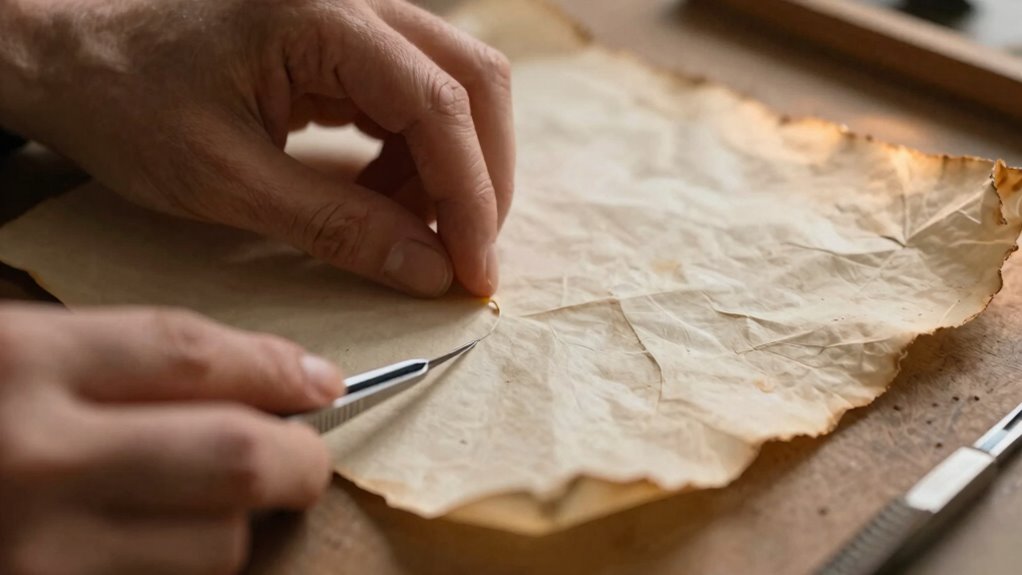

You need patience in paper conservation because restoring fragile, centuries-old documents involves delicate hands-on procedures that technology can’t mimic. Every step, from gentle cleaning to precise chemical treatments, requires careful timing and caution to prevent irreversible damage. Drying and monitoring take days or weeks, demanding your attention and steady patience. This process respects the paper’s fragility and long-term preservation. Keep going, and you’ll discover how expertise turns care into lasting preservation.

Get business pricing on monitors, keyboards and dev gear
- Business-only prices and quantity discounts
- Tax-exempt purchasing
- Multiple users, one account, clear invoices
Key Takeaways
- Physical conservation involves delicate, hands-on procedures that demand careful, incremental steps to prevent damage.
- Chemical treatments require precise timing, testing, and slow application to ensure long-term stability.
- Drying and monitoring can take days or weeks, requiring patience to avoid stress and deterioration.
- Expertise and understanding of material science are essential to avoid irreversible harm during treatment.
- Preservation prioritizes respect for material fragility, emphasizing careful handling over the speed of technological solutions.
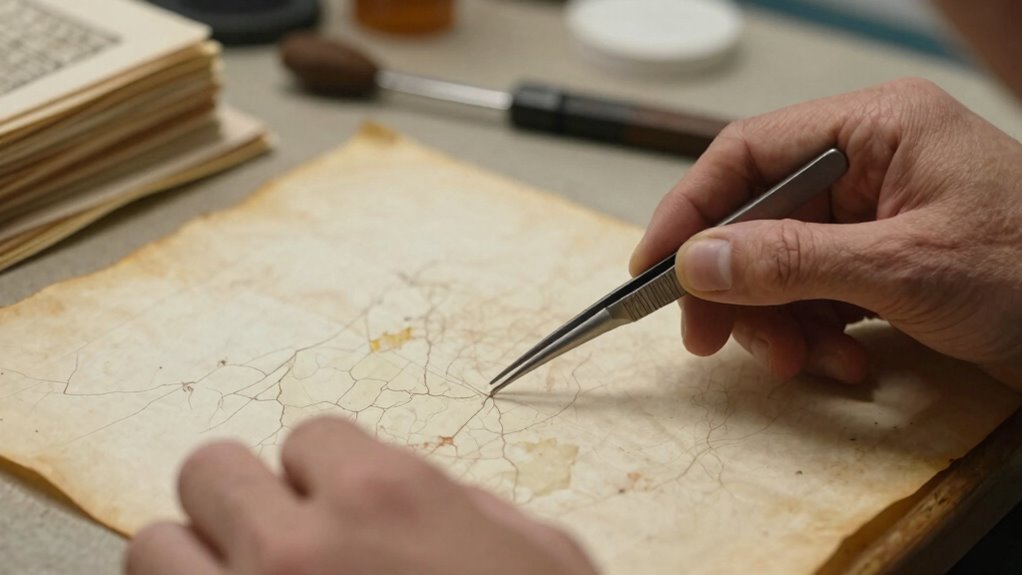
Have you ever wondered why paper conservation takes so much time? It’s a question many people ask, especially when technology seems to promise quick fixes and instant results. But when it comes to preserving delicate, centuries-old documents, the process demands patience and meticulous care. Unlike digital preservation, which can often be achieved through swift copying or scanning, physical conservation requires detailed, hands-on work. Every step is deliberate, aimed at safeguarding the paper’s integrity for future generations.
Paper conservation requires patience and careful, hands-on work to preserve fragile, historic documents for future generations.
You might think chemical treatments could speed things up, but that’s usually not the case. These treatments involve carefully selecting and applying chemicals to stabilize the paper, remove harmful residues, or reverse deterioration. Each chemical process must be controlled precisely to avoid damaging the fragile fibers or altering the document’s appearance. Rushing this step could lead to irreversible harm, so conservators proceed slowly, constantly monitoring the effects of their work. It’s a delicate balance between effective preservation and avoiding unintended damage.
Moreover, the entire process involves multiple stages that can’t be rushed. After initial assessment, you’ll need to clean the surface gently, often with soft brushes or specialized solvents. Then, if necessary, you might apply chemical treatments to strengthen the paper. Each chemical application must be carefully timed and tested on small areas before proceeding further. This ensures you’re not causing more harm than good. After chemical stabilization, the document may need humidification or flattening, which is another slow, controlled process to prevent tears or warping. Incorporating material science principles helps conservators understand how each treatment affects the paper’s long-term stability. Additionally, understanding the chemical stability of materials guides conservators in choosing appropriate treatments that won’t compromise the paper’s future integrity.
Restoration also involves a lot of waiting. After treatments, documents must dry completely before further work can be done. This drying process can take days or even weeks, depending on the paper’s condition and the methods used. During this time, conservators constantly check for signs of stress or new deterioration, adjusting their techniques accordingly. It’s a process that requires patience, precision, and a deep understanding of material science, not just the latest technology. Recognizing the importance of biodiversity and the fragile balance of ecosystems parallels the care needed to preserve historical documents, emphasizing how delicate and essential patience is in conservation work. The process of ensuring the chemical stability of each treatment adds another layer of complexity, requiring expertise and cautious timing.
In the end, conserving paper isn’t about quick fixes. It’s about respecting the material’s fragility and history, which demands time and care. While digital preservation offers a fast way to create copies, it can’t replace the nuanced, physical work necessary to preserve the original. Patience becomes your most valuable tool, ensuring that each step enhances the document’s longevity without risking its integrity. That’s why paper conservation requires more patience than the fastest technology can provide.
professional paper conservation tools
As an affiliate, we earn on qualifying purchases.
As an affiliate, we earn on qualifying purchases.
Frequently Asked Questions
How Long Does a Typical Paper Conservation Process Take?
A typical paper conservation process usually takes anywhere from a few weeks to several months, depending on the item’s condition. During this time, you’ll see restoration techniques carefully applied, such as cleaning, flattening, and repairing tears. The conservation timeline is meticulous, as each step demands patience and precision. Rushing could damage the paper further, which is why careful, time-consuming work guarantees the best long-term preservation.
Can All Types of Paper Be Conserved Effectively?
You can’t fix all types of paper effectively, as “not all that glitters is gold.” Restoration ethics and material compatibility are essential; some papers, like those with acidic or fragile fibers, may not withstand conservation efforts. Your patience is key, as each piece requires a tailored approach. While some papers can be restored beautifully, others might be better preserved through careful digitization or alternative methods.
What Are the Most Common Mistakes in Paper Conservation?
You often make mistakes in paper conservation by neglecting restoration ethics and the historical context. Rushing repairs can cause damage, and using inappropriate materials can compromise the artifact’s integrity. You might also overlook the importance of documenting each step, risking loss of vital information. To avoid these errors, take your time, respect the paper’s history, and prioritize ethical practices that preserve its authenticity for future generations.
Is Special Training Required to Become a Paper Conservator?
Yes, you need special training to become a paper conservator. You’ll learn about historical techniques and ethical considerations, which are vital for proper care and preservation. Training involves hands-on practice, understanding materials, and adhering to ethical standards to guarantee your work respects the integrity of each piece. This specialized education helps you develop patience and precision, essential qualities for restoring delicate paper artifacts responsibly and effectively.
How Does Environmental Control Affect Paper Preservation?
Environmental control is crucial in paper preservation because fluctuations in humidity can accelerate damage, leading to warping or mold growth. You might think technology alone can protect your collection, but consistent environmental management prevents acidic degradation and maintains paper’s integrity. By controlling humidity and temperature, you create a stable environment, giving your papers the best chance to endure over time. Patience and careful monitoring are key to effective conservation.
acid-free document storage sleeves
As an affiliate, we earn on qualifying purchases.
As an affiliate, we earn on qualifying purchases.
Conclusion
You might not realize it, but paper conservation demands incredible patience—sometimes taking months for a single piece. Did you know that restoring fragile documents can involve over 100 meticulous steps? That’s a proof to the care and time it takes to preserve history. When you appreciate the painstaking effort behind each restored page, you’ll see that conservation isn’t just about fixing paper; it’s about safeguarding stories for generations to come. Patience truly makes all the difference.
delicate cleaning brushes for old paper
As an affiliate, we earn on qualifying purchases.
As an affiliate, we earn on qualifying purchases.
chemical treatments for paper preservation
As an affiliate, we earn on qualifying purchases.
As an affiliate, we earn on qualifying purchases.
Fall Picks
fall essentials
As an affiliate, we earn on qualifying purchases.