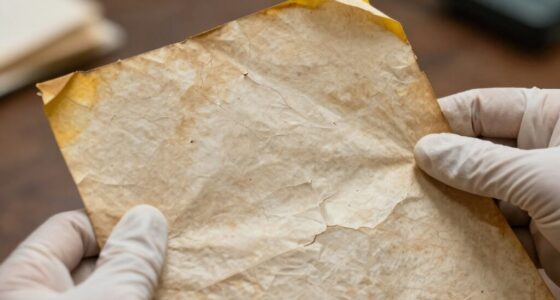
To stabilize brittle architectural plans, conservation teams carefully assess their condition and identify materials like paper, ink, and previous restorations. They use gentle cleaning methods, conservation-grade adhesives, and backing techniques for added strength. Techniques like humidification relax and flatten the documents, while deacidification neutralizes harmful acids. Proper storage in climate-controlled environments prevents further damage. If you want to understand how these processes work together, continue exploring the methods used to preserve fragile plans effectively.

Get business pricing on monitors, keyboards and dev gear
- Business-only prices and quantity discounts
- Tax-exempt purchasing
- Multiple users, one account, clear invoices
Key Takeaways
- Use humidification chambers to relax and flatten brittle paper without causing damage.
- Apply conservation-grade, reversible adhesives to mend tears and reinforce weak areas.
- Conduct deacidification treatments to neutralize acids and prolong paper lifespan.
- Store plans in climate-controlled environments with acid-free containers to prevent further deterioration.
- Prioritize gentle cleaning and stabilization techniques that can be reversed if needed.
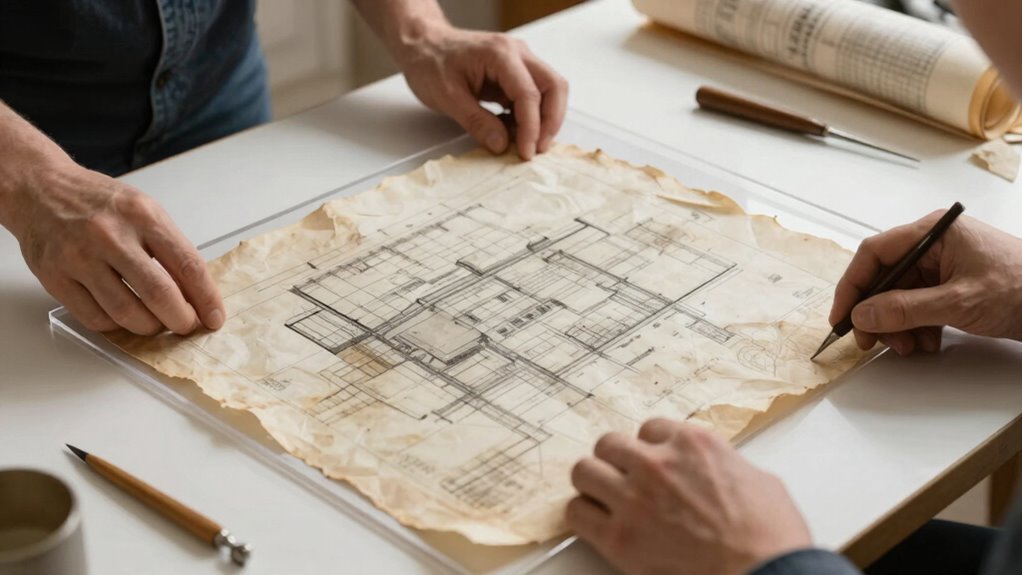
When historic architectural plans face deterioration, conservation teams step in to stabilize and preserve them. These fragile documents, often centuries old, require specialized care to prevent further damage. Conservation teams begin by carefully evaluating the condition of the plans, which involves detailed material analysis. This process helps identify the specific types of paper, ink, and any previous restoration materials used. Understanding the composition of these materials is vital because it guides the selection of appropriate restoration techniques that won’t harm the original fabric.
Once the material analysis is complete, the team moves on to choosing the right restoration techniques. For brittle or fragile documents, they often employ gentle cleaning methods to remove dirt and debris without causing additional stress. Techniques like vacuuming with soft brushes or using specialized solvents are common. If the paper has become weakened or torn, they might use conservation-grade adhesives to mend tears or reinforce weak areas. These adhesives are chosen carefully to guarantee they are reversible and don’t cause long-term damage. Sometimes, they also employ backing techniques—attaching a new support layer behind the original to provide extra strength—especially if the document is extremely fragile. Additionally, understanding the importance of preservation materials helps ensure that conservation methods remain effective and compatible with the original documents.
Conservation techniques include gentle cleaning, reversible adhesives, and backing for fragile architectural plans.
To stabilize the document further, conservation teams often utilize humidification chambers. These controlled environments allow the paper to relax and flatten without risking further damage. They carefully regulate humidity and temperature to prevent any warping or buckling. Once the document is stabilized, they might also consider deacidification, a process that neutralizes acids present in the paper which can accelerate deterioration. This treatment helps extend the lifespan of the architectural plans and maintains their legibility over time. Proper storage conditions are also essential, as they influence the overall success of preservation efforts. Implementing environmental controls is crucial for maintaining optimal conditions and preventing future deterioration. Incorporating proper storage conditions is essential to prevent future deterioration, as environmental factors like light and humidity can significantly impact the longevity of historical documents.
Throughout the entire process, conservation teams prioritize reversibility. They use techniques and materials that can be undone in the future if needed, guaranteeing that the preservation process remains flexible for ongoing conservation efforts. After stabilization, the plans are stored in climate-controlled environments, often housed in acid-free folders or boxes, to prevent future deterioration.
conservation-grade adhesive for paper repair
As an affiliate, we earn on qualifying purchases.
As an affiliate, we earn on qualifying purchases.
Frequently Asked Questions
What Are Common Causes of Brittleness in Architectural Plans?
Brittleness in architectural plans often results from poor archival storage and inadequate environmental control. When plans are stored in environments with fluctuating humidity, extreme temperatures, or exposure to light, the paper degrades, becoming fragile and prone to cracking. You can safeguard this by maintaining stable conditions and using proper archival materials, which help preserve the plans’ structural integrity. Regular monitoring ensures these conditions stay consistent, reducing the risk of further deterioration.
How Do Conservation Teams Prioritize Repairs for Fragile Plans?
You prioritize repairs by evaluating each plan’s fragility and documenting its condition through detailed preservation records. Using archival techniques, you carefully assess the severity of deterioration to decide which plans need immediate stabilization. You focus on those most at risk, ensuring minimal handling and using gentle, reversible methods. This systematic approach helps you preserve the integrity of fragile plans while planning long-term conservation strategies effectively.
What Materials Are Used to Reinforce Delicate Architectural Documents?
You use archival adhesives to carefully reinforce delicate architectural documents, ensuring their longevity without causing damage. Reinforcement techniques often include thin tissue or Japanese paper, which is adhered using these archival adhesives to strengthen fragile areas. This method helps support weak spots while maintaining the document’s integrity. By combining archival adhesives with precise reinforcement techniques, you effectively stabilize brittle plans, preserving their historical value for future study and display.
How Long Does the Stabilization Process Typically Take?
The stabilization process typically takes several weeks to months, depending on the document’s condition and complexity. You’ll want to guarantee proper archival storage during and after conservation, which helps prevent further deterioration. Conservation techniques, such as gentle cleaning, repairing tears, and using specialized adhesives, are applied carefully to stabilize the plans. Patience is key, as thorough work ensures long-term preservation and safe storage of your delicate architectural documents.
Are There Digital Methods to Assist in Plan Stabilization Efforts?
Think of digital imaging as a time machine; it allows you to see a building’s past without risking damage. Virtual restoration tools help stabilize brittle plans by creating detailed 3D models, making fragile sections safer to handle. These digital methods enable precise analysis, reducing the risk of further deterioration. You can then plan carefully, ensuring preservation while respecting the building’s history—like reviving a precious memory without fading it away.
humidification chamber for archival documents
As an affiliate, we earn on qualifying purchases.
As an affiliate, we earn on qualifying purchases.
Conclusion
You see the power of preservation in the way conservation teams stabilize fragile architectural plans. They inspect with care, analyze with precision, and act with expertise. They protect history, conserve beauty, and guarantee longevity. Their dedication brings clarity to the past, strength to the structure, and hope for the future. By balancing skill with passion, they turn fragile plans into lasting legacies, reminding us all that preservation is a promise to future generations.
acid-free document storage boxes
As an affiliate, we earn on qualifying purchases.
As an affiliate, we earn on qualifying purchases.
deacidification treatment for paper preservation
As an affiliate, we earn on qualifying purchases.
As an affiliate, we earn on qualifying purchases.
Evergreen bestsellers Picks
bestsellers
As an affiliate, we earn on qualifying purchases.