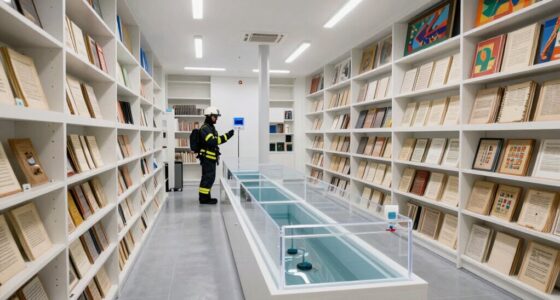

To create a good archive room setup, you need reliable climate control with precise temperature (65-70°F) and humidity (30-50%) regulation. Install energy-efficient HVAC systems and dehumidifiers with adjustable settings, and keep them regularly maintained. Seal the room properly to prevent external influences. Use environmental monitoring tools for early detection of fluctuations, and have backup systems ready. Understanding these essentials helps guarantee your collection stays protected for decades—continue to explore for more tips.

Get business pricing on monitors, keyboards and dev gear
- Business-only prices and quantity discounts
- Tax-exempt purchasing
- Multiple users, one account, clear invoices
Key Takeaways
- Ensure dehumidifiers are appropriately sized for the room’s volume and humidity levels for effective moisture control.
- Maintain consistent temperature between 65-70°F and humidity between 30-50% for optimal preservation conditions.
- Regularly calibrate and clean dehumidifiers and sensors to ensure accurate operation and prevent mold growth.
- Seal the room properly to prevent external environmental influences and drafts that could disrupt climate stability.
- Implement continuous environmental monitoring and backup systems to promptly detect and address fluctuations or outages.

Have you ever wondered how archive rooms preserve delicate documents and artifacts? It’s not just about storing items out of sight; it’s about creating an environment where these items can last for decades. The key to achieving this is a well-designed setup that emphasizes climate control and proper equipment maintenance. Your goal should be to maintain stable conditions that prevent deterioration caused by humidity, temperature fluctuations, and pollutants. A good archive room keeps humidity levels consistently between 30 and 50 percent, and temperature around 65 to 70 degrees Fahrenheit. This balance minimizes the risk of mold growth, paper brittleness, and other forms of degradation.
Maintaining stable humidity and temperature is essential for preserving delicate documents and artifacts for decades.
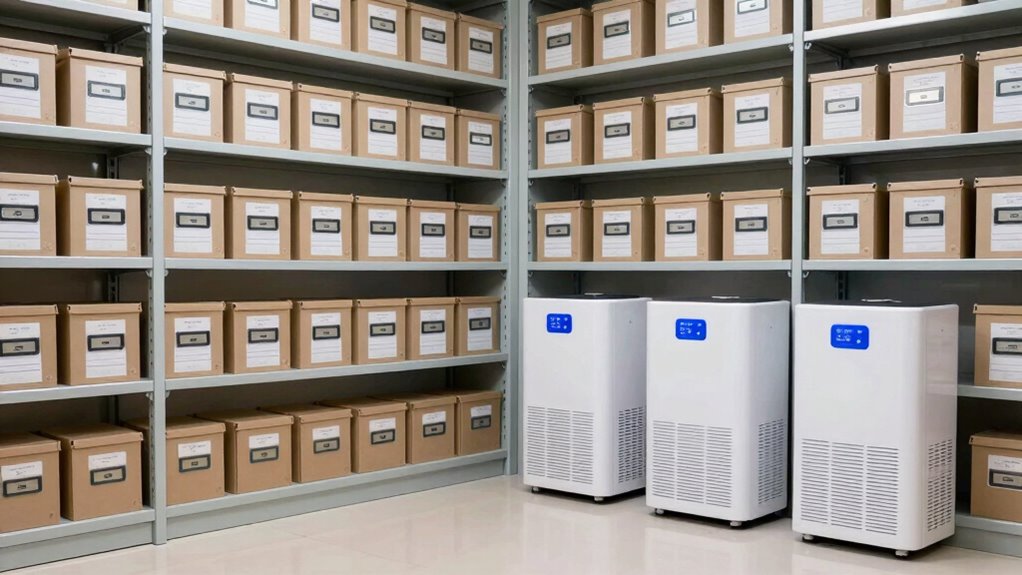
Climate control is at the heart of effective preservation. You’ll want to invest in reliable HVAC systems that can fine-tune temperature and humidity levels with precision. These systems should include dehumidifiers, which are essential for removing excess moisture from the air. Dehumidifiers help maintain a stable environment, especially in areas prone to high humidity or seasonal changes. When selecting dehumidifiers, look for models with adjustable settings and sufficient capacity for your space. Regularly monitoring the environment with hygrometers and thermometers ensures you catch any fluctuations early, so you can take corrective action before damage occurs. Implementing proper environmental monitoring can significantly enhance preservation efforts. Additionally, understanding the importance of stable environmental conditions helps in designing an effective climate control system. Moreover, choosing energy-efficient models can reduce operational costs over time.
Equipment maintenance is equally critical. All climate control devices, especially dehumidifiers, require routine upkeep to function effectively. This includes cleaning filters, checking for leaks, and ensuring that sensors and controls are calibrated correctly. Neglecting maintenance can lead to equipment failure, which in turn jeopardizes the integrity of your collection. An effective maintenance schedule should be part of your routine, with clear procedures for inspecting and servicing each piece of equipment. Performing preventive maintenance extends the lifespan of your systems and keeps the environment within the ideal parameters needed for preservation. Additionally, choosing reliable dehumidifiers with advanced controls can help optimize performance and reduce energy consumption.
In addition, you should consider backup systems, like generators or secondary dehumidifiers, to ensure continuous climate control during power outages or equipment failures. Good setup also means proper sealing of the archive room to prevent drafts and external influences that could disrupt your carefully controlled environment. Proper installation, regular equipment checks, and vigilant monitoring all work together to create an archive room that protects your valuable items for the long term. When you prioritize climate control and diligent equipment maintenance, you’re giving your collection the best chance to survive and remain accessible for future generations. Being proactive about equipment troubleshooting can prevent minor issues from becoming major disruptions.
adjustable dehumidifier for archive room
As an affiliate, we earn on qualifying purchases.
As an affiliate, we earn on qualifying purchases.
Frequently Asked Questions
How Often Should I Service My Dehumidifier?
You should service your dehumidifier at least every six months to guarantee proper dehumidifier maintenance. Regular servicing helps optimize your storage environment by preventing mold, corrosion, and equipment failure. Check filters, clean coils, and inspect for leaks or damage during each service. If your environment is particularly humid or dusty, consider more frequent maintenance. Keeping your dehumidifier well-maintained ensures it runs efficiently and protects your archived materials effectively.
Can Dehumidifiers Eliminate Mold Completely?
While dehumidifiers can substantially improve mold prevention, they can’t completely eliminate mold on their own. Regular dehumidifier maintenance keeps humidity levels in check, reducing mold-friendly conditions. Think of it as a gentle nudge in the right direction, but you might still need to address existing mold with cleaning or professional help. Keep humidity low, maintain your device, and stay vigilant for any signs of mold growth.
What Is the Ideal Humidity Level for Archive Rooms?
You should aim to keep the humidity level in archive rooms between 30-50% to guarantee ideal moisture control. Maintaining this range prevents mold growth and preserves sensitive materials. Use a dehumidifier to monitor and adjust moisture levels consistently. By controlling humidity, you protect your archives from damage caused by excess moisture or dryness, ensuring your stored items stay safe and in good condition over time.
Are There Specific Dehumidifiers for Sensitive Materials?
Yes, there are specific dehumidifier types designed for sensitive materials. You want models with precise humidity control, low vibration, and minimal noise to protect delicate items. These specialized dehumidifiers maintain stable environments, prevent mold, and reduce deterioration. You need units with advanced filtration, adjustable settings, and gentle air circulation. By choosing the right dehumidifier types, you guarantee your sensitive materials stay preserved, safe, and in ideal condition.
How Do I Prevent Pests in Archive Storage Areas?
To prevent pests in your archive storage areas, you should implement pest deterrent strategies like sealing cracks, using traps, and maintaining cleanliness. Choose storage containers that are pest-proof, such as airtight, durable plastic bins or metal cabinets, to block pests’ entry points. Regular inspections and controlling humidity levels also help create an environment unattractive to pests, ensuring your materials stay safe and pest-free over time.
energy-efficient HVAC system for climate control
As an affiliate, we earn on qualifying purchases.
As an affiliate, we earn on qualifying purchases.
Conclusion
Think of your archive room as a treasure chest, holding priceless gems that need protection. Dehumidifiers act as vigilant guardians, warding off moisture’s sneaky attacks. When you set up your space wisely, it’s like building a fortress that preserves history and memories for generations. With the right tools and care, your archive becomes a timeless vault—secure, dry, and ready to reveal its treasures whenever you open it.
environmental monitoring hygrometer and thermometer
As an affiliate, we earn on qualifying purchases.
As an affiliate, we earn on qualifying purchases.
professional archive room dehumidifier
As an affiliate, we earn on qualifying purchases.
As an affiliate, we earn on qualifying purchases.
Fall Picks
fall essentials
As an affiliate, we earn on qualifying purchases.