📊 Full opportunity report: How Brand-Name GLP-1 Access Looks Across Pharmacies on IdeaNavigator AI — validation score, market gap, and execution plan.

Get business pricing on monitors, keyboards and dev gear
- Business-only prices and quantity discounts
- Tax-exempt purchasing
- Multiple users, one account, clear invoices
TL;DR
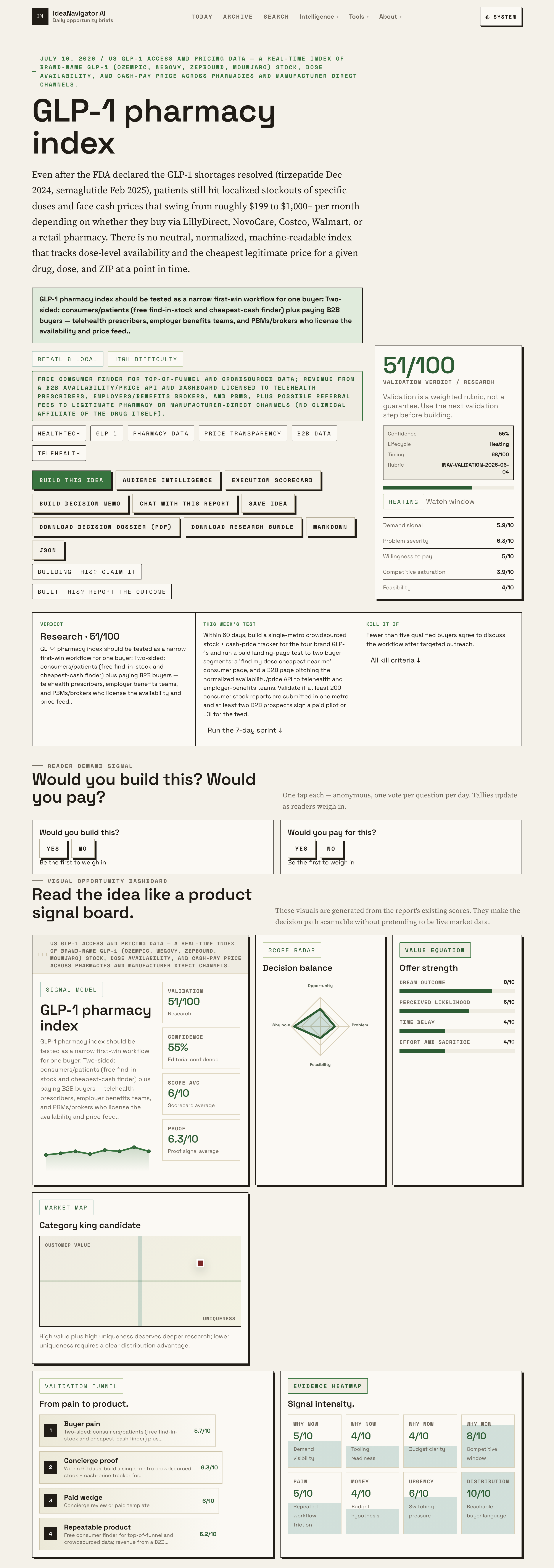
With FDA shortages of tirzepatide and semaglutide declared resolved, GLP-1 access has shifted from a supply problem to a fragmentation problem. Monthly cash prices for brand drugs like Ozempic, Wegovy, Zepbound and Mounjaro range from roughly $199 to over $1,000 depending on the pharmacy channel, and no neutral index tracks dose-level availability by location.
Patients seeking brand-name GLP-1 drugs such as Ozempic, Wegovy, Zepbound and Mounjaro now face monthly cash prices that swing from roughly $199 to more than $1,000 depending on whether they buy through LillyDirect, NovoCare, Costco, Walmart or a traditional retail pharmacy — even though the FDA declared the GLP-1 shortages resolved, according to a market analysis by IdeaNavigator AI. The analysis argues the market has moved from a shortage problem to a fragmentation problem: no neutral, normalized source tracks dose-level availability and the cheapest legitimate price for a given drug, dose and ZIP code at a point in time.
The FDA removed tirzepatide from its shortage list in December 2024 and semaglutide in February 2025. But according to the IdeaNavigator AI analysis, patients continue to encounter localized stockouts of specific doses, meaning a pharmacy may have one strength of a drug in supply while another is unavailable. Because GLP-1s are titrated through escalating dose strengths, a gap at a single dose level can interrupt a patient’s treatment course even when the drug is officially no longer in shortage.
At the same time, manufacturers and retailers have launched competing direct cash-pay channels. Eli Lilly operates LillyDirect, Novo Nordisk runs NovoCare, Costco and Walmart offer their own cash programs, and the TrumpRx portal launched in February 2026. Each channel posts different prices for the same drugs, and the analysis found cash prices ranging from about $199 per month to more than $1,000 per month across these options, with no single source normalizing the differences.
The proposed response, outlined by IdeaNavigator AI, is a two-sided GLP-1 pharmacy index: a free consumer tool that shows where a specific drug and dose is in stock nearby and which legitimate channel offers the cheapest cash price, plus a paid B2B data feed licensed to telehealth prescribers, employer benefits teams, and pharmacy benefit managers or brokers. The consumer side would be seeded with crowdsourced stock reports and normalized public pricing data from manufacturer direct sites and retail cash programs.
Why Dose-Level Tracking Matters Now
The fragmentation has a measurable cost. Employers report that GLP-1s now account for roughly 20% of pharmacy spend, according to the analysis, creating demand among benefits teams and PBMs for cost-steering data that does not currently exist in normalized form. Without a dose-level view of what is actually on shelves, employers and telehealth prescribers are steering patients toward channels that may be out of stock at the specific strength the patient needs.
For patients, the price spread is the immediate issue. A difference between a $199 and a $1,000 monthly cash price — for the same active drug at the same dose — can determine whether a cash-pay patient continues treatment or stops. A public, location-specific index would let patients compare options in minutes instead of calling pharmacies individually or checking multiple manufacturer and retail sites.
The timing is also driven by the exit of compounders. Federal compounding deadlines, which followed the FDA shortage resolutions, forced compounding pharmacies out of the copycat GLP-1 market. Patients who had relied on cheaper compounded versions are now moving back to brand-name channels, increasing the volume of people navigating the fragmented pricing landscape for the first time.
From Shortage Crisis to Channel Sprawl
The GLP-1 access story has moved through three phases. During the shortage period, the core problem was total supply: patients could not fill prescriptions at all, and the FDA’s shortage declarations permitted compounders to produce copies of tirzepatide and semaglutide. When the FDA removed those drugs from the shortage list — tirzepatide in December 2024, semaglutide in February 2025 — the legal basis for mass compounding ended, and compounding deadlines followed.
Into that vacuum, manufacturers and retailers launched direct cash-pay channels. LillyDirect and NovoCare let patients buy Lilly and Novo Nordisk products directly at posted cash prices, Costco and Walmart built their own discount programs, and the TrumpRx portal arrived in February 2026. Each channel sets its own pricing and has its own supply position, which produced the current spread the analysis documents.
What the Price Data Does Not Yet Show
The $199-to-$1,000+ price range is presented in the analysis as an approximate spread across channels, not as a dose-by-dose or city-by-city measurement; the analysis does not specify which drugs, doses or time periods produced those endpoints. It is not yet clear how stable those prices are, or how frequently manufacturer direct channels change them.
The prevalence of localized dose-level stockouts is also not quantified. The claim rests on the analysis’s characterization of continued patient friction rather than on published inventory data — which is precisely the gap the proposed index would fill. The 20% employer pharmacy-spend figure is attributed to employer reports within the analysis and is not independently sourced.
The proposal itself remains unvalidated. It has not been built, and no design partners have been announced.
A 60-Day Validation Test
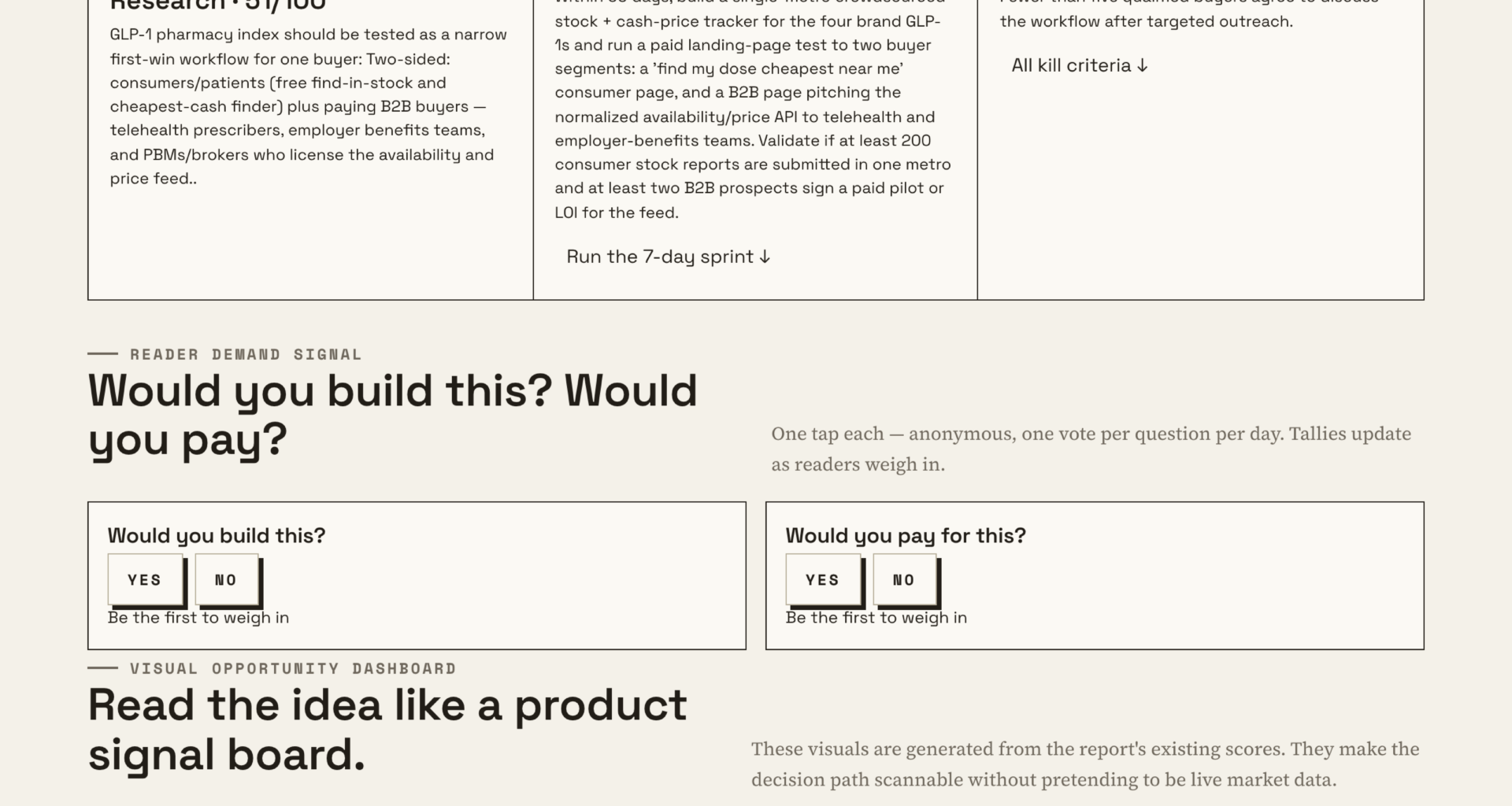
The proposed validation plan, as outlined by IdeaNavigator AI, calls for a single-metro pilot within 60 days: a crowdsourced stock and cash-price tracker for the four brand GLP-1s, paired with paid landing-page tests aimed at two segments — a consumer ‘find my dose cheapest near me’ page and a B2B page pitching the availability and price API to telehealth and employer-benefits buyers.
The stated success thresholds are at least 200 consumer stock reports submitted in one metro and at least two B2B prospects signing a paid pilot or letter of intent for the data feed. If those thresholds are met, the next step would be expanding the consumer finder to additional metros and layering on dose-level availability alerts. Whether any team takes up the build, and whether crowdsourced stock reports prove accurate enough to anchor a licensed data product, remains to be seen.
Key Questions
Are GLP-1 drugs still in shortage?
No. The FDA removed tirzepatide from its shortage list in December 2024 and semaglutide in February 2025. However, localized stockouts of specific dose strengths can still occur at individual pharmacies, according to the IdeaNavigator AI analysis.
Why do GLP-1 cash prices vary so much between pharmacies?
Manufacturers and retailers now run competing direct cash-pay channels — LillyDirect, NovoCare, Costco and Walmart programs, and the TrumpRx portal — each setting its own price. The analysis found monthly cash prices ranging from about $199 to over $1,000 for brand GLP-1s depending on the channel.
Can patients still get cheaper compounded GLP-1s?
Largely no. Compounding deadlines that followed the FDA shortage resolutions forced compounders out of the copycat GLP-1 market, pushing cash-pay patients back toward brand-name channels.
What would a GLP-1 pharmacy index do?
Per the proposal, it would be a free tool showing where a specific drug and dose is in stock by ZIP code and which legitimate channel has the cheapest cash price, funded by licensing the underlying availability and price data to telehealth, employer benefits and PBM buyers.
Does this index exist yet?
No. It is a proposal with a defined validation plan: a 60-day single-metro test targeting at least 200 consumer stock reports and two signed B2B pilots or letters of intent. No launch has been announced.
Source: IdeaNavigator AI
Evergreen bestsellers Picks
bestsellers
As an affiliate, we earn on qualifying purchases.