
The best mechanical keyboards for programmers balance a comfortable layout, dependable typing, and features that fit your desk and workflow. I’d put the Keychron V5 Max first for its compact 96% layout, wireless connectivity, and number pad; the Keychron C1 Pro 8K is a strong wired TKL option, while the Keychron K3 Version 2 suits programmers who want a low-profile, space-saving board. The main tradeoffs are layout versus desk space, wired simplicity versus wireless flexibility, and extra features versus a straightforward typing setup. Switch feel and programmability also matter, especially if you spend long sessions at the keyboard. Read on for the full breakdown and recommendations by buyer type.

Get business pricing on monitors, keyboards and dev gear
- Business-only prices and quantity discounts
- Tax-exempt purchasing
- Multiple users, one account, clear invoices
Key Takeaways
- The Keychron V5 Max stands out as the most balanced pick: its 96% layout keeps a number pad while taking less space than a full-size board.
- Wired boards offer a simpler route to a focused setup: the Keychron C1 Pro 8K provides a TKL layout, while the Keychron V6 8K keeps the number pad and adds a programmable knob.
- Compact layouts make different compromises: the K3 Version 2 goes low-profile, while the AULA F75 Pro and RK Royal Kludge S98 offer wireless 75% layouts with added controls.
- Display and knob features are a dividing line: the S98, Keymatic M98, and Typehaven L98 foreground these extras, while simpler boards keep attention on the core typing setup.
- Hot-swappable models leave more room to change switches: the V6 8K, Redragon K671, and AULA F99 offer that flexibility, while fixed-switch boards call for more confidence in the original feel.
| Keychron K3 Version 2 75% Low-Profile Wireless Mechanical Keyboard |  | Best Compact Wireless Pick | Layout: 75%, QWERTY, 84 keys | Switches: Tactile brown | Connectivity: Bluetooth 5.1 for up to 3 devices; USB-C wired | VIEW LATEST PRICE | See Our Full Breakdown |
| ProtoArc K310 Pro Backlit Wireless Mechanical Keyboard |  | Best Full-Size Wireless Pick | Layout: Full-size QWERTY, 108 keys | Switches: Linear red | Connectivity: Bluetooth and 2.4 GHz USB receiver; up to 3 devices | VIEW LATEST PRICE | See Our Full Breakdown |
| Logitech G413 SE Full-Size Mechanical Gaming Keyboard |  | Best Wired Typing Pick | Layout: Full-size QWERTY, 108 keys | Switches: Tactile mechanical | Connectivity: Wired USB 2.0 | VIEW LATEST PRICE | See Our Full Breakdown |
| Keychron C2 Full-Size Wired Mechanical Keyboard with Brown Switches |  | Best No-Frills Full-Size Pick | Layout: Full-size QWERTY, 104 keys | Switches: Tactile Keychron Brown | Connectivity: Wired USB-C | VIEW LATEST PRICE | See Our Full Breakdown |
| RK Royal Kludge S98 Wireless Mechanical Keyboard with Smart Display and Knob |  | Best Customization Pick | Layout: QWERTY, 98 keys | Switches: Linear RK switches | Switch compatibility: Hot-swappable 3-pin and 5-pin switches | VIEW LATEST PRICE | See Our Full Breakdown |
| Keymatic M98 Wireless Mechanical Keyboard with Display and Knob |  | Best for Wireless Feature Flexibility | Layout: QWERTY, 99 keys; listing also describes it as 96% | Connectivity: USB-C, 2.4 GHz, Bluetooth | Switches: Clicky, Cherry MX Black (as listed) | VIEW LATEST PRICE | See Our Full Breakdown |
| SteelSeries Apex 5 Hybrid Mechanical Gaming Keyboard with OLED Display and RGB Lighting |  | Best for Clicky Typing and Desk Support | Layout: AZERTY, 104 keys | Switches: Hybrid blue, tactile and clicky | Switch lifespan: Rated for 20 million keypresses | VIEW LATEST PRICE | See Our Full Breakdown |
| Typehaven L98 Wireless Mechanical Gaming Keyboard with Smart Display and Knob |  | Best Compact Wireless Board with a Number Pad | Layout: 98% QWERTY with number pad | Connectivity: Bluetooth, 2.4 GHz wireless, USB-C wired | Switches: Linear | VIEW LATEST PRICE | See Our Full Breakdown |
| Keychron V5 Max 96% Wireless Mechanical Keyboard with Number Pad |  | Best for Programmable Layouts | Layout: 96% QWERTY, 97 keys | Connectivity: 2.4 GHz, Bluetooth 5.1, USB-C | Switches: Linear Gateron Jupiter Red | VIEW LATEST PRICE | See Our Full Breakdown |
| AULA F75 Pro 75% Tri-Mode Wireless Mechanical Keyboard |  | Best Compact Pick for Multi-Device Desks | Layout: 75%, 81 keys, QWERTZ | Connectivity: Bluetooth 5.0, 2.4 GHz wireless, USB-C | Multi-device support: Up to five devices | VIEW LATEST PRICE | See Our Full Breakdown |
| SOLAKAKA KI99 Pro 96% Wireless Mechanical Keyboard, Gradient Black |  | Best for Wireless Customization | Layout: 96%, QWERTY | Keys: 99 | Connectivity: Bluetooth 5.0, 2.4 GHz wireless, USB-C wired | VIEW LATEST PRICE | See Our Full Breakdown |
| Keychron V6 8K Full-Size Wired Mechanical Keyboard with Programmable Knob, Hot-Swappable Red Switches, PBT Keycaps, and RGB Backlighting |  | Best for Full-Size Programmers | Layout: Full-size QWERTY, 104 keys | Connection: Wired USB-C | Polling rate: 8000 Hz | VIEW LATEST PRICE | See Our Full Breakdown |
| Redragon K671 Wired Mechanical Gaming Keyboard with Hot-Swappable Red Switches |  | Best for Simple Full-Size Setup | Layout: QWERTY, 104 keys | Connectivity: Wired | Switch type: Linear red | VIEW LATEST PRICE | See Our Full Breakdown |
| AULA F99 Wireless Mechanical Keyboard, 99-Key, Hot-Swappable, RGB | 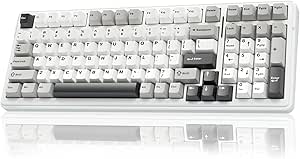 | Best for Multi-Device Desks | Layout: 96%, 99 keys | Connectivity: Bluetooth 5.0, 2.4 GHz wireless, USB-C wired | Multi-device support: Up to five paired devices | VIEW LATEST PRICE | See Our Full Breakdown |
| Keychron C1 Pro 8K Wired TKL Mechanical Keyboard with RGB Backlight and Brown Switches |  | Best Compact Wired Pick | Layout: Tenkeyless, 87 keys | Connectivity: Wired USB-C | Polling rate: 8000 Hz | VIEW LATEST PRICE | See Our Full Breakdown |
| mechanical keyboards for programmer | Layout | Connectivity | Switches | Backlighting |
|---|---|---|---|---|
| Keychron K3 Version 2 75% Low- | 75%, QWERTY, 84 keys | Bluetooth 5.1 for up to 3 devices; USB-C wired | Tactile brown | Single-color white LED |
| ProtoArc K310 Pro Backlit Wire | Full-size QWERTY, 108 keys | Bluetooth and 2.4 GHz USB receiver; up to 3 devices | Linear red | Single color, 10 effects |
| Logitech G413 SE Full-Size Mec | Full-size QWERTY, 108 keys | Wired USB 2.0 | Tactile mechanical | Single-color white LED |
| Keychron C2 Full-Size Wired Me | Full-size QWERTY, 104 keys | Wired USB-C | Tactile Keychron Brown | None |
| RK Royal Kludge S98 Wireless M | QWERTY, 98 keys | Bluetooth 5.0, 2.4 GHz wireless, USB-C | Linear RK switches | RGB |
| Keymatic M98 Wireless Mechanic | QWERTY, 99 keys; listing also describes it as 96% | USB-C, 2.4 GHz, Bluetooth | Clicky, Cherry MX Black (as listed) | RGB, 20 effects, five brightness levels |
| SteelSeries Apex 5 Hybrid Mech | AZERTY, 104 keys | USB | Hybrid blue, tactile and clicky | — |
| Typehaven L98 Wireless Mechani | 98% QWERTY with number pad | Bluetooth, 2.4 GHz wireless, USB-C wired | Linear | RGB, 18 effects, 16.8 million colors |
| Keychron V5 Max 96% Wireless M | 96% QWERTY, 97 keys | 2.4 GHz, Bluetooth 5.1, USB-C | Linear Gateron Jupiter Red | — |
| AULA F75 Pro 75% Tri-Mode Wire | 75%, 81 keys, QWERTZ | Bluetooth 5.0, 2.4 GHz wireless, USB-C | Linear LEOBOG Reaper, pre-lubricated | — |
| SOLAKAKA KI99 Pro 96% Wireless | 96%, QWERTY | Bluetooth 5.0, 2.4 GHz wireless, USB-C wired | — | — |
| Keychron V6 8K Full-Size Wired | Full-size QWERTY, 104 keys | — | — | Per-key RGB with 22+ effects |
| Redragon K671 Wired Mechanical | QWERTY, 104 keys | Wired | Hot-swappable; four spare switches included | 11 effects, five brightness levels; color cannot be changed |
| AULA F99 Wireless Mechanical K | 96%, 99 keys | Bluetooth 5.0, 2.4 GHz wireless, USB-C wired | — | — |
| Keychron C1 Pro 8K Wired TKL M | Tenkeyless, 87 keys | Wired USB-C | — | — |
More Details on Our Top Picks
Keychron K3 Version 2 75% Low-Profile Wireless Mechanical Keyboard
The Keychron K3 Version 2 suits programmers who want arrow keys and a function row without giving up much desk space. Its 75% layout is more practical for shortcuts than a smaller layout, while Bluetooth for three devices makes switching between a work computer and tablet straightforward. Compared with the full-size ProtoArc K310 Pro, it leaves room for a mouse but drops the number pad. The QMK firmware also gives programmers room to remap keys and build macros, an advantage over the simpler wired Keychron C2. The low-profile design keeps the board slim, though its tactile brown switches and compact key spacing may take adjustment. It is also not water resistant, and Bluetooth can be affected by distance or interference.
Pros:- Compact 75% layout retains arrow keys and a function row.
- Bluetooth supports connections to up to three devices.
- QMK firmware supports key remapping, macros, and shortcuts.
- Includes keycaps for Mac and Windows layouts.
Cons:- No number pad, which can slow frequent numeric entry.
- Bluetooth performance may vary with distance or signal interference.
- Not water resistant.
Best for: Programmers with limited desk space who want a compact layout, wireless device switching, and key remapping.
Not ideal for: Programmers who enter numbers frequently, need a full-size layout, or require a wired connection with predictable performance.
- Layout:75%, QWERTY, 84 keys
- Switches:Tactile brown
- Connectivity:Bluetooth 5.1 for up to 3 devices; USB-C wired
- Firmware:QMK
- Backlighting:Single-color white LED
- Operating systems:macOS 10.12 Sierra and later; Windows 10
- Dimensions and weight:12.05 × 4.57 × 0.87 in; 500 g
- Materials:Aluminum body and plate; ABS plastic bottom frame
Our verdict“Choose the K3 if desk space and wireless flexibility matter more to your programming workflow than a number pad.”
ProtoArc K310 Pro Backlit Wireless Mechanical Keyboard
The ProtoArc K310 Pro is the practical choice for programmers who rely on a number pad and want to move between devices without switching keyboards. Its full-size 108-key layout keeps navigation and numeric keys available, while Bluetooth and a 2.4 GHz receiver cover up to three devices. Compared with the wired Logitech G413 SE, the ProtoArc offers more placement flexibility and quieter linear switches, but it lacks the Logitech’s PBT keycaps. Macro support can help with repeated commands, though customization requires the 2.4 GHz connection; that limits its usefulness when connected by Bluetooth. The single-color backlight has several effects but no color choice, and its broad footprint takes more desk space than the compact Keychron K3. Its USB-C charging and long stated standby time suit a desk setup that moves between devices.
Pros:- Full-size layout includes a number pad and navigation keys.
- Bluetooth and 2.4 GHz receiver support up to three devices.
- Linear red switches are described as quiet and smooth.
- USB-C charging and two adjustable tilt levels support a flexible desk setup.
Cons:- Macro customization works only over a 2.4 GHz USB connection.
- Full-size footprint uses more desk space than the Keychron K3.
- Backlighting is single color.
Best for: Programmers who need a number pad, quieter linear switches, and wireless switching among a computer and mobile devices.
Not ideal for: Programmers with small desks or those who need macro customization while using Bluetooth.
- Layout:Full-size QWERTY, 108 keys
- Switches:Linear red
- Connectivity:Bluetooth and 2.4 GHz USB receiver; up to 3 devices
- Backlighting:Single color, 10 effects
- Customization:Programmable macros and key functions
- Charging and standby:USB-C rechargeable; up to 150 days standby; 6–8 hours charging
- Materials:Aluminum top case and plate
- Dimensions:17.64 × 6.1 × 1.77 in
- Operating systems:Windows, macOS, Android, iOS, iPadOS
Our verdict“Pick the K310 Pro if you need full-size keys and wireless device switching, and can accept connection-limited macro customization.”
Logitech G413 SE Full-Size Mechanical Gaming Keyboard
The Logitech G413 SE is a straightforward fit for programmers who prefer a full-size board with a wired connection. Its tactile switches provide a distinct bump as keys register, and the PBT keycaps are suited to frequent daily typing. Unlike the wireless ProtoArc K310 Pro, this Logitech stays tethered to the computer; that means less placement freedom but no need to manage a wireless connection or charging. It also gives up customization options found on the hot-swappable RK Royal Kludge S98. The single-color white backlight keeps the keys visible without lighting choices, and 12 function-key media controls offer quick access to common controls. Its full-size layout claims more desk area than the Keychron K3, so this pick fits a fixed workstation better than a compact setup.
Pros:- PBT keycaps are designed to resist wear and heat.
- Tactile mechanical switches provide distinct feedback.
- Brushed aluminum-magnesium alloy top case offers a rigid build.
- 12 function keys provide media controls.
Cons:- Wired USB connection limits placement and mobility.
- Full-size layout takes more space than the Keychron K3.
- Backlighting is limited to white.
Best for: Programmers at a fixed desk who want tactile typing, durable PBT keycaps, and a familiar full-size layout.
Not ideal for: Programmers who need wireless mobility, hot-swappable switches, or a smaller keyboard footprint.
- Layout:Full-size QWERTY, 108 keys
- Switches:Tactile mechanical
- Connectivity:Wired USB 2.0
- Keycaps:PBT
- Anti-ghosting:6-key rollover
- Backlighting:Single-color white LED
- Media controls:12 function keys
- Top case:Brushed aluminum-magnesium alloy
- Operating systems:Windows, macOS
Our verdict“Choose the G413 SE for a durable, tactile full-size workstation board if a wired connection suits your desk.”
Keychron C2 Full-Size Wired Mechanical Keyboard with Brown Switches
The Keychron C2 keeps the programming setup simple: a full-size layout, tactile brown switches, and a wired USB-C connection. The number pad and function keys suit developers who enter data or rely on a broad set of shortcuts, while included Mac and Windows keycaps make it easier to match the board to different systems. Compared with the wireless ProtoArc K310 Pro, the C2 gives up device switching and backlighting in exchange for a direct wired setup. It is also more basic than the Logitech G413 SE, which adds white LEDs and PBT keycaps. The C2’s ABS keycaps and enclosure keep the specification modest, and its non-backlit design can be inconvenient in dim rooms. Its two typing angles and tactile switches make it a sensible everyday office board, provided the cable and full-size footprint fit your desk.
Pros:- Full-size layout includes a number pad, multimedia, and function keys.
- Tactile brown switches are rated for up to 50 million keystrokes.
- Includes extra Mac and Windows keycaps.
- Two adjustable feet positions provide alternate typing angles.
Cons:- No backlighting for low-light work.
- Wired connection limits placement compared with the ProtoArc K310 Pro.
- ABS keycaps and enclosure are less substantial than the Logitech G413 SE’s PBT keycaps and metal top case.
Best for: Programmers who want a full-size wired keyboard with tactile switches and cross-platform keycaps for an office desk.
Not ideal for: Programmers who work in dim rooms, need wireless connections, or want more durable PBT keycaps.
- Layout:Full-size QWERTY, 104 keys
- Switches:Tactile Keychron Brown
- Connectivity:Wired USB-C
- Backlighting:None
- Compatibility:macOS, Windows
- Keycaps and enclosure:ABS
- Dimensions and weight:17.1 × 5.1 × 1.5 in; 1.5 kg
- Adjustable feet:Two angles: 6° and 9°
- Switch lifespan:Up to 50 million keystrokes
Our verdict“Pick the C2 if you want tactile full-size typing and cross-platform keycaps without wireless or lighting features.”
RK Royal Kludge S98 Wireless Mechanical Keyboard with Smart Display and Knob
The RK Royal Kludge S98 is for programmers who want to tailor both the keyboard and the desk controls around their workflow. Its hot-swappable PCB accepts 3-pin and 5-pin switches, so changing the feel does not require soldering; the display and multifunction knob add quick access to customizable information and controls. That makes it more adaptable than the fixed-switch Keychron K3, while its 98-key layout preserves a number pad in a smaller footprint than full-size boards like the Logitech G413 SE. Bluetooth, 2.4 GHz, and USB-C offer connection choices, and layered dampening plus double-shot PBT keycaps support a more considered typing setup. The tradeoffs are its linear switches, which may not suit users who want a tactile bump, and unspecified battery capacity and runtime. The display and RGB also add complexity some programmers may not need.
Pros:- Hot-swappable PCB supports 3-pin and 5-pin switches without soldering.
- Bluetooth, 2.4 GHz wireless, and USB-C provide three connection modes.
- 98-key layout keeps a number pad while using less space than full-size boards.
- Double-shot PBT keycaps and layered dampening materials support a durable, quieter build.
Cons:- Linear switches may not satisfy users who want tactile or clicky feedback.
- Battery capacity and runtime are not specified.
- Display, knob, and RGB features may be unnecessary for programmers seeking a straightforward board.
Best for: Programmers who want a compact number pad layout and enjoy swapping switches or customizing desk controls.
Not ideal for: Programmers who prefer tactile or clicky switches, want a simple board, or need a stated battery runtime.
- Layout:QWERTY, 98 keys
- Switches:Linear RK switches
- Switch compatibility:Hot-swappable 3-pin and 5-pin switches
- Connectivity:Bluetooth 5.0, 2.4 GHz wireless, USB-C
- Backlighting:RGB
- Keycaps:Double-shot PBT
- Sound dampening:IXPE switch pad, two foam layers, silicone dampener
- Compatible devices:Laptop, PC, smartphone, tablet
- Weight:3 lb
Our verdict“Choose the S98 if you want a customizable, multi-connection board with a number pad in a tighter footprint.”
Keymatic M98 Wireless Mechanical Keyboard with Display and Knob
The Keymatic M98 suits programmers who want to move between a desktop and other devices without giving up a number pad. Its USB-C, 2.4 GHz, and Bluetooth connections give it more setup flexibility than the wired SteelSeries Apex 5, while hot-swappable switches let owners change the typing feel later. The display and multifunction knob add quick access to status and controls, though those extras matter less to someone who mainly wants programmable layers and macros, as on the Keychron V5 Max. The listing describes the layout inconsistently as 96% and 99 keys, so buyers should check the physical arrangement before choosing it. It also gives no battery runtime, making long stretches away from a cable hard to plan around.
Pros:- USB-C, 2.4 GHz, and Bluetooth connectivity support wired and wireless setups.
- Hot-swappable switches allow later changes to the typing feel.
- N-key rollover supports simultaneous key input.
- Display panel and multifunction knob provide device status and convenient controls.
Cons:- The listing conflicts on whether the layout is 96% or 99 keys.
- Battery runtime and charging time are not specified.
- Clicky switches can be distracting in shared workspaces.
Best for: Programmers who need a number pad, switch between wireless and wired devices, and value a display and knob.
Not ideal for: Developers who need a clearly specified layout, Linux compatibility, or published battery runtime before choosing a keyboard.
- Layout:QWERTY, 99 keys; listing also describes it as 96%
- Connectivity:USB-C, 2.4 GHz, Bluetooth
- Switches:Clicky, Cherry MX Black (as listed)
- Hot-swappable:Yes
- Battery:8000 mAh
- Backlighting:RGB, 20 effects, five brightness levels
- Input features:N-key rollover, display panel with six modes, multifunction knob
- Compatibility:Windows XP/7/8/10/11, Mac; PC and gaming console
Our verdict“Choose the M98 if wireless flexibility and a number pad matter more to you than clear layout documentation or a published battery runtime.”
SteelSeries Apex 5 Hybrid Mechanical Gaming Keyboard with OLED Display and RGB Lighting
The SteelSeries Apex 5 is the wired choice here for programmers who want tactile, clicky feedback and a wrist rest included. Its aluminum frame and magnetic rest give it a more anchored, supported desk setup than the wireless Typehaven L98, while the customizable OLED display and per-key RGB add at-a-glance customization. The tradeoff is that this is a full 104-key AZERTY keyboard, so it will not suit every programmer’s key layout or shortcut habits. Its hybrid blue switches are rated for 20 million keypresses, but they are still clicky and may be disruptive in a shared office. Unlike the Keychron V5 Max, it has no listed wireless options or hot-swap support for changing switches.
Pros:- Hybrid blue switches provide tactile, clicky feedback.
- Customizable OLED display and per-key RGB support at-a-glance customization.
- Aluminum alloy frame gives the keyboard a sturdy construction.
- Magnetic wrist rest is included.
Cons:- AZERTY layout may not match a programmer’s preferred key arrangement.
- Clicky switches can be loud in shared spaces.
- USB-only connectivity and no listed hot-swap support limit setup flexibility.
Best for: Programmers who prefer AZERTY, want clicky tactile feedback, and work at a fixed desk with a wrist rest.
Not ideal for: People who need QWERTY, wireless connectivity, or a quiet keyboard for shared workspaces.
- Layout:AZERTY, 104 keys
- Switches:Hybrid blue, tactile and clicky
- Switch lifespan:Rated for 20 million keypresses
- Connectivity:USB
- Frame:Aluminum alloy
- Display and lighting:Customizable OLED smart display, per-key RGB
- Water resistance:IP32
- Wrist rest:Magnetic
Our verdict“Pick the Apex 5 if you want a wired AZERTY board with clicky feedback and wrist support, and can accommodate its noise and layout.”
Typehaven L98 Wireless Mechanical Gaming Keyboard with Smart Display and Knob
The Typehaven L98 keeps a number pad and arrow keys in a compact 98% layout, making it a practical middle ground for programmers who switch between code and spreadsheet work. Its Bluetooth, 2.4 GHz, and USB-C connections offer more flexibility than the wired SteelSeries Apex 5, and the hot-swap sockets accept most 3-pin and 5-pin switches. The gasket mount and linear switches give it a different typing setup from the Apex 5’s clicky hybrid switches; buyers who want a pronounced tactile or audible bump may prefer that SteelSeries option instead. The display, knob, and macro support add convenience, but the L98 has no water resistance. Compared with the Keychron V5 Max, it also lacks listed Linux compatibility and a specified polling rate.
Pros:- 98% layout keeps a number pad and arrow keys in a compact footprint.
- Bluetooth, 2.4 GHz, and USB-C support multiple connection styles.
- Hot-swap sockets support most 3-pin and 5-pin switches.
- Display, knob, and macro support provide extra controls.
Cons:- No water resistance is listed.
- The compact arrangement may feel cramped to users accustomed to full-size spacing.
- Linear switches may not suit programmers who prefer tactile feedback.
Best for: Programmers who want a compact desk footprint while keeping a number pad, arrow keys, wireless options, and switch customization.
Not ideal for: Developers who need water resistance, Linux compatibility, or tactile and clicky switches out of the box.
- Layout:98% QWERTY with number pad
- Connectivity:Bluetooth, 2.4 GHz wireless, USB-C wired
- Switches:Linear
- Switch compatibility:Most 3-pin and 5-pin switches
- Mount:Gasket mount
- Battery:8000 mAh rechargeable
- Backlighting:RGB, 18 effects, 16.8 million colors
- Compatibility:Windows and macOS; PC, laptop, tablet, Mac
Our verdict“Choose the L98 if you want wireless flexibility and a number pad in a compact layout, and can accept no water protection.”
Keychron V5 Max 96% Wireless Mechanical Keyboard with Number Pad
The Keychron V5 Max earns its place for programmers who want to shape the keyboard around their workflow. QMK Launcher key and macro remapping can turn its 97-key, 96% layout into a more personal tool, and support for macOS, Windows, and Linux makes it a more broadly compatible programming pick than the Typehaven L98, which lists Windows and macOS. It also keeps a number pad while offering 2.4 GHz, Bluetooth 5.1, and USB-C, so it works across different desk setups. Its linear Gateron Jupiter Red switches suit smooth, uninterrupted keystrokes but offer less tactile feedback than the clicky SteelSeries Apex 5. The plastic enclosure is less substantial than the Apex 5’s aluminum frame, and the compact layout may take adjustment if you rely on full-size spacing.
Pros:- QMK Launcher supports key and macro remapping.
- Works with macOS, Windows, and Linux.
- 2.4 GHz, Bluetooth 5.1, and USB-C offer flexible connections.
- Hot-swap support and double-shot PBT keycaps support customization and durable legends.
Cons:- Linear switches lack the tactile feedback of the SteelSeries Apex 5.
- The 96% layout may require adjustment from a full-size keyboard.
- Plastic enclosure is less substantial than the Apex 5’s aluminum frame.
Best for: Developers who want to remap keys and macros across macOS, Windows, or Linux while retaining a number pad.
Not ideal for: Programmers who prefer tactile or clicky switches, a full-size layout, or an aluminum enclosure.
- Layout:96% QWERTY, 97 keys
- Connectivity:2.4 GHz, Bluetooth 5.1, USB-C
- Switches:Linear Gateron Jupiter Red
- Hot-swappable:Yes; compatible with 3-pin and 5-pin MX-style switches
- Remapping:QMK Launcher key and macro remapping
- Keycaps:OSA-profile double-shot PBT
- Compatibility:macOS, Windows, Linux
- Polling rate:1000 Hz over 2.4 GHz and wired connections
Our verdict“Pick the V5 Max if programmable controls and broad operating system support matter more than tactile switches or a full-size layout.”
AULA F75 Pro 75% Tri-Mode Wireless Mechanical Keyboard
The AULA F75 Pro is for programmers who want a smaller keyboard with arrow keys, a knob, and room to move between devices. Its 75% layout saves more desk space than the number-pad-equipped Keychron V5 Max, while Bluetooth, 2.4 GHz, and USB-C support wired or wireless use. Up to five-device support can suit someone sharing one keyboard across a work PC, laptop, and phone. The pre-lubricated linear Reaper switches and hot-swap sockets make it a flexible starting point, though the V5 Max is a stronger fit for programmers who want listed Linux support and QMK Launcher remapping. This board is specified as QWERTZ and Windows 7 or later compatible, which narrows its fit for other layouts or operating systems.
Pros:- 75% layout retains arrow keys while saving desk space.
- Bluetooth, 2.4 GHz, and USB-C support up to five devices.
- Hot-swap sockets accept 3-pin and 5-pin switches.
- Programmable keys, N-key rollover, and a control knob add useful controls.
Cons:- QWERTZ layout may not fit users accustomed to QWERTY or another arrangement.
- No number pad, unlike the Keychron V5 Max.
- Water repellency does not mean the keyboard is waterproof.
Best for: Programmers who use several devices, prefer a compact QWERTZ keyboard, and want arrow keys with customizable switches.
Not ideal for: Developers who need a number pad, Linux compatibility, or a QWERTY layout.
- Layout:75%, 81 keys, QWERTZ
- Connectivity:Bluetooth 5.0, 2.4 GHz wireless, USB-C
- Multi-device support:Up to five devices
- Switches:Linear LEOBOG Reaper, pre-lubricated
- Hot-swappable:Yes; 3-pin or 5-pin
- Keycaps:Side-printed PBT, double-shot and heat-sublimated
- Battery:4000 mAh rechargeable
- Compatibility:Windows 7 or later
Our verdict“Choose the F75 Pro if desk space and switching among devices matter more than a number pad or Linux support.”
SOLAKAKA KI99 Pro 96% Wireless Mechanical Keyboard, Gradient Black
The SOLAKAKA KI99 Pro suits programmers who want a near-full layout without committing to a cable: Bluetooth, 2.4 GHz, and USB-C let it move between a desktop and other devices. Its 99-key 96% layout keeps a number area and arrow keys while taking less space than a full-size board such as the Keychron V6 8K. Hot-swappable sockets and PBT keycaps leave room to tune the typing feel over time, while the gasket structure and layered dampening are aimed at softening vibration. The tradeoff is that this is the non-silent version, so it may be distracting in a shared office. Custom macros and lighting also depend on driver software, which makes it less appealing to programmers who prefer a wired, QMK-based setup.
Pros:- Bluetooth, 2.4 GHz, and USB-C modes support flexible desk and device setups
- 96% layout retains a number area and arrow keys in a compact footprint
- Hot-swappable sockets support 3-pin and 5-pin switches
- PBT keycaps and layered gasket construction support durable, cushioned typing
Cons:- Non-silent version may be too loud for shared offices
- Macros and lighting customization rely on driver software
Best for: Programmers who need a number area, wireless device switching, and the option to change switches without soldering
Not ideal for: People who type in shared quiet spaces or want keyboard remapping without relying on driver software
- Layout:96%, QWERTY
- Keys:99
- Connectivity:Bluetooth 5.0, 2.4 GHz wireless, USB-C wired
- Battery:10,000 mAh
- Switch type:Linear
- Hot-swappable:Supports 3-pin and 5-pin switches
- Keycaps:Dual-color injection-molded PBT
- Compatibility:Windows and macOS
Our verdict“Choose the KI99 Pro if you want a compact, customizable programming board that can switch between wireless and wired use.”
Keychron V6 8K Full-Size Wired Mechanical Keyboard with Programmable Knob, Hot-Swappable Red Switches, PBT Keycaps, and RGB Backlighting
The Keychron V6 8K is the most direct fit here for programmers who depend on a dedicated number pad and want extensive remapping. Its full-size 104-key layout gives number entry and navigation keys their usual places, while QMK and Keychron Launcher support custom shortcuts and macros. That flexibility is a clearer programming advantage than the 8000 Hz polling rate, which is less relevant to ordinary coding than to latency-sensitive play. Compared with the wireless SOLAKAKA KI99 Pro, the V6 trades mobility for a wired connection and deeper configuration options. Hot-swap sockets, screw-in stabilizers, and layered foam add room to adjust switches and reduce rattling, though the plastic enclosure is a less substantial base than some premium builds.
Pros:- Full-size layout includes a dedicated number pad and navigation keys
- QMK and Keychron Launcher support remapping, macros, and shortcuts
- Hot-swappable sockets accept most 3-pin and 5-pin MX-style switches
- Layered foam and screw-in stabilizers are designed to limit typing noise and rattle
Cons:- Wired USB-C connection limits placement flexibility
- Plastic enclosure may feel less substantial than a metal-bodied keyboard
Best for: Programmers who use a number pad daily and want programmable layers, shortcuts, and macros
Not ideal for: People who need a wireless board, a smaller desk footprint, or a heavier enclosure
- Layout:Full-size QWERTY, 104 keys
- Connection:Wired USB-C
- Polling rate:8000 Hz
- Switch type:Linear red
- Hot-swappable:Supports most 3-pin and 5-pin MX-style switches
- Keycaps:Double-shot PBT, non-shine-through
- Backlighting:Per-key RGB with 22+ effects
- Compatibility:macOS, Windows, and Linux
Our verdict“Pick the V6 8K if your programming workflow benefits from a number pad and extensive wired key remapping.”
Redragon K671 Wired Mechanical Gaming Keyboard with Hot-Swappable Red Switches
The Redragon K671 makes sense for programmers who want a straightforward full-size board with linear red switches and a few useful controls. Its 104-key layout preserves the number pad and full-key anti-ghosting handles simultaneous inputs, while macro editing can cover frequently repeated commands. Compared with the Keychron V6 8K, it offers a simpler feature set: there is no stated QMK support, and the backlight color cannot be changed. That limits desk customization, though adjustable effects and brightness still let you tune how much light you use. Hot-swappable switches and four spare switches make maintenance accessible, but the ABS enclosure and wired-only connection give programmers fewer ways to tailor the board or move it between workstations.
Pros:- Full-size 104-key layout includes a dedicated number pad
- Hot-swappable red switches include four spare switches
- Full-key anti-ghosting supports simultaneous key presses
- Macro editing and 12 multimedia shortcuts provide convenient controls
Cons:- Backlight color is fixed, limiting lighting customization
- Wired-only connection restricts placement and device flexibility
- ABS enclosure is less wear-resistant than PBT keycaps
Best for: Programmers who want a full-size wired keyboard with basic macro controls and replaceable switches
Not ideal for: People who want wireless flexibility, per-key remapping, or a choice of backlight colors
- Layout:QWERTY, 104 keys
- Connectivity:Wired
- Switch type:Linear red
- Switches:Hot-swappable; four spare switches included
- Backlighting:11 effects, five brightness levels; color cannot be changed
- Key rollover:Full-key anti-ghosting
- Multimedia shortcuts:12
- Dimensions:17.13 × 4.88 × 1.42 in
Our verdict“Choose the K671 if you want a basic full-size wired board with hot-swap switches and macro controls.”
AULA F99 Wireless Mechanical Keyboard, 99-Key, Hot-Swappable, RGB
The AULA F99 is built for programmers who move between a computer and other paired devices but still want the number area close at hand. Bluetooth, 2.4 GHz, and USB-C connection modes cover different setups, and it can pair with up to five devices. Like the SOLAKAKA KI99 Pro, it uses a compact 96% layout and supports hot-swappable switches; the F99 specifies pre-lubed linear switches and gasket construction for a softer typing feel. Its 8000mAh battery is smaller than the SOLAKAKA’s 10,000mAh capacity, and its stated compatibility lists Windows rather than macOS and Linux. That narrower OS information and the AZERTY layout caveat make it a less predictable choice for programmers who need a standard QWERTY setup across operating systems.
Pros:- Three connection modes and pairing for up to five devices
- Compact 96% layout retains arrow keys and a number area
- Hot-swappable sockets support 3-pin and 5-pin switches
- Gasket construction and layered dampening are designed for a softer typing feel
Cons:- AZERTY layout may not suit programmers who prefer QWERTY
- Listed operating system compatibility is limited to Windows
- Water resistance is described only as water repellent
Best for: Windows programmers who switch among several devices and want a compact layout with a number area
Not ideal for: Programmers who require QWERTY, macOS or Linux compatibility, or clearly specified liquid protection
- Layout:96%, 99 keys
- Connectivity:Bluetooth 5.0, 2.4 GHz wireless, USB-C wired
- Multi-device support:Up to five paired devices
- Switch type:Pre-lubed linear
- Hot-swappable:Supports 3-pin and 5-pin switches
- Battery:8000 mAh
- Keycaps:Double-shot PBT
- Compatibility:Windows
Our verdict“Pick the F99 if you use Windows across several devices and want wireless flexibility in a compact, number-pad layout.”
Keychron C1 Pro 8K Wired TKL Mechanical Keyboard with RGB Backlight and Brown Switches
The Keychron C1 Pro 8K keeps the main typing and navigation keys while dropping the number pad, making it a practical fit for programmers who want more mouse space. Its 87-key TKL layout is more compact than the full-size Keychron V6 8K, though anyone entering numbers frequently may miss the dedicated pad. Brown switches offer a different feel from the linear red switches in the V6, and hot-swappable sockets let you change that feel later. QMK and Keychron Launcher support remapping across macOS, Windows, and Linux, giving it a strong programming focus. The tradeoff is a wired-only connection, so it suits a fixed workstation better than a mobile multi-device setup like the AULA F99.
Pros:- TKL layout leaves more room for mouse movement than a full-size board
- QMK and Keychron Launcher support remapping and macros
- Hot-swappable brown switches allow changes without soldering
- Double-shot PBT keycaps are designed to resist shine and wear
Cons:- No dedicated number pad for frequent numeric entry
- Wired USB-C connection limits flexible placement
- RGB backlighting may be unnecessary for users who prefer a plain board
Best for: Programmers with limited desk space who want a wired TKL board and cross-platform remapping
Not ideal for: People who rely on a dedicated number pad or need wireless connectivity
- Layout:Tenkeyless, 87 keys
- Connectivity:Wired USB-C
- Polling rate:8000 Hz
- Switch type:Keychron Apex Brown, hot-swappable
- Keycaps:Double-shot PBT
- Backlight:South-facing RGB
- Operating systems:macOS, Windows, and Linux
- Warranty:1 year manufacturer
Our verdict“Choose the C1 Pro 8K if you want a compact wired programming keyboard with remapping and do not need a number pad.”

How We Picked
I compared these keyboards around the needs that shape a programmer’s daily work: how much desk space the layout uses, whether it keeps a number pad or navigation keys accessible, how it connects, and how much room it leaves for later switch changes. I also weighed practical build and control features against complexity. Knobs and displays can help with common shortcuts or status checks, but they do not matter equally to every coding setup.
The ranking favors a useful balance of typing layout, connection options, and workflow flexibility. That puts the Keychron V5 Max ahead for its 96% layout and wireless support, while the C1 Pro 8K is a clearer fit for people who prefer a wired TKL board. Specialized choices rank for narrower needs: low-profile portability, full-size layouts, gaming-oriented features, or extra displays and knobs. The list does not treat a longer feature sheet as an automatic advantage; each pick has tradeoffs in layout, connectivity, or feature focus.
| mechanical keyboards for programmer | Keycaps |
|---|---|
| Keychron K3 Version 2 75% Low- | — |
| ProtoArc K310 Pro Backlit Wire | — |
| Logitech G413 SE Full-Size Mec | PBT |
| Keychron C2 Full-Size Wired Me | — |
| RK Royal Kludge S98 Wireless M | Double-shot PBT |
| Keymatic M98 Wireless Mechanic | — |
| SteelSeries Apex 5 Hybrid Mech | — |
| Typehaven L98 Wireless Mechani | — |
| Keychron V5 Max 96% Wireless M | OSA-profile double-shot PBT |
| AULA F75 Pro 75% Tri-Mode Wire | Side-printed PBT, double-shot and heat-sublimated |
| SOLAKAKA KI99 Pro 96% Wireless | Dual-color injection-molded PBT |
| Keychron V6 8K Full-Size Wired | Double-shot PBT, non-shine-through |
| Redragon K671 Wired Mechanical | — |
| AULA F99 Wireless Mechanical K | Double-shot PBT |
| Keychron C1 Pro 8K Wired TKL M | Double-shot PBT |
Factors to Consider When Choosing Mechanical Keyboards For Programmers
Before choosing a board, I’d start with how you work at your desk rather than with a feature checklist. Layout, typing habits, and how often you move between devices can matter more over a long coding session than lighting or an onboard display.
Choose a layout around your daily shortcuts
A full-size keyboard gives you a number pad and a familiar cluster of navigation keys, but it occupies more horizontal space and can push a mouse farther away. TKL removes the number pad while preserving dedicated navigation keys, which suits many coding setups that rely on arrows and page controls. A 96% layout keeps the number pad in a tighter footprint, though its compressed arrangement may take adjustment. Smaller 75% boards reclaim more desk space but can put keys behind function layers. Before buying, check whether the keys you use most are dedicated or require a modifier combination.
Pick switches for your working environment
Switch labels such as red or brown offer a starting point, but they do not fully describe the sound or feel of a complete keyboard. A tactile bump may help some typists feel each keystroke, while a linear switch moves without that bump; either can suit programming, depending on preference. Noise also comes from the board, keycaps, desk, and typing force, so a switch name alone cannot promise a quiet setup. If you share an office or take calls near your desk, pay attention to noise and consider how the full keyboard may sound in that space. Hot-swap support gives you a way to change compatible switches later, but it adds choice and setup work rather than guaranteeing a better typing experience.
Treat wireless as a workflow choice
Wireless connectivity can make a desk easier to rearrange and can help if you switch among devices, while a wired board avoids managing a battery and keeps the connection simple. Check which connection modes a particular model supports rather than assuming every wireless keyboard offers the same flexibility. Also think about whether the keyboard will stay in one place or travel between a home desk and another workspace. A low-profile board may be easier to pack, but compact keys and layouts can feel different from a conventional full-size keyboard. For a fixed workstation, the benefit of wireless may be modest if a cable is already convenient.
Spend on controls you will use
A knob can be mapped to useful tasks such as volume or application controls, and a display may surface selected settings or status information. Those features can be handy when they support a routine you already have, but they can also add complexity without improving day-to-day coding. Programmable controls matter most when your editor, operating system, and keyboard software let you assign shortcuts that fit your habits. Think through one or two actions you would actually map before making these features a priority. If you cannot name a regular use, a simpler keyboard may be easier to live with.
Check compatibility before relying on customization
Hot-swap support, key remapping, and lighting controls vary between models, so verify the exact keyboard’s compatibility with the switches and software you plan to use. A programmable layout can make frequent shortcuts easier to reach, but the setup may depend on software or operating-system support. Keycap replacement also depends on the board’s layout and key sizes, not just the keycap set’s advertised profile. If you want to maintain or customize a keyboard over time, look for clear compatibility details before purchase. Buyers who prefer a ready-to-use board may get more value from a straightforward model with the layout and switch feel they want from the start.
Frequently Asked Questions
Is a 96% keyboard a good compromise between TKL and full-size?
It can be, especially if you use a number pad but want a shorter board than a conventional full-size layout. A 96% design keeps many keys close together, so the arrangement can feel more crowded than TKL or full-size. Check the placement of the arrow and navigation keys if you use them constantly. If easy access to those keys matters more than the number pad, TKL may feel more familiar. If you do frequent numeric entry, the compact number pad can save desk space without giving it up.
Should I choose a wired keyboard for long coding sessions?
Wired is a practical choice if the keyboard will stay at one desk and you want to avoid battery management. It also keeps the connection straightforward, which some buyers prefer for a fixed workstation. Wireless can be more useful if you move the keyboard or switch between devices, depending on the model’s supported connections. Neither choice determines typing comfort, so compare layout and switch feel separately. Consider whether cable clutter or charging would be the bigger daily nuisance for your setup.
Do I need hot-swappable switches if I am new to mechanical keyboards?
No; hot-swap support is most useful if you expect to try different compatible switches or want to replace one without soldering. A beginner who already likes the included switch type can start with a fixed-switch board and avoid an extra decision. If you are unsure about switch feel, trying keyboards in person can tell you more than buying based on color labels alone. Hot-swap sockets do not make every switch compatible, so check the board’s specifications before replacing anything. Think of the feature as future flexibility, not a requirement for a good first keyboard.
Are keyboards with displays and knobs useful for programming?
They can help if you assign the knob to a frequent action or use the display to check information you otherwise look up elsewhere. Their value depends on the software and controls available for the specific model. A screen or knob does not by itself improve typing or make code easier to write. If your workflow already depends on keyboard shortcuts, remappable controls may be more relevant than a display. Choose these extras for a clear task you want them to handle, rather than assuming they are essential for coding.
Which keyboard layout should I choose if I move between a laptop and a desktop?
Start by deciding whether you want the keyboard to match the laptop’s compact feel or give you more dedicated keys at the desk. A low-profile 75% board can take less space and may be easier to carry, while a TKL or 96% keyboard provides more accessible keys for a permanent workstation. Wireless support may make switching setups easier, but check which modes and devices the model supports. Moving between different layouts can also mean relearning key positions, so consistency may be more useful than maximizing portability. If you mostly code at one desk, prioritize that setup over occasional travel.
Conclusion
I’d choose the Keychron V5 Max as the best overall for programmers who want a number pad, a compact footprint, and wireless connectivity. For a best value direction, the wired Keychron C2 keeps the layout familiar and the feature set straightforward; it suits buyers who do not need wireless or extensive customization. The Keychron V6 8K is the premium fit for someone who wants a full-size board, a programmable knob, and hot-swap support. Beginners who want a simpler wired TKL setup can start with the Keychron C1 Pro 8K. For specific needs, the K3 Version 2 is the low-profile compact pick, while the RK Royal Kludge S98 targets buyers who want a display and knob. Choose by the keys and controls you will use every day; those differences matter more than a long list of extras.