
Large-capacity USB flash drives can make it easier to carry video, project files, and backups, but capacity alone does not tell you how well a drive fits your devices or workload. My best overall pick is the SanDisk Extreme PRO Dual Drive 2TB, which pairs the largest listed capacity with USB-C and USB-A connectors. The SANKESU 1TB dual-drive is a lower-capacity alternative with both connector types, while the SanDisk Ultra Luxe 512GB suits buyers who want a single USB-A drive with a metal body. The main tradeoffs are connector fit, speed class, physical design, and whether you need one high-capacity drive or several smaller ones. Read on for the full comparison and a guide to choosing the capacity and format that match your devices.

Get business pricing on monitors, keyboards and dev gear
- Business-only prices and quantity discounts
- Tax-exempt purchasing
- Multiple users, one account, clear invoices
Key Takeaways
The SanDisk Extreme PRO Dual Drive leads on listed capacity at 2TB and offers both USB-C and USB-A, but its premium-style positioning may be more than a casual file carrier needs.
Dual-connector designs are common among the higher-capacity picks: the SanDisk Extreme PRO, SANKESU 1TB, Gigastone, OG O2G, Lexar D40E, and myemuun pair support USB-C and USB-A connections.
512GB is the roundup’s practical middle ground, represented by several SanDisk and Lexar options; it gives buyers more room than the 128GB and 256GB choices without jumping to the 1TB or 2TB models.
USB 2.0 models are the clear compromise for frequent transfers: the Marryler 230GB and Aiibe 128GB may suit occasional file storage, but their listed interface is less suited to moving large folders often.
Multi-drive packs trade one large volume for flexibility: Lexar JumpDrive A30E and PNY Turbo Attaché 3 provide two 128GB drives, useful for separating files or keeping a spare, but neither gives the convenience of a single 1TB-class drive.
| Marryler 230GB USB 2.0 Flash Drive with Keychain |  | Best for Keychain Carry | Storage capacity: 230 GB | Interface: USB 2.0 | Connector: USB Type-A | VIEW LATEST PRICE | See Our Full Breakdown |
| SanDisk Extreme PRO Dual Drive 2TB USB-C and USB-A Flash Drive | 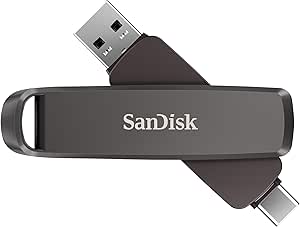 | Best Premium High-Capacity Pick | Storage capacity: 2 TB | Connectors: USB Type-C and USB Type-A | Interface: USB 3.2 Gen 2 | VIEW LATEST PRICE | See Our Full Breakdown |
| SanDisk Ultra Luxe 512GB USB-A Flash Drive |  | Best Metal-Cased 512GB Pick | Storage capacity: 512 GB | Interface: USB 3.2 Gen 1 | Connector: USB Type-A | VIEW LATEST PRICE | See Our Full Breakdown |
| Lexar JumpDrive A30E USB 3.2 Gen 1 Flash Drive, 128GB, 2-Pack |  | Best Multi-Drive Set | Capacity per drive: 128 GB | Pack quantity: 2 | Interface: USB 3.2 Gen 1 | VIEW LATEST PRICE | See Our Full Breakdown |
| Lexar JumpDrive S80 512GB USB 3.2 Gen 1 Flash Drive |  | Best Retractable 512GB Value | Storage capacity: 512 GB | Interface: USB 3.2 Gen 1 | Connector: USB Type-A | VIEW LATEST PRICE | See Our Full Breakdown |
| PNY Attaché X 256GB USB 3.2 Gen 1 Flash Drive |  | Best Capless Mid-Capacity Pick | Storage capacity: 256 GB | Interface: USB Type-A, USB 3.2 Gen 1 | Read speed: Up to 130 MB/s | VIEW LATEST PRICE | See Our Full Breakdown |
| SanDisk Ultra 512GB USB-A Flash Drive |  | Best for Large USB-A Libraries | Storage capacity: 512 GB | Interface: USB 3.0 | Connector: USB Type-A | VIEW LATEST PRICE | See Our Full Breakdown |
| Gigastone 256GB Dual USB Flash Drive, USB Type-A and Type-C |  | Best for Switching Between USB-A and USB-C | Storage capacity: 256 GB | Connectors: USB Type-A and USB Type-C | Interface: USB 3.2 Gen 1 | VIEW LATEST PRICE | See Our Full Breakdown |
| SANKESU 1TB Dual USB-A and USB-C Flash Drive, USB 3.2 Gen 1 |  | Best for Maximum Capacity and Dual-Device Transfers | Storage capacity: 1 TB | Interface and connectors: USB 3.2 Gen 1, USB Type-A, USB Type-C | Read speed: Up to 400 MB/s | VIEW LATEST PRICE | See Our Full Breakdown |
| Aiibe 128GB USB 2.0 Flash Drive |  | Best for Basic, Infrequent File Storage | Storage capacity: 128 GB | Interface: USB 2.0 | Connector: USB Type-A | VIEW LATEST PRICE | See Our Full Breakdown |
| OG O2G Flash 512GB USB-C and USB-A Flash Drive |  | Best for Phone-to-Computer Transfers | Storage capacity: 512 GB | Interface: USB 3.0 | Connectors: USB Type-A and USB Type-C | VIEW LATEST PRICE | See Our Full Breakdown |
| SanDisk Ultra Flair 512GB USB-A Flash Drive |  | Best for USB-A Read Speed | Capacity: 512 GB | Connector: USB Type-A | Interface: USB 2.0 and USB 3.0 | VIEW LATEST PRICE | See Our Full Breakdown |
| myemuun 2-Pack 128GB USB-C and USB-A Flash Drives |  | Best for Split Storage | Total storage capacity: 256 GB (2 × 128 GB) | Connectors: USB-C and USB-A | Interface: USB 2.0 | VIEW LATEST PRICE | See Our Full Breakdown |
| PNY Turbo Attaché 3 128GB USB 3.0 Flash Drive, 2-Pack |  | Best for Simple Computer Backups | Storage capacity: 128 GB per drive | Pack size: 2 drives | Interface: USB 3.0 | VIEW LATEST PRICE | See Our Full Breakdown |
| Lexar D40E 256GB Dual USB 3.2 Gen 1 Flash Drive |  | Best for Compact Dual-Connector Storage | Storage capacity: 256 GB | Connectors: USB Type-A and USB Type-C | Interface: USB 3.2 Gen 1 | VIEW LATEST PRICE | See Our Full Breakdown |
| large capacity USB flash drife | Interface | Read speed | Storage capacity | Write speed |
|---|---|---|---|---|
| Marryler 230GB USB 2.0 Flash D | USB 2.0 | — | 230 GB | — |
| SanDisk Extreme PRO Dual Drive | USB 3.2 Gen 2 | Up to 1,000 MB/s | 2 TB | Up to 900 MB/s |
| SanDisk Ultra Luxe 512GB USB-A | USB 3.2 Gen 1 | Up to 400 MB/s | 512 GB | 80 MB/s |
| Lexar JumpDrive A30E USB 3.2 G | USB 3.2 Gen 1 | Up to 100 MB/s | — | — |
| Lexar JumpDrive S80 512GB USB | USB 3.2 Gen 1 | 150 MB/s | 512 GB | 60 MB/s |
| PNY Attaché X 256GB USB 3.2 Ge | USB Type-A, USB 3.2 Gen 1 | Up to 130 MB/s | 256 GB | Not specified |
| SanDisk Ultra 512GB USB-A Flas | USB 3.0 | Up to 130 MB/s | 512 GB | 40 MB/s |
| Gigastone 256GB Dual USB Flash | USB 3.2 Gen 1 | Up to 100 MB/s | 256 GB | Up to 40 MB/s |
| SANKESU 1TB Dual USB-A and USB | — | Up to 400 MB/s | 1 TB | Up to 400 MB/s |
| Aiibe 128GB USB 2.0 Flash Driv | USB 2.0 | 25 MB/s | 128 GB | 12 MB/s |
| OG O2G Flash 512GB USB-C and U | USB 3.0 | — | 512 GB | — |
| SanDisk Ultra Flair 512GB USB- | USB 2.0 and USB 3.0 | Up to 150 MB/s | — | — |
| myemuun 2-Pack 128GB USB-C and | USB 2.0 | 20 MB/s | — | — |
| PNY Turbo Attaché 3 128GB USB | USB 3.0 | Up to 100 MB/s | 128 GB per drive | — |
| Lexar D40E 256GB Dual USB 3.2 | USB 3.2 Gen 1 | Up to 100 MB/s | 256 GB | Up to 80 MB/s |
More Details on Our Top Picks
Marryler 230GB USB 2.0 Flash Drive with Keychain
The Marryler’s appeal is its 230GB capacity in a tiny metal body that can attach to a keychain, making it easier to keep everyday files close at hand. It suits buyers who value simple USB-A plug-and-play use over fast transfers. That tradeoff is clear beside the USB 3.2 Gen 1 Lexar JumpDrive S80: the Lexar lists a faster interface and 150 MB/s reads, while this drive uses USB 2.0 and lists 40 MB/s writes. The keychain format is more convenient for carrying, but its speed is a weaker fit for frequent transfers of large video collections. Its waterproof, shockproof, and dustproof protection is described by the product, though it should not replace a backup. Choose it for portable storage and broad Type-A compatibility; skip it if speed is a priority.
Pros:- 230GB capacity in a compact metal design
- Keychain attachment makes it easy to carry
- Plug-and-play USB Type-A connection
- Described as waterproof, shockproof, and dustproof
Cons:- USB 2.0 is slower than the USB 3.2 Gen 1 drives in this lineup
- Listed 40 MB/s write speed may make large transfers time-consuming
Best for: People who want a compact USB-A drive attached to keys for carrying documents, photos, and occasional media files.
Not ideal for: People who regularly move large video libraries or need fast transfers, since it uses USB 2.0 and lists 40 MB/s write speed.
- Storage capacity:230 GB
- Interface:USB 2.0
- Connector:USB Type-A
- Listed write speed:40 MB/s
- Material and color:Metal, silver
- Design:Compact body with keychain attachment
- Protection described:Waterproof, shockproof, and dustproof
Our verdict“Choose the Marryler if keychain-ready portability matters more than transfer speed; choose the Lexar JumpDrive S80 for faster listed reads.”
SanDisk Extreme PRO Dual Drive 2TB USB-C and USB-A Flash Drive
For buyers who need both a large archive and fast movement between devices, the SanDisk Extreme PRO combines 2TB of capacity with USB-C and USB-A connectors. Its listed speeds—up to 1,000 MB/s read and 900 MB/s write—set it apart from the 512GB SanDisk Ultra Luxe, whose listed read speed is up to 400 MB/s. The dual connectors also make this a more flexible handoff drive for compatible phones, tablets, and computers than the Ultra Luxe’s USB-A-only design. That flexibility comes with limits: the host needs a matching port, and app-based backup and file management require a SanDisk download. Its metal construction and 128-bit AES encryption add useful protection options, but this is more drive than casual document storage requires.
Pros:- Large 2TB capacity for substantial file libraries
- USB-C and USB-A connectors support transfers across compatible device types
- Listed read speeds up to 1,000 MB/s and write speeds up to 900 MB/s
- Metal design and 128-bit AES encryption
Cons:- App-based backup and file management require a SanDisk app download
- Devices must have a compatible USB-C or USB-A port
- Its high-capacity, high-speed feature set may be unnecessary for light storage needs
Best for: Creative professionals and power users moving large video, photo, or project libraries between compatible USB-C and USB-A devices.
Not ideal for: People who only store occasional documents or use devices without USB-C or USB-A ports; its capacity and speed advantages may go unused.
- Storage capacity:2 TB
- Connectors:USB Type-C and USB Type-A
- Interface:USB 3.2 Gen 2
- Read speed:Up to 1,000 MB/s
- Write speed:Up to 900 MB/s
- Encryption:128-bit AES
- Design:Metal
- Dimensions:3.54 × 0.8 × 0.51 in
Our verdict“Pick this SanDisk when you need the lineup’s strongest combination of listed capacity, speed, and USB-C/USB-A flexibility.”
SanDisk Ultra Luxe 512GB USB-A Flash Drive
The SanDisk Ultra Luxe is a good match for buyers who want 512GB in a cast-metal USB-A drive rather than a retractable plastic design. Its listed read speed of up to 400 MB/s is substantially higher than the Lexar JumpDrive S80’s 150 MB/s, while the Lexar offers a retractable connector and lists a 60 MB/s write speed. The Ultra Luxe’s own listed write speed is 80 MB/s, so it can suit regular file access, though the read figure alone does not tell the whole story for copying files onto it. Optional 128-bit AES password protection adds a security option, but requires downloadable software. It has half the capacity of the 2TB SanDisk Extreme PRO, so it fits a smaller archive rather than a large, growing media collection.
Pros:- 512GB capacity in a cast-metal casing
- Listed read speed up to 400 MB/s
- Listed write speed of 80 MB/s
- Optional 128-bit AES password protection
Cons:- USB Type-A connector does not directly suit USB-C-only devices
- Password protection requires a software download
- Usable storage is less than the stated capacity
Best for: USB-A users who want a durable-feeling metal casing, 512GB of storage, and fast listed read access for frequently opened files.
Not ideal for: People who need more than 512GB, a USB-C connector, or built-in password protection without downloading software.
- Storage capacity:512 GB
- Interface:USB 3.2 Gen 1
- Connector:USB Type-A
- Read speed:Up to 400 MB/s
- Write speed:80 MB/s
- Material and color:Cast metal, silver
- Encryption:Optional 128-bit AES password protection; software download required
- Dimensions:1.57 × 0.62 × 0.23 in
Our verdict“Choose the Ultra Luxe for a metal 512GB USB-A drive with faster listed reads than the Lexar S80, but look to the SanDisk Extreme PRO for more capacity or USB-C.”
Lexar JumpDrive A30E USB 3.2 Gen 1 Flash Drive, 128GB, 2-Pack
The A30E is the practical choice when two separate drives matter more than putting the most storage on one stick. Each drive holds 128GB, giving buyers a pair for dividing work and personal files or keeping one as a spare. That arrangement differs from the Lexar JumpDrive S80, which packs 512GB onto a single drive and lists faster reads at up to 150 MB/s. The A30E lists reads up to 100 MB/s, so it is better suited to everyday transfers than frequent movement of large media projects. A push-button retractable connector avoids a loose cap, and DataShield offers password-protected storage with auto-encryption. The USB-A-only connector may need an adapter for newer devices, and actual transfer performance varies by host and use.
Pros:- Two 128GB drives support separate storage or a spare
- Listed read speeds up to 100 MB/s
- Push-button retractor and lanyard loop
- DataShield offers password-protected storage with auto-encryption
Cons:- Each drive has less capacity than the 512GB Lexar JumpDrive S80
- USB Type-A may require an adapter for devices without a Type-A port
- Actual transfer performance varies by host device, interface, and use
Best for: People who want two separate USB-A drives for splitting files, sharing projects, or keeping a spare available.
Not ideal for: Buyers who need 512GB or more on one drive, rely on USB-C-only devices, or routinely transfer large files at higher speeds.
- Capacity per drive:128 GB
- Pack quantity:2
- Interface:USB 3.2 Gen 1
- Connector:USB Type-A
- Read speed:Up to 100 MB/s
- Connector design:Push-button retractor
- Security:Lexar DataShield password-protected storage with auto-encryption
- Weight:7.41 g
Our verdict“Choose the A30E two-pack if you value split storage and a spare drive over the higher single-drive capacity of the Lexar S80.”
Lexar JumpDrive S80 512GB USB 3.2 Gen 1 Flash Drive
The Lexar JumpDrive S80 puts 512GB on one compact USB-A drive and pairs it with a retractable connector, which helps protect the plug from everyday dust and wear without requiring a cap. Its listed read speed of 150 MB/s is more modest than the SanDisk Ultra Luxe’s up-to-400 MB/s read figure, but the S80 adds a listed write speed of 60 MB/s and 256-bit AES encryption through downloadable security software. Compared with the two-drive Lexar A30E set, the S80 is simpler for keeping a larger library in one place; the A30E is more useful when separate drives or a spare matter. USB-A limits direct use with USB-C-only devices, and the security tools require a download.
Pros:- 512GB capacity on one drive
- Retractable connector helps protect against dust and everyday wear
- Listed read speed of 150 MB/s and write speed of 60 MB/s
- Downloadable security software supports 256-bit AES encryption
Cons:- USB Type-A connector may not fit USB-C-only devices
- Listed read speed is lower than the SanDisk Ultra Luxe’s up-to-400 MB/s
- Encryption features require a software download
Best for: USB-A users who want a single 512GB drive with a retractable connector for carrying a large collection of files.
Not ideal for: People who need USB-C connectivity, faster listed reads than 150 MB/s, or security features that work without downloaded software.
- Storage capacity:512 GB
- Interface:USB 3.2 Gen 1
- Connector:USB Type-A
- Read speed:150 MB/s
- Write speed:60 MB/s
- Connector design:Retractable
- Encryption:256-bit AES through downloadable security software
- Warranty:3-year limited
Our verdict“Pick the S80 for a single retractable 512GB USB-A drive; choose the SanDisk Ultra Luxe if higher listed read speed matters more.”
PNY Attaché X 256GB USB 3.2 Gen 1 Flash Drive
The PNY Attaché X makes sense for buyers who want 256GB in a simple USB-A drive without carrying a loose cap. Its sliding collar covers the connector, while the listed read speed of up to 130MB/s suits everyday file access and transfers on compatible ports. Compared with the SanDisk Ultra 512GB, it offers half the capacity and no stated write speed, so it is a weaker choice for large libraries or buyers who need clearer transfer expectations. It does, however, provide more room than the Aiibe 128GB and uses a newer USB interface. The main tradeoff is straightforward: this is a portable, practical drive, not a dual-connector option or a model with a specified write rate.
Pros:- 256GB capacity for a broad mix of documents and media
- Read speeds listed up to 130MB/s
- Sliding collar protects the connector without a separate cap
- Compatible with USB 2.0 ports as well as newer USB-A connections
Cons:- Write speed is not specified
- USB Type-A only, so USB-C devices need an adapter
- Transfers may be slower on earlier-generation USB ports
Best for: PC and Mac users with USB-A ports who want 256GB for documents, media, and routine file transfers in a capless design.
Not ideal for: People moving very large files regularly, needing USB-C connectivity, or wanting a stated write speed before choosing.
- Storage capacity:256 GB
- Interface:USB Type-A, USB 3.2 Gen 1
- Read speed:Up to 130 MB/s
- Write speed:Not specified
- Compatibility:PC and Mac computers with USB Type-A ports; backward compatible with USB 2.0
- Color:Black and gray
- Design:Lightweight sliding collar
Our verdict“Choose the PNY Attaché X if you want a capless 256GB USB-A drive for everyday storage, but pick the SanDisk Ultra 512GB for twice the space.”
SanDisk Ultra 512GB USB-A Flash Drive
For buyers whose priority is fitting a large collection onto one stick, the SanDisk Ultra offers 512GB of capacity—double the space of the PNY Attaché X and Gigastone 256GB. Its USB 3.0 connection lists reads up to 130MB/s and writes at 40MB/s, giving shoppers more transfer information than the PNY, whose write speed is unspecified. The drive also supports 128-bit AES password protection, which can help safeguard files when used with the required software. That added protection is not built-in plug-and-play simplicity: users must download the software, and actual speeds depend on the host device. It is a strong fit for a sizable USB-A archive, but not for people who need USB-C access or want a connector designed for phones.
Pros:- 512GB capacity for larger file libraries
- Read speeds listed up to 130MB/s and write speed listed at 40MB/s
- Supports 128-bit AES password protection
- Backward compatible with USB 2.0
Cons:- Password protection requires a software download
- USB-A connector limits direct use with many newer phones and tablets
- Actual transfer speeds can be lower depending on the host device
Best for: USB-A computer users keeping large photo, video, or work-file collections on one drive, especially those who want optional password protection.
Not ideal for: People who transfer files between USB-C phones and computers, or who want password protection without downloading software.
- Storage capacity:512 GB
- Interface:USB 3.0
- Connector:USB Type-A
- Read speed:Up to 130 MB/s
- Write speed:40 MB/s
- Encryption:128-bit AES password protection; software required
- Warranty:Five-year limited warranty
Our verdict“Pick the SanDisk Ultra if a large USB-A archive and optional software-based password protection matter more than dual-connector convenience.”
Gigastone 256GB Dual USB Flash Drive, USB Type-A and Type-C
The Gigastone’s clearest advantage is its USB-A and USB-C connectors: it can move files between compatible older computers and newer phones or tablets without making an adapter part of the plan. At 256GB, it matches the PNY Attaché X for capacity, while its listed read and write speeds—up to 100MB/s and 40MB/s—make transfer expectations more explicit. Those figures are lower on read than the PNY’s listed 130MB/s, so choose this for connector flexibility rather than the fastest stated reads. Its protective claims and five-year limited warranty add reassurance for a drive that may travel between devices. The head cap is the practical compromise: unlike the PNY’s sliding collar, it is a separate piece to keep track of.
Pros:- USB Type-A and USB Type-C connectors support transfers across compatible devices
- 256GB capacity for photos, videos, and other files
- Read and write speeds are both specified
- Listed dust-proof, magnetic-proof, shockproof, and water-resistant features
Cons:- Listed read speed is lower than the PNY Attaché X’s maximum
- Separate head cap can be misplaced
- Capacity is half that of the SanDisk Ultra 512GB
Best for: People who regularly transfer files between USB-C phones or tablets and USB-A computers and want one 256GB drive for both.
Not ideal for: Buyers who want a capless design, higher listed read speed, or more than 256GB of storage.
- Storage capacity:256 GB
- Connectors:USB Type-A and USB Type-C
- Interface:USB 3.2 Gen 1
- Read speed:Up to 100 MB/s
- Write speed:Up to 40 MB/s
- Compatibility:USB 2.0, USB 3.0, and USB 3.1 devices
- Additional features:Dust-proof, magnetic-proof, shockproof, and water-resistant
- Warranty:Five-year limited warranty
Our verdict“Choose the Gigastone if two connector types matter more than maximum capacity or a capless design.”
SANKESU 1TB Dual USB-A and USB-C Flash Drive, USB 3.2 Gen 1
The SANKESU stands apart in this group by pairing 1TB of storage with USB-A and USB-C connectors. That capacity is twice the SanDisk Ultra’s 512GB and four times the 256GB PNY and Gigastone models, making it the strongest fit for consolidating a large media or project library on one drive. The listing claims read and write speeds up to 400MB/s, far above the stated figures for the other products here, but those are maximums that can vary by device; buyers should not treat them as guaranteed everyday performance. Plug-and-play use and integrated covers support quick sharing between compatible devices, and a PU leather case is included. Its tradeoff is dependence on suitable ports, with no stated encryption or detailed speed conditions.
Pros:- 1TB capacity exceeds the other drives in this five-product group
- USB-A and USB-C connectors support transfers between compatible device types
- Read and write speeds are listed up to 400MB/s
- Includes integrated protective covers and a PU leather case
Cons:- Listed maximum speeds may vary by device and are not guaranteed transfer rates
- Compatibility depends on having a suitable USB-A or USB-C port
- No encryption feature is listed
Best for: People with compatible USB-A and USB-C devices who need a single portable drive for a very large media, work, or backup library.
Not ideal for: Buyers who need verified sustained transfer performance, built-in file encryption, or a drive for devices without a suitable USB-A or USB-C port.
- Storage capacity:1 TB
- Interface and connectors:USB 3.2 Gen 1, USB Type-A, USB Type-C
- Read speed:Up to 400 MB/s
- Write speed:Up to 400 MB/s
- Compatible systems:Windows, Android, Linux, Mac OS
- Compatible devices:iPhone 15/16 series, Android phones, iPads, laptops, desktop computers, PS4, Mac, and Smart TV
- Dimensions:2.5 × 0.33 × 0.79 in
- Included accessory:PU leather case
Our verdict“Choose the SANKESU when 1TB capacity and USB-A/USB-C sharing are the priorities, while treating its listed maximum speeds as device-dependent.”
Aiibe 128GB USB 2.0 Flash Drive
The Aiibe is the simplest, lowest-capacity option here: 128GB with USB 2.0 and a retractable connector. That capacity can still hold a useful collection of documents, photos, or music, but it is half the PNY Attaché X’s 256GB and a quarter of the SanDisk Ultra’s 512GB. Its listed 25MB/s read and 12MB/s write speeds make it a better match for occasional transfers than frequent movement of large video files. The capless retractable design also avoids the loose cap found on the Gigastone, while plug-and-play setup keeps routine use straightforward. I would choose it for basic storage on older USB-A equipment, not as a performance-oriented large-capacity drive or a convenient phone-to-computer bridge.
Pros:- 128GB capacity for basic file storage and transfers
- Retractable connector protects the plug without a separate cap
- Plug-and-play setup requires no software installation
- Compatibility includes Windows, Mac OS, Linux, Unix, and USB 1.1/2.0 ports
Cons:- USB 2.0 connectivity is older than the USB 3.x interfaces on the PNY and Gigastone
- Listed write speed is 12MB/s, making large transfers slower
- Lower capacity than the 256GB and 512GB options in this group
Best for: Budget-conscious users with USB-A computers or compatible devices who need 128GB for occasional backups, photos, or documents.
Not ideal for: People storing a large media library, transferring large files often, or using USB-C devices without an adapter.
- Storage capacity:128 GB
- Interface:USB 2.0
- Connector:USB Type-A
- Read speed:25 MB/s
- Write speed:12 MB/s
- Weight:7 g
- Dimensions:2.6 × 0.8 × 0.4 in
- Default format:exFAT
- Compatibility:Windows, Mac OS, Linux, Unix, USB 2.0 and 1.1 ports
Our verdict“Choose the Aiibe for occasional, basic storage on USB-A devices, but step up to the PNY or SanDisk if capacity or transfer speed matters more.”
OG O2G Flash 512GB USB-C and USB-A Flash Drive
The OG O2G Flash pairs 512GB of storage with both USB-C and USB-A connectors, so compatible phones and tablets can share files directly with computers without an adapter. Its OTG support also lets users manage files on supported mobile devices, a useful distinction from the USB-A-only SanDisk Ultra Flair. A zinc alloy housing is described as shockproof, dustproof, and heat-resistant, adding a sturdy feel for portable backups. The tradeoff is that the listing gives no transfer-speed figure and specifies only USB 3.0, so buyers cannot gauge how quickly large video libraries will move. This makes more sense for cross-device convenience than for speed-focused transfers; check that your phone supports OTG before choosing it.
Pros:- 512GB capacity accommodates substantial photo, video, and document collections.
- USB-C and USB-A connectors support transfers across compatible newer and older devices.
- OTG support enables file management on compatible phones and tablets.
- Zinc alloy housing is described as shockproof, dustproof, and heat-resistant.
Cons:- No read or write speed is specified, making transfer performance hard to compare.
- Compatibility depends on the device supporting the relevant connector and, for mobile use, OTG.
Best for: Android phone and tablet owners who need to move large files between compatible USB-C mobile devices and USB-A computers.
Not ideal for: Buyers who prioritize documented transfer speeds or whose mobile devices lack OTG support.
- Storage capacity:512 GB
- Interface:USB 3.0
- Connectors:USB Type-A and USB Type-C
- Compatible devices:Compatible Android phones, tablets, laptops, and desktop computers
- Mobile file support:OTG support
- Housing material:Zinc alloy
- Additional features:Plug and play
- Color:Black
Our verdict“Choose this 512GB drive if direct USB-C-to-USB-A file sharing matters more than having published speed figures.”
SanDisk Ultra Flair 512GB USB-A Flash Drive
The SanDisk Ultra Flair is a straightforward pick for buyers who want 512GB on a USB-A drive and a stated read speed of up to 150 MB/s. That published figure gives shoppers a clearer performance reference than the OG O2G Flash, which lists no speed, though the SanDisk’s maximum requires a USB 3.0 port. Its metal casing suits frequent carry, while downloadable software adds 128-bit AES password protection for supported files. The main limitation is its single USB-A connector: unlike the Lexar D40E, it cannot plug directly into a USB-C-only phone or computer. The listed write speed is 4 MB/s and varies by capacity, so buyers moving large files onto the drive should not assume its read speed describes both directions.
Pros:- 512GB capacity provides room for large media and backup collections.
- Read speeds are listed up to 150 MB/s when connected through USB 3.0.
- Metal casing is suited to regular portable use.
- Optional 128-bit AES password protection is available through downloadable software.
Cons:- USB-A-only design does not connect directly to USB-C-only devices.
- The listed 4 MB/s write speed varies by capacity and may be a bottleneck for large transfers.
- Password protection requires downloading software.
Best for: USB-A computer users who want a 512GB drive with a stated read-speed ceiling and optional password protection.
Not ideal for: People who need direct USB-C connectivity or routinely write large files and need a clearly specified fast write rate.
- Capacity:512 GB
- Connector:USB Type-A
- Interface:USB 2.0 and USB 3.0
- Read speed:Up to 150 MB/s
- Listed write speed:4 MB/s; varies by capacity
- Casing:Metal
- Password protection:128-bit AES encryption; software download required
- Dimensions:0.3 × 1.7 × 0.5 in (D × W × H)
- Operating system compatibility:Windows 7–10 and macOS X 10.9 or later
Our verdict“Pick the Ultra Flair for high-capacity USB-A storage with a published read-speed figure, not for direct phone connectivity or fast writes.”
myemuun 2-Pack 128GB USB-C and USB-A Flash Drives
This set supplies two separate 128GB drives, giving buyers 256GB total while making it easy to keep work and personal files apart or carry a second copy. Both drives have USB-C and USB-A connectors, a flexibility the USB-A-only PNY Turbo Attaché 3 pair does not offer. The tradeoff is capacity per drive: neither stick matches the single-drive 512GB options such as the SanDisk Ultra Flair, so large libraries may need to be divided. The USB 2.0 interface and listed 20 MB/s read speed also make this less suited to frequent transfers of bulky video files than the USB 3.0 PNY pair. Plug-and-play operation and a compact, shockproof design favor simple everyday backups, but compatibility still depends on available ports.
Pros:- Two drives provide separate storage and backup options.
- USB-C and USB-A connectors support compatible devices without an adapter.
- Plug-and-play operation requires no software or drivers.
- Compact, lightweight design is described as shockproof.
Cons:- USB 2.0 and the listed 20 MB/s read speed limit its appeal for frequent large transfers.
- Each drive holds 128GB, less than the 256GB or 512GB single-drive choices in the roundup.
- Usability depends on the device having a compatible USB-C or USB-A port.
Best for: People who want two independently managed 128GB drives for separating files, sharing data, or keeping a second copy.
Not ideal for: Users who need one large-capacity drive or expect to transfer large media collections quickly.
- Total storage capacity:256 GB (2 × 128 GB)
- Connectors:USB-C and USB-A
- Interface:USB 2.0
- Read speed:20 MB/s
- Colors:Black and blue
- Special feature:Shockproof
- Items included:2 flash drives
- Operation:Plug and play
Our verdict“Choose this pair if separate, cross-device 128GB storage matters more than speed or keeping your full collection on one drive.”
PNY Turbo Attaché 3 128GB USB 3.0 Flash Drive, 2-Pack
The PNY Turbo Attaché 3 two-pack is aimed at buyers who prefer two familiar USB-A drives over a single high-capacity stick. Each drive holds 128GB, for 256GB across the pack, and the USB 3.0 interface lists read speeds up to 100 MB/s. That makes it a better fit for routine computer transfers than the USB 2.0 myemuun pair, though the PNY lacks its USB-C connector for direct mobile use. A sliding collar protects the connector without a loose cap, which is handy when the drives travel in a bag. Compatibility with USB 2.0 devices is useful, but those connections run at USB 2.0 speeds. Write speed is not specified, so I would not choose it based on expectations for fast backups to the drive.
Pros:- Two 128GB drives provide 256GB total across separate storage devices.
- USB 3.0 supports listed read speeds up to 100 MB/s.
- Sliding collar protects the connector without a separate cap.
- Backward compatible with USB 2.0 devices.
Cons:- USB-A connectors do not plug directly into USB-C-only devices.
- USB 2.0 connections operate at slower USB 2.0 speeds.
- Write speed is not specified.
Best for: PC and Mac owners who want two portable USB-A drives for organizing or duplicating everyday files.
Not ideal for: USB-C-only device owners or buyers who need a single drive above 128GB or a stated write speed.
- Storage capacity:128 GB per drive
- Pack size:2 drives
- Interface:USB 3.0
- Connector:USB Type-A
- Read speed:Up to 100 MB/s
- Design:Sliding collar, cap-less
- Compatibility:Compatible PC and Mac laptops and desktops
- Backward compatibility:USB 2.0 devices; operates at USB 2.0 speeds
- Color:Silver
Our verdict“Choose the PNY pair for practical USB-A computer storage and a cap-free design, but look elsewhere for USB-C access or a single larger drive.”
Lexar D40E 256GB Dual USB 3.2 Gen 1 Flash Drive
The Lexar D40E offers a practical middle ground for buyers who want USB-C and USB-A access but do not need the 512GB capacity of the OG O2G Flash or SanDisk Ultra Flair. Its 256GB capacity suits a sizable working collection, and the 360-degree swivel design switches between connectors without a separate cap. The stated speeds—up to 100 MB/s read and 80 MB/s write—give a clearer picture of transfers than the OG O2G listing, though actual results vary with the host and conditions. A metal enclosure and included security software with 256-bit AES encryption add useful protection features. The tradeoff is lower capacity than the 512GB picks, and its 0–50°C operating range is a defined limit for storage use. It fits mixed-device users better than those seeking maximum capacity per drive.
Pros:- USB Type-A and USB Type-C connectors support a range of compatible devices.
- Up to 100 MB/s read and 80 MB/s write speeds are listed.
- 360-degree swivel design avoids a separate cap.
- Metal enclosure and 256-bit AES security software add useful protection features.
Cons:- 256GB capacity is half that of the roundup’s 512GB options.
- Actual transfer speeds vary by host device, interface, and usage conditions.
- Specified operating temperature range is limited to 0–50°C.
Best for: Mobile and computer users who want one compact drive for compatible USB-C and USB-A devices, with stated read and write speeds.
Not ideal for: Buyers who need 512GB or more on one drive, or whose transfer devices and conditions cannot support the listed speeds.
- Storage capacity:256 GB
- Connectors:USB Type-A and USB Type-C
- Interface:USB 3.2 Gen 1
- Read speed:Up to 100 MB/s
- Write speed:Up to 80 MB/s
- Weight:26 g
- Dimensions:70.4 × 16.9 × 11.7 mm
- Security:256-bit AES encryption
- Operating temperature:0–50°C (32–122°F)
Our verdict“Choose the D40E if dual-connector convenience and stated write speed matter more than matching the 512GB capacity picks.”

How We Picked
I ranked these large-capacity USB flash drives by how well their stated capacity, connector options, and interface fit common storage needs. Higher capacity mattered, but I did not treat it as an automatic win: a drive that cannot connect to a buyer’s devices or that is a poor match for frequent large transfers can be less useful than a smaller, more compatible option. I also considered whether the design offers a practical distinction, such as USB-C plus USB-A, a compact carry format, a metal body, or multiple drives in one pack.
The order reflects those tradeoffs rather than capacity alone. The SanDisk Extreme PRO Dual Drive ranks first for its 2TB capacity and two connector types; the 1TB SANKESU is a strong alternative for buyers who want substantial storage with the same broad connector approach. The 512GB options follow as more moderate single-drive choices, while 128GB and 256GB models, USB 2.0 drives, and two-packs rank lower for readers whose main goal is maximum capacity. Product details here are based on the supplied model names and specifications; I do not infer transfer speeds, durability, or compatibility beyond what those details state.
| large capacity USB flash drife | Interface |
|---|---|
| Marryler 230GB USB 2.0 Flash D | USB 2.0 |
| SanDisk Extreme PRO Dual Drive | USB 3.2 Gen 2 |
| SanDisk Ultra Luxe 512GB USB-A | USB 3.2 Gen 1 |
| Lexar JumpDrive A30E USB 3.2 G | USB 3.2 Gen 1 |
| Lexar JumpDrive S80 512GB USB | USB 3.2 Gen 1 |
| PNY Attaché X 256GB USB 3.2 Ge | USB Type-A, USB 3.2 Gen 1 |
| SanDisk Ultra 512GB USB-A Flas | USB 3.0 |
| Gigastone 256GB Dual USB Flash | USB 3.2 Gen 1 |
| SANKESU 1TB Dual USB-A and USB | — |
| Aiibe 128GB USB 2.0 Flash Driv | USB 2.0 |
| OG O2G Flash 512GB USB-C and U | USB 3.0 |
| SanDisk Ultra Flair 512GB USB- | USB 2.0 and USB 3.0 |
| myemuun 2-Pack 128GB USB-C and | USB 2.0 |
| PNY Turbo Attaché 3 128GB USB | USB 3.0 |
| Lexar D40E 256GB Dual USB 3.2 | USB 3.2 Gen 1 |
Factors to Consider When Choosing Large Capacity USB Flash Drives
Capacity labels and connector names are only part of the decision. I would match the drive to the devices and files it must handle, then decide whether convenience, speed class, or having a spare matters more than putting everything on one stick.
Choose Capacity Around Your Largest Transfer
Think about the largest project or folder you expect to carry, not just your typical weekly files. A 128GB drive can be a sensible handoff or document backup, while 512GB gives more room for media libraries and work folders; 1TB and 2TB make sense when consolidating larger collections. Leave headroom rather than filling a drive to its limit, especially if you expect to add files while away from your main computer. A common mistake is choosing the biggest number without checking the actual usable space shown by your operating system, which is usually below the advertised capacity. For exceptionally large archives, compare the cost and convenience of one flash drive with an external SSD or hard drive. If you need to share files with others, ask what capacity their devices can read before committing to an unusually large drive.
Match Connectors to Every Device
USB-A remains common on desktop computers, older laptops, televisions, and workplace equipment, while USB-C appears on many newer laptops, phones, and tablets. A dual-connector drive can reduce the need for adapters, but the connector alone does not guarantee that a phone or tablet supports USB storage. Check the device’s port capabilities, operating system, and file system support before buying. Also check whether a wide drive body could block an adjacent port, particularly on slim laptops or devices with closely spaced connectors. If most transfers happen on one computer, a single-connector model may be simpler than paying for flexibility you will rarely use. For a mixed-device household or work setup, the extra connector can be worth the added design complexity.
Treat Speed Class as a Clue, Not a Guarantee
The interface listed on a product can help separate USB 2.0 models from USB 3.x options, but it does not tell the whole story about real-world copy speed. Actual performance depends on the drive’s internal components, the host port, file size, and whether the transfer involves many small files or a few large ones. A USB 3.x label is most useful when both the drive and the computer support a compatible port; connecting it to an older port can limit performance. If you routinely move large video files, look for independent read and write measurements for the exact model and capacity before deciding. For occasional document storage, a slower interface may be a reasonable tradeoff if low complexity matters more. Avoid assuming that two drives with the same USB generation will perform identically.
Decide Between One Large Drive and a Multi-Pack
One high-capacity drive keeps a library together and reduces the chance of forgetting which stick holds a file. A two-pack can be more useful when you want separate work and personal copies, a handoff drive, or a spare kept in another location. Splitting files across two devices also limits how much data is tied to a single lost or damaged drive, though it adds the work of tracking and updating both. Do not treat a second flash drive as a backup unless you keep it separate and refresh it regularly. Before choosing a pack, check whether each included drive has the capacity you need on its own. Buyers who want a simple carry-all should favor one larger model; buyers who value separation and redundancy may prefer multiple drives.
Check File-System and Device Limits
A drive’s capacity does not guarantee that every computer, television, camera, or console can use it as delivered. Some devices require a particular file system, and older systems may have limits on the size of a single file or the maximum supported drive capacity. Reformatting can solve certain compatibility problems, but it erases existing data and may make the drive unreadable to another device. Check the target device’s storage instructions before formatting, especially when using a large drive with a TV or camera. If files must move between Windows and macOS systems, verify that both can read and write the chosen format. Keep a separate copy of important files before changing a drive’s format.
Set Expectations for Flash-Drive Durability and Security
A keychain loop or metal casing can make a drive easier to carry, but neither proves that it is waterproof, impact-resistant, or suited to long-term archival storage. Flash drives are convenient for moving files, yet they can be lost, damaged, or left unused for extended periods. For important records, keep another copy on a separate storage device or trusted backup service rather than relying on one stick. If the drive will hold sensitive work or personal data, check whether encryption is supported and whether it works with the computers you use. Build a simple routine for safely ejecting the drive and checking that copied files open correctly. Paying more for capacity or a premium-looking shell does not replace a backup plan.
Frequently Asked Questions
Is a 1TB or 2TB flash drive a better choice than a 512GB model?
Choose 1TB or 2TB if you regularly carry large media collections, project folders, or backups and want fewer separate drives. The SanDisk Extreme PRO Dual Drive offers the largest listed capacity in this group, while the SANKESU provides a 1TB option with USB-A and USB-C. A 512GB model may be easier to justify if your files are mostly documents, photos, and smaller work folders. Larger capacity also makes it easier to keep more data on one device, so losing or damaging it could affect more files. Match the capacity to your actual library and keep a second copy of anything you cannot replace.
Will a USB-C and USB-A flash drive work with my phone?
It may, but having a USB-C connector does not by itself guarantee phone compatibility. Your phone must support USB host or external-storage access, and its operating system must be able to read the drive’s file system. Some phones also need a file-manager app or permission setting before the files appear. Check the phone maker’s guidance and confirm the connector orientation and supported capacity before buying. If phone access is essential, verify compatibility for the exact phone model rather than relying on the drive’s connector description alone.
Should I choose USB 2.0 or USB 3.x for storing large files?
For frequent transfers of large folders, a USB 3.x model is generally the more sensible starting point than a USB 2.0 model. In this roundup, the Marryler 230GB and Aiibe 128GB list USB 2.0, while several alternatives list USB 3.x interfaces. The interface label does not provide a guaranteed copy speed, since the drive’s internal performance and the computer’s port also matter. If you mainly store files and rarely move them, USB 2.0 may still meet your needs. For regular video or backup transfers, check independent measurements for the exact model and confirm your computer has a compatible port.
Are two 128GB flash drives better than one 256GB drive?
Two 128GB drives can be better if you want to separate file groups, hand one drive to someone else, or keep a spare in another place. A single 256GB drive is simpler when you want one library in one location and fewer devices to track. A two-pack can also reduce the effect of losing one stick, but only if you distribute files or maintain a useful second copy. Check the capacity of each drive in the pack rather than reading the combined total as one storage volume. For the most straightforward carry-all setup, choose one drive; for separation and flexibility, a pair can make more sense.
Can I use a large-capacity flash drive as my only backup?
I would not rely on a single flash drive as the only copy of important data, regardless of its capacity. A compact drive is easy to misplace, and one device failure could take the entire collection with it. Keep another copy on a separate drive or a trusted backup service, and store at least one copy apart from the device you use daily. Check backups periodically by opening a sample of files, rather than assuming that a successful copy operation means every file is usable. A large-capacity model can make a convenient portable copy, but it should be one part of a backup plan.
Conclusion
For the broadest mix of capacity and connector flexibility, I would choose the SanDisk Extreme PRO Dual Drive 2TB as the best overall pick. The SANKESU 1TB Dual USB-A and USB-C is my value-oriented choice for buyers who want substantial capacity and two connector types without stepping up to 2TB. For a premium-style USB-A option, the SanDisk Ultra Luxe 512GB stands out for its metal construction; for beginners who want a familiar, straightforward USB-A format, the SanDisk Ultra 512GB is the simpler fit. If you need a compact cross-device option, compare the dual-connector drives such as the Lexar D40E 256GB or Gigastone 256GB; if you need separate handoff drives or a spare, the Lexar JumpDrive A30E two-pack or PNY Turbo Attaché 3 two-pack may suit you better. Pick by the devices you will connect, the files you carry, and whether one large drive or multiple smaller ones better matches your routine.