🔍 Read the full analysis: Meta, TikTok And Google Join Forces Over Indonesia’s AI Copyright Proposal on ThorstenMeyerAI.com

Get business pricing on monitors, keyboards and dev gear
- Business-only prices and quantity discounts
- Tax-exempt purchasing
- Multiple users, one account, clear invoices
TL;DR
Meta and TikTok joined Google at a November 11 parliamentary hearing to oppose parts of Indonesia’s proposed copyright law revision. The draft would address payments for news shown by platforms and rules for AI, but its current text is not publicly available and it has not become law.
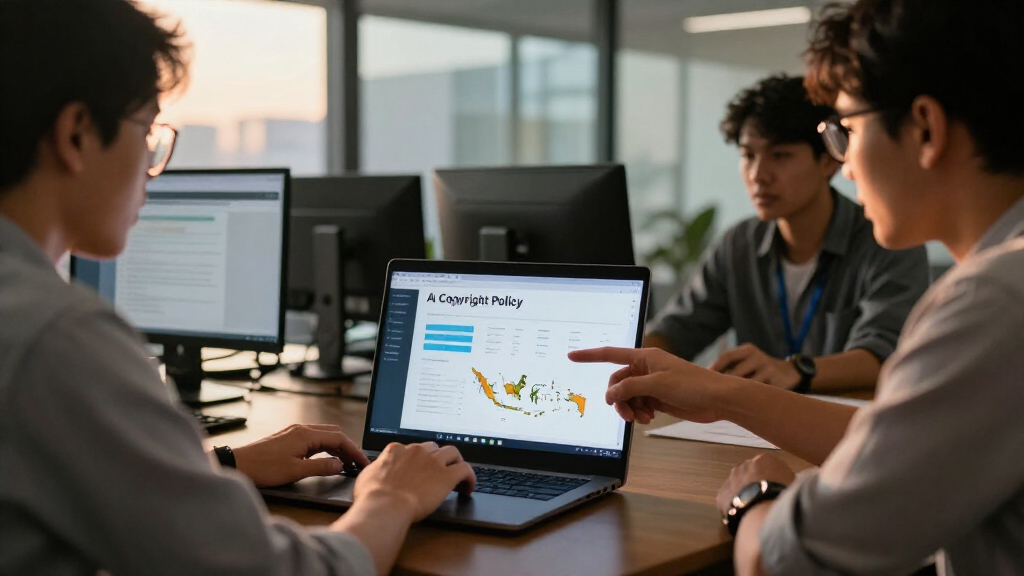
Meta and TikTok joined Google in challenging parts of Indonesia’s proposed copyright law revision at a parliamentary hearing in Jakarta on November 11, according to Reuters and Indonesian news reports. The draft would require platforms to compensate publishers for certain uses of news content and set rules for copyrighted works used to train artificial intelligence systems, but the proposal has not become law.
Parliament’s Legislation Body, known as Baleg, heard from Google, Meta, TikTok, the Press Council and Satu Lisensi Indonesia, according to Kompas. The bill revises Copyright Law No. 28 of 2014. Parliament approved it as an initiative in a plenary session on March 12, 2026, and is now deliberating it with the government. The full version currently under discussion was not available in the source material, and reports refer to different drafts.
Google objected to provisions it said would require payment for news indexing, aggregation and snippets, and opposed a single collective licensing body and mandatory licenses for AI training data. Its representative, Agung Pamungkas, argued that a levy on links could leave Google with “no choice” but to stop crawling, indexing and distributing Indonesian news, Reuters reported. Google also called for safe-harbor protections for platforms and proposed a text-and-data-mining exception with an opt-out such as robots.txt, according to reports from Suara and Kompas.
Meta argued that sharing a link is not the same as republishing an article, and said payment requirements could reduce publishers’ traffic and revenue, according to the source account. TikTok objected to requiring AI-use disclosures when AI only assists with a work and also called for safe-harbor protections. These are the companies’ positions, not findings established by lawmakers.
Platforms challenge copyright bill
Meta, TikTok and Google opposed parts of a proposed copyright law revision at a November 11 parliamentary hearing. The bill is still under discussion, and the current draft is unavailable.
What platforms challenged
The companies raised distinct concerns about news payments, AI rules and platform protections.
News links and AI training
Opposed payment for news links and snippets, a single licensing body and mandatory AI training licenses.
Linking is not republishing
Said payment duties could reduce publishers’ traffic and revenue.
AI assistance disclosures
Objected to disclosure when AI only assists with a work and called for platform safe-harbor protections.
What the proposal could affect
The dispute concerns how news and copyrighted works are used and paid for.
- Payment rules could change commercial terms for news shown on platforms.
- The Press Council says platform referrals to news sites have fallen by up to 70%.
- Training rules could affect access to copyrighted material and creators’ rights.
- The Press Council says platforms take 80% of digital advertising.
Earlier draft, current uncertainty
Reuters described AI provisions in a July draft, which officials said was not final.
It proposed AI disclosure, rules for human involvement, limits on style imitation, and fair-use or licensing terms for training.
Companies, press representatives and licensing groups shared positions with Parliament’s Legislation Body.
Lawmakers are considering the bill with the government; no vote date has been announced.
Who Pays for News and AI
The dispute concerns how money and control over copyrighted material are distributed as platforms display news and developers train AI systems. If the bill requires payment for link previews or other displays, it could change the commercial terms between publishers and technology platforms. The exact obligations and payment mechanism remain uncertain because the current draft text was not available.
The proposal also matters to creators and AI developers. The July draft described by Reuters would address whether works made with AI qualify for copyright protection, whether AI may imitate a creator’s distinctive style, and when AI use must be disclosed. It would place training on copyrighted material under fair-use provisions or licensing agreements. Those provisions could affect both the availability of training material and the rights creators can exercise, although lawmakers may have revised them since July.
The disagreement reflects competing claims about the effects of platform rules. Google says link payments could limit access to news and reduce its ability to distribute local reporting. The Press Council, by contrast, told lawmakers that platforms take 80 percent of digital advertising and that traffic from platforms to news sites has fallen by up to 70 percent, according to the source material. Those figures were presented by the council; the available information does not provide the underlying data or establish that the proposed bill would reverse either trend.
Products Worth Considering

Samsung 27-inch Odyssey OLED G6 QHD Gaming Monitor

LG UltraGear 34G600A-B 34-Inch Curved WQHD Gaming Monitor, 160Hz

Jackery Explorer 300 Portable Power Station with 40W Solar Panel, 292Wh
As an affiliate, we earn on qualifying purchases.
From July Draft to Jakarta Hearing
Reuters reported the proposal’s AI provisions on July 17, citing a draft. Hermansyah Siregar, a law ministry official overseeing intellectual property, confirmed that draft was authentic but said it was not final. He described generative AI as a disruption to the copyright framework and said the proposal would mark explicit recognition of AI in Indonesia’s copyright law.
As described in that July version, AI-assisted works could receive protection if they met a human-involvement test, while fully AI-generated works would not. The draft would require disclosure of AI use and prohibit imitation of a creator’s “distinctive style.” It did not specify how much human contribution would qualify. The July text also proposed compensation for some platform uses of news, including link previews, and sanctions that could include revoking a local business permit. These details are not confirmed as provisions in the current draft.
The bill would add to an existing policy framework. Presidential Regulation No. 32 of 2024 requires digital platforms to support quality journalism. At the November hearing, Press Council deputy chair Totok Suryanto said compliance with that regulation was low and it had not worked as intended, according to Aktual. His assessment is the council’s position; the source material does not provide an independent compliance review.
“The development of generative AI has disrupted the copyright framework.”
— Hermansyah Siregar, a law ministry official overseeing intellectual property, as quoted by Reuters in July
The text lawmakers are now considering has not been obtained in the source material, and reports refer to different versions. The July draft therefore cannot be treated as a definitive account of the provisions before Baleg in November. Reports of article numbers cited by Google are also provisional until the current text can be checked.
It is not clear whether the latest version retains the proposed rules on style imitation, disclosure, human contribution, AI training, collective licensing or sanctions. The bill’s final payment formula, any exceptions for links or snippets, and the scope of safe-harbor protections have not been established. The source material also gives no announced date for a parliamentary vote.
Parliamentary Deliberations Continue
Baleg is deliberating the proposal with the government after hearing from technology companies, press representatives and licensing groups. The immediate next step is further consideration of the bill’s wording; no vote date has been announced in the available reports.
Readers should look for publication of an updated draft and for lawmakers’ responses to the competing positions on news payments, collective licensing, AI training and platform liability. Until the text advances through parliament and its provisions are confirmed, the July draft’s details should be treated as proposals rather than rules that platforms or creators must follow.
Key Questions
Has Indonesia passed the proposed copyright law?
No. Parliament is still deliberating the revision with the government. The source material reports no completed vote or enactment.
What did Meta, TikTok and Google object to?
They challenged different parts of the proposal. Google opposed payments for news links and snippets, a single collective licensing body and mandatory AI-training licenses. Meta argued that linking is not republishing and said payment duties could reduce publisher traffic. TikTok said disclosure rules should not cover AI used only as assistance and called for safe-harbor protections.
What AI rules appeared in the earlier draft?
The July draft described by Reuters proposed rules for AI disclosure, copyright protection for works with qualifying human involvement, restrictions on imitating a creator’s distinctive style, and licensing or fair-use terms for training data. The current draft may differ, and the amount of human involvement required was not specified.
When will lawmakers vote on the bill?
No vote date has been announced in the available source material. Parliamentary deliberations are ongoing.
Source: ThorstenMeyerAI.com