
TL;DR
Open a free Amazon Business account
Business pricing, bulk buying and tax-exempt orders.
As an affiliate, we earn on qualifying purchases.
In 1990, East German researchers successfully ported Unix to their mainframe systems, creating a German-supported version. This development marked a significant step in GDR computing history, with ongoing efforts to expand and improve the system.
In 1990, East German researchers successfully ported Unix to their mainframe systems, creating a German-supported version that supported their research and educational needs. This achievement marked a significant milestone in the GDR’s computing history amid the political and technological transitions of the period.
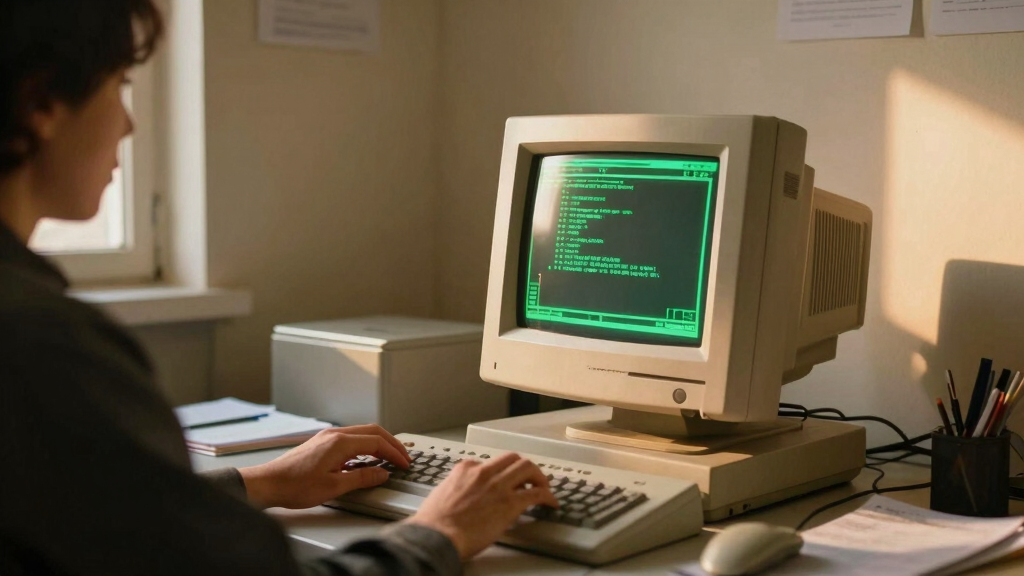
Researchers at the Technical University Karl-Marx-Stadt and other institutions in East Germany developed their own version of Unix, beginning with porting Unix Version 7 to their IBM 360 and 370 mainframes. They built a comprehensive system, including a fully supported German documentation set and tools that allowed both batch and interactive computing. The effort involved translating Unix components into German, adapting the system to support local peripherals, and creating a compiler that could generate IBM 360 assembler code.
Initially, the team used a PDP-11/20 to gain Unix experience and later moved to port Unix onto their mainframes. The process involved significant technical challenges, including porting tools like ‘nroff’ and developing a job scheduler for overnight processing. The porting efforts were supported by collaborations with other institutions such as Leipzig and Jena, and included assistance in adapting Unix to the EBCDIC character set used in their systems.
Why It Matters
This development was a milestone for East German computing, as it provided a native, fully supported Unix environment that could be used for research, education, and system development. It marked a move toward independence from foreign operating systems and fostered local expertise in Unix-based systems. The project also demonstrated the technical capability of GDR researchers to adapt complex software to their hardware and language environment, which had broader implications for technological self-sufficiency in the region.
As an affiliate, we earn on qualifying purchases.
Background
Throughout the 1980s, East German institutions had limited access to Western software and operating systems due to political restrictions. Efforts to develop local computing solutions included adapting existing systems like PSU and porting Unix to their mainframes. The project gained momentum in 1990, as the political landscape was shifting, and technological development was increasingly seen as vital for research and education. Prior to this, the GDR’s computing efforts were primarily focused on batch processing systems and limited multiprogramming environments.
“Our efforts began to bear fruit: the students and staff could work with the same tools both in batch and interactively, the OS and TSO could no longer be seen, and we could start to educate ourselves for the future.”
— Guenther Fischer
“The porting process was challenging but ultimately successful, allowing us to support all peripherals and run the system independently of VM.”
— Matthias Clausz
As an affiliate, we earn on qualifying purchases.
What Remains Unclear
It remains unclear how widely adopted the German-supported Unix system became within East Germany or how it compared to Western Unix variants in terms of stability and performance. Additionally, the long-term sustainability of the project post-reunification and the extent of ongoing development are not yet confirmed.
As an affiliate, we earn on qualifying purchases.
What’s Next
Next steps include further expanding the system’s capabilities, integrating more peripherals, and possibly collaborating with Western institutions following the political changes. Monitoring how the system evolves and whether it influences broader East German computing initiatives will be important.
As an affiliate, we earn on qualifying purchases.
Key Questions
What was the main goal of porting Unix in East Germany?
The primary goal was to develop a fully supported, German-language Unix system that could be used for research and education, reducing reliance on foreign operating systems and fostering local expertise.
How did East German researchers manage to port Unix to their mainframes?
They translated Unix components into German, adapted the system for their hardware and peripherals, and developed a custom compiler to generate IBM 360 assembler code, overcoming significant technical challenges.
What challenges did they face during the porting process?
Major challenges included adapting Unix to the EBCDIC character set, porting essential tools like ‘nroff’, and ensuring the system could support local peripherals and run independently without VM.
Did this Unix port influence other East German computing projects?
Yes, it facilitated the development of local tools, research environments, and educational systems, and served as a basis for further innovations in East German computing before reunification.
Is the German Unix system still in use today?
There is no current information indicating ongoing use; the project was a milestone in 1990, but subsequent developments post-reunification likely shifted focus elsewhere.
Source: Hacker News
Flea & tick season Picks
flea and tick prevention
As an affiliate, we earn on qualifying purchases.