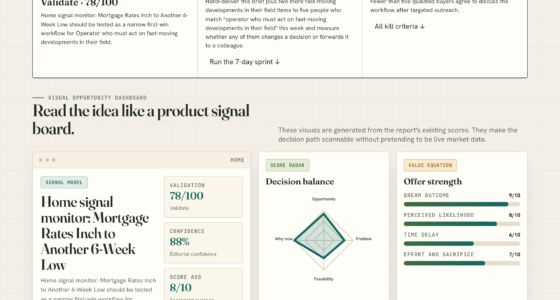

📊 Full opportunity report: The Bottleneck Moved: Inside Anthropic’s Expansion of Project Glasswing on ThorstenMeyerAI.com — validation score, market gap, and execution plan.

Get business pricing on monitors, keyboards and dev gear
- Business-only prices and quantity discounts
- Tax-exempt purchasing
- Multiple users, one account, clear invoices
TL;DR
Anthropic is expanding its cybersecurity initiative, Project Glasswing, from 50 to approximately 150 partners. The focus is shifting from finding vulnerabilities to rapidly verifying, disclosing, and patching them, addressing a new bottleneck in cybersecurity.
Anthropic has expanded its Project Glasswing partnership from 50 to approximately 150 organizations worldwide, shifting the initiative’s focus from vulnerability detection to the critical process of verifying, disclosing, and patching security flaws.
Initially launched in early April, Project Glasswing provided partners access to the Claude Mythos Preview model, which identified over 10,000 high- or critical-severity vulnerabilities across partner codebases. The recent expansion broadens the geographic reach to more than 15 countries and includes sectors such as power, water, healthcare, communications, and hardware. Many new partners are vendors maintaining widely-used codebases, including those relied upon by governments and critical infrastructure. The core aim is to address the new bottleneck in cybersecurity: the downstream process of fixing vulnerabilities after detection. Anthropic emphasizes that the challenge has shifted from finding flaws to verifying, disclosing, and deploying patches swiftly. The company states that its models are now being used to automate patch writing, simulate attacks, and even rewrite legacy software in memory-safe languages, especially targeting open-source projects.The bottleneck moved — from finding flaws to fixing them
50 partners found 10,000+ critical vulnerabilities in weeks. So the constraint is no longer detection — it’s verify, disclose, patch, deploy. Anthropic is expanding Project Glasswing to ~150 organizations, and pivoting its weight toward the new chokepoint.
From 50 partners to ~150 — aimed at the leverage points
Not just more headcount. The new group reaches sectors the first cohort underrepresented, and leans toward vendors whose code sits under thousands of downstream systems.
each must meet Anthropic’s security requirements first
Finding used to be the hard part
For the whole history of the field, detection was the scarce, skilled work — the chokepoint. A model that surfaces 10,000 critical flaws in weeks inverts that. Toggle before/after and watch the bottleneck move.
The defensive pipeline — where the constraint sits
Same five stages. The chokepoint slides downstream.
AI redeployed downstream — and pushed beyond the cohort
Glasswing is consciously shifting its weight from finding toward disclosing, fixing & deploying. The same model helps at the new bottleneck.
Defensive tasks Mythos-class models now take on
Beyond scanning — the work that actually closes the gap.
Writing patches
Partners use the model to fix what it finds — not just flag it.
Pre-release checks
Preventing vulnerabilities from appearing in the first place.
Penetration testing
Simulating attacks to see how a flaw might be exploited.
Rebuilding in memory-safe languages
Attacking whole vulnerability classes at the root.
Claude Security
Uses public frontier models like Claude Opus 4.8 to scan codebases & suggest patches.
The Glasswing tooling
The vuln-finding tools, to trusted security teams — so partners’ methods replicate widely.
Why the urgency is named, not gestured at
The program’s tempo is the tempo of a race against diffusion. Anthropic puts a number on the deadline.
Within 6–12 months, many other labs will have Mythos-class models — and could release them without safeguards.
In that world, cyberattacks could occur much more often, and in much more unpredictable forms. The strategic theory of the whole program: build the defensive head start now, while the capability is still scarce and gated — so when it’s cheap and everywhere, defenders already stand on higher ground.
Capability is scarce & gated
Mythos-class power sits with vetted Glasswing partners under Anthropic’s requirements.
Capability goes ambient
Other labs ship Mythos-class models — possibly ungoverned. The window to prepare closes.
Read it with its difficulties in view
Several are real — some Anthropic states outright, some inherent to the situation. None cancels the core, but all deserve to be held.
Dual use — and the safeguards don’t exist yet
The same capability that finds-and-patches can find-and-exploit. Anthropic says general release needs safeguards that it, and to its knowledge all other developers, have yet to develop. The caution is the clearest evidence of the power.
Gated, even as the logic demands breadth
Advanced defensive capability is allocated by one company’s selection — yet the announcement’s own case is that hundreds of thousands will need access. “Must be gated for safety” sits in tension with “must be widespread to work.”
Not a neutral observer
A frontier lab is at once warning of the danger, helping constitute it, and selling the response (Claude Security, the tooling, the Cyber Verification Program). The warning isn’t wrong — but the commercial frame is worth holding alongside the public-interest one.
Toward a permanent advantage for defenders
Cybersecurity has long been asymmetric in the attacker’s favor — defenders close every hole, attackers need one. The north star is to flip that.
More essential infrastructure
Plus critical-OSS maintainers & safety testers, US & overseas.
Cyber Verification Program
Mythos-class capability for specific cyberdefense tasks — breadth without waiting on full-release safeguards.
Make all software secure
And help the industry adjust how AI changes the core assumptions of cybersecurity.
Reading it in proportion
- The core is hard to argue with: AI made finding cheap & abundant; the bottleneck genuinely moved to patching & deployment; redirecting effort there is sane.
- The caveats sit alongside, not against: one company’s program, one company’s gate, a timeline & products that company has reason to advance — and admittedly-missing release safeguards.
- Hold both halves: the danger is plausible and the 10,000 flaws are real; the response is reasonable and commercially convenient; the aspiration is worthy and unproven.
Shifting the Cybersecurity Bottleneck to Patching and Fixing
This expansion signifies a major shift in cybersecurity strategy, where the focus moves from detection to rapid response and remediation. By leveraging AI models like Mythos Preview to automate patch generation and vulnerability management, Anthropic aims to reduce the time window for potential exploits, which could significantly enhance global security. The inclusion of vendors and critical infrastructure providers increases the potential impact, as fixing vulnerabilities in widely-used code can prevent cascading failures affecting millions. This approach also underscores the importance of AI in transforming traditional security workflows, addressing the previously scarce resource: human verification and patch deployment.
automated vulnerability patching software
As an affiliate, we earn on qualifying purchases.
As an affiliate, we earn on qualifying purchases.
From Vulnerability Discovery to Rapid Patch Deployment
Since April 2024, Anthropic’s Project Glasswing has demonstrated that AI models can identify thousands of vulnerabilities quickly, but the cybersecurity challenge has now shifted to addressing the backlog of fixing these flaws. Historically, detection was the bottleneck, requiring skilled security teams to manually verify and patch issues. With AI surfacing vast numbers of flaws rapidly, the industry faces a new challenge: how to verify, disclose, and deploy patches efficiently. The expansion of Glasswing reflects this shift, emphasizing downstream mitigation rather than upstream detection. The initiative also highlights growing concerns about vulnerabilities in critical infrastructure, open-source software, and vendor-maintained codebases, which serve as points of leverage for widespread security improvements.
“The move from detection to patching marks a fundamental change in how we approach cybersecurity, with AI models now playing a central role in closing the loop.”
— Thorsten Meyer, AI security expert
cybersecurity attack simulation tools
As an affiliate, we earn on qualifying purchases.
As an affiliate, we earn on qualifying purchases.
Unresolved Challenges in Scaling Patching Efforts
It remains unclear how effectively the AI models will perform at scale in real-world patch deployment, especially in complex legacy systems or highly sensitive infrastructure. The logistics of coordinating disclosures and patches across diverse organizations and jurisdictions also pose significant challenges. Additionally, the long-term impact of automating vulnerability fixes on security practices and human oversight is still being evaluated.
memory-safe programming languages for legacy systems
As an affiliate, we earn on qualifying purchases.
As an affiliate, we earn on qualifying purchases.
Next Steps in Scaling and Evaluating Impact
Anthropic plans to continue expanding its partner network and improve AI-driven patching workflows. The company will likely monitor the effectiveness of automated patching and disclosure processes, aiming to refine models for broader deployment. Future milestones include scaling open-source vulnerability management and establishing best practices for responsible disclosure across sectors. Industry observers expect ongoing collaboration with security firms and government agencies to evaluate real-world impact and address emerging challenges.
cybersecurity vulnerability disclosure platform
As an affiliate, we earn on qualifying purchases.
As an affiliate, we earn on qualifying purchases.
Key Questions
Why is the focus shifting from vulnerability detection to patching?
The bottleneck has moved downstream; detection is now fast and abundant thanks to AI, but verifying, disclosing, and deploying patches remains slow and resource-intensive. Addressing this shift is crucial for reducing the window of opportunity for attackers.
How does AI help in automating patches?
AI models like Mythos Preview can generate patches, simulate attacks to test fixes, and even rewrite legacy code in safer languages, accelerating the entire remediation process.
Who are the new partners in Project Glasswing?
The expansion includes organizations from over 15 countries, with many being vendors maintaining widely-used codebases, including those critical to infrastructure and government systems.
What are the main risks or challenges remaining?
Scaling automated patching across complex and legacy systems, coordinating responsible disclosures, and ensuring patches are effectively deployed without unintended consequences remain significant hurdles.
Source: ThorstenMeyerAI.com
Fall Picks
fall essentials
As an affiliate, we earn on qualifying purchases.