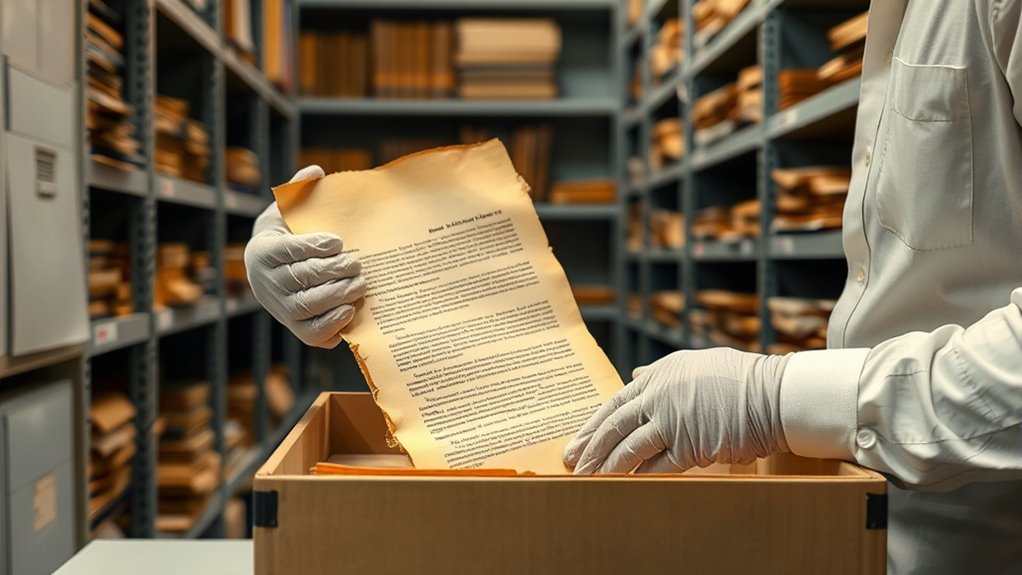

To safely handle and store archival papers, always wash your hands or wear cotton gloves to prevent oils and dirt from damaging fragile surfaces. Support documents fully and avoid touching the surfaces directly, especially with thin or brittle papers. Store items flat in acid-free folders and boxes, and keep environmental conditions stable by monitoring temperature and humidity. Proper handling and storage extend their lifespan, and continuing to learn guarantees you protect your collection effectively.
Key Takeaways
- Always wash hands or wear cotton gloves to prevent oils and dirt transfer when handling documents.
- Support fragile papers with both hands or a padded surface to avoid tearing or bending.
- Store papers flat in acid-free folders and boxes to prevent physical stress and warping.
- Maintain a stable environment with temperature around 65-70°F and humidity of 40-50%.
- Handle documents in well-lit areas and minimize unnecessary contact to reduce damage risk.
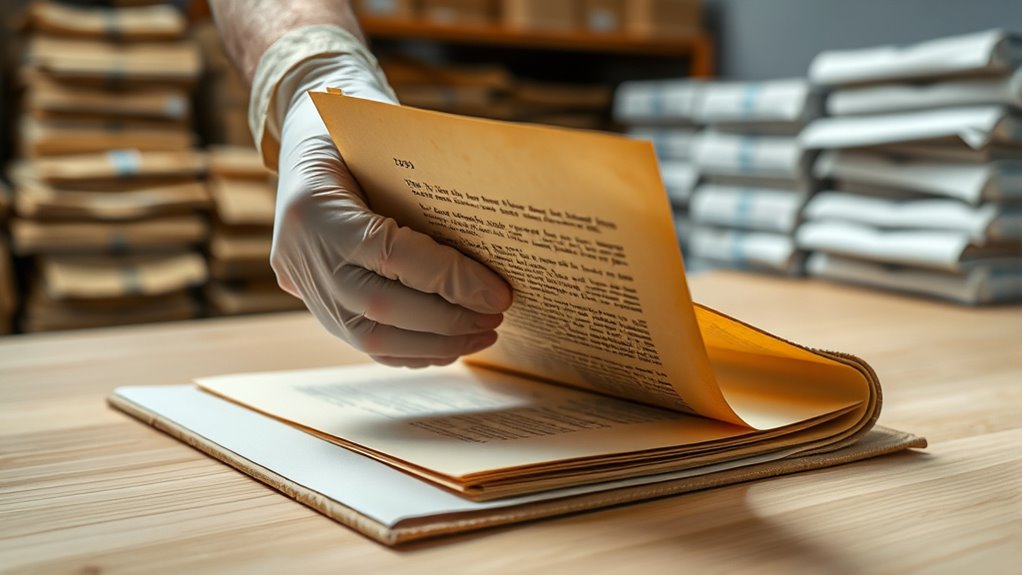
Proper handling and storage are essential to preserving archival papers for future generations. When you work with these valuable documents, you need to be mindful of how you touch and store them to prevent deterioration. One of the most effective ways to do this is by using acid free materials. Acid free folders, boxes, and sleeves help neutralize acids that naturally occur in paper or are introduced through storage materials. These acids can accelerate the aging process, causing papers to become brittle, discolored, or fragile over time. By choosing acid free options, you create a buffer that protects your archival papers from chemical reactions that could compromise their integrity.
In addition to selecting proper storage materials, maintaining environmental controls is vital. You should keep your collection in a climate-controlled environment where temperature and humidity levels are carefully monitored. Ideally, temperatures should stay between 65 and 70 degrees Fahrenheit, while relative humidity should be maintained around 40-50%. Fluctuations in these conditions can cause paper to expand and contract, leading to warping, cracking, or other physical damage. Excess humidity can promote mold growth and attract pests, while overly dry conditions may make paper brittle and prone to breaking. You can use dehumidifiers or humidifiers to stabilize these levels and avoid rapid changes that harm delicate documents. Additionally, understanding the importance of acid neutralization in storage materials can significantly extend the lifespan of your collection.
Handling the papers with care is just as important as storing them properly. Always wash your hands thoroughly to remove oils and dirt that can stain or degrade paper. When you do need to handle the documents, use clean, dry hands or wear cotton gloves to prevent transferring oils or dirt. Support fragile papers with both hands or use a flat, padded surface to prevent bending or tearing. Avoid touching the surface of the paper directly, especially if it’s thin or brittle, to minimize physical stress. If you need to read or examine a document, do so in a well-lit area and avoid unnecessary handling. When storing, lay the papers flat in acid free folders or boxes, and avoid stacking heavy items on top, which can cause physical stress and deformation.

Lineco, Archival Storage Cartons, Ready-To-Assemble, for Documents or Photos, Acid-Free, Buffered Corrugated Board, 12 x 15 10 in, Tan, Pack of 5
Lineco is a leading manufacturer of archival storage for conservation of photos, documents, and artwork. Trusted by museums…
As an affiliate, we earn on qualifying purchases.
As an affiliate, we earn on qualifying purchases.
Frequently Asked Questions
What Are the Signs of Paper Deterioration?
You’ll notice signs of paper deterioration like discoloration, often from acidic paper breaking down over time. You might also see mold growth, which appears as fuzzy patches or dark spots, indicating moisture issues. Crumbling edges, warping, or brittleness are common as the paper loses its strength. If you spot these signs, handle the papers carefully and consider conservation measures to prevent further damage.
How Do Temperature Fluctuations Affect Archival Papers?
Temperature fluctuations can wreak havoc on your archival papers, causing them to expand and contract like a rollercoaster ride, risking tears and warping. To prevent this chaos, maintain consistent temperatures through humidity control and a stable storage environment. Sudden changes can accelerate deterioration, so you need a climate-controlled space that keeps your documents safe, preserving their integrity and ensuring they withstand the test of time without falling apart.
Can Archival Papers Be Exposed to Light Regularly?
You shouldn’t expose archival papers to light regularly, as it accelerates deterioration and causes fading. To preserve their integrity, use preservation techniques like storing them in dark, acid-free containers and limiting their exposure to light sources. When displaying or handling these papers, keep light exposure to a minimum, ideally under UV-filtered lighting. This approach helps maintain their condition and extends their lifespan.
What Are the Best Practices for Digitizing Archival Materials?
Think of digitizing as giving your archival treasures a digital breath of fresh air. You should use high-quality scanners and choose suitable file formats like TIFF or PDF/A for digital preservation. Keep your files organized with clear naming conventions and backups in secure locations. Regularly update your digital copies to prevent data loss, ensuring your valuable materials are protected and accessible for generations to come.
How Often Should Storage Conditions Be Monitored?
You should monitor storage conditions at least monthly to guarantee ideal preservation. Regular checks help you maintain proper humidity control and prevent fluctuations that could damage your documents. During inspections, look for signs of pest management issues, like droppings or damage. Keeping a detailed record of these assessments allows you to quickly address problems, ensuring your archival papers stay safe and well-preserved over time.

5 Pairs White Cotton Gloves – Breathable Cotton Gloves for Dry Hands Sleeping, Inspection, Coin Handling, Reusable Soft Cloth Glove for Eczema, Spa, Moisturizing Hands, High Elasticity, Women and Men
Comfort & Breathability: Indulge in the softness of our cotton gloves, meticulously crafted for comfort. Engineered to promote…
As an affiliate, we earn on qualifying purchases.
As an affiliate, we earn on qualifying purchases.
Conclusion
By following these careful handling and storage tips, you protect your precious archives from deterioration and loss. Think of your papers as treasures—worthy of preservation and respect. With each mindful action, you’re not just safeguarding documents; you’re preserving history itself. So, handle with care, store wisely, and let your archival collection stand the test of time. After all, isn’t it worth ensuring that future generations can cherish the stories you preserve today?

TempPro TP50 Digital Hygrometer Indoor Thermometer Room Thermometer and Humidity Gauge with Temperature Humidity Monitor(Previously ThermoPro)
Wellness Indicator: This humidity meter with humidity level icon indicates air conditions – DRY/COMFORT/WET, allowing this humidity sensor…
As an affiliate, we earn on qualifying purchases.
As an affiliate, we earn on qualifying purchases.

Lineco Archival Letter Size File Folders. Organize Important Documents, Prints, Photos. 9.5" x 11.75" with 1/2-Cut Tab, Acid-Free, Lignin-Free Light Tan 10 Pt. Perma/Dur Folder Stock. Pack of 25
Lineco is a leading manufacturer of archival storage materials for preservation of photos, documents, and artwork. Trusted by…
As an affiliate, we earn on qualifying purchases.
As an affiliate, we earn on qualifying purchases.