
To estimate the true cost per print, you need to calculate both ink and media expenses. Track your ink consumption by reviewing cartridge coverage, calibration, and color use, then divide total ink costs by your number of prints. For media, analyze paper types, print volume, and media quality, factoring in durability and color consistency. Combining these figures gives you a clear cost picture, and understanding these details helps manage budgets more effectively—keep exploring to learn how to optimize your printing expenses.

Get business pricing on monitors, keyboards and dev gear
- Business-only prices and quantity discounts
- Tax-exempt purchasing
- Multiple users, one account, clear invoices
Key Takeaways
- Calculate ink costs by tracking total ink consumption per cartridge and dividing by the number of prints.
- Estimate media expenses based on print volume, media type, quality, and associated costs.
- Combine ink and media costs to determine the overall cost per print.
- Use calibration and monitoring tools to optimize ink usage and reduce waste.
- Include media variability and durability factors for accurate, comprehensive cost estimations.
As an affiliate, we earn on qualifying purchases.
How to Calculate Your Ink Costs for Printing

Calculating your ink costs for printing is essential to managing expenses effectively. To do this accurately, start with understanding ink formulation, which determines how much ink is used per print. Review your printer’s specifications to find the ink’s coverage rate, usually expressed in square feet per cartridge. Next, perform color calibration regularly to ensure consistent ink usage and prevent over-application. Proper calibration minimizes wasted ink caused by color imbalances. Tracking how many pages you print and noting the ink consumption over time helps identify usage patterns. Divide the total ink cost by the number of prints to get your cost per page. This method provides a clear picture of your ink expenses and helps you optimize your printing process for cost efficiency. Understanding the coverage rate of your ink can further refine your cost estimates. Additionally, being aware of measurement accuracy can improve your ability to estimate ink consumption more precisely. Regularly monitoring your usage patterns can also help you identify opportunities to reduce waste and improve overall efficiency. Incorporating ink formulation insights can help you select the most cost-effective inks for your printing needs.
As an affiliate, we earn on qualifying purchases.
Estimating Paper and Media Expenses Based on Your Print Volume
To estimate your paper and media expenses accurately, start by analyzing your typical print volume. This helps determine how much media you’ll need and the impact of paper quality on costs. Consider these factors:
Analyzing your print volume helps estimate paper and media costs effectively.
- Print volume: Higher volumes often reduce per-unit costs, but you’ll need enough media for consistent needs.
- Paper quality: Premium paper or media with strong branding features may cost more but can enhance your output’s professionalism.
- Media branding: Custom media with branding elements can increase expenses but boost brand visibility and client perception.
- Understanding digital content formats can help you select media that aligns with your overall content strategy and budget constraints. Incorporating insights from AI and society discussions can also inform smarter media choices that balance cost and impact.
As an affiliate, we earn on qualifying purchases.
How to Combine Ink and Media Costs to Find Your True Cost Per Print

To determine your true cost per print, you need to accurately calculate your ink expenses and understand how media costs fluctuate. By combining these figures, you get a complete picture of your overall printing costs. This method allows for better cost management and helps you price your prints more effectively and identify areas to save. Additionally, maintaining traceability of costs ensures ongoing compliance with industry standards and facilitates more precise budget tracking. Incorporating knowledge of projector technology trends can also assist in optimizing your printing setup for presentations and visual displays. Understanding print quality expectations can further help align your costs with customer satisfaction and industry benchmarks. Being aware of media durability can also influence your media choices to better suit different project requirements.
Calculating Ink Expenses Accurately
Understanding your true ink expenses requires more than just knowing the cost of the ink itself; you need to account for how much ink is used per print and how it combines with your media costs. First, determine the ink color used for each job, as different colors may consume varying amounts of ink. Second, track ink consumption across different media types, since glossy media may require more ink than matte. Third, calculate the average ink usage per print by reviewing your printer’s data or test prints. This approach helps you identify how much ink is used per unit and ensures accurate cost calculations. Additionally, considering factors like media type and print complexity can further refine your cost estimates. Recognizing the impact of printing technology can also enhance your cost analysis. For example, understanding the ink consumption patterns associated with different printing methods allows for more precise budgeting. By analyzing these factors, you gain a clearer picture of your true ink expenses and can better optimize your printing budget.
Assessing Media Cost Variability
Since media type substantially influences ink consumption, combining media costs with ink expenses is essential for accurate per-print pricing. Different media vary in durability, affecting how long prints last and the total media cost over time. Media with higher durability may cost more initially but reduce replacement frequency, lowering overall expenses. Additionally, media affects color consistency; some substrates produce more vibrant, uniform colors, reducing waste and reprints. Recognizing these factors helps you understand variability in media costs. By evaluating how media durability impacts lifespan and how color consistency influences print quality, you can better estimate true costs. Incorporating media variability into your cost assessments ensures you don’t underestimate expenses and can make more informed decisions about media selection to optimize your printing budget. To accurately gauge the true cost, it’s also important to understand how media quality impacts overall printing efficiency and expenses, as well as its role in media performance. Considering media selection can significantly enhance your cost management and printing outcomes.
Combining Costs for True Pricing
Combining ink and media costs is essential for calculating your true cost per print, giving you a clear picture of overall expenses. To do this effectively, focus on these steps: 1. Gather accurate data on both ink and media costs, considering usage rates and wastage. 2. Perform a thorough cost analysis to determine the actual expense per print, not just the average. 3. Use this information to refine your pricing strategies, ensuring your prices cover costs and remain competitive. Incorporating insights from fan culture research can also help industry professionals understand consumer behavior and better tailor their offerings.
As an affiliate, we earn on qualifying purchases.
Why Knowing Your Cost Per Print Helps Manage Your Budget
Knowing your cost per print is essential for effective budget management because it gives you a clear picture of how much each print really costs. When you understand this, you can make smarter decisions about your printing needs and allocate funds more accurately. It improves your budget planning by revealing where your money is going, helping you identify unnecessary expenses. Additionally, knowing your costs helps with cost forecasting, so you can predict future expenses and adjust your spending before costs spiral out of control. Without this knowledge, you risk overspending or underfunding important projects. Ultimately, understanding your cost per print empowers you to control expenses, optimize resources, and maintain a healthy budget, ensuring your printing activities remain sustainable and aligned with your financial goals. smart locks and office gear can also be considered investments in your overall security infrastructure, which can further protect your assets, and complement your budgeting efforts. Implementing precise cost analysis techniques allows for better decision-making and resource allocation. Furthermore, maintaining accurate cost data can identify cabling failures and other technical issues that may lead to hidden expenses, helping you prevent costly disruptions. Regularly reviewing your printing patterns can uncover inefficiencies and opportunities for cost savings, ensuring your budget remains balanced.
Practical Tips to Reduce Printing Costs Without Sacrificing Quality
To reduce printing costs without sacrificing quality, start by choosing the right printer settings. Adjust print quality to draft or economy mode for internal documents, saving ink and media. Next, consider sustainable printing practices by using eco friendly inks that are less harmful and more cost-effective over time. Also, select media wisely—opt for high-quality, durable paper that reduces waste and reprints. Implementing these steps helps you cut expenses while maintaining professional results. Additionally, explore using recycled media and switching to eco friendly inks to support environmental goals. These measures not only lower your cost per print but also promote responsible, sustainable printing. Being aware of Free Floating options can help optimize your backyard setups for leisure and aesthetic appeal. Consistently applying these tips ensures you get the most value without compromising on quality.
Tools and Strategies to Track and Improve Your Printing Expenses
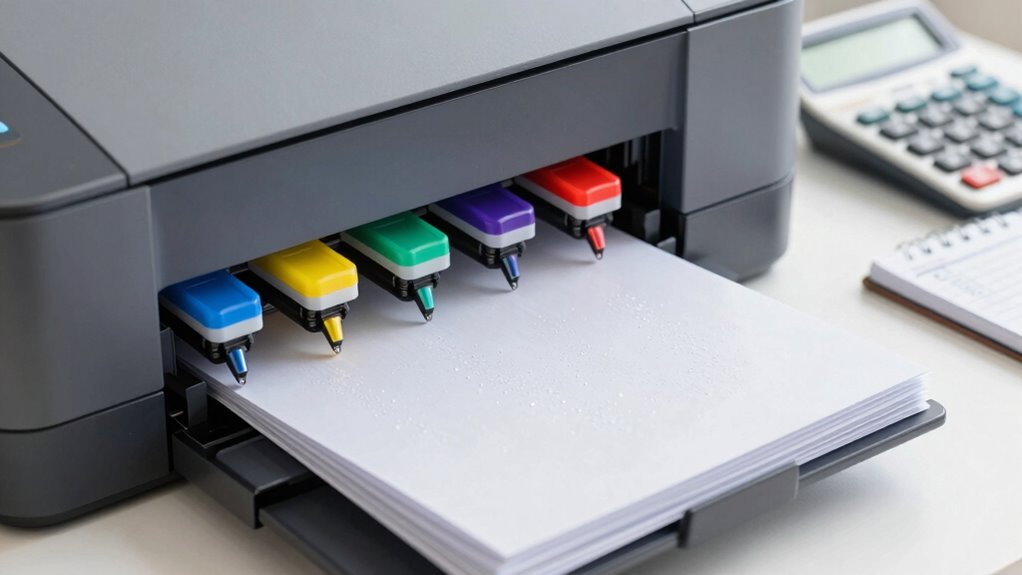
Tracking your printing expenses is essential to identify areas where costs can be minimized and efficiency improved. Use digital tools or software that monitor ink usage, media consumption, and print volume to gain insight into your spending patterns. Implement color management strategies to optimize ink use, ensuring you’re not overusing costly color prints when black-and-white suffices. Regular maintenance scheduling keeps your printers in top shape, preventing costly breakdowns and ensuring consistent print quality. By analyzing data from these tools, you can identify wasteful practices and adjust workflows accordingly. Combining accurate tracking with proactive maintenance and effective color management helps you reduce costs over time while maintaining quality. These strategies empower you to make informed decisions that improve your overall printing efficiency and lower your cost per print.
Frequently Asked Questions
How Often Should I Review My Printing Cost Calculations?
You should review your print cost analysis regularly, ideally every three to six months, to guarantee your budgeting strategies stay accurate. Frequent reviews help you identify cost fluctuations and adjust your printing habits accordingly. Staying proactive means you can spot inefficiencies early, control expenses, and optimize your print environment. Consistent evaluations keep your printing budget aligned with actual costs, saving you money and improving overall cost management.
What Factors Influence Ink and Media Price Fluctuations?
You should know that ink supply issues and media durability markedly influence price fluctuations. When ink supply is tight or there’s high demand, prices tend to rise. Similarly, media with higher durability, like premium papers or fabrics, costs more, especially if supply is limited. These factors, combined with market demand and raw material costs, cause the prices of ink and media to fluctuate over time, impacting your printing expenses.
Can Alternative Media Types Reduce Overall Printing Costs?
Yes, using alternative media can lower your overall printing costs. By choosing cost-effective media options, you implement cost-saving strategies that reduce ink and media expenses. Alternative media types often require less ink or media material, helping you stretch your budget further. This approach allows you to optimize your printing process, minimize waste, and achieve quality results while keeping costs down.
How Do Different Printer Models Affect Cost Estimations?
Think of printer models as different puzzle pieces—each impacts your costs through printer compatibility and media compatibility. Some models handle various media types better, reducing waste and ink use, while others might be limited, increasing expenses. When estimating costs, consider how well a printer’s features match your media needs. Choosing the right printer guarantees efficient printing, saving you money and preventing costly mistakes caused by incompatible media or insufficient compatibility.
What Are Common Mistakes When Estimating Print Costs?
You often underestimate ink wastage or overlook how media selection impacts costs, which skews your estimates. Don’t forget to account for ink that’s wasted during setup, cleaning, or errors, and consider media type, as it influences ink consumption and pricing. Failing to include these factors leads to inaccurate cost calculations, causing you to overspend or underprice. Always track wastage and choose media carefully for more precise print cost estimates.
Conclusion
Knowing your true cost per print is like holding the compass to your budget’s heart. It guides you through the stormy seas of expenses, helping you steer clear of hidden costs lurking in ink and media. By understanding and managing these costs, you’re not just saving money—you’re nurturing a healthier, more sustainable printing practice. Take control today, and watch your savings blossom like a well-tended garden, vibrant and thriving under your careful watch.
Halloween Picks
halloween
As an affiliate, we earn on qualifying purchases.