📊 Full opportunity report: How Phone-Photo Solutions Are Changing Industrial Operations on IdeaNavigator AI — validation score, market gap, and execution plan.

Get business pricing on monitors, keyboards and dev gear
- Business-only prices and quantity discounts
- Tax-exempt purchasing
- Multiple users, one account, clear invoices
TL;DR
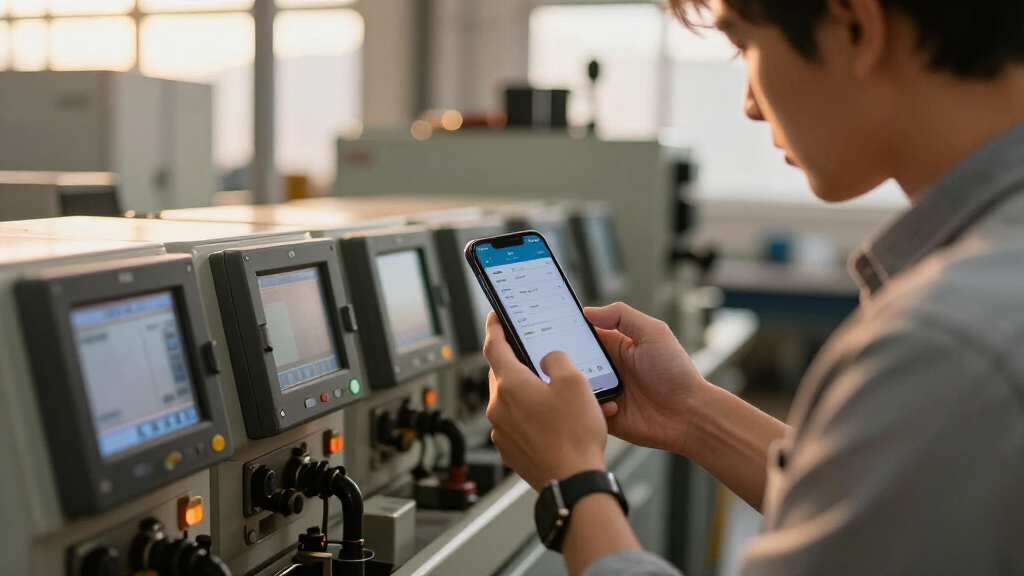
A new approach using phone photos to read analog gauges is being tested in industrial plants, offering a low-cost alternative to IoT sensors. This method promises to reduce errors and enable better trend analysis without retrofitting legacy equipment.
Industrial facilities are beginning to adopt phone-photo gauge reading solutions as a cost-effective alternative to traditional IoT sensor retrofitting. This new approach involves technicians photographing analog gauges during routine rounds, with software automatically reading and logging the data. The development aims to address longstanding issues with manual transcription errors and lack of trend data, potentially transforming maintenance workflows and early failure detection.
The concept was proposed as a pilot project for facilities whose technicians regularly check analog gauges, sight glasses, and counters. By replacing manual transcription with automated photo reading, the system reduces errors, speeds up data collection, and provides real-time anomaly detection. The solution is designed to be implemented via a mobile app that technicians use to photograph gauges during their rounds. The app then analyzes the images using vision models to extract gauge readings, compare them against expected ranges, and log the data with timestamps and location tags.
Initial testing involves running parallel gauge readings—manual clipboard rounds versus photo-based logging—at three facilities over a month. Early results suggest a significant reduction in transcription errors and earlier identification of anomalies. The app flags deviations immediately, enabling maintenance teams to respond faster. The solution is offered as a tiered monthly subscription based on the number of gauges monitored, making it a scalable option for facilities with legacy equipment that lacks IoT sensors.
Implications for Cost-Effective Maintenance Data Collection
This development offers a practical, low-cost alternative to retrofitting legacy equipment with IoT sensors, which can be prohibitively expensive. By leveraging existing camera technology on smartphones, facilities can generate reliable, continuous data streams that support predictive maintenance and early failure detection. If widely adopted, this approach could democratize data-driven operations in industries where equipment is often outdated or difficult to upgrade, leading to improved safety, reduced downtime, and lower operational costs.
industrial gauge photo reading app
As an affiliate, we earn on qualifying purchases.
As an affiliate, we earn on qualifying purchases.
Legacy Equipment and the Need for Improved Monitoring
Many industrial facilities operate with analog gauges and sight glasses that provide critical process data but lack digital connectivity. Traditionally, maintenance teams record readings manually on paper, file them away, and only review them during scheduled inspections. This process is prone to transcription errors, delays in identifying issues, and limited trend analysis. Retrofitting sensors on legacy equipment can be costly and technically challenging, especially in facilities with extensive infrastructure or outdated systems.
Recent advances in vision models and mobile technology have made it feasible to extract data from images reliably. The idea of using phone photos during routine rounds as a form of digital data collection has gained traction as a low-cost, minimally invasive solution. Early pilots indicate that this method can match or exceed the accuracy of manual transcription, while also providing valuable trend data that was previously unavailable.
smartphone gauge reader for industrial equipment
As an affiliate, we earn on qualifying purchases.
As an affiliate, we earn on qualifying purchases.
Unconfirmed Aspects of Long-Term Reliability and Adoption
It is not yet clear how well the phone-photo approach will perform in diverse lighting conditions, with different gauge types, or over extended periods. The pilot phase is ongoing, and comprehensive data on error rates, maintenance impact, and cost savings is still being collected. Additionally, the scalability of the solution across various industries and facility sizes remains to be validated. Questions about user acceptance and integration with existing maintenance workflows are also unresolved at this stage.
As an affiliate, we earn on qualifying purchases.
Next Steps in Validation and Broader Deployment
The ongoing pilot at three facilities will continue for another month, with detailed analysis expected to be published afterward. If results confirm reduced errors and improved early detection, the developers plan to expand testing to additional sites and refine the app’s algorithms. Commercial deployment will likely involve tiered subscription plans, with options tailored to different facility sizes and gauge counts. Broader industry adoption will depend on demonstrated ROI and ease of integration.
industrial maintenance photo analysis tool
As an affiliate, we earn on qualifying purchases.
As an affiliate, we earn on qualifying purchases.
Key Questions
How accurate are phone photos compared to manual readings?
Initial pilot results suggest that vision models can read gauges with accuracy comparable to manual transcription, with fewer errors and faster processing times.
Can this method replace all types of gauge readings?
It is most effective with analog gauges, sight glasses, and counters that are visually accessible. Complex or obscured gauges may require additional solutions.
What are the costs involved in adopting this solution?
The system is offered as a monthly subscription tiered by gauge count, which is generally less expensive than retrofitting sensors on legacy equipment.
Will this technology work in all lighting conditions?
The current vision models perform well under typical lighting, but extreme conditions may require additional calibration or lighting adjustments. Further testing is ongoing.
When can facilities expect broader availability?
If pilot results are positive, commercial offerings could be available within the next six to twelve months, depending on customer adoption and further validation.
Source: IdeaNavigator AI
Fall Picks
fall essentials
As an affiliate, we earn on qualifying purchases.