

This checklist is for developers, QA teams, and software professionals putting together a dependable network and connectivity setup. It covers wired access, Wi-Fi, switching, desk connections, portable storage, and cable verification, with a pick for each slot. Start with your actual workflow: a home office, shared lab, and frequent travel can call for different priorities.

Get business pricing on monitors, keyboards and dev gear
- Business-only prices and quantity discounts
- Tax-exempt purchasing
- Multiple users, one account, clear invoices
The sections follow the path from getting connected to managing a workspace and checking or carrying data. Each one explains why the item matters, what to look for, and who the listed pick may suit. Compatibility comes first, especially for network standards, port types, power delivery, display support, and the devices you already own.
Use the checklist to compare the pick with your host computer, network equipment, and day-to-day tasks before buying. Check the manufacturer’s specifications for supported features and requirements, and confirm that the product name matches the item you intend to order. Verify the details that affect fit rather than assuming a connector or headline feature guarantees compatibility.
USB-C Ethernet Adapter
A wired connection can be useful when you need a direct network link at a desk or while troubleshooting a connection. The listed pick is named “USB-C and USB-A Data Blocker Adapters, 3-Pack,” so its name describes data-blocking adapters rather than an Ethernet adapter. That distinction matters: do not assume it provides an Ethernet port or network access.
Before choosing this slot, check whether you need Ethernet, a data blocker, or both, and compare the product’s actual ports and function with that need. For Ethernet, confirm the adapter has an Ethernet jack and supports the connection and operating system you plan to use. For a data blocker, verify which connector types are included and whether they fit your device. Match the function to the task instead of relying on the checklist heading.
Because the pick name does not establish Ethernet support, treat it as a product to investigate rather than a confirmed adapter recommendation. Read the listing and manufacturer details carefully before relying on it for a wired network connection.
What to look for:
- Confirm the product provides Ethernet if you need a wired network connection
- Check the host device’s USB-C or USB-A port
- Verify operating system and network compatibility
- For a data blocker, confirm the connector types and intended use
- Review the product listing to confirm the exact function
USB-C and USB-A Data Blocker Adapters, 3-Pack
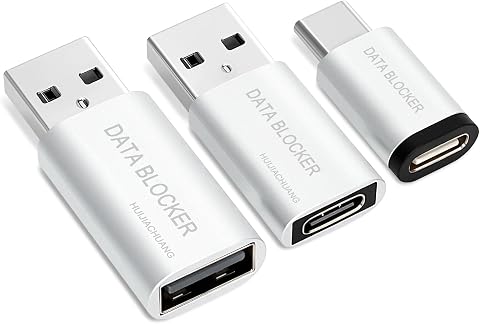
This set includes three USB-C and USB-A adapters designed to block data transfer while charging, helping protect devices from unauthorized access at public charging ports. The USB-C to USB-C adapter supports up to 100W (20V/5A), while the USB-A adapters support charging up to 2.4A.
Pros:
- Blocks data transfer during charging
- Supports up to 100W charging over USB-C
- Compact and portable
- Includes both USB-C and USB-A adapters
Cons:
- USB-A adapters are limited to 2.4A charging
- Does not support data transfer
Best for: People seeking data-blocking adapters who confirm the product’s function
Not ideal for: Anyone who needs confirmed Ethernet connectivity without further verification
Bottom line: The listed name does not confirm Ethernet capability, so verify the product’s function before selecting it for this slot.
Wi-Fi 6E Router
A router is a central part of a wireless setup, and the pick’s name identifies it as a Wi-Fi 6E router. Whether that fits your environment depends on your internet connection, client devices, and network layout. Check client compatibility before expecting devices to use a particular wireless capability.
A common buying mistake is choosing a router based on its label alone without checking the modem or gateway arrangement, available connection type, and coverage needs. Confirm how it connects to your existing service equipment and whether the devices you plan to use support the relevant Wi-Fi features. Consider where the router will sit and whether the layout calls for additional network equipment. Plan around the whole network, not just one device’s name.
The pick is the NETGEAR Nighthawk WiFi 6E Router (RAXE500). Check the manufacturer’s specifications for its ports, setup requirements, supported features, and compatibility with your equipment. Confirm the exact model before ordering, particularly if you are comparing related router names.
What to look for:
- Confirm your client devices support the wireless features you need
- Check how the router connects to your modem or gateway
- Review the port and setup requirements in manufacturer specifications
- Consider router placement in relation to your workspace
- Verify the exact model and supported features
NETGEAR Nighthawk WiFi 6E Router (RAXE500)

The NETGEAR Nighthawk RAXE500 is a high-performance WiFi 6E router featuring a dedicated 6GHz band, 12 streams, and speeds up to 10.8Gbps. It provides extensive coverage, supports multiple devices, and includes advanced security features for safe and fast internet connectivity.
Pros:
- Supports ultra-fast WiFi speeds up to 10.8Gbps
- Dedicated 6GHz band for WiFi 6E devices
- Extensive coverage up to 3,500 sq. ft and supports 60 devices
- Advanced security features including WPA3 and NETGEAR Armor
Cons:
- Requires a separate modem for internet connection
- Premium price point may be high for some users
- Complex setup for non-technical users
Best for: Users whose equipment and network plan match the router’s specifications
Not ideal for: People who have not checked device or service compatibility
Bottom line: Confirm the model’s requirements and your clients’ compatibility before building around this router.
Managed Network Switch
A managed switch can be relevant when a network setup calls for multiple wired connections and configuration options. The listed pick is named “Ubiquiti UniFi Switch Enterprise 8-Port Gigabit and 2.5G PoE+ Managed,” which signals several connection and management features in its product name. Count the ports and needs you actually have before choosing a switch.
Common mistakes include overlooking the number of connected devices, assuming every port supports the same connection or power behavior, and failing to check how the switch fits with existing network equipment. Confirm the port mix, management requirements, and whether the stated PoE+ capability is relevant to the devices you plan to connect. Check the manufacturer’s documentation for power, setup, and compatibility details. Match each requirement to the specifications rather than inferring details from the product title.
For a development or QA workspace, list the wired devices that need connections now and those likely to join the setup. Then compare that list with the switch’s documented capabilities. Verify the exact product variant and intended management approach before ordering.
What to look for:
- Count current and planned wired devices against available ports
- Confirm which ports support the connection types you need
- Check whether PoE+ is needed for your connected devices
- Review management and setup requirements
- Verify compatibility with existing network equipment
Ubiquiti UniFi Switch Enterprise 8-Port Gigabit and 2.5G PoE+ Managed Switch

The Ubiquiti UniFi Switch Enterprise 8-PoE is a managed network switch featuring eight ports with support for both Gigabit and 2.5G speeds. It provides PoE+ power delivery and SFP+ uplinks, housed in a durable metal case suitable for enterprise networking environments.
Pros:
- Supports high-speed 2.5G and Gigabit connections
- Includes PoE+ for powering devices over Ethernet
- Durable metal construction suitable for enterprise use
- Managed switch capabilities for advanced network control
Cons:
- Limited to 8 ports, which may not suit larger networks
- Requires specific UniFi software ecosystem for full management
Best for: Teams that need managed wired connections and confirm the port fit
Not ideal for: Setups that have not established port, power, or management needs
Bottom line: Compare your device list and network requirements with the switch specifications before selecting it.
USB-C Docking Station
A docking station can consolidate connections at a workstation, but the right fit depends on the host computer and the peripherals you intend to attach. The pick is the Anker Prime DL7400 14-in-1 DisplayLink Docking Station. Its name identifies DisplayLink, so check what that means for your computer’s setup and display workflow. Start with the host computer, since dock features only help when the system supports the required connection and software.
A frequent mistake is counting advertised ports without checking which ones you need, how displays connect, or whether the computer supports the arrangement. Make a list of monitors, storage, network, and other peripherals, then compare their connectors with the dock’s documented ports. Review DisplayLink setup requirements and operating-system compatibility in the manufacturer’s materials. Confirm display and software support before treating a multiport dock as plug-and-play.
Also check the host connection and power expectations against your laptop’s specifications. Confirm the exact DL7400 model and the included capabilities rather than assuming all docks with similar names work the same way.
What to look for:
- Check host computer and operating-system compatibility
- Match monitor connectors and display needs to documented support
- Confirm DisplayLink setup requirements
- Compare required peripherals with available ports
- Verify host connection and power expectations
Anker Prime DL7400 14-in-1 DisplayLink Docking Station

This docking station connects up to three 4K displays and offers USB-C, USB-A, HDMI, DisplayPort, Ethernet, audio, and SD/TF card ports. It supports laptop charging up to 140W, with a built-in display and fan for monitoring and cooling.
Pros:
- Supports up to three 4K external displays
- Provides up to 140W laptop charging
- Broad selection of ports, including 2.5Gbps Ethernet
- Built-in smart display and fan cooling
Cons:
- Requires a DisplayLink driver for triple-display use
- DRM-protected streaming may show a black screen
- Front USB-C ports do not support video output
Best for: Users whose computers support the dock’s documented DisplayLink setup
Not ideal for: Anyone who needs a dock without checking display or host compatibility
Bottom line: Map your peripherals and confirm DisplayLink support before choosing this dock.
Portable SSD
Portable storage can help keep files available across work locations, but the right choice depends on the devices and tasks involved. The listed pick is the SanDisk 8TB Extreme Portable SSD. Check the manufacturer’s documentation for its connection type, compatibility, and handling guidance, and confirm it suits the computers or other devices you plan to use. Verify capacity and compatibility against your actual storage workflow.
A common mistake is treating a large capacity label as the only decision point. Consider what you need to store, how often you will move files, and whether your devices have compatible connections. Check supported file systems or formatting requirements when moving between different systems, and make sure any needed backup or encryption workflow is covered separately. Plan how the drive will be used before depending on it as the only copy of important work.
The pick’s name gives a model and stated capacity, but it does not establish all performance, durability, or device-compatibility details. Consult the product specifications and confirm the exact model before choosing it for project files, test data, or travel.
What to look for:
- Confirm device connector and operating-system compatibility
- Check capacity against the files you plan to carry
- Review formatting needs across your computers
- Consider how the drive fits your backup workflow
- Verify the exact model and manufacturer specifications
SanDisk 8TB Extreme Portable SSD

The SanDisk 8TB Extreme Portable SSD offers high-speed NVMe performance with up to 1050MB/s read and 1000MB/s write speeds. It features rugged durability with drop, water, and dust resistance, along with password protection and a 5-year warranty, making it ideal for active lifestyles and professional use.
Pros:
- High-speed data transfer with up to 1050MB/s read and 1000MB/s write speeds
- Rugged design with drop, water, and dust resistance for durability
- Includes password protection with 256-bit AES encryption for security
- Compact and portable, ideal for travel and on-the-go use
Cons:
- Performance may vary depending on host device and conditions
- Limited to USB 3.0 and USB 3.2 Gen 2 connectivity, may require compatible ports
- Price not specified, which could be a consideration for budget-conscious buyers
Best for: Users who need portable storage and verify device compatibility
Not ideal for: Anyone expecting a portable drive to replace a complete backup plan
Bottom line: Confirm compatibility and plan a separate backup approach for important files.
Network Cable Tester
A cable verifier can help when you need to check copper cabling as part of a network setup or troubleshooting workflow. The listed pick is the Fluke Networks MicroScanner2 Copper Cable Verifier with Built-In Intel. The wording “Built-In Intel” is unclear as a product feature, so verify the exact listing and product description before relying on it. Confirm the exact model and what is included.
Common buying mistakes include assuming a verifier checks every cable type or fault, overlooking connector requirements, and purchasing a tool that does not match the cabling work at hand. Identify the cable types and checks you need, then compare them with the manufacturer’s stated capabilities. Review any required accessories, supported connectors, and operating instructions. Match the tester to the cable job rather than inferring scope from the word “verifier.”
For a development or QA environment, consider whether cable verification is an occasional troubleshooting task or part of routine network work. Check the manufacturer’s information for the exact MicroScanner2 variant and its supported functions, and clarify the unusual wording in the supplied product name before ordering.
What to look for:
- Verify the exact MicroScanner2 product listing and included items
- Check support for the cable types you need to inspect
- Confirm connector and accessory requirements
- Compare documented checks with your troubleshooting tasks
- Clarify the “Built-In Intel” wording with the product description
Fluke Networks MicroScanner2 Copper Cable Verifier with Built-In IntelliTone Ton

The MicroScanner2 Cable Verifier tests copper cables for length, wiremap, cable ID, and faults. It supports troubleshooting for RJ11, RJ45, coax, and network speeds up to 10/100/1000Base-T, including VoIP applications.
Pros:
- Comprehensive cable testing features
- Displays cable length and faults on one screen
- Supports multiple cable types and network speeds
Cons:
- Limited to copper cable verification
- No mention of wireless testing capabilities
Best for: People who need copper cable verification and confirm supported checks
Not ideal for: Buyers relying on unclear product wording without checking specifications
Bottom line: Confirm the exact model and supported cable checks before selecting this verifier.
Build your buying order around the work that currently blocks you: first confirm the connection or compatibility gap, then choose the matching network or desk component, and add storage or verification tools when your workflow calls for them. Prioritize confirmed requirements such as port types, supported devices, and cable needs before adding features you may not use.
Use the manufacturer’s specifications to resolve any unclear product names and compare each pick with your setup. A short device and cable inventory can make the choices easier to evaluate. Take it one connection at a time, and you can assemble a checklist that fits your workspace with confidence.