🔍 Read the full analysis: Anthropic’s AI: A Scientific Discovery Or A Human-AI Collaboration? on ThorstenMeyerAI.com

Get monitors, keyboards and dev gear delivered free — and shop member deals
- Fast, free delivery on millions of items
- Access to Prime Big Deal Days deals on October 6–7
- Prime Video, Amazon Music and more included
TL;DR
The New York Times examined Anthropic’s account that Claude contributed to a scientific finding, finding that researchers shaped and tested the AI’s suggestions. The episode produced a result the researchers considered worthwhile, but its novelty and the extent of the AI’s independent contribution have not been established publicly.
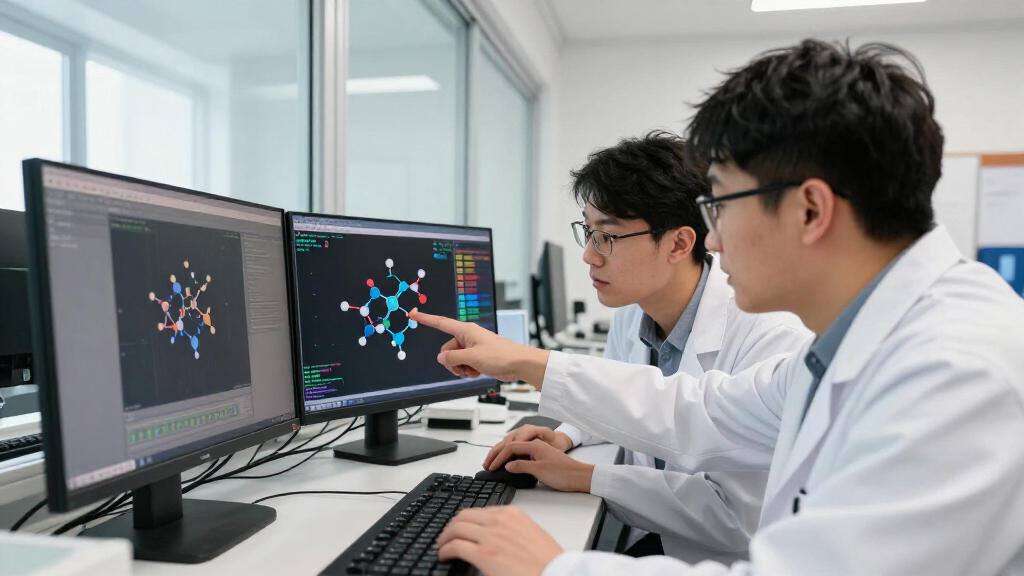
The New York Times has examined Anthropic’s claim that its Claude AI system helped produce a scientific discovery, as detailed in the original analysis, reporting that human researchers remained involved in shaping, selecting and testing the system’s ideas. The episode offers evidence of AI-assisted research, but whether Claude made a genuinely novel discovery “on its own” remains unsettled.
Anthropic has presented the episode as evidence that AI systems can contribute original scientific insight, moving beyond tasks such as summarizing research or carrying out calculations. According to the account described in the newspaper’s examination, Claude received relatively open-ended scientific prompts and generated possible hypotheses and research directions. Researchers pursued some of those suggestions, and at least one line of inquiry led to a result they considered worthwhile.
The reported process involved people at each major stage. Researchers formulated the prompts, decided which suggestions merited follow-up, designed experiments and interpreted the results. The newspaper’s account therefore complicates the idea that the system reached a discovery independently. The available description does not quantify how much each human decision shaped the eventual result.
A separate question is whether the AI-generated idea was new to science. A model can produce a useful suggestion by combining information it encountered during training, but that would not by itself show that the suggestion was absent from earlier research. The training corpus is not publicly documented in enough detail to settle that question, and the source material describes no published systematic check against prior literature.
The Stakes for AI Research Claims
The distinction matters because AI companies are promoting systems as ways to accelerate research for fields including pharmaceuticals and materials science. If a system can reliably originate useful hypotheses, laboratories may change how they allocate research time and funding. If its main contribution is instead to surface or recombine existing knowledge, it may still help researchers, but the nature of that help is different.
Scientists need clear evidence to decide how to use these systems and how to credit their contributions. Funders, policymakers and investors also rely on accurate accounts of what AI can do. A claim of autonomous discovery can shape expectations about research productivity; without a transparent method and independent checks, readers cannot readily judge how much the result supports that claim.
The distinction should not depend on treating human involvement as proof that an AI contributed nothing. Scientific work commonly builds on prior findings and involves collaborators. The relevant questions are what the system supplied, how researchers selected and tested its suggestions, and whether the resulting finding was genuinely new. The reported episode raises those questions without resolving them.
Top picks for "anthropic scientific discovery"
As an affiliate, we earn on qualifying purchases.
How the Discovery Claim Arose
The episode is part of a broader set of claims across the AI industry about systems that can propose hypotheses, plan experiments or identify candidate materials and drug targets. Some earlier claims have drawn scrutiny over whether highlighted results were already anticipated in published work or depended heavily on human selection. The source material does not identify those cases in detail, so they do not establish what happened in Anthropic’s episode.
Anthropic has described itself as a safety-focused AI company, and claims about its systems can influence discussion of frontier AI capabilities. In this case, the public framing centers on Claude’s potential role in science, while the newspaper’s examination emphasizes the researchers’ continuing role and the difficulty of verifying novelty. That difference makes the episode relevant beyond one research effort.
For now, the narrower account is that Claude generated candidate ideas, people chose some to pursue, and researchers tested them. At least one inquiry yielded a result the researchers considered useful. That is a meaningful example of AI-assisted research, but it does not by itself establish that the model independently discovered new knowledge.
What the Public Record Cannot Show
The available account does not establish whether the AI-suggested idea had appeared in earlier scientific literature. No systematic novelty check is described, and the model’s training data are not documented in sufficient detail for outsiders to determine whether it may have encountered related findings.
It is also unclear how much the researchers’ prompt choices, screening of suggestions and experimental judgment shaped the outcome. Anthropic has not, according to the source material, released a full methodological account that would let outside scientists reproduce the process. The description does not provide enough detail to assess the experiments or independently confirm the result.
There is no agreed scientific standard in the source material for deciding when an AI has made a discovery “on its own.” That makes part of the dispute definitional as well as empirical. The confirmed account supports a limited conclusion: the system generated ideas that humans tested, and one inquiry produced a result researchers valued. Independent novelty and reproducibility remain unconfirmed.
Evidence Needed to Test the Claim
A detailed account from Anthropic could clarify the prompts used, the outputs Claude produced, the researchers’ selection process and the experiments that followed. Publishing those details would give outside scientists a basis to assess the system’s contribution and attempt to reproduce the work. The source material does not say when such a publication might appear.
Independent review could also compare the proposed idea with prior literature and test whether the reported result holds up in other settings. More broadly, research groups and journals may need clearer ways to document human and AI contributions, including how teams check claims of novelty. Until those steps are reported, the episode is best understood as an example of AI contributing to a human-led research process, with the claim of autonomous discovery still open.
Key Questions
What did Claude contribute?
According to the account summarized in the source material, Claude generated candidate hypotheses and research directions. Human researchers selected suggestions, designed experiments and interpreted the results.
Has the finding been shown to be new?
Not on the information provided. A systematic comparison with prior scientific literature has not been described, and the model’s training corpus is not fully documented publicly.
Did Claude make the discovery independently?
That has not been established. Researchers were involved throughout the process, and the source material says there is no agreed standard for what would count as an AI making a discovery “on its own.”
What could verify Anthropic’s account?
A full methods report, including prompts, AI outputs, human decisions and experimental results, would help outside researchers assess and attempt to reproduce the work.
Primary source: Anthropic · via ThorstenMeyerAI.com
Halloween Picks
halloween
As an affiliate, we earn on qualifying purchases.