
📊 Full opportunity report: From Manual To Automated: Modern Food Safety With Computer Vision on IdeaNavigator AI — validation score, market gap, and execution plan.

Get business pricing on monitors, keyboards and dev gear
- Business-only prices and quantity discounts
- Tax-exempt purchasing
- Multiple users, one account, clear invoices
TL;DR
A restaurant industry innovation employs computer vision to automate kitchen safety inspections, promising more accurate and verifiable food safety checks. It transforms manual walk-throughs into data-driven processes, with initial testing underway at multiple locations.
Restaurant operators are piloting a new AI-driven system that uses computer vision to verify food safety compliance during kitchen inspections, replacing traditional manual checklists. This development could significantly improve the accuracy and accountability of food safety procedures, a critical concern for the industry and regulators.
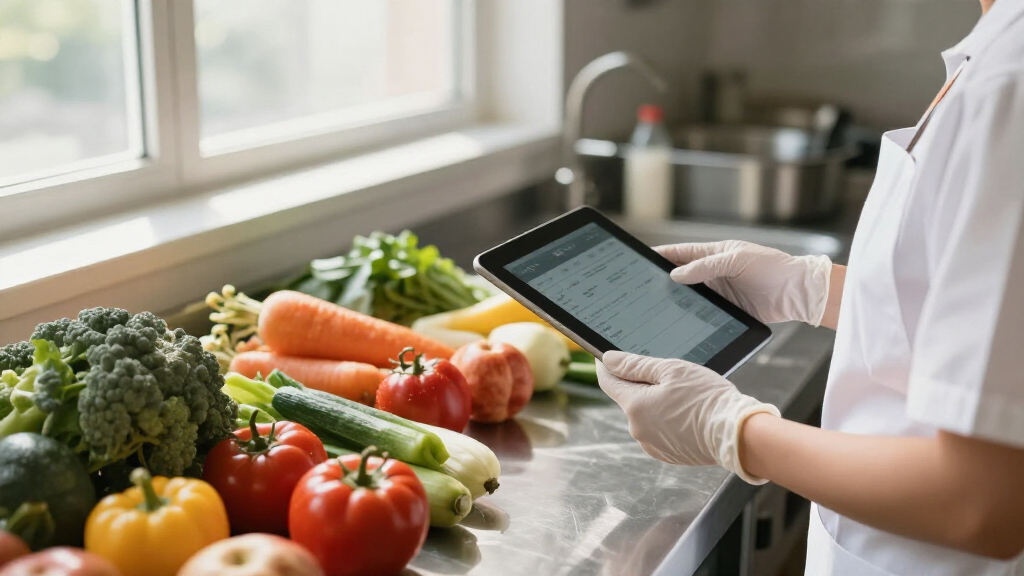
The system involves managers photographing key areas of the kitchen—such as prep stations, storage, and sinks—during morning walk-throughs. A trained vision model analyzes these photos for violations like uncovered containers, propped cooler doors, or missing date labels, and flags issues with severity ratings.
Unlike traditional checklists, which rely on subjective observation and paper records, this approach produces timestamped, verifiable inspection reports that can be aggregated across multiple locations. The initial pilot involves five restaurant units, with plans to compare the AI’s flagged violations against findings from a professional health-inspection consultant over a two-week period.
Marketed as a subscription service, the solution offers a dashboard for operators to monitor compliance trends and identify recurring issues, potentially reducing the risk of violations and improving food safety standards.
From Manual to Automated
Computer vision is turning routine kitchen walk-throughs into timestamped, verifiable safety data—giving restaurant operators a clearer view of violations, recurring risks, and compliance across locations.
From kitchen image to corrective action
Managers retain the familiar morning inspection routine. The difference is that every observation becomes analyzable, reviewable evidence.
Capture
A manager photographs prep stations, storage areas, coolers, and sinks.
Analyze
A trained vision model scans each image for defined compliance indicators.
Flag
Suspected violations are identified and assigned a severity rating.
Correct
Teams address uncovered food, open doors, labels, and storage issues.
Aggregate
A dashboard reveals patterns across inspections and restaurant locations.
Visible risks become structured data
The system is designed around specific, photographically verifiable conditions rather than open-ended judgment.
Exposed ingredients
Images can reveal containers or prepared food left uncovered in work and storage areas.
Cooler access
Door position and surrounding conditions provide evidence of avoidable temperature-control risks.
Date labeling
The model checks visible packaging for missing or potentially incomplete identification labels.
Manual checklist vs. vision-assisted inspection
Computer vision does not remove the manager from the process. It strengthens the evidence behind each inspection.
| Inspection factor | Manual checklist | Vision-assisted system | Operational effect |
|---|---|---|---|
| Evidence captured | ✗ Often paper-only | ✓ Image-backed record | Findings can be reviewed later |
| Consistency | ~ Depends on observer | ✓ Standard model criteria | Comparable checks across locations |
| Time verification | ~ Manually recorded | ✓ Timestamped | Stronger inspection traceability |
| Trend analysis | ✗ Difficult to aggregate | ✓ Dashboard reporting | Recurring issues become visible |
| Human judgment | ✓ Context-aware | ~ Requires validation | Best used as decision support |
| Regulatory status | ✓ Established process | ~ Acceptance unresolved | Human oversight remains essential |
A controlled test against professional inspections
For two weeks, AI-generated findings will be compared with the observations of a professional health-inspection consultant.
Current evidence pathway
Promising technology, unanswered questions
The pilot must establish reliability in real kitchens before commercial scale or formal regulatory recognition.
Environmental variation
Lighting, camera angle, kitchen layout, packaging, and visual clutter may affect how reliably violations are recognized.
Validation priorityAmbiguous conditions
A photograph may show a condition without enough operational context to determine whether it is truly noncompliant.
Human review neededPrivacy and security
Inspection photos require appropriate retention, access, privacy, and security controls within the subscription service.
Governance requiredRegulatory acceptance
Authorities have not yet established whether AI-generated records can become recognized compliance documentation.
Policy unresolvedEconomic case
Operators will need to compare subscription costs with fewer violations, faster audits, and improved risk management.
ROI to proveHuman accountability
The system is currently positioned to augment managers and inspectors—not to replace trained professional judgment.
Augmentation modelWhat operators need to know
Commercial availability depends on successful validation, model refinement, and confidence in deployment economics.
How are violations identified?
The model analyzes inspection photos for defined visual indicators, then assigns flags and severity ratings for manager review.
Will AI replace inspectors?
Not during the current phase. The system is intended to augment human checks and reduce documentation gaps.
What is the operator benefit?
More consistent monitoring, streamlined records, location-level comparisons, and earlier visibility into recurring safety risks.
When could it launch?
A commercial rollout could follow successful pilot validation, potentially within the next year, but no firm date is confirmed.
Impact of Automated Kitchen Inspections on Food Safety
This innovation matters because it addresses longstanding challenges in food safety compliance: the reliance on subjective, often incomplete manual checks. By providing verifiable, consistent data, the system could reduce violations, improve accountability, and streamline regulatory audits. For consumers, this could mean safer dining experiences, while for operators, it offers a way to proactively manage food safety risks and demonstrate compliance more effectively.
As an affiliate, we earn on qualifying purchases.
Emergence of AI in Restaurant Food Safety Monitoring
Traditional restaurant inspections depend on periodic, manual observations by health inspectors, often leading to inconsistent reporting and missed violations. Recent advances in computer vision enable AI models to analyze photos for specific food safety violations with high reliability. Pilot programs like this reflect a broader trend toward automating operational compliance in hospitality and food service industries, driven by the availability of affordable smartphone cameras and AI technology.
This development follows several years of incremental improvements in AI accuracy and the growing demand for digital solutions that enhance transparency and accountability in food safety management.
“The vision model can reliably flag violations like uncovered food or missing labels from standard phone photos, turning manual inspections into verifiable data.”
— an anonymous researcher
restaurant kitchen inspection tool
As an affiliate, we earn on qualifying purchases.
As an affiliate, we earn on qualifying purchases.
Uncertainties in AI Inspection Accuracy and Adoption
It is not yet clear how well the AI system will perform across diverse restaurant environments or how it will handle ambiguous violations. The pilot phase will determine its reliability compared to expert human inspectors. Additionally, questions remain about regulatory acceptance and the cost-effectiveness of widespread deployment.
computer vision food safety system
As an affiliate, we earn on qualifying purchases.
As an affiliate, we earn on qualifying purchases.
Next Steps for Validation and Broader Deployment
The current pilot will run for two weeks, with results compared against professional health inspections. If successful, the developers plan to refine the model and expand testing to more locations. A broader rollout could follow, alongside discussions with regulators about recognition of AI-based inspections as part of compliance documentation.
As an affiliate, we earn on qualifying purchases.
Key Questions
How does the AI system identify violations?
The system analyzes photos taken during kitchen walk-throughs for specific indicators such as uncovered food, propped cooler doors, missing labels, or improper storage, and flags violations based on severity.
Will this replace human inspectors entirely?
Currently, the system is designed as a tool to augment human inspections, providing verifiable data and reducing oversight errors. Full replacement would depend on regulatory acceptance and further validation.
What are the benefits for restaurant operators?
Operators can achieve more consistent compliance monitoring, reduce the risk of violations, streamline record-keeping, and generate data for ongoing safety improvements.
Are there privacy or data security concerns?
The system relies on photos taken during inspections; data security measures would be implemented as part of the subscription service, with compliance to relevant privacy standards.
When will this technology be available commercially?
The pilot phase is ongoing, with potential commercial deployment following successful validation, likely within the next year.
Source: IdeaNavigator AI
Halloween Picks
halloween
As an affiliate, we earn on qualifying purchases.