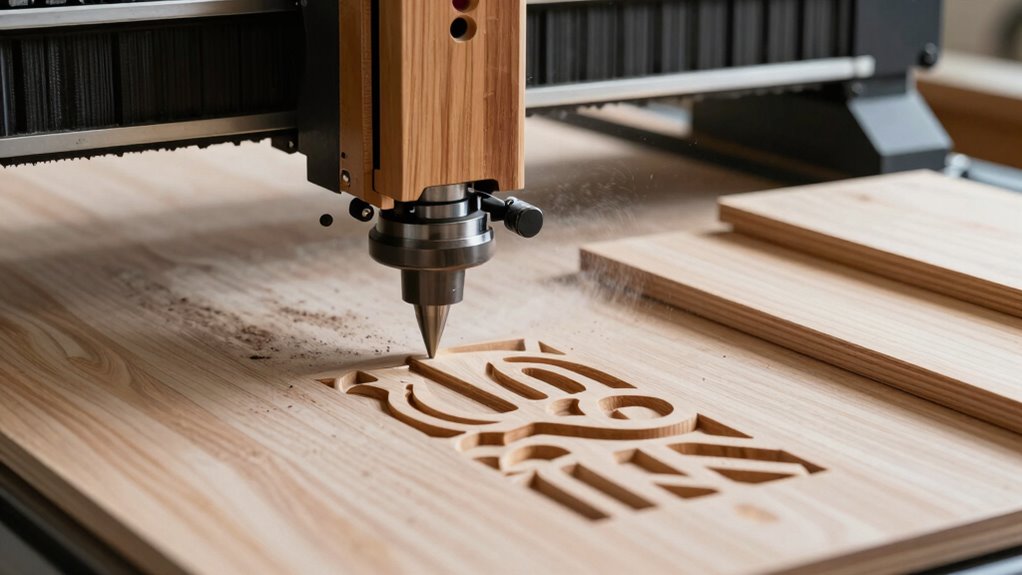

When working on cabinet parts versus sign making, you need to adjust your CNC router settings because each task has different material needs, design complexities, and precision requirements. For cabinets, you’ll prioritize accuracy for perfect assembly, using durable materials that resist warping. Signs, however, often involve more detailed graphics and artistic effects, requiring flexibility in textures and depths. Understanding these differences helps you optimize performance—if you want to master these adjustments, keep exploring how each process varies.
Key Takeaways
- Different materials require specific CNC settings to optimize durability for cabinets and aesthetics for signs.
- Cabinet parts demand high precision for seamless assembly, while signs allow more creative flexibility with tolerances.
- Material properties influence cutting techniques, affecting the final quality of either durable furniture or decorative signage.
- Complex joinery in cabinets necessitates accurate, repeatable CNC routing; signs often feature varied textures and layered effects.
- Workflow efficiency depends on selecting appropriate materials and adjusting CNC parameters to suit each project’s purpose and design complexity.
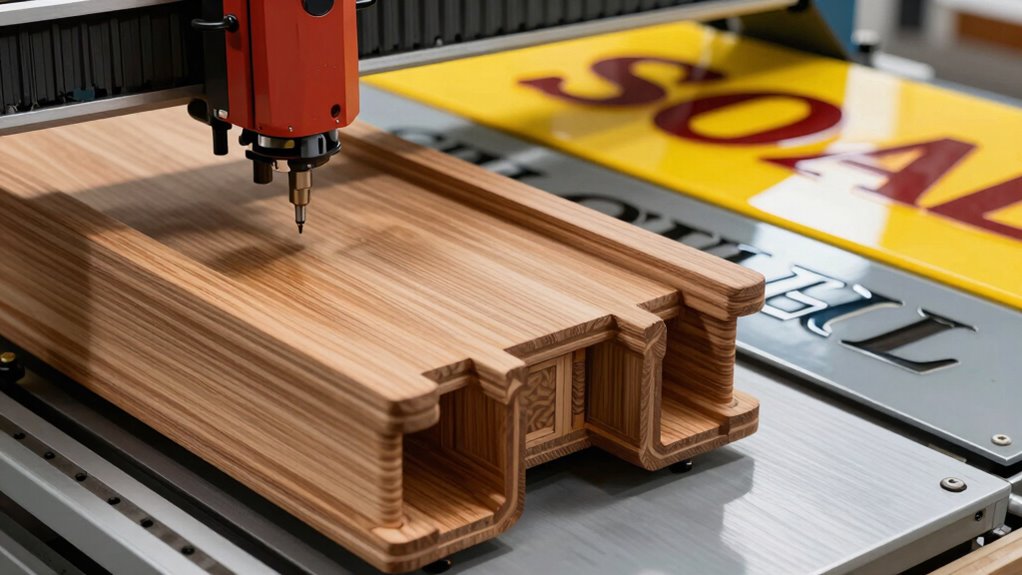
When you’re deciding between cabinet parts and sign making, understanding their differences can help you choose the right materials and techniques for your project. One of the key considerations is material durability. Cabinet parts typically need to withstand frequent use, moisture, and sometimes heavy weight, so selecting materials like hardwood or high-quality plywood ensures longevity. These materials resist warping and damage over time, making them ideal for functional furniture components. Conversely, sign making often prioritizes visual appeal over extreme durability, especially for indoor signs. While outdoor signs demand weather-resistant materials like aluminum or acrylic, many indoor signs can be crafted from lighter, less durable materials, which are easier to cut and shape. Additionally, the choice of materials can influence the cutting difficulty, affecting your CNC router settings and overall workflow. Design complexity further influences your material choices and CNC router settings. Cabinet parts often involve intricate joinery, precise cuts for drawers, doors, and shelves. The design requires accuracy to ensure parts fit perfectly, so your CNC router must handle detailed cuts without compromising material integrity. This means you might need a more powerful machine or specific bit types to achieve clean, tight joints. Sign making, on the other hand, can range from simple text to elaborate, multi-layered graphics. While some signs demand complex carvings or 3D effects, many are straightforward, focusing on high-quality graphics and lettering. For these projects, the CNC router’s flexibility in handling various textures and depths becomes essential, especially when creating multi-color or layered effects. Another difference lies in the technical setup. Cabinet parts usually require precise, repeatable cuts for parts that must assemble seamlessly. This demands consistent settings, proper fixturing, and often, more detailed programming to ensure each part matches exactly. Sign making, especially for custom or artistic signs, often involves more creative freedom, with less emphasis on strict tolerances. This allows for more artistic flexibility in the design process, which can sometimes mean accepting slight variances in cuts or finishes for artistic effect. Moreover, understanding the material properties helps optimize your CNC routing, ensuring better cuts and finishes across different projects. Recognizing the different material types and their unique characteristics is crucial for achieving optimal results. To maximize efficiency, it’s also important to consider how different materials respond to various cutting techniques, which can significantly impact the quality of your final product. Ultimately, your project’s purpose shapes your material selection and CNC router configuration. Cabinets demand materials with high durability and precise, complex cuts to ensure functionality and longevity. Signs, however, often benefit from a broader range of materials and techniques, emphasizing design flexibility and visual impact. Recognizing these differences helps you set up your CNC router appropriately, guaranteeing you get the best results tailored to either practical cabinet parts or eye-catching signs.

10PCS CNC Router Bits Set 1/4 inch Shank, Carbide Multiple Uses Router Bit for Woodworking Detail Carving Trimming V Groove Engraving Slotting Mortise, Bonus 1/4" ER11 High Precision Collet
【10PCS CNC Router Bits Set for Multiple Woodworking Projects】 Includes 10 carbide CNC router bits with 1/4 inch…
As an affiliate, we earn on qualifying purchases.
As an affiliate, we earn on qualifying purchases.
Frequently Asked Questions
Can a CNC Router Be Used for Both Cabinet Parts and Signs Simultaneously?
Yes, you can use a CNC router for both cabinet parts and signs at the same time. Its material customization and design flexibility allow you to switch between different projects easily. You simply adjust the settings and tools as needed, making it efficient for multiple tasks. This versatility guarantees you can produce precise cabinet components and detailed signs without needing separate machines, saving time and resources.
What Materials Are Best Suited for Cabinet Parts Versus Sign Making?
Think of materials as the language your CNC router speaks best. For cabinet parts, hardwoods like oak and maple excel due to their strength and material compatibility, supporting intricate joinery. For sign making, softer materials like MDF, acrylic, or PVC work well because they allow for detailed designs and smooth finishes. Your choice depends on design complexity and the material’s ability to handle detailed carving without chipping or warping.
How Does the Software Differ Between Cabinet and Sign CNC Projects?
You’ll find that CNC software for cabinet parts emphasizes design flexibility to create precise, complex joints and fittings, ensuring smooth assembly. For sign making, the software prioritizes material compatibility and detailed graphics, allowing you to craft intricate, eye-catching designs. Both types of projects benefit from adaptable software, but you’ll choose different features based on whether you need more design flexibility or focus on material-specific settings.
What Safety Precautions Are Essential for Both Applications?
Think of your CNC router as a powerful beast—you need safety to tame it. Always wear protective gear like goggles and ear protection to shield yourself from flying debris and noise. Dust management is your shield against particles filling the air, preventing health issues and equipment damage. Keep clear of moving parts, guarantee proper ventilation, and double-check your settings. Staying vigilant keeps your workspace safe and your projects running smoothly.
How Does Production Speed Vary Between Cabinet Parts and Signs?
You’ll find that production speed varies based on material durability and design complexity. For cabinet parts, the process tends to be faster since materials are often durable and designs straightforward, allowing quicker cuts. In sign making, intricate designs and less durable materials slow down production. A CNC router adapts well to both, but understanding these factors helps you optimize speed without sacrificing quality, ensuring efficient workflows for each project.

Woodcraft Woodshop Baltic Birch Plywood 1/8" (3Mm) X 30" X 30"
Higher quality plywood, uses no fillers or softwood
As an affiliate, we earn on qualifying purchases.
As an affiliate, we earn on qualifying purchases.
Conclusion
Understanding the differences between cabinet parts and sign making helps you optimize your CNC router for each task. Did you know that custom cabinet components require precision cuts at tolerances of less than 0.005 inches? This highlights why your CNC router needs specific features like high accuracy and versatility. By tailoring your machine to each application, you guarantee better quality, efficiency, and satisfaction—making your projects stand out in both cabinet craftsmanship and sign creation.

CALPALMY (2 Pack) 1/4" Thick Clear Acrylic Sheets – 18 x 24 Pre-Cut Plexiglass Sheets for Craft Projects, Signs, Display Cases, Sneeze Guard and More – Cut with Engraver, Power Saw or Hand Tools
1. Superior Quality 1/4" Thick Clear Acrylic Sheets for Plexiglass Windows – Elevate the aesthetic appeal of any…
As an affiliate, we earn on qualifying purchases.
As an affiliate, we earn on qualifying purchases.

TTC3018 Pro CNC Router Machine,Desktop CNC Engraving Machine Upgraded 3-Axis Engraving All-Metal Milling Machine for Wood Acrylic MDF Nylon,300mmX180mmX40mm Working Area
All-Metal Z-Axis & 0.1mm High Precision – Upgraded metal Z-axis with T8 backlash-eliminating lead screws, 0.1mm positioning accuracy,…
As an affiliate, we earn on qualifying purchases.
As an affiliate, we earn on qualifying purchases.