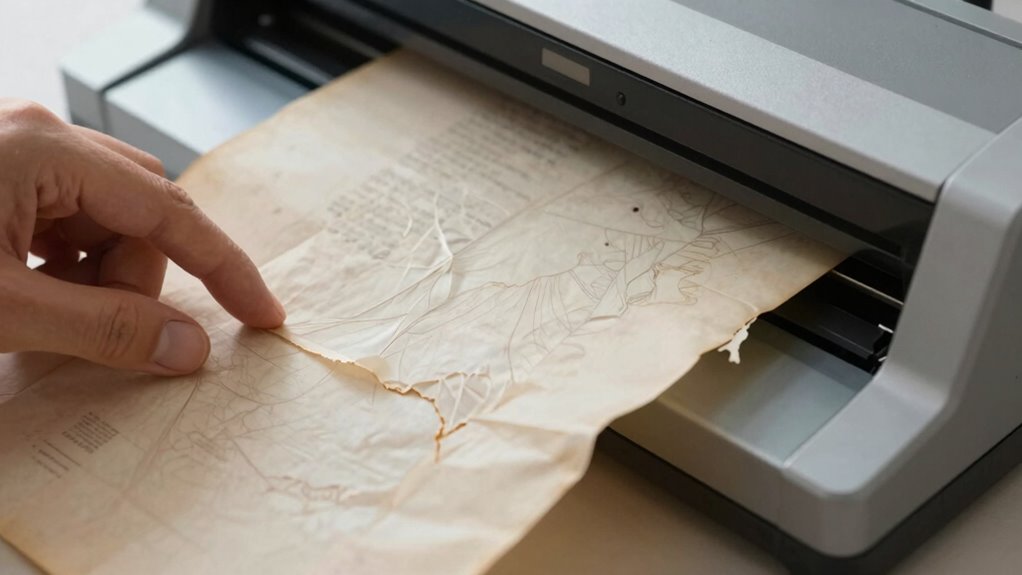

Scanning fragile paper originals is tricky because they can easily tear or fade if handled incorrectly. You need to use specialized tools like acid-free gloves, support aids, and high-resolution scanners designed for delicate documents. Careful handling and proper environment control help prevent damage during the process. Balancing preservation with quality digitization is essential, and understanding these techniques can make a significant difference. Keep exploring to discover expert tips that can help protect your valuable documents.

Get business pricing on monitors, keyboards and dev gear
- Business-only prices and quantity discounts
- Tax-exempt purchasing
- Multiple users, one account, clear invoices
Key Takeaways
- Handling fragile originals requires delicate techniques to prevent tears, creases, or further deterioration during scanning.
- Specialized, non-invasive imaging methods are necessary to minimize physical contact and damage.
- Maintaining proper environmental conditions is crucial to avoid exacerbating deterioration during digitization.
- Ensuring high-resolution, accurate digital captures without compromising the original’s integrity is a complex balance.
- Proper training and equipment are essential to address the hidden risks involved in scanning delicate documents.
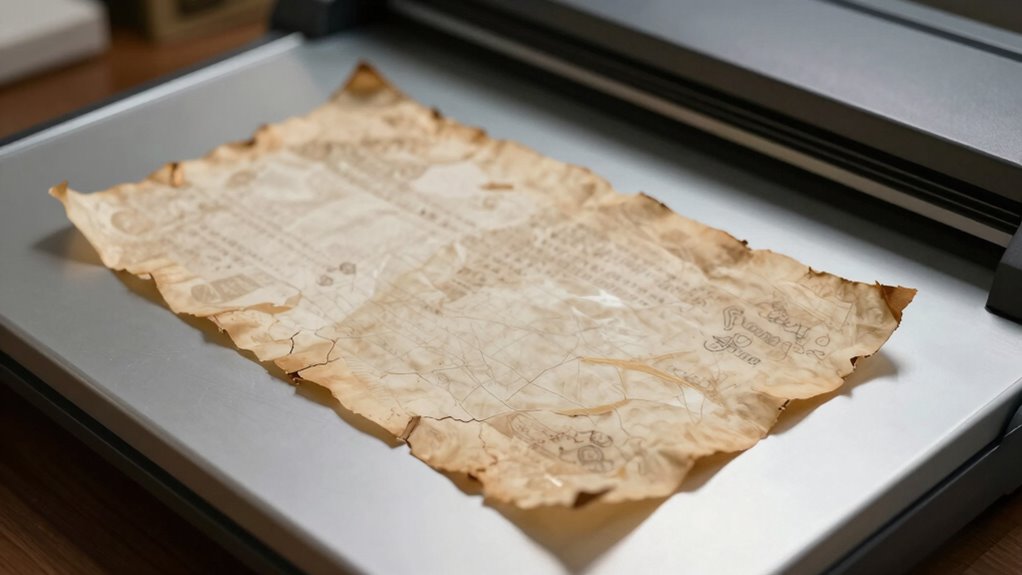
If you need to digitize fragile paper originals without risking damage, careful handling and specialized techniques are vital. These documents often hold historical, legal, or sentimental value, making their preservation a top priority. When you approach their digitization, you must consider the importance of archival preservation—guaranteeing that the digital copies accurately reflect the original’s condition, appearance, and context. The process isn’t just about creating a digital image; it’s about safeguarding the authenticity and integrity of irreplaceable materials.
Handling fragile paper requires patience and a gentle touch. You’ll want to use clean, acid-free gloves and avoid unnecessary contact that could cause tears or smudges. Supportive tools, such as foam wedges or flat, rigid surfaces, help prevent bending or creasing during the scanning process. Specialized equipment, like high-resolution scanners designed for delicate documents, minimizes contact with the paper’s surface. These scanners often utilize non-invasive techniques, such as transmitted light or contactless imaging, reducing the risk of deterioration. The goal is to capture crisp, detailed images while preserving the physical state of the original.
Digital archiving plays a vital role in safeguarding fragile documents. Once digitized, these images can be stored securely, shared easily, and accessed without further handling of the originals. This not only protects the physical documents but also ensures their longevity for future generations. High-quality digital files also facilitate detailed examination, research, and reproduction, all without exposing the originals to potential harm. When creating digital archives, it’s important to follow best practices—such as maintaining consistent file formats, proper metadata, and redundant backups—to guarantee long-term preservation and usability. Employing standardized digital file formats is essential for ensuring future accessibility and compatibility. Additionally, understanding archival preservation principles helps ensure that digital copies are reliable and sustainable over time. Proper environmental controls are crucial to prevent accelerated deterioration, making climate-controlled storage a key element in preservation strategies.
You should also be aware of environmental factors that could accelerate deterioration. Keep the originals in climate-controlled environments with stable temperature and humidity levels. Avoid exposure to direct light, which can fade inks and weaken paper fibers over time. Proper storage in acid-free folders or boxes further extends their life, complementing your digitization efforts. Additionally, understanding the importance of archival preservation helps ensure that digital copies truly serve as a reliable record for future use. The careful balance of preservation and access is fundamental to maintaining the historical and cultural value of these documents.
As an affiliate, we earn on qualifying purchases.
Frequently Asked Questions
How Long Does It Typically Take to Scan Fragile Paper Originals?
It typically takes several hours to scan fragile paper originals, depending on the document’s size and condition. You need to prioritize archival standards and maintain historical accuracy, which means slow, careful handling and multiple quality checks. Rushing can damage the originals or compromise image quality. So, expect a meticulous process that prioritizes preservation, often requiring patience to guarantee the scanned copies meet archival standards and accurately reflect the originals.
What Equipment Is Best for Preserving Delicate Documents During Scanning?
You should use a flatbed scanner with gentle handling techniques to protect delicate documents. Opt for preservation materials like acid-free support sheets and anti-static gloves to prevent damage during scanning. Keep the paper flat and avoid unnecessary pressure, working slowly and carefully. Using specialized equipment guarantees you minimize wear, preserving the integrity of fragile originals while capturing high-quality digital images.
Are There Specific Storage Conditions Recommended Post-Scanning?
After scanning delicate documents, you should store them in archival storage conditions, which include acid-free folders and boxes. Keep the environment climate-controlled, maintaining stable temperature and humidity levels—ideally around 65-70°F and 40-50% humidity—to prevent deterioration. Avoid exposure to direct sunlight, pests, and fluctuating conditions. Proper archival storage and climate control guarantee your fragile originals stay preserved for the long term, maintaining their integrity and readability.
How Can I Digitally Enhance Faded or Damaged Fragile Papers?
To digitally enhance faded or damaged fragile papers, you actively apply archival inks carefully to improve visibility without risking further harm. Use conservation techniques like gentle digital adjustments—boosting contrast or brightness—to bring out details. You can also employ specialized software to restore lost information, ensuring the original’s integrity remains intact. By blending these methods, you preserve the paper’s authenticity while making the faded or damaged content clearer and more accessible.
What Are the Cost Implications of Professional vs. DIY Scanning?
A cost comparison shows that professional scanning can be expensive upfront, but it offers high quality and safety for fragile papers. DIY scanning is cheaper initially, saving you money, but may require investing in specialized equipment and risking damage if done improperly. If you need high-resolution, delicate handling, professional services are worth the investment. For casual or frequent projects, DIY might be more budget-friendly, despite potential quality compromises.
high-resolution document scanner for fragile papers
As an affiliate, we earn on qualifying purchases.
As an affiliate, we earn on qualifying purchases.
Conclusion
So, next time you tackle those delicate paper originals, remember—you’re not just scanning; you’re risking the entire universe of history, art, and knowledge! A single slip could erase centuries of stories, turning priceless artifacts into dust. Handle with care, or risk releasing chaos in the timeline of civilization. Your delicate touch might just be the difference between preserving a masterpiece and causing an irreversible disaster—so, scan wisely!
support aids for delicate document scanning
As an affiliate, we earn on qualifying purchases.
As an affiliate, we earn on qualifying purchases.
climate-controlled storage boxes for archival documents
As an affiliate, we earn on qualifying purchases.
As an affiliate, we earn on qualifying purchases.
Fall Picks
fall essentials
As an affiliate, we earn on qualifying purchases.