
Understanding paper weight and grammage helps you pick the right material for your project. Weight, shown in pounds (lb) or grams per square meter (gsm), tells you how thick and durable the paper is—heavier options feel more premium. Grammage measures the weight of a square meter of paper in grams, making it easy to compare types. By mastering these numbers, you’ll choose the perfect paper for professional, high-quality results—keep exploring to learn more about making the best choices.
Key Takeaways
- Paper weight in pounds (lb) indicates thickness and durability, commonly used in the US, while grams per square meter (gsm) is the international standard.
- Higher gsm or lb numbers mean heavier, more substantial paper suitable for professional and high-quality printing.
- Lower weights or grammage produce lighter, more flexible paper ideal for everyday printing tasks.
- Understanding gsm helps compare different papers regardless of brand, ensuring proper choice for durability and appearance.
- Matching paper weight and grammage with the printing method ensures optimal results and prevents issues like smudging or jams.
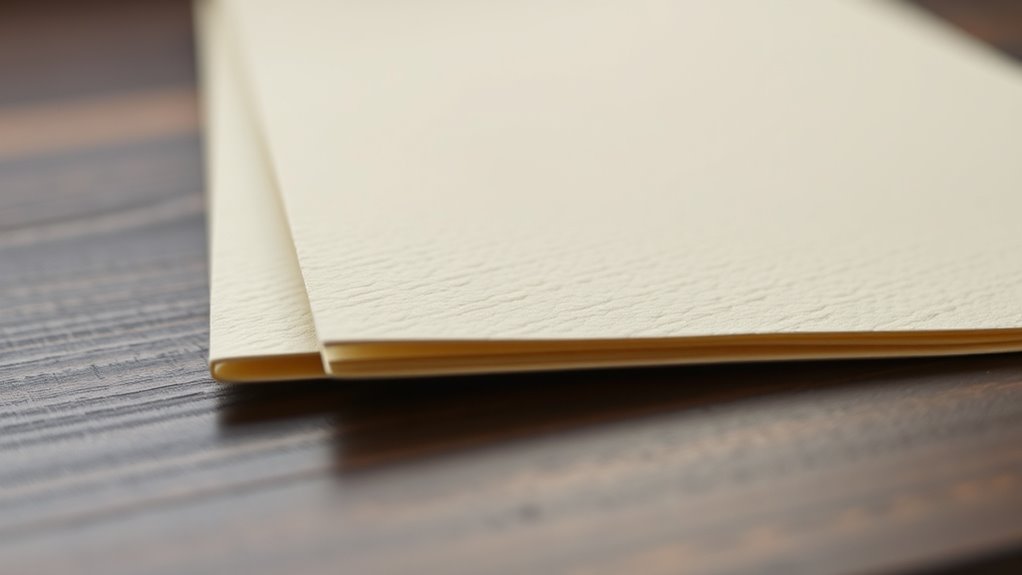
Understanding paper weight and grammage is essential when selecting the right paper for your project. These measurements influence not only how your finished product looks and feels but also how it performs during printing. When choosing paper, you need to consider its paper texture, which affects tactile appeal and overall presentation, as well as its printing suitability—whether it handles ink, toner, or other printing methods effectively. Grasping these concepts helps you avoid issues like ink smudging, paper jams, or an unprofessional finish.
Paper weight is typically expressed in pounds (lb) in the US or grams per square meter (gsm) internationally. The weight gives you an idea of how heavy or thick the paper is, which directly impacts its durability and feel. Heavier papers, such as 80 lb or 120 gsm, tend to be sturdier, making them ideal for high-quality brochures, business cards, or invitations. Lighter weights, like 20 lb or 75 gsm, are more suitable for everyday printing, such as office documents or flyers. But weight alone doesn’t tell the whole story. The paper texture—whether it’s smooth, matte, textured, or linen—also plays a vital role in the final appearance. For example, textured papers add a tactile element that can make printed materials feel more luxurious, but they might pose challenges for certain types of printing, especially if fine detail is involved.
Paper weight varies in pounds (US) or grams per square meter (gsm), affecting durability, appearance, and printing suitability.
Grammage, on the other hand, measures the weight of a single square meter of paper in grams. This standard allows for a more straightforward comparison across different paper types and brands. When you’re selecting paper based on grammage, think about what your project demands. For high-end printing, a higher grammage often ensures a more substantial, professional look and feel. Conversely, papers with lower grammage are lighter and more flexible, perfect for everyday use or when you need to print large volumes efficiently. Additionally, understanding paper durability helps ensure your printed materials withstand handling and environmental factors over time.
Your choice should also factor in printing suitability. Not all paper textures work well with every printing method. For example, glossy or coated papers are great for vibrant images and photos but may cause ink smudging if not designed for high-quality inkjet or laser printing. Uncoated papers with a smooth texture are generally more versatile, offering better ink absorption and sharper images. If you’re printing text-heavy documents, a matte or semi-matte finish might prevent glare and improve readability. Understanding how paper texture influences printing suitability helps you select the right type, ensuring your final product looks sharp and professional without technical problems.

50 Sheets of Heavyweight White Cardstock Ideal for Business Cards, Art Projects, Invitations, and Stationery Printing | 80 lb Weight | 8.5 x 11 inches | Thick Cover Stock (216 gsm) |
Premium Medium Weight Smooth Cardstock, White, 80lb, 176gsm, 8.5” x 11” – Ideal for Invitations, Menus, Business Cards…
As an affiliate, we earn on qualifying purchases.
As an affiliate, we earn on qualifying purchases.
Frequently Asked Questions
How Does Paper Weight Affect Printing Quality?
When you choose a heavier paper, it reduces ink absorption, resulting in sharper images and text. This improved ink handling enhances color vibrancy, making your prints look more vivid and professional. Lighter paper may absorb more ink, causing colors to appear dull or blurry. So, selecting the right paper weight directly impacts your print quality, helping your images and text pop with clarity and vibrant colors.
What Is the Difference Between Basis Weight and Grammage?
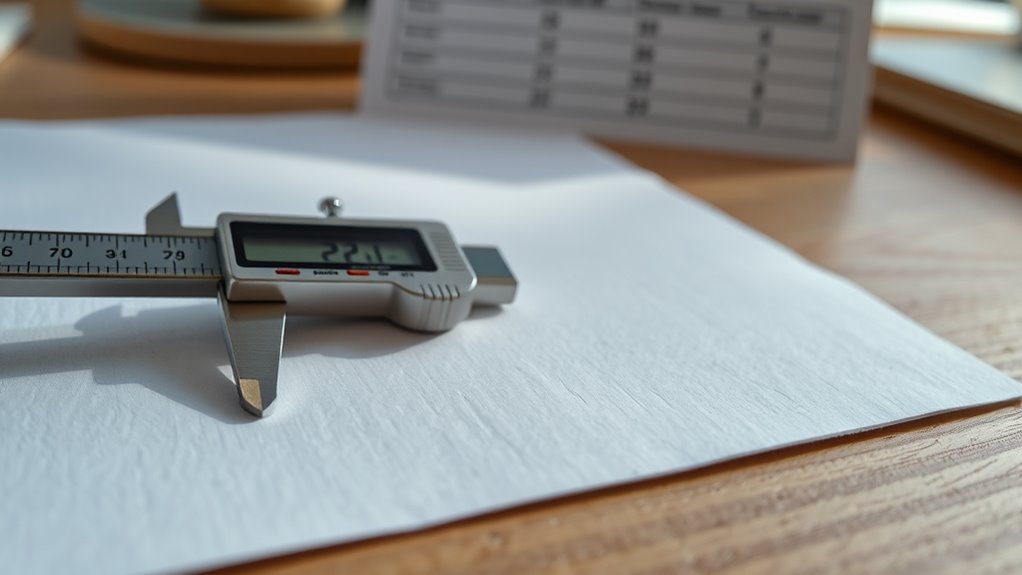
Imagine basis weight as the story’s backbone, giving structure, while grammage is the map, showing the paper’s density. Basis weight measures how much paper a ream weighs, like a weighty novel, whereas grammage calculates the paper’s thickness per square meter, helping you classify it by its density. Caliper measurement then adds detail, revealing the paper’s actual thickness, giving you a complete picture of its quality and purpose.
Which Paper Weight Is Best for Business Cards?
You should choose a paper weight around 300-350 gsm for business cards, as it feels sturdy and professional. Opt for a font style that’s clear and easy to read, and consider color options that align with your branding. Heavier paper enhances durability and makes a lasting impression, so avoid thin or flimsy options. This combination guarantees your business cards look high-quality and stand out.
How Does Paper Weight Impact Environmental Sustainability?
You can reduce your environmental impact by choosing lighter paper, which lowers the carbon footprint during production and transportation. Heavier paper often has lower recycling rates because it’s harder to process, leading to more waste. Opting for sustainably sourced, recyclable paper helps improve recycling rates and minimizes environmental harm. By being mindful of paper weight, you support eco-friendly practices and contribute to a more sustainable future.
Can Paper Weight Influence Archival Durability?
Yes, paper weight can influence archival durability. Heavier paper often has higher acid resistance, making it better suited for archival storage. This durability helps prevent deterioration over time, protecting your documents from acid migration and environmental damage. By choosing sturdier, acid-resistant paper, you guarantee your materials stay intact longer, providing reliable archival quality and safeguarding your important records for future generations.
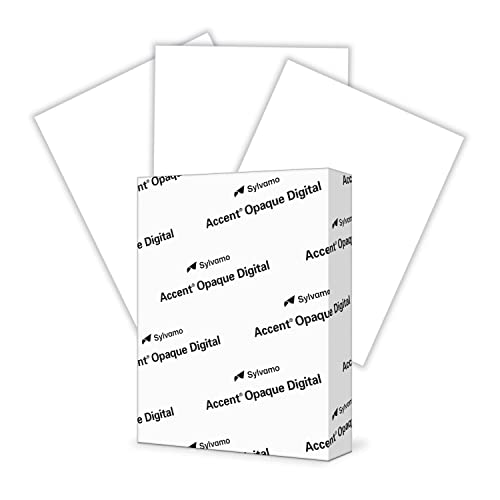
Accent Opaque White 8.5” x 11” Cardstock Paper, 120 Lb, 325 GSM – 150 Sheets (1 Ream) – Premium Smooth Extremely Heavy Cardstock, Printer Paper for Invitations, Cards, Menus, Business Cards – 188179R
EXTREMELY THICK CARDSTOCK PAPER: Accent Opaque heavy cardstock paper offers a high bright-white shade and smooth finish. It’s…
As an affiliate, we earn on qualifying purchases.
As an affiliate, we earn on qualifying purchases.
Conclusion
Think of paper weight and grammage like the backbone of a sturdy bridge—you may not see it, but it holds everything together. When I first picked up a thick cardstock, I realized how much more substantial it felt, just like a reliable foundation. Knowing these numbers helps you choose the right paper for your project, ensuring it stands strong and true. So, next time you select paper, remember: weight and grammage are your building blocks for success.

Strathmore 59-701 Textured Inkjet Paper, 8.5"x11", 25 Sheets , White, Packaging May Vary
Inkjet Paper Texture
As an affiliate, we earn on qualifying purchases.
As an affiliate, we earn on qualifying purchases.
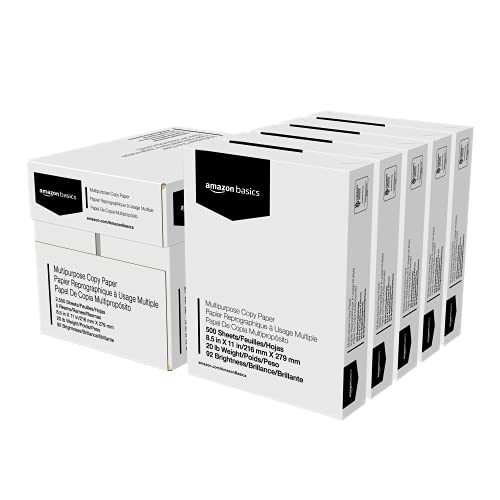
Amazon Basics Multipurpose Copy Printer Paper, 20 lb, 8.5 x 11 Inches, 5 Reams (2,500 Sheets), 92 Bright White
5 ream case (2,500 sheets) of 8.5 x 11 white copier and printer paper for home or office…
As an affiliate, we earn on qualifying purchases.
As an affiliate, we earn on qualifying purchases.