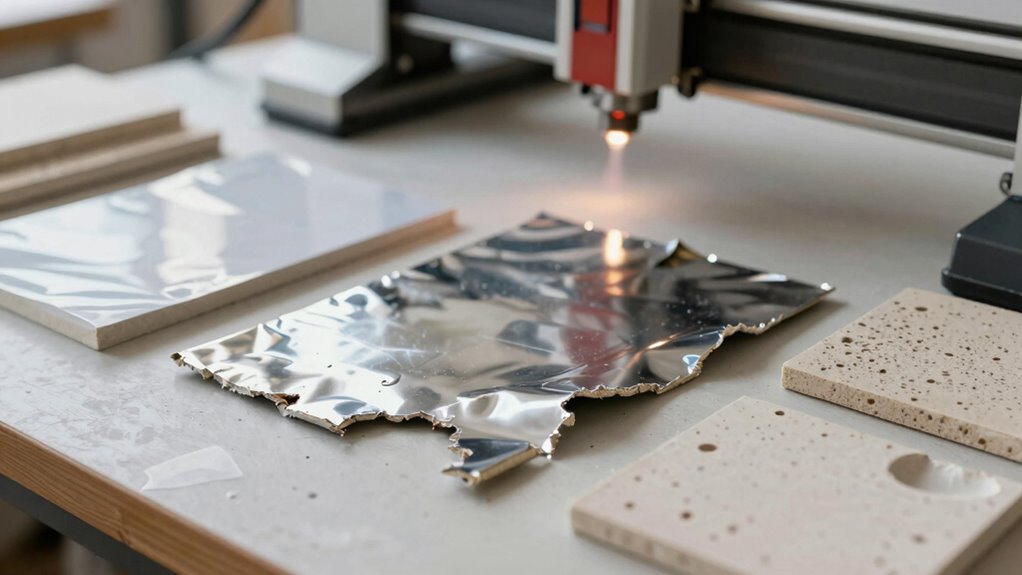

You should never laser cut materials that can catch fire, release toxic fumes, or cause equipment damage. Avoid burning plastics like PVC or vinyl, as they emit dangerous gases, and steer clear of reflective metals that can harm your laser. Be cautious with items containing embedded electronics, batteries, or metal parts, as they risk explosions or reflections. If you’re curious about more materials to watch out for, keep exploring these safety guidelines.

Get business pricing on monitors, keyboards and dev gear
- Business-only prices and quantity discounts
- Tax-exempt purchasing
- Multiple users, one account, clear invoices
Key Takeaways
- Avoid laser cutting PVC, vinyl, or other chlorinated plastics due to toxic fumes and dioxin emissions.
- Do not cut reflective metals like aluminum, copper, or brass, as they can redirect laser beams and damage equipment.
- Never laser electronics, circuit boards, or items with embedded batteries, which pose fire and explosion risks.
- Refrain from cutting combustible fabrics or coated/painted materials that can ignite or produce hazardous fumes.
- Stay away from thick, dense, or composite materials that may cause incomplete cuts, excessive burning, or warping.
As an affiliate, we earn on qualifying purchases.
Materials That Might Catch Fire When Laser Cut
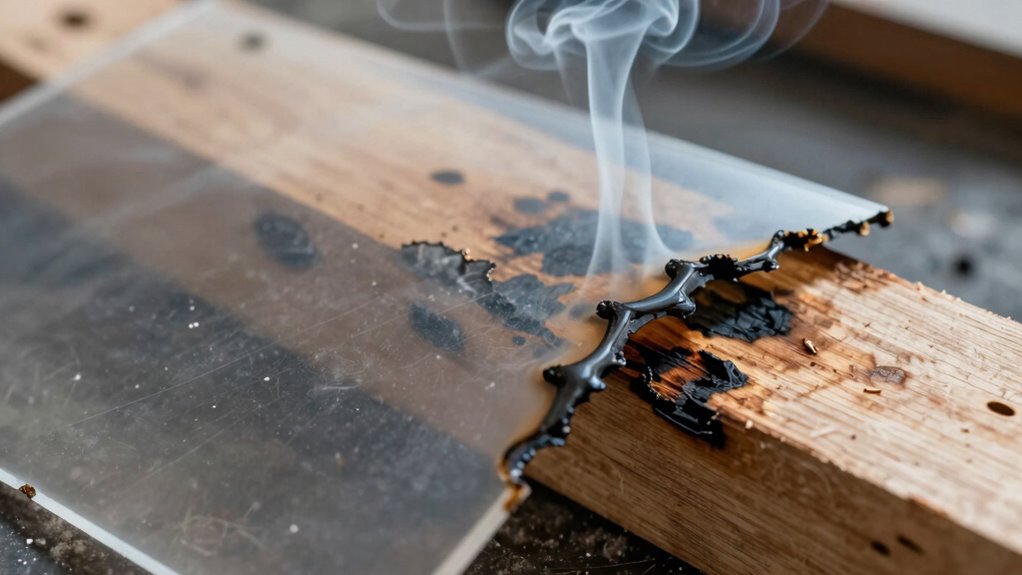
Some materials can ignite easily when exposed to the intense heat of a laser cutter. Combustible fabrics, such as certain cotton or polyester blends, pose a fire risk because they can catch fire quickly during cutting. Similarly, flammable plastics like PVC or polystyrene release toxic fumes and are highly combustible. These materials can ignite unexpectedly, causing damage to your equipment or even starting a fire in your workspace. Always check the material’s fire resistance before attempting to cut it with a laser. If a material is flammable or produces smoke, it’s safest to avoid it altogether. Fire safety considerations are essential when working with any flammable materials, and understanding the material’s flammability can help prevent accidents. Additionally, being aware of the flammability ratings of materials provides further guidance on safe handling. Recognizing the potential for ignition in certain materials underscores the importance of proper safety protocols. Staying cautious helps prevent accidents and ensures your safety while working with laser cutters. Never underestimate the fire risk associated with combustible fabrics and flammable plastics. Being familiar with fire-resistant materials can help you choose safer options for laser cutting applications.
fire-resistant laser cutting mats
As an affiliate, we earn on qualifying purchases.
As an affiliate, we earn on qualifying purchases.
Toxic and Hazardous Materials to Avoid Laser Cutting
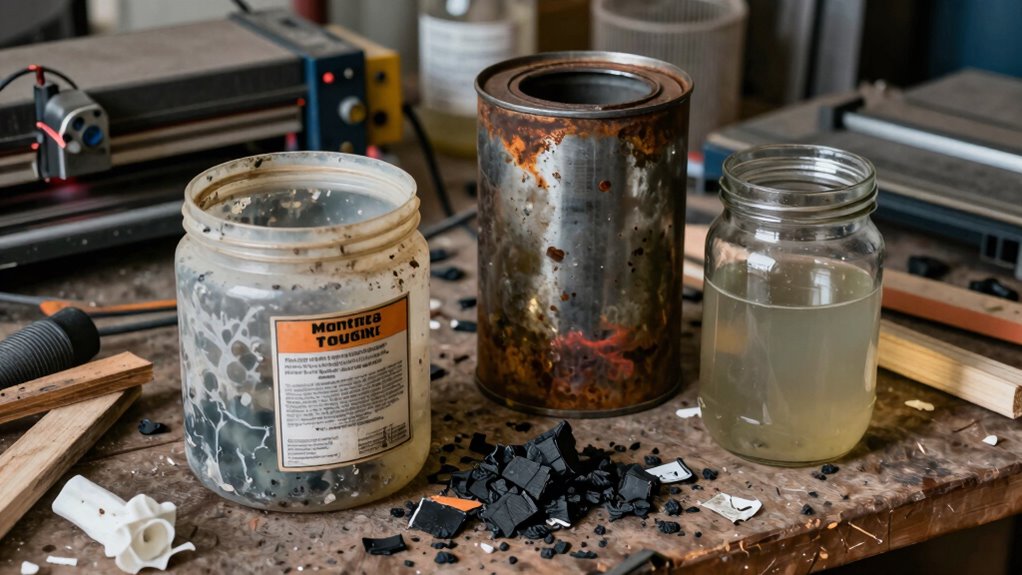
If you’re not careful, laser cutting certain materials can release toxic fumes that pose serious health risks. Non flammable plastics, such as PVC or vinyl, are particularly hazardous because they emit harmful chlorinated compounds when heated. Avoid these materials entirely, as inhaling their fumes can cause respiratory issues and long-term health problems. Instead, look for safe material alternatives like acrylic, wood, or certain textiles, which generally produce fewer toxic emissions. Always ensure proper ventilation and use extraction systems to minimize exposure. Additionally, understanding material safety guidelines can help prevent accidents and health hazards. Recognizing the toxicity of materials is essential for making informed choices and maintaining a safe workspace. Being aware of material composition can further help identify which substances are safe to laser cut. Knowing how to identify and select non-toxic materials is crucial for a safe and successful project. Proper material testing can also help confirm the safety of materials before use. Skipping toxic and hazardous materials not only protects your health but also prevents damage to your equipment. Remember, choosing the right materials is essential for safe laser cutting, so prioritize safety and opt for non-toxic options whenever possible.
ventilation system for laser cutter
As an affiliate, we earn on qualifying purchases.
As an affiliate, we earn on qualifying purchases.
Chemicals That Release Dangerous Gases During Laser Cutting

When you laser cut certain materials, dangerous gases can be released into the air. These toxic emissions and corrosive byproducts pose serious health risks if you’re not properly protected. Understanding which chemicals produce these harmful gases is essential for your safety during laser cutting. Proper ventilation systems are crucial to effectively remove hazardous fumes and protect your health during the process. Additionally, being aware of environmental impact of tissue paper can help you select safer materials for your projects. Recognizing material composition can guide you in choosing substances that minimize toxic emissions during laser cutting, especially considering the regional regulations that may govern material safety standards. Being familiar with laser technology and how it interacts with different materials can also aid in reducing the release of harmful gases and ensure safer working conditions.
Toxic Gas Emissions
Laser cutting certain materials can release hazardous gases that pose serious health risks and environmental concerns. When you cut these materials, you risk inhaling chemical fumes and smoke, which can cause respiratory issues or long-term health problems. Materials like PVC, vinyl, and treated woods produce toxic gases such as chlorine, phosgene, and formaldehyde. To understand better, here’s a quick overview:
| Material | Toxic Gas Emitted | Health Risk |
|---|---|---|
| PVC | Hydrogen chloride, dioxins | Respiratory irritation |
| Vinyl | Vinyl chloride | Carcinogenic effects |
| Painted Wood | Formaldehyde, benzene | Cancer, respiratory issues |
| Composite Board | Formaldehyde | Eye, nose irritation |
| Rubber | Isocyanates, fumes | Chemical burns, breathing problems |
Additionally, the chemical emissions from these materials can linger in the environment and contribute to pollution if not properly managed. These emissions can also be influenced by cutting parameters such as temperature and speed, which are important to control for safety. It is crucial to use proper ventilation and filtration systems to mitigate these risks and prevent toxic gas accumulation in your workspace. Failure to do so can result in dangerous chemical buildup, increasing health hazards for operators and nearby occupants.
Corrosive Byproducts Formation
Certain materials release corrosive byproducts that can form dangerous gases during laser cutting, posing serious health and safety risks. When these materials undergo laser-induced heat, they degrade chemically, producing corrosive byproducts like acids or chlorides. This material degradation releases hazardous gases, which can corrode equipment and harm your respiratory system if inhaled. For instance, cutting plastics containing chlorine or certain metals can generate corrosive fumes that accelerate corrosion and release toxic gases. These corrosive byproducts threaten not only your safety but also the longevity of your tools and machinery. Recognizing which materials produce harmful corrosive byproducts helps you avoid potential hazards and ensures safer, cleaner laser cutting operations. Always research material composition before laser processing to prevent dangerous corrosive byproduct formation.
Health Risks and Safety
Many materials release dangerous gases that can pose serious health risks during laser cutting, making laser safety essential. When you cut certain plastics, metals, or composites, toxic fumes are emitted, which can harm your respiratory system or cause long-term health issues. Material toxicity varies widely; some substances release carcinogens or irritants, so you must understand the risks before proceeding. Proper ventilation and fume extraction systems are critical to protect yourself and others in the workspace. Always check material safety data sheets (MSDS) and avoid materials known to emit harmful gases. Recognizing material toxicity is vital for safe laser cutting practices, as some substances contain hazardous compounds that can be released into the air. Ignoring these precautions can lead to exposure to hazardous chemicals, increasing health risks. Understanding material toxicity and implementing effective safety measures is essential to minimize danger. Prioritize laser safety by choosing materials wisely and implementing effective safety measures to minimize danger, including using appropriate protective equipment and ensuring proper workspace ventilation. Additionally, being aware of volatile chemical emissions can help you better assess the risks associated with different materials. It is also advisable to stay informed about toxic fume components that may be released during cutting processes to enhance safety protocols.
non-toxic acrylic sheets for laser cutting
As an affiliate, we earn on qualifying purchases.
As an affiliate, we earn on qualifying purchases.
PVC and Vinyl Materials That Produce Poisonous Dioxins
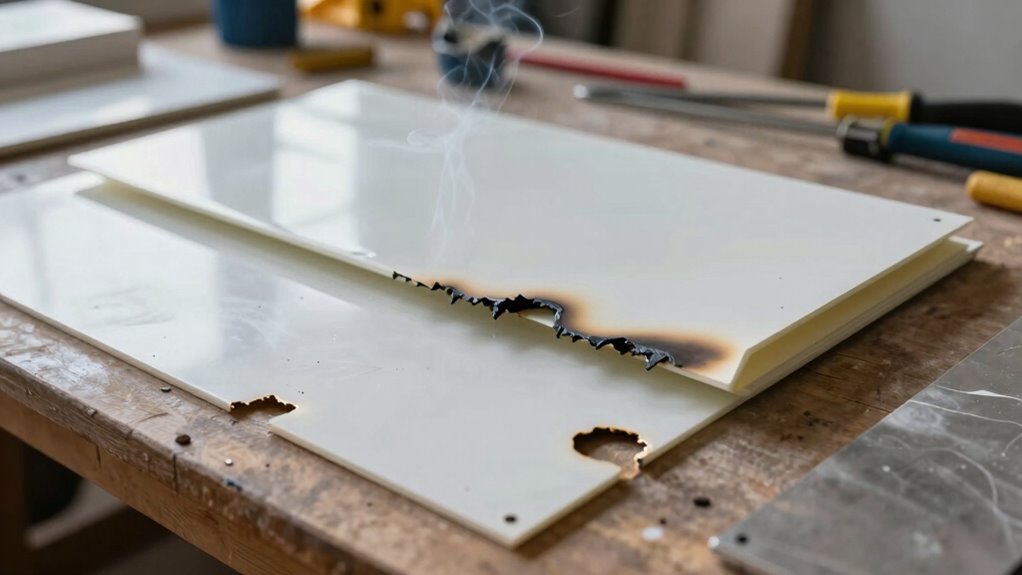
When you cut PVC or vinyl materials with a laser, you’re at risk of releasing toxic fumes, specifically poisonous dioxins. These PVC hazards not only pose health risks but also contribute to vinyl toxicity in the environment. The fumes released during laser cutting contain harmful chemicals that can cause respiratory issues and long-term health problems. To visualize the danger:
- The smoke turns dark and thick, indicating the release of dangerous toxins.
- The smell becomes acrid and overpowering, warning you of chemical fumes.
- Residue left on your workspace shows signs of chemical contamination, risking further exposure.
Avoid cutting these materials entirely to prevent health hazards. Instead, opt for safer alternatives that don’t produce poisonous dioxins or compromise your safety during the laser cutting process. Additionally, understanding the importance of indoor air quality can help you make better decisions to protect your health.
Reflective Metals and Surfaces That Can Damage Your Laser
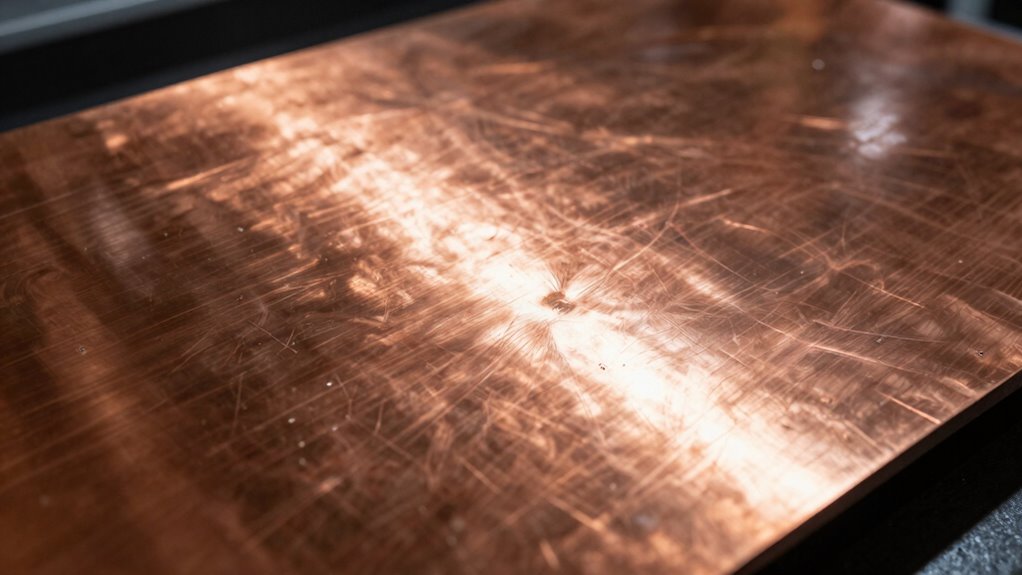
Reflective metals and surfaces pose a significant risk to your laser cutter because their highly reflective nature can direct laser beams back into the machine’s optics. Reflective surfaces, especially polished metals like aluminum, brass, or copper, can reflect laser energy unpredictably, causing potential damage to the laser head and optics. When laser beams bounce off these surfaces, they may focus back into the machine, leading to misfires, malfunctions, or permanent hardware damage. Always avoid placing polished metals or glossy reflective surfaces inside the laser’s working area. Instead, use materials specifically designed for laser cutting or cover reflective surfaces with a masking or matte finish to reduce reflections. Protecting your equipment from these hazards is essential for safe and efficient laser operation.
Embedding Electronics or Batteries in Materials: Risks to Watch For
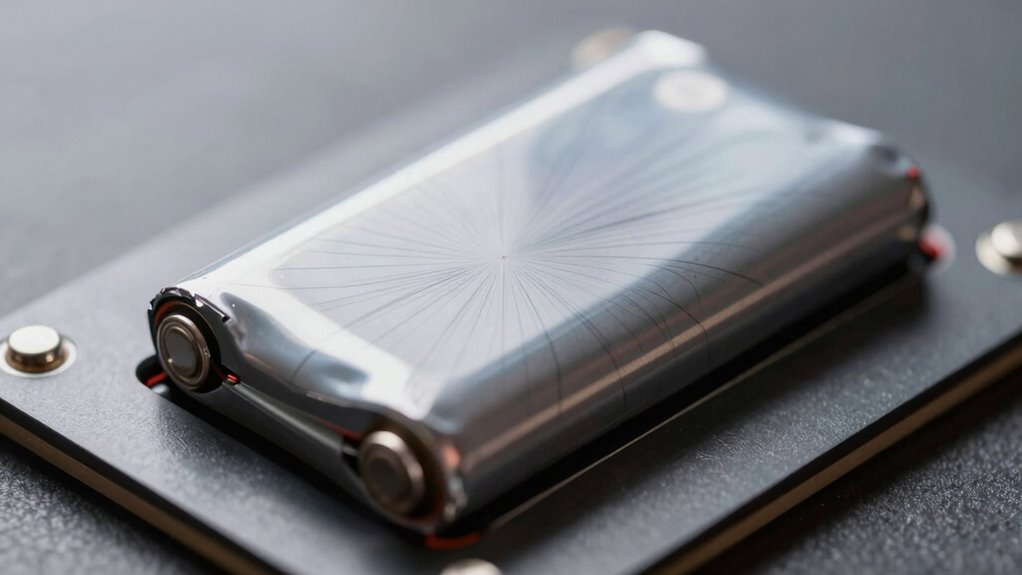
Embedding electronics or batteries into materials might seem like a clever way to create integrated gadgets or illuminated projects, but it introduces serious safety and functionality risks. Battery hazards, such as short circuits, overheating, and potential fires, make electronic embedding dangerous. Additionally, laser cutting can damage delicate components, causing malfunctions or exposing you to electrical risks. Here are three key concerns:
- Fire risk: Laser heat can ignite batteries or electronic components, leading to dangerous fires.
- Damage to electronics: The laser beam can destroy sensitive circuitry or wiring, rendering devices inoperable.
- Unpredictable outcomes: Embedding electronics without proper insulation or shielding can cause shorts or malfunctions, risking safety and project integrity.
Avoid embedding electronics or batteries to guarantee safety and reliable results.
Materials Too Thick or Dense for Your Laser Power

If your material is too thick or dense, your laser may struggle to cut through it effectively, even at maximum power. Thick wood and dense plastics often fall into this category. These materials require more energy than your laser can provide, leading to incomplete cuts, excessive burning, or even damage to your equipment. Trying to cut through thick wood can cause warping or charring, while dense plastics may melt or produce harmful fumes without fully penetrating. If you encounter such materials, consider alternative methods like CNC routing or breaking the material into smaller sections. Pushing your laser beyond its limits can also pose safety risks. Always check your laser’s specifications and choose materials that match its capabilities for clean, safe cuts.
Coatings, Paints, or Adhesives That Can Burn or Smolder
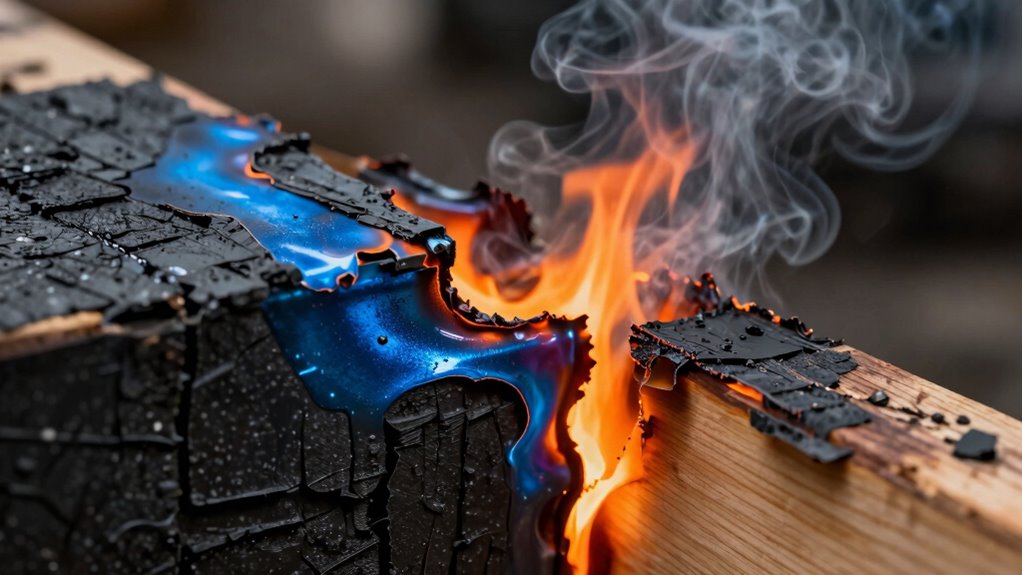
Coatings, paints, and adhesives can pose serious fire hazards when laser cutting because many are designed to be combustible or contain volatile chemicals. These materials may ignite or smolder unexpectedly, risking fire or damage. Be especially cautious of:
Coatings, paints, and adhesives can ignite unexpectedly during laser cutting, posing serious fire hazards.
- Flammable spray paints that have high coating flammability, which can ignite instantly.
- Adhesives with toxic fumes that release hazardous vapors when heated, increasing fire and health risks.
- Decorative coatings containing volatile solvents that can burn or produce toxic smoke during laser exposure.
Always check material safety data sheets for flammability and toxicity information. Avoid using coated or glued materials that lack heat-resistant properties, as they can ignite or smolder, creating dangerous conditions.
Organic and Biological Materials That Are Unsafe to Laser
Many organic and biological materials are unsafe to laser due to their propensity to produce toxic fumes, unpredictable fires, or harmful biological agents when heated. These materials pose significant biological hazards, risking the release of bacteria, viruses, or mold spores that can be hazardous to health. Organic toxicity is another concern, as burning or vaporizing these substances can release dangerous chemicals or carcinogens. Items like bone, tissue, or certain food products should never be laser cut because they can emit harmful biological agents and toxic fumes. Even natural materials such as leaves, herbs, or wood with mold or bacteria can become hazardous when heated. To protect yourself and others, avoid laser cutting any biological or organic material that isn’t specifically designed for safe laser processing.
Items With Metal Parts or Embedded Components That Could Explode
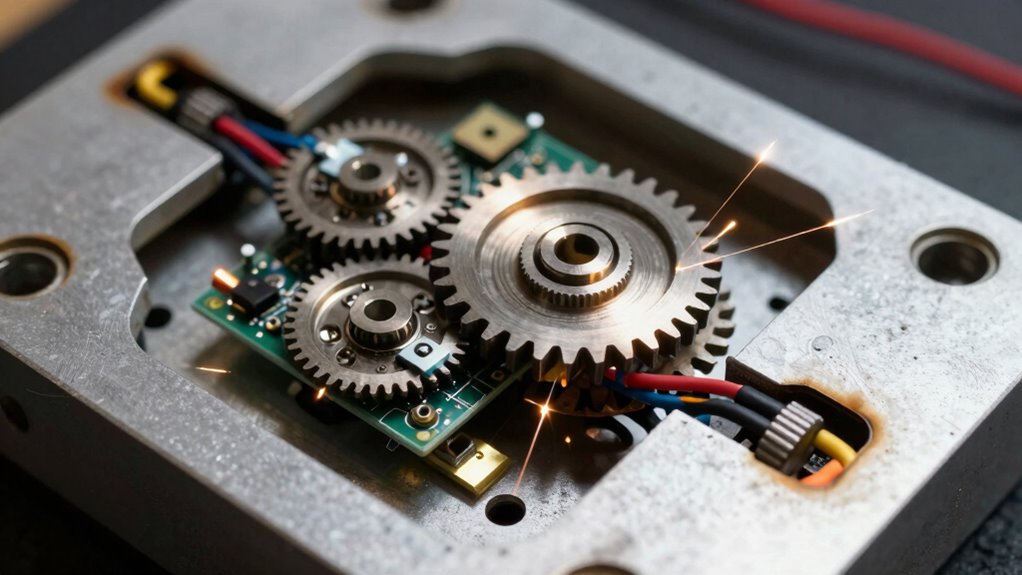
Laser cutting metal parts can create sparks and fires, posing safety hazards. Embedded electronics inside objects can overheat or explode when exposed to the laser. Always identify these risks before attempting to cut such items.
Metal Sparks and Fires
When laser cutting items with metal parts or embedded components, sparks and fires can occur unexpectedly, posing serious safety risks. Metal sparks can ignite nearby materials or cause the laser equipment to malfunction. Fire hazards increase when metal fragments reflect laser energy or heat up rapidly. Be cautious of:
- Metal jewelry or accessories with embedded stones that can produce sparks during cutting.
- Metal-filled plastics or composites that may ignite or cause flare-ups.
- Items with thin metal sheets or embedded metal pieces that can overheat and spark.
These situations create unpredictable sparks and fire hazards, risking damage to your workspace and personal injury. Always inspect materials thoroughly and avoid cutting any items with unknown or embedded metal components to prevent dangerous sparks and fires.
Embedded Electronics Risks
Items with metal parts or embedded electronic components can pose serious explosion risks during laser cutting because the intense heat can ignite batteries, capacitors, or other sensitive elements, causing sudden and dangerous releases of energy. Electronic components and circuit boards often contain materials that are highly combustible or volatile when heated rapidly. When laser cutting materials with embedded electronics, the heat can damage or rupture these components, leading to fires or explosions. Lithium-ion batteries, in particular, are prone to thermal runaway if compromised. Even small circuit boards with metal connectors or embedded chips can spark dangerous reactions. To stay safe, avoid laser cutting any items containing electronic components or circuit boards, as the risks of explosion and fire outweigh any potential benefits.
Frequently Asked Questions
Can Recycled or Reclaimed Materials Be Safely Laser Cut?
Recycled or reclaimed materials can be laser cut, but you should consider recycling challenges and material integrity first. These materials may contain contaminants or impurities that affect cutting quality and safety. Always inspect for coatings, adhesives, or unknown substances, as they can produce harmful fumes or damage your equipment. Testing a small area first helps guarantee safety and precision, and understanding the specific material’s properties prevents potential hazards.
Are There Specific Types of Plastics That Are Safe for Laser Cutting?
You should avoid certain plastics like PVC and polystyrene because they pose plastic safety risks when laser cut. Instead, opt for materials like acrylic, polycarbonate, or PETG, which are safer choices. Proper material selection is vital for safety and quality. Always check manufacturer guidelines and verify your workspace has good ventilation. By choosing the right plastics, you minimize hazards and achieve better results in your laser cutting projects.
How Does Laser Power Affect the Safety of Cutting Various Materials?
Laser power acts like a double-edged sword, directly impacting material safety. When you crank up the laser power, it cuts faster but risks releasing toxic fumes or damaging materials. Lower power settings make cutting safer and more precise, but may struggle with thicker materials. Always adjust laser power carefully and follow safety guidelines to guarantee both your safety and the integrity of the materials you’re working with.
What Are the Best Practices for Ventilating Fumes During Laser Cutting?
You should prioritize proper ventilation systems and fume extraction to guarantee safe laser cutting. Always operate your laser cutter in a well-ventilated area and use dedicated fume extractors to remove harmful fumes promptly. Regularly maintain and check your ventilation systems to keep air quality high. Wearing appropriate protective gear and following manufacturer guidelines further enhances safety, preventing exposure to hazardous fumes during your cutting process.
Can Laser Cutting Be Safely Performed on Layered or Composite Materials?
Laser cutting layered composites can be safe if you understand the risks. You need to be cautious because laser processing may cause material delamination, especially with sensitive layers. It’s like walking a tightrope—you must balance heat and precision carefully. Always test small sections first, use proper ventilation, and monitor for fumes or warping. When done correctly, you can cut layered composites safely without compromising their integrity or safety.
Conclusion
Now that you know what materials to avoid, isn’t it worth taking a little extra time to keep your projects safe? Laser cutting can be amazing, but only when you’re cautious about what you’re working with. Always do your research, use proper safety gear, and trust your instincts. After all, isn’t it better to be safe than sorry? Happy and safe laser cutting!
Fall Picks
fall essentials
As an affiliate, we earn on qualifying purchases.