TL;DR
AI can help engineers shape parts around specified loads and help monitor some nozzle-based 3D printers for errors. The source material says text-to-CAD remains research, and simulations or automated checks cannot replace human review and physical testing of parts that carry loads.
A November 29 explainer from Thorsten Meyer AI describes AI tools that can shape parts around specified loads and monitor some 3D printers for errors, while stressing that engineers still need to review designs and test finished parts. The distinction matters because a plausible computer model or an automatically corrected print does not establish that a part is safe under real conditions.

Get business pricing on monitors, keyboards and dev gear
- Business-only prices and quantity discounts
- Tax-exempt purchasing
- Multiple users, one account, clear invoices
In generative design, an engineer supplies requirements such as loads, attachment points and areas the design must avoid. Software then proposes a shape that meets those constraints. The source cites NASA Goddard engineer R. McClelland’s work on generative design, reporting that software can produce lighter, stiffer designs in hours rather than days. Those outcomes depend on the inputs: a missing load, fastener or clearance requirement can make a convincing-looking design unsuitable.
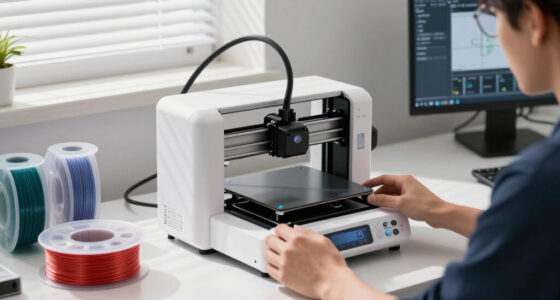
AI-assisted monitoring has also been demonstrated for material extrusion printers, which melt and deposit plastic through a nozzle. The source describes research by Cambridge researchers Brion and Pattinson, published in Nature Communications, in which a camera-based system learned to identify and correct common nozzle errors during a print. That is a defined application, not evidence that cameras can detect every defect or verify a part’s strength.
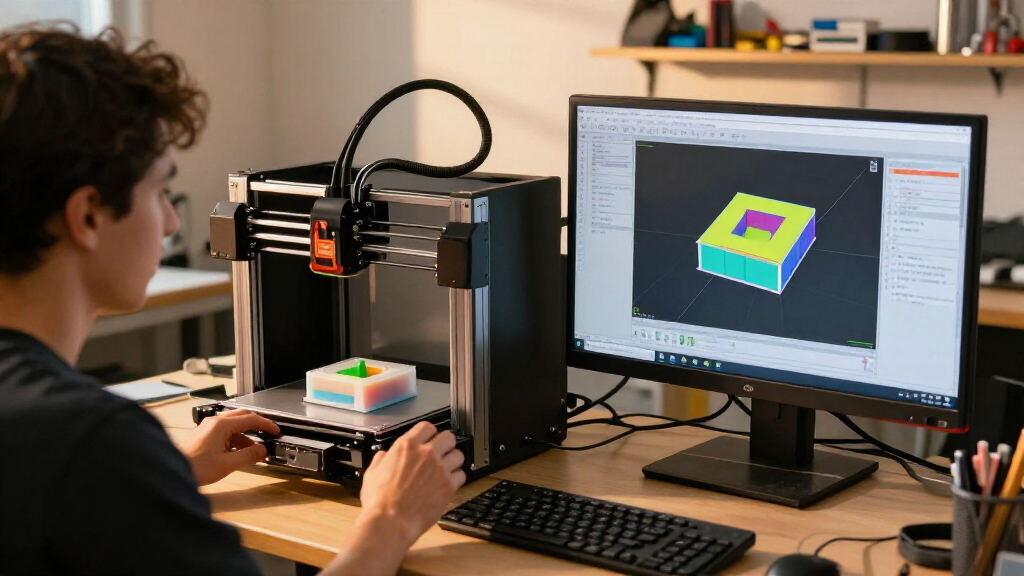
The article traces a typical workflow from computer-aided design (CAD), through simulation and slicing, to printing. A slicer divides a model into layers and generates machine instructions, often G-code. The cited material does not identify an AI use at the slicing stage. It also cautions that text-to-CAD systems remain research: software producing a model or executable code does not show that the resulting geometry is correct or fit for use.

Design Gains Still Need Testing
AI may reduce the time needed to explore design options and help catch certain printing problems while a machine is running. For engineers, that can make iteration faster. For home users, a printer camera may act as an additional way to notice a failed print, but it is not a substitute for checking the first layers or inspecting the finished object.
The central limit is that automated systems work from their inputs and available data. A simulation estimates how a design responds to modeled forces; it does not reproduce every material variation or use condition. The source says NASA’s AI-designed parts still go through standard stress analysis and testing, and points to NASA’s standard for printed flight hardware. Parts that bear weight, protect people or are intended for flight therefore require appropriate human review and physical tests.
Products Worth Considering

Kindle Paperwhite (12th Generation, 2024), 16 GB, 7-inch Display, Black

Jackery Explorer 1000 v2 Portable Power Station

Anker SOLIX C1000 Gen 2 Portable Power Station
As an affiliate, we earn on qualifying purchases.
From CAD Model to Printed Layers
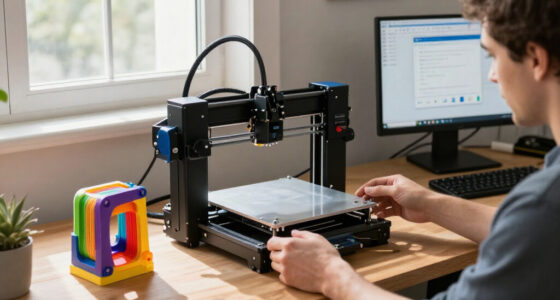
Three-dimensional printing, also called additive manufacturing, builds an object by adding material layer by layer. Common approaches include material extrusion, which deposits melted plastic; resin printing, which hardens liquid with ultraviolet light; and powder-based processes that use a laser or electron beam. The camera-monitoring study described in the source concerns material extrusion, not every type of printer.
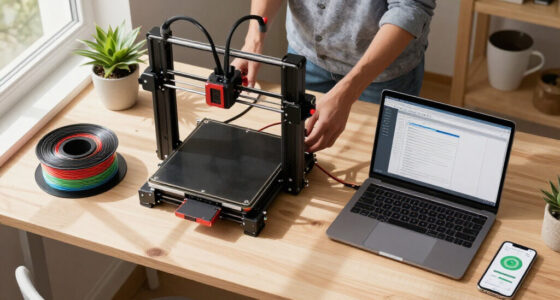
The workflow helps explain where the cited AI applications fit. Engineers first make a dimensioned model in CAD and may use simulation to estimate how it responds to forces. A slicer then turns the model into layered machine instructions. The printer follows those instructions, though unexpected production failures can still lead to adjustments and another print. AI assistance at one stage does not validate the others.
The source also notes legal limits in the United States: purely AI-generated output is not eligible for copyright, and only humans can be named as inventors. These points concern authorship and patent rules; they do not determine whether an engineering design is accurate or safe.
Limits of Automated Checks
The source does not specify how often the camera system catches errors, which failure types it misses, or how well it performs across printers, materials and operating conditions. It also gives no independent comparison of the reported design time or weight and stiffness results against a common benchmark.
Text-to-CAD is characterized as research rather than a dependable production tool, but the source does not identify particular systems or quantify their error rates. More broadly, it does not establish that AI monitoring or simulation can certify a finished part. The part’s performance under actual loads remains a separate question that requires suitable testing.
Validation Remains the Next Step
For each application, the next practical step is validation: engineers need to check whether the model includes the real loads, fasteners, clearances and material assumptions, then assess the printed part against its intended use. For safety-related hardware, the source says standard analysis and testing still apply.
Further evidence on camera-based monitoring would clarify which errors it can reliably catch and how the method performs beyond the studied setup. Until those limits are established, AI tools can assist particular steps in design and printing, while responsibility for approving a part stays with people and the tests appropriate to its use.
Key Questions
Can AI design a 3D-printed part from a text prompt?
The source describes text-to-CAD as a research area, not a tool that can yet be relied on to produce correct, usable parts. A model or code that runs does not prove the geometry is suitable.
How can AI help during a 3D print?
A camera-based research system described in the source learned to detect and correct common nozzle errors on material extrusion printers. The source does not show that it catches every defect or applies to all printer types.
Does AI replace testing a printed part?
No. The source says simulation and automated monitoring do not replace physical testing. Parts that carry loads or protect people still need review and tests suited to their use.
Where does AI fit in the 3D-printing workflow?
The cited examples cover generative design and printer monitoring, with simulation used to check how a design may respond to forces. The source describes slicing as the step that creates layered machine instructions but does not identify an AI application there.
Source: Thorsten Meyer AI