📊 Full opportunity report: Training Tech Helps Put Young Athletes’ Form In Context on IdeaNavigator AI — validation score, market gap, and execution plan.

Get business pricing on monitors, keyboards and dev gear
- Business-only prices and quantity discounts
- Tax-exempt purchasing
- Multiple users, one account, clear invoices
TL;DR
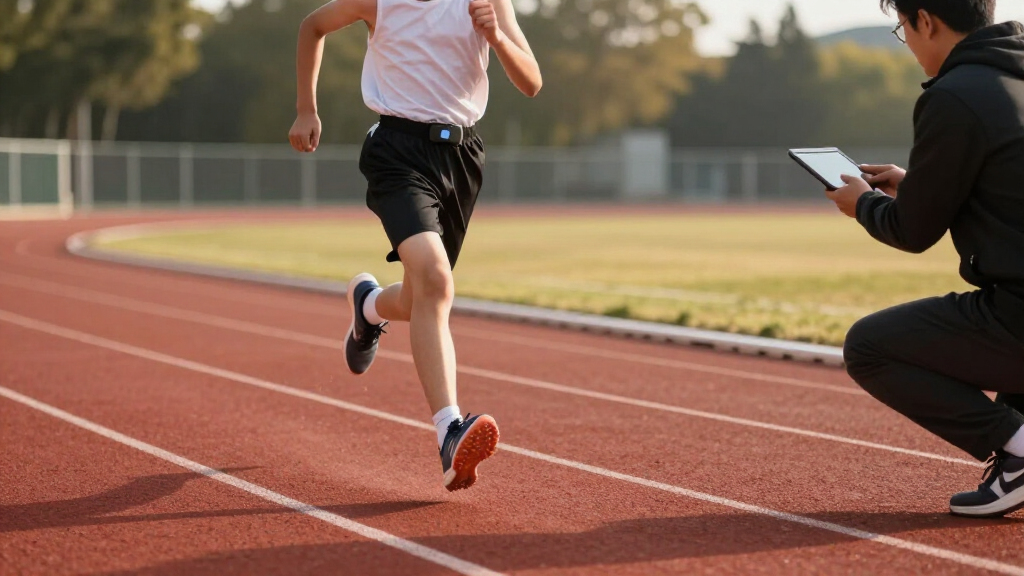
IdeaNavigator AI has proposed a youth sports training app that grades a young athlete’s filmed movements against pro-derived reference mechanics and suggests one targeted drill. The concept is at the proposal stage; no working product, pilot results, or validated accuracy data are provided.
IdeaNavigator AI has proposed a mobile training app that would compare young athletes’ filmed movements with pro-derived reference mechanics, grade selected checkpoints and prescribe one drill per session. The concept targets parents whose children practice without a private coach, but it remains a product proposal: no app launch, performance results or completed youth-athlete trial are reported.
The proposed workflow is to film a repetition, then have the app overlay the young athlete’s motion against a reference profile for that sport and skill. It would assess selected mechanics, such as hip rotation, release angle and stride, identify a main gap and recommend one drill intended to address it. The proposal describes phone-based pose estimation as making this kind of feedback accessible, but provides no measured accuracy figures or evidence that a particular system has been tested on children.
The suggested first version would focus on baseball hitting rather than attempt to cover multiple sports at once. To evaluate it, the proposal calls for a pilot involving 100 children, with certified coaches comparing the app’s grades with their own assessments. That is a proposed validation plan, not a completed study; no coach ratings, agreement statistics or participant details are given.
The business model described is a family subscription for each sport, with a separate coach tier for team use. The proposal frames the central customer as a parent seeking feedback for a child who does not have access to individual coaching. Pricing, subscription terms and whether the service would be sold directly to families or through teams are not specified.
A Low-Cost Alternative to Private Feedback
The idea addresses a practical gap in youth sports: children can repeat a movement many times without a coach watching each attempt, while individual coaching can be expensive. The proposal puts private sessions at $75 to $150 each, presenting automated feedback as a potentially more accessible supplement for families. Those prices are figures stated in the proposal; no location, date range or independent pricing survey is supplied.
If a tool can provide useful, sport-specific feedback from a phone recording, it could help parents and athletes notice movement patterns between coached sessions. But a mechanics score is not itself proof that a technique is unsafe, that a drill will correct it, or that an athlete will improve. For families, coaches and teams, the value would depend on whether the app’s judgments are reliable and understandable, and whether its instructions are appropriate for a child’s age and skill.
That makes coach review central to the proposal, rather than a secondary feature. A product that disagrees with qualified coaches or offers misleading corrections could give families misplaced confidence. The suggested comparison across 100 children is an initial test concept; it would not, on its own, establish performance across different sports, ages, body types, recording conditions or levels of experience.
As an affiliate, we earn on qualifying purchases.
From Phone Video to Coaching Feedback
The proposed app combines two ideas: estimating body motion from video and comparing that motion with reference profiles for a particular athletic skill. In the suggested product, this analysis would be packaged as a short loop: record a repetition, review a grade, then try a drill. The pitch is not simply to store or replay video, but to turn it into an actionable prompt for practice.
The proposed first customer is narrowly defined: a parent of a young athlete practicing without a private coach. The stated problem is that repeated swings, throws or strides may reinforce a movement flaw when no one is present to notice it. The plan’s focus on a single sport and a small set of checkpoints would give a pilot a clearer scope than a broad launch across youth sports.
IdeaNavigator AI presents phone-based pose-estimation capability as the reason the product may now be feasible. However, the proposal does not identify a model, describe its technical testing or show that it can reliably assess baseball swings from ordinary phone video. Its suggested coach audit is therefore a proposed next step toward testing the premise, not evidence that the premise has already been demonstrated.
As an affiliate, we earn on qualifying purchases.
Accuracy and Child-Specific Guidance
No product name, developer team, release schedule or prototype results are provided. It is also unclear which pro-derived reference motions would be used, how those profiles would account for differences in age and physical development, or how the system would handle camera placement, clothing and recording quality. The proposal gives no benchmark for acceptable agreement between the app and coaches.
The stated concern that unnoticed flaws can become habits or increase injury risk is part of the product rationale; no injury data or evidence that this proposed app reduces injury is supplied. The material also does not explain how recordings of children would be stored, who could view them, or what privacy protections and parental consent process would apply. Those questions would need answers before families could assess the product’s safety and usefulness.
sports pose estimation smartphone app
As an affiliate, we earn on qualifying purchases.
As an affiliate, we earn on qualifying purchases.
A Coach-Audited Baseball Pilot
The next step set out in the proposal is a baseball-hitting pilot involving 100 young athletes, with certified coaches reviewing the app’s grades against their assessments. No dates, participating coaches, recruitment plans or evaluation criteria have been announced. Any findings would need to show not only whether app grades match coach judgments, but also when the tool fails and how its feedback is communicated to children and parents.
Until such a pilot is carried out and results are reported, the concept should be treated as an early product idea rather than a proven training method. The proposal does not give a launch timetable or confirm that development has begun. The article ends with the named attribution required by the assignment.
Source: IdeaNavigator AI
As an affiliate, we earn on qualifying purchases.
Key Questions
Is the youth sports form-grading app available now?
No launch or available product is reported. IdeaNavigator AI describes a proposed app concept, without a release date or confirmation that a working version exists.
How would the app evaluate an athlete’s movement?
The proposed system would analyze phone video, compare motion with pro-derived reference mechanics, grade selected checkpoints and recommend one drill. Its actual accuracy has not been reported.
What sport would be tested first?
The proposal suggests a pilot focused on baseball hitting, with certified coaches reviewing app grades for 100 children against their own assessments. The pilot has not been reported as completed.
Does the proposal show that the app prevents injuries?
No. Injury risk is cited as part of the problem the concept aims to address, but no evidence is presented that the proposed app reduces injuries or changes outcomes.
Source: IdeaNavigator AI
Fall Picks
fall essentials
As an affiliate, we earn on qualifying purchases.