
📊 Full opportunity report: Webinar follow-up personalization tool for B2B consultants on IdeaNavigator AI — validation score, market gap, and execution plan.

Get business pricing on monitors, keyboards and dev gear
- Business-only prices and quantity discounts
- Tax-exempt purchasing
- Multiple users, one account, clear invoices
TL;DR
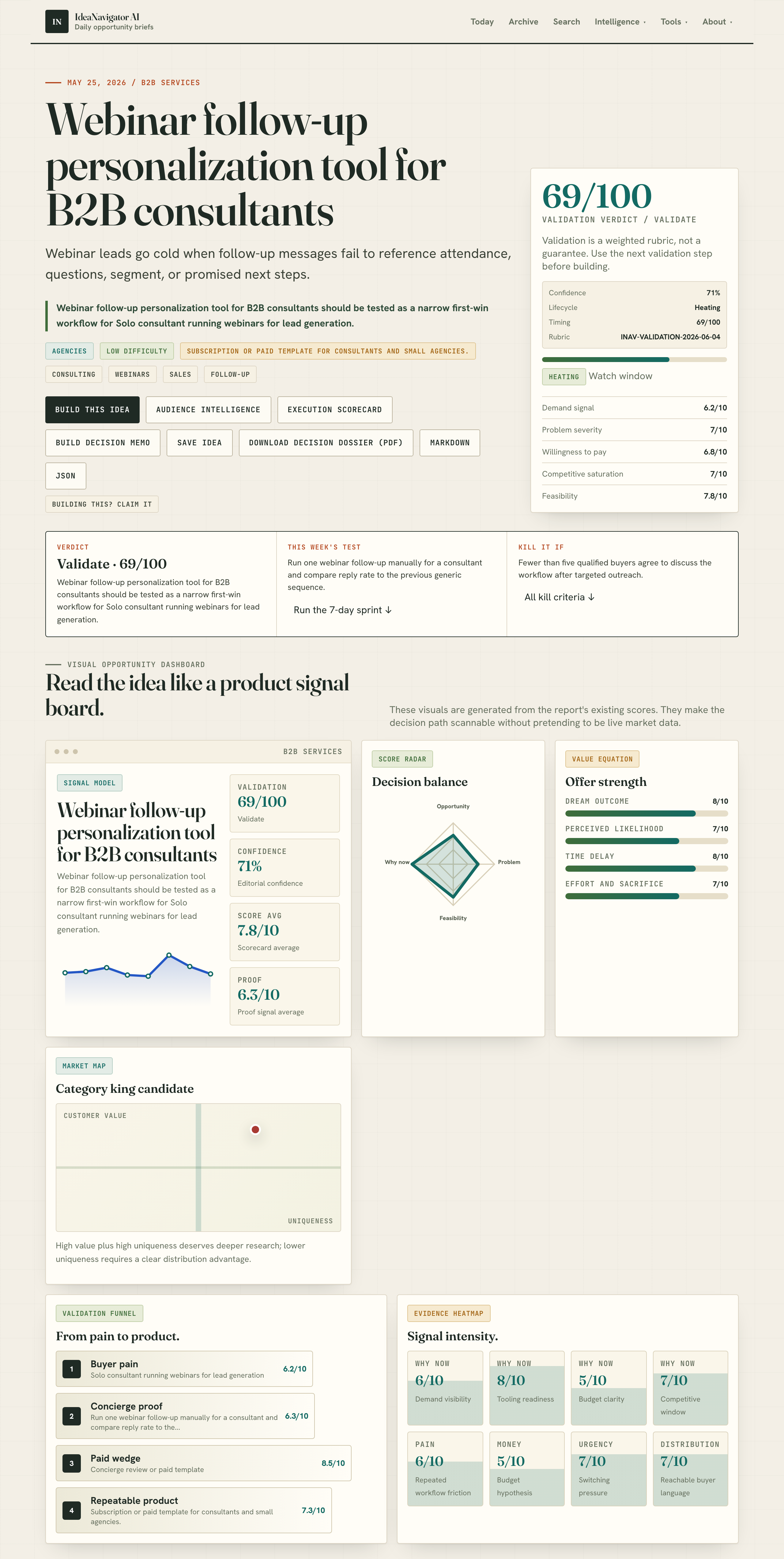
A prototype webinar follow-up personalization tool for B2B consultants is being tested as a first step to enhance post-webinar engagement. The tool aims to increase reply rates by customizing follow-up messages based on attendee data.
A new webinar follow-up personalization tool tailored for solo B2B consultants is entering a testing phase, aiming to improve reply rates and lead engagement after webinars. The tool seeks to address the common challenge of leads going cold due to generic follow-up messages, offering a more targeted approach based on attendee data.
The proposed tool is designed for solo consultants who run webinars for lead generation within the B2B services market. It will enable users to create a follow-up queue that automatically incorporates attendee notes, questions, topic interests, and suggested next steps, making follow-up messages more relevant and personalized.
The initial testing involves running one webinar follow-up manually using the tool and comparing the response rates to previous generic sequences. The goal is to validate whether this personalized approach can significantly improve engagement and conversion rates.
IdeaNavigator AI reports that the tool will be offered via a subscription model or paid templates tailored for small agencies and individual consultants. It is still in the early testing stage, with broader market deployment contingent on initial results.
Potential Impact on Lead Engagement and Conversion
If successful, the tool could significantly enhance the effectiveness of webinar follow-ups for solo B2B consultants, a segment that often struggles with scaling personalized communication. Improving reply rates can lead to higher conversion and better ROI from webinar efforts, making this an important development in the B2B lead generation landscape.
Products Worth Considering

Apple AirPods Pro (2nd Generation) Wireless Earbuds with USB‑C Charging, Up to 2X More Active Noise Cancelling, Transparency Mode, Adaptive

Sony WH-1000XM5 Premium Noise Cancelling Wireless Headphones – Midnight Blue

Amazon Kindle Paperwhite (2024, 16 GB) – 7-inch Glare-Free Display, Black
As an affiliate, we earn on qualifying purchases.
Growing Need for Scalable Personalization in B2B Webinars
Webinars are a common strategy for B2B service providers to build trust and generate leads. However, manual follow-up remains a bottleneck, especially for solo consultants who lack the resources to personalize messages at scale. Current practices often result in leads going cold, reducing the overall effectiveness of webinar campaigns.
Previous efforts to automate follow-up have relied on generic sequences, which tend to underperform. The new tool aims to bridge this gap by providing more targeted, attendee-specific messaging, leveraging data collected during the webinar.
“Personalized follow-up messages that reference attendee questions and interests can significantly improve engagement rates.”
— an anonymous researcher
Unclear Effectiveness and Broader Adoption Timeline
It is not yet confirmed how much the tool will improve reply rates in practice, as initial testing is still underway. Broader adoption depends on the results of these early tests and subsequent validation in diverse webinar scenarios. Details about long-term scalability and integration with existing CRM systems remain to be seen.
Next Steps in Testing and Market Rollout
The immediate next step is to complete initial testing by running live webinars with the tool and analyzing response data. If results are promising, developers plan to refine the product and expand availability through subscription plans or templates. Further validation will include larger pilot programs with different types of B2B consultants and agencies.
Key Questions
How will the tool personalize follow-up messages?
The tool will use attendee notes, questions, expressed interests, and suggested next steps to generate tailored follow-up messages, making each communication more relevant to the recipient.
Is this tool available for all B2B consultants now?
No, it is currently in testing with a limited number of users. Broader availability will depend on successful validation results.
What are the expected benefits of using this tool?
Potential benefits include higher reply and engagement rates, improved lead conversion, and more efficient follow-up processes for solo consultants.
Will the tool integrate with existing webinar or CRM platforms?
Details about integration capabilities are still under development, with plans to enable compatibility with common webinar and CRM tools in future versions.
Source: IdeaNavigator AI