
TL;DR

Get business pricing on monitors, keyboards and dev gear
- Business-only prices and quantity discounts
- Tax-exempt purchasing
- Multiple users, one account, clear invoices
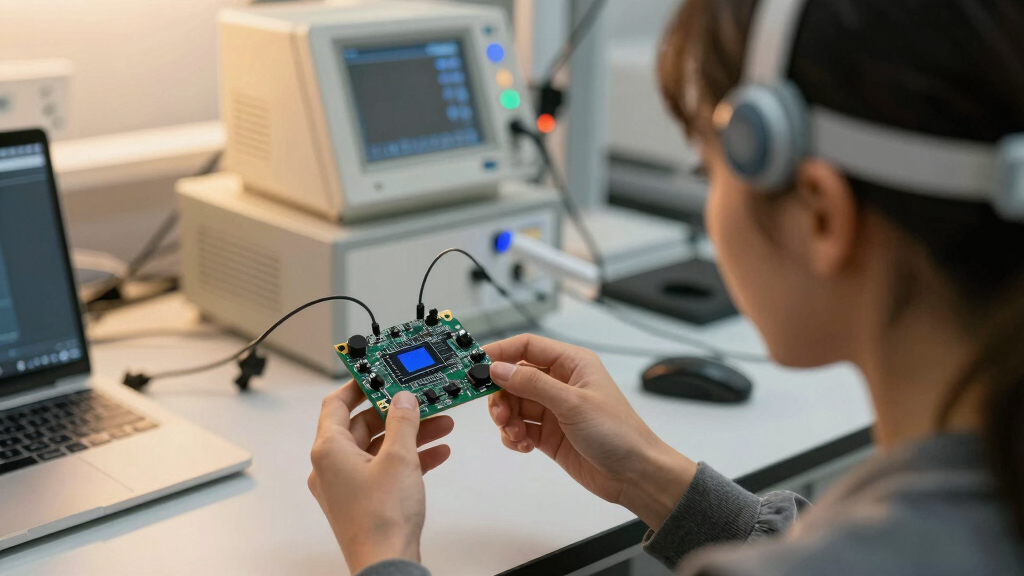
Cerelog announced the ESP-EEG, an open-source, 8-channel biosensing board utilizing the TI ADS1299 chip. It aims to provide cleaner signals at a lower price than comparable devices like OpenBCI Cyton, with software support for popular biosensing platforms.
Cerelog has launched the ESP-EEG, an open-source 8-channel biosensing board featuring the Texas Instruments ADS1299 analog-digital converter, offering a more affordable alternative to existing solutions like OpenBCI Cyton.
The ESP-EEG is built around the TI ADS1299 chip, known for its 24-bit resolution and use in high-quality EEG devices. It is designed by former SpaceX hardware engineer Simon Hakimian and is marketed as providing cleaner signals due to true closed-loop active bias circuitry. The device supports software compatibility with the OpenBCI GUI via Lab Streaming Layer and Brainflow, facilitating integration with existing biosensing workflows.
The hardware schematics are open source under a CC-BY-NC-SA 4.0 license, while the firmware and software are licensed under MIT. However, the PCB layout files are not publicly available, and firmware access currently requires email request, creating some ambiguity around licensing details. The device currently only supports USB connections, with Bluetooth and WiFi hardware support planned but not yet implemented, limiting its use with electrically grounded computers for safety reasons.
Why It Matters
The ESP-EEG’s lower price point—less than half the cost of the OpenBCI Cyton—makes high-quality EEG research more accessible, especially for educational, hobbyist, and research applications with limited budgets. Its open-source design fosters community development and customization, potentially accelerating innovation in biosensing technology.
By integrating high-resolution ADCs with native WiFi capabilities and open-source software, the device could influence the development of more affordable, versatile EEG systems, expanding their use beyond traditional clinical settings into broader research and DIY projects.
As an affiliate, we earn on qualifying purchases.
Background
The OpenBCI Cyton, a popular 8-channel EEG device, has set a standard for open-source biosensing hardware but is relatively expensive. The Cerelog ESP-EEG aims to compete by offering similar or improved signal quality at a lower cost, leveraging the TI ADS1299 chip. The project is part of a broader trend toward open hardware and software in neuroscience research, with the goal of democratizing access to advanced biosensing tools.
Previous efforts in open-source EEG hardware have faced challenges related to signal quality, cost, and licensing restrictions. The ESP-EEG’s approach—using a well-regarded ADC, open schematics, and a fresh design architecture—addresses some of these issues, though questions about firmware availability and wireless support remain.
“I wanted to handle everything natively on the ESP32 for high-bandwidth WiFi streaming, which required a ground-up redesign.”
— Simon Hakimian, creator of ESP-EEG
“Firmware & Software: MIT License. Hardware Schematics: CC-BY-NC-SA. The split allows protection from commercial clones while supporting community debugging and modification.”
— Simon Hakimian, on licensing
As an affiliate, we earn on qualifying purchases.
What Remains Unclear
It remains unclear when wireless support will be fully implemented and available for use, as the firmware is not yet released. Additionally, the exact licensing scope and the extent of community support are still evolving, and the availability of PCB layout files is limited to non-commercial use.
As an affiliate, we earn on qualifying purchases.
What’s Next
Next steps include the release of firmware supporting Bluetooth and WiFi, further community testing, and potential commercial availability of the device. Monitoring updates from Cerelog will clarify how the device’s wireless capabilities develop and how the community adopts it.
As an affiliate, we earn on qualifying purchases.
Key Questions
How does the ESP-EEG compare to the OpenBCI Cyton?
The ESP-EEG uses the same TI ADS1299 chip as the Cyton and aims to offer similar or better signal quality at less than half the price, with a design focused on open-source hardware and native WiFi support.
Is the ESP-EEG ready for wireless use?
No, the current firmware only supports USB, but wireless support via Bluetooth and WiFi is planned and expected to be released in the future.
Can I modify or build on the ESP-EEG hardware?
Yes, the firmware and schematics are open source under MIT and CC-BY-NC-SA licenses, respectively, allowing for modification and community development, though PCB files are not publicly available for commercial use.
What are the main limitations of the ESP-EEG?
Currently, it only supports USB connections, lacks immediate wireless functionality, and the firmware access requires email request. Additionally, the hardware is not electrically isolated, so caution is advised when connecting to computers.
Halloween Picks
halloween
As an affiliate, we earn on qualifying purchases.
![Pixel 11 Ads Show A Mysterious Screen-equipped Tracker That's Not Pixel Watch 5 Or Fitbit Air [Gallery]](https://bestcadpapers.com/wp-content/uploads/2026/08/pixel-11-ads-show-a-mysterious-screen-equipped-tracker-that-s-not-pixel-watch-5-featured-560x300.jpg)