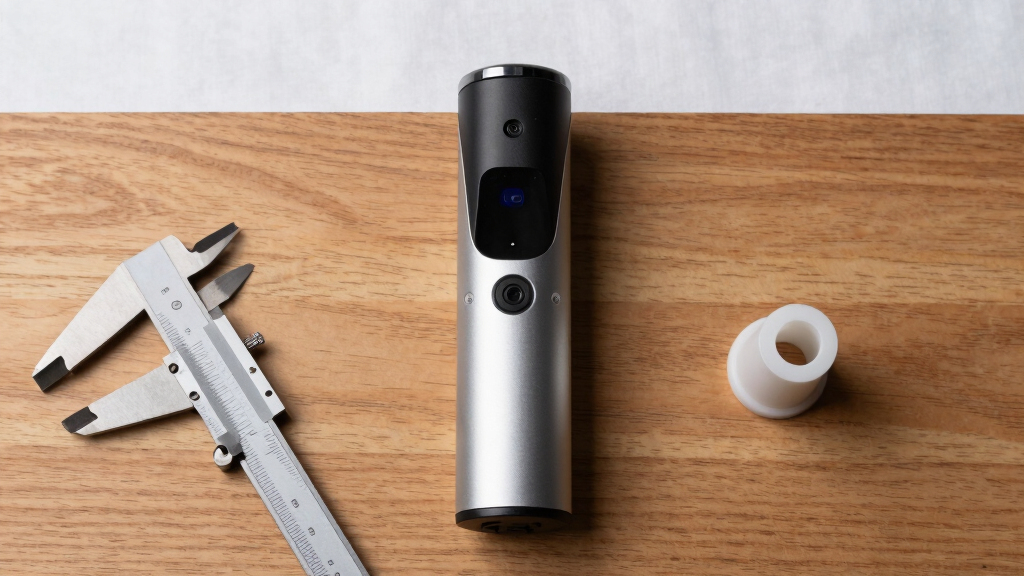
Finding the best 3D scanner for reverse engineering involves balancing precision, speed, and usability. The Revopoint MetroX Pro stands out as the overall top choice thanks to its industrial-grade 0.01mm accuracy and full-color scanning, ideal for detailed engineering work. For those prioritizing portability and real-time preview, the Revopoint INSPIRE 2 offers versatile wireless operation with decent precision. Meanwhile, the Creality Raptor Pro excels in metrology-grade accuracy for automotive and engineering projects. The challenge lies in choosing a device that balances your specific needs against budget and complexity. Continue reading for a detailed breakdown of each option to find your best fit.
Key Takeaways
- Precision levels vary significantly; industrial-grade scanners like the MetroX Pro deliver sub-0.02mm accuracy, essential for detailed reverse engineering.
- Portability and ease of use often come at the expense of maximum accuracy; handheld models like INSPIRE 2 balance convenience with solid performance.
- Laser-based scanners generally provide more accurate color and surface detail than structured-light options, but may be more sensitive to ambient lighting.
- Higher speed scanners like EINSTAR 2 are suited for quick prototyping but might sacrifice some resolution compared to slower, high-precision models.
- Price ranges are broad; investing in a premium scanner yields better long-term results for complex projects, but budget-friendly options can suffice for simpler tasks.

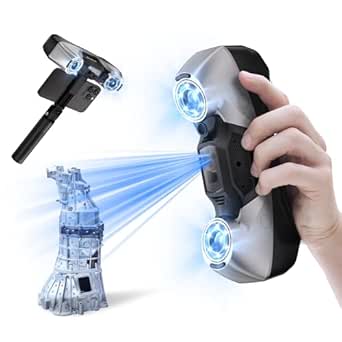


More Details on Our Top Picks
Revopoint MetroX Pro 3D Scanner for 3D Printing, Industrial-Grade Precision 0.01mm, 30+15 Blue Laser Scan, Full Color Scanning, for Reverse Engineering & Automotive Modeling, Standard
This model stands out for its industry-level accuracy with a 0.01 mm single-frame precision and volumetric accuracy that meets stringent industrial standards. Compared with the Revopoint MetroY Pro, it offers slightly higher accuracy and more versatile scanning modes, making it ideal for detailed reverse engineering. Its four scanning modes—including 62-line full-field structured light—allow it to handle shiny, dark, or complex surfaces without spray, which is a major advantage. The auto turntable and real-time streaming enable efficient workflows, especially for large or complex parts. However, this scanner requires a powerful PC, and its software can be complex for beginners. It makes the most sense for industrial professionals or advanced hobbyists needing top-tier precision, but might be too cumbersome for casual or entry-level users.
Pros:- Exceptional 0.01 mm single-frame precision
- Multiple versatile scanning modes for different surface types
- Full-color high-fidelity scans for realistic modeling
- Automated turntable for efficient multiple-angle capture
Cons:- Requires a high-performance PC, increasing setup cost
- Steep learning curve due to advanced features and software complexity
Best for: Industrial engineers, professional reverse engineers, or advanced prototyping labs needing high-precision scans.
Not ideal for: Hobbyists or beginners with limited technical experience who prefer simple, plug-and-play solutions.
- Scanner Type:3D Handheld/Turntable Hybrid
- Precision:0.01mm
- Accuracy:0.02mm
- Scanning Modes:4 modes including structured light and cross-line lasers
- Color Capture:Full color
- Connectivity:USB
Bottom line: Best suited for professionals demanding industrial-grade accuracy and versatile surface handling, but not ideal for casual users.
Revopoint MetroY Pro 3D Scanner for 3D Printing, Up to 0.01mm Precision, 34+15+1 Industrial Blue Laser Handheld Scanner, 62-Line Full-Field, Real-time Preview, Bulit-in Wi-Fi 6, Full-Color 3D Scan
This pick makes the most sense for users who need wireless capabilities and real-time control via Wi-Fi 6, making it ideal for on-site or mobile scanning. Its up to 0.01 mm precision and 7 million points per second ensure reliable, detailed data suitable for reverse engineering and detailed modeling. Compared with the Revopoint MetroX Pro, it offers more lines and a built-in Wi-Fi module for easier wireless operation, adding convenience for field use. Its multiple modes—including markerless and auto turntable—support complex surface scans with minimal setup. However, some users report software instability and connectivity issues, especially on Mac systems. This scanner is ideal for professionals and field technicians who prioritize mobility and ease of use but might be less suitable for those seeking absolute stability without dedicated software updates.
Pros:- Wireless Wi-Fi 6 enables cable-free operation
- High precision (0.01mm) with fast data acquisition
- Multiple scanning modes for different surfaces
- Full-color, high-resolution 3D textures
Cons:- Software can be unstable, especially on Mac
- Connectivity issues may disrupt workflow in some environments
Best for: Mobile technicians, field engineers, or hobbyists who need wireless operation and flexible scanning in real-world environments.
Not ideal for: Users with limited Wi-Fi stability or those requiring the most stable, high-precision industrial data for critical manufacturing.
- Scanner Type:Handheld with Wi-Fi
- Precision:0.01mm
- Points per Second:7 million
- Color Capture:Full color
- Connectivity:Wi-Fi 6
- Scanning Modes:Multiple including markerless and auto turntable
Bottom line: Ideal for portable, wireless scanning with high detail, but less suited for users needing rock-solid stability.
Revopoint MetroX Pro 3D Scanner for 3D Printing, Industrial-Grade Precision 0.01mm, 30+15 Blue Laser Scan, Full Color Scanning, for Reverse Engineering & Automotive Modeling, Advanced
This version of the MetroX Pro emphasizes ultra-precise data capture with 0.01 mm accuracy across multiple modes, making it perfect for automotive and industrial reverse engineering. Compared to the MetroY Pro, it offers more advanced calibration and high-accuracy modes designed for detailed component analysis. The inclusion of full-color textured scans enhances realism for heritage or product visualization. Its automatic turntable and multiple laser modes support complex surface scans without spray. The drawback lies in its software stability issues reported by some users and the high demand for a powerful PC, which might be prohibitive for small-scale or casual hobbyists. This model is best for professionals requiring metrology-grade precision but less ideal for beginners or casual users.
Pros:- Exceptional 0.01 mm precision for detailed work
- Multiple laser modes handle various surface types
- Full-color high-resolution textures for realistic models
- Automated turntable streamlines complex scans
Cons:- Software stability concerns reported by some users
- Requires a powerful PC, increasing overall cost
Best for: Metrology specialists, industrial reverse engineers, or automotive prototyping teams needing maximum detail and accuracy.
Not ideal for: Hobbyists or casual users who prefer simple, straightforward scanning with minimal setup and software complexity.
- Scanner Type:Turntable/Handheld hybrid
- Precision:0.01mm
- Accuracy:0.02mm
- Color Capture:Full color
- Laser Modes:Multiple, including structured light
- Connectivity:USB
Bottom line: Best for precise, industrial-level reverse engineering where accuracy and detail are paramount, but not for entry-level or casual scenarios.
Revopoint INSPIRE 2 3D Scanner for 3D Printing Handheld, Up to 0.03mm Precision, Multi-Line Laser/Structured Light, Wireless/Outdoor Scanning, Full-Color Scan, for iOS/Android/Win/macOS, Standard
This scanner emphasizes wireless and outdoor scanning capabilities with built-in Wi-Fi 6 and multi-line laser/structured light modes. Its accuracy of up to 0.03mm and high-density color textures make it suitable for heritage preservation, outdoor inspections, or large-scale reverse engineering. The powerful optical zoom and outdoor filters support capturing detailed geometry even in challenging lighting. Compared with the MetroX Pro, it offers greater portability, durability, and outdoor usability, at the expense of slightly lower accuracy. Its lightweight design (190g) and robust aluminum front panel make it ideal for fieldwork. However, some may find the 0.03mm precision insufficient for very fine industrial parts. This is a great choice for on-site, outdoor, or large-object scanning, where portability and environmental robustness are priorities.
Pros:- Wireless Wi-Fi 6 for flexible outdoor scanning
- High-resolution full-color textures
- Powerful optical zoom for detailed surface capture
- Lightweight and durable design for field use
Cons:- Accuracy (0.03mm) less suitable for ultra-fine industrial parts
- Some users report software bugs and connectivity hiccups
Best for: Field technicians, heritage conservators, or outdoor engineers needing portable, high-quality color capture in variable lighting conditions.
Not ideal for: Users requiring sub-0.02 mm accuracy for highly detailed industrial reverse engineering or small component analysis.
- Scanner Type:Wireless handheld
- Precision:0.03mm
- Color Capture:Full color
- Connectivity:Wi-Fi 6
- Laser Modes:Multi-line laser and structured light
- Weight:190g
Bottom line: Excellent for outdoor, large, or textured surface scans where portability and environmental resistance outweigh ultra-high precision.
Creality Otter Lite Basic 3D Scanner for 3D Printing & Reverse Engineering, Auto Scanning Handheld Device with 0.05mm High Precision, Color Texture & Portable Design for DIY
This scanner offers 0.05mm resolution with support for both close-range and long-range scanning, making it versatile for small object reverse engineering and DIY projects. Its full-color texture capture and portable design—lightweight at 235g—make it suitable for hobbyists and makers. Compared with the MetroX Pro, it is less precise but provides a more accessible entry point with an easy, plug-and-play approach. The included accessories like a turntable and calibration kit simplify setup. Its main drawback is the lower resolution and accuracy, which limits its use for highly detailed industrial parts or complex geometries. This makes it ideal for hobbyists and small-scale prototyping, but less so for professional reverse engineering where finer detail is required.
Pros:- Affordable price point for beginners
- Supports both close and long-range scanning
- Full-color texture with high-speed capture
- Lightweight and portable for on-the-go use
Cons:- Limited accuracy (0.05mm) for detailed industrial parts
- Less suited for complex geometries requiring high precision
Best for: DIY enthusiasts, small business owners, or students starting out in 3D scanning and reverse engineering.
Not ideal for: Professionals or industrial users needing high-precision data for complex part analysis or manufacturing.
- Resolution:0.05mm
- Scan Range:100-1500mm
- Color Texture:Full color
- Portability:Lightweight, portable
- Connectivity:USB 3.0/2.0
- Included Accessories:Turntable, calibration kit
Bottom line: A solid choice for entry-level, small-scale projects, but not for high-precision industrial reverse engineering.
Creality Otter Lite Basic 3D Scanner with High Precision 0.05mm, Auto Scanning, Color Texture Support, Portable Design for 3D Printing, Reverse Engineering & DIY Projects
This scanner stands out for its combination of high precision (0.05mm) and a dual-mode setup that supports both close-range and long-range scanning, making it versatile for various reverse engineering tasks. Compared to the Revopoint INSPIRE 2, which offers even finer detail at 0.03mm, the Otter Lite Basic’s true-color texture mapping at 30 fps and its lightweight, portable design make it ideal for on-the-go projects. The inclusion of a turntable, calibration tools, and user-friendly indicators simplifies operation, especially for DIY users. However, calibration can be tricky—as I experienced with barcode scanning during setup—and its resolution, while sufficient for many applications, falls short of industrial-grade scanners like the Creality Raptor Pro. This pick makes the most sense for hobbyists and small workshops needing reliable color textures and portability without sacrificing too much detail.
Pros:- Highly portable and lightweight (235g), easy to carry for fieldwork
- Supports both close and long-range scanning modes
- Full-color texture capture at 30 fps enhances visual fidelity
- Complete kit with turntable, markers, and calibration tools
Cons:- Calibration process can be confusing; barcode scanning was problematic
- Resolution might be insufficient for high-precision industrial reverse engineering
- Limited software options compared to more advanced scanners
Best for: Small-scale reverse engineering projects, DIY enthusiasts, and mobile 3D scanning needs
Not ideal for: Industrial quality control or detailed metal surface scans requiring sub-0.01mm resolution
- Resolution:0.05mm
- Scanning Range:100-200mm (close), 250-1500mm (long)
- Color Texture Support:Yes
- Frame Rate:Up to 30 fps
- Weight:235g
- Connectivity:USB-C, USB 3.0
Bottom line: This scanner suits hobbyists and small businesses seeking a portable, color-capable device for moderate reverse engineering tasks.
Creality 3D Scanner Raptor Pro for Automotive & Engineering Projects with Metrology-Grade 0.02mm Accuracy,22+7 Blue Laser, Up to 60FPS Scanning Speed
This model is distinguished by its metrology-grade accuracy of 0.02mm and its advanced laser configuration, which combines 22 cross laser lines and 7 parallel lines to optimize data capture for medium to large objects. Unlike the EINSTAR 2, which excels in portability and wireless operation, the Raptor Pro’s robust hardware—including a Qualcomm 8-core processor and 24GB RAM—handles massive datasets with ease, making it perfect for industrial reverse engineering and quality control. Its fast 60 fps scanning speed and adaptability to outdoor environments set it apart for large-scale, precision-demanding tasks. The software supports seamless transition into professional workflows with compatibility for Geomagic and Verisurf tools. The main tradeoff is its size and weight (around 8.3 pounds), which makes it less portable than handheld units like the EINSTAR 2. It’s the ideal choice for engineers and industrial labs focused on high accuracy and large object scanning.
Pros:- Exceptional accuracy (0.02mm) suitable for precise engineering tasks
- Fast scanning speed (60 fps) reduces data acquisition time
- Supports outdoor and challenging environments
- Powerful hardware with 24GB RAM and Wi-Fi 7 for large datasets
Cons:- Heavy and bulky, less portable for fieldwork
- High cost and complex setup may require technical expertise
- Size may be inconvenient for small workshop use
Best for: Industrial engineers, automotive reverse engineering, and quality assurance teams
Not ideal for: Hobbyists or mobile users needing lightweight, wireless scanning solutions
- Accuracy:0.02mm
- Laser Lines:22 cross + 7 parallel
- Scanning Speed:Up to 60 fps
- Connectivity:Wi-Fi 7, USB 3.0
- Processor:Qualcomm 8-core
- RAM:24GB
Bottom line: This scanner is best suited for professionals requiring top-tier precision and large-object scanning in industrial settings.
EINSTAR 2 Wireless 3D Scanner, 17 Parallel Blue Laser and Infrared Light, 0.05mm High Resolution, 90 FPS High Scanning Speed, Support 3D Printing, Reverse Engineering, Art and Design, AR/VR
The EINSTAR 2 makes a compelling case for users needing true wireless operation combined with high resolution (0.05mm) and rapid scanning at 90 fps. Compared to the Creality Otter Lite Basic, which relies on USB connections and manual setup, the EINSTAR 2’s built-in Wi-Fi and 3-hour battery life enable more flexible, outdoor, and on-site reverse engineering. Its dual laser system (17 lines + IR VCSEL) supports a wide range of applications—from small detailed parts to large objects—without requiring sprays or surface treatments, saving time and effort. The software, EXStar Hub, offers a user-friendly interface with model processing tools suitable for art, design, and AR/VR content creation. The main tradeoff is its higher price and slightly bulkier design, but for professionals seeking mobility and precision, it’s a strong choice.
Pros:- Wireless operation with built-in Wi-Fi and 3-hour battery life
- High scanning speed (90 fps) for real-time capture
- Supports black, metallic, and reflective surfaces without sprays
- Versatile for small parts and large objects
Cons:- Relatively higher price point
- Bulkier than handheld wired scanners
- Limited to surface color and reflectivity without post-processing
Best for: Mobile professionals, artists, and AR/VR developers needing wireless and fast scanning
Not ideal for: Heavy industrial environments or high-precision manufacturing requiring sub-0.02mm accuracy
- Resolution:0.05mm
- Frame Rate:90 fps
- Laser Lines:17 parallel + IR VCSEL
- Battery Life:3 hours
- Connectivity:Wi-Fi
- Supports:Black, metallic, reflective surfaces
Bottom line: Ideal for artists, mobile engineers, and AR/VR creators who prioritize wireless flexibility and speed in reverse engineering.
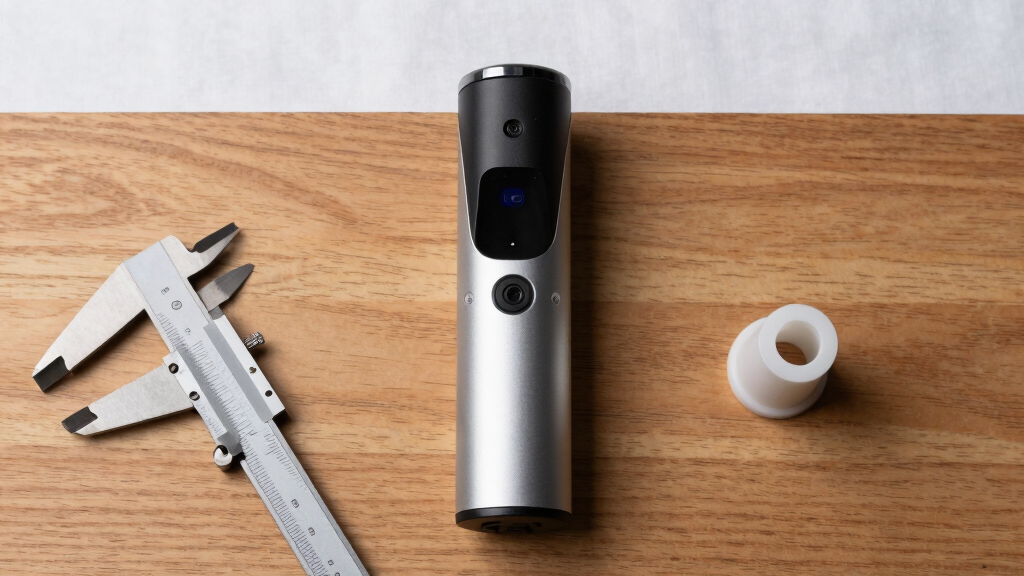
How We Picked
These products were selected based on a combination of key factors: scanning accuracy, speed, ease of use, build quality, and versatility. We prioritized devices with proven industrial or professional-grade performance, especially for reverse engineering applications requiring fine detail. Value was also a consideration—models that deliver high performance at a reasonable price point ranked higher. Additionally, we looked at user interface and portability, recognizing that ease of operation can significantly impact workflow. The ranking reflects a balance between technical capability and practical usability for different types of reverse engineering tasks.Factors to Consider When Choosing Best 3D Scanner For Reverse Engineering
Choosing the best 3D scanner for reverse engineering involves understanding several critical factors. Beyond raw accuracy, aspects like scanning speed, compatibility, and ease of use influence the overall experience. Considering these factors helps ensure you select a device that fits your specific project requirements and budget, avoiding common pitfalls such as overpaying for unnecessary features or opting for underpowered models that can’t deliver the needed detail.Accuracy and Resolution
For reverse engineering, high precision is often non-negotiable. Scanners with sub-0.02mm accuracy capture fine details needed for precise part replication or analysis. However, increased accuracy can come with higher costs and longer scanning times. Evaluate your project’s tolerance for detail versus throughput to determine the right accuracy level, and consider calibration and environmental factors that may influence measurement quality.
Speed and Workflow
Depending on your volume of work, scanning speed can be a decisive factor. Faster scanners like the EINSTAR 2 support high throughput, ideal for projects demanding quick turnaround. But speed often compromises some resolution; slower, high-precision devices focus on detail over speed. Think about your typical project size and deadlines to find the right balance, and look for models with efficient data processing and easy export options.
Ease of Use and Portability
Handheld and portable scanners simplify on-site or complex setups, reducing the learning curve. Devices with intuitive interfaces and wireless connectivity streamline workflows, especially when working in confined or awkward environments. However, portability may limit some advanced features found in larger, desktop models. Match your environment and skill level with a scanner designed for straightforward operation if ease of use is a priority.
Surface and Color Data Quality
For reverse engineering, capturing surface textures and colors can be essential, especially for aesthetic or functional analysis. Laser scanners generally excel at capturing detailed surface data, while structured-light scanners may struggle with reflective or dark surfaces. Consider your typical material types and whether full-color scanning is necessary for your projects, as this can influence the choice of technology and device cost.
Budget and Long-term Value
High-end scanners offer unmatched accuracy and speed but come with a steep price tag. Budget models may suffice for simple or occasional reverse engineering, but they risk limitations in detail and reliability. Investing in a mid-range or premium device often pays off for frequent or complex projects, especially when accuracy and durability are critical. Weigh your current needs against future growth to make a cost-effective choice.
Frequently Asked Questions
Can handheld 3D scanners achieve the same accuracy as stationary models?
While handheld scanners offer exceptional convenience and flexibility, they typically do not match the highest accuracy levels of stationary, tripod-based models designed for precision tasks. Modern handheld devices have improved significantly, delivering sub-0.05mm accuracy, but for detailed reverse engineering where micron-level precision is needed, stationary scanners with advanced laser or structured-light systems are usually more reliable. The choice depends on your specific accuracy requirements and workflow environment.
Is full-color scanning necessary for reverse engineering?
Full-color scanning can be highly beneficial when surface aesthetics, branding, or visual details are important in your project. However, for purely functional reverse engineering, color data is often secondary to geometric accuracy. Many high-accuracy scanners focus on precise shape capture and may only offer color as a secondary feature. Consider whether color information adds value for your specific application before prioritizing models with full-color capabilities.
How important is scanning speed for reverse engineering projects?
Scanning speed becomes critical when working with large batches or complex geometries that demand quick turnaround. Fast scanners can significantly reduce project time, but they often compromise some detail or resolution. Conversely, high-precision devices may take longer to scan but provide finer detail necessary for accurate part replication. Balance your project timelines with your resolution needs to choose an appropriate speed-accuracy tradeoff.
What maintenance should I expect with high-precision 3D scanners?
High-precision scanners require regular calibration and cleaning to maintain accuracy. Dust, fingerprints, or environmental factors can impact measurement quality. Some devices have automated calibration routines, simplifying maintenance. Investing in proper storage and handling practices can extend the lifespan and performance consistency of your scanner, especially in industrial or outdoor environments.
Should I consider software compatibility when choosing a scanner?
Yes, software plays a vital role in processing, editing, and exporting scan data. Compatibility with your existing CAD or reverse engineering tools can streamline the workflow and reduce additional costs. Look for scanners that offer broad file format support, easy integration, and user-friendly interfaces. Some models include dedicated software with advanced features, which can be a significant advantage in complex projects.
Conclusion
For general reverse engineering projects requiring high accuracy and detailed surface data, the Revopoint MetroX Pro offers an excellent balance of precision and usability, making it the best overall choice. If portability and quick results are your priorities, the Revopoint INSPIRE 2 is a strong contender for versatile, on-the-go work. Budget-conscious users or those just starting out might find the Creality Otter Lite Basic sufficient for simpler tasks. For automotive or engineering professionals demanding metrology-grade performance, the Creality Raptor Pro stands out as the premium pick. Tailor your choice based on your specific project scope, environment, and budget to get the best results in reverse engineering tasks.