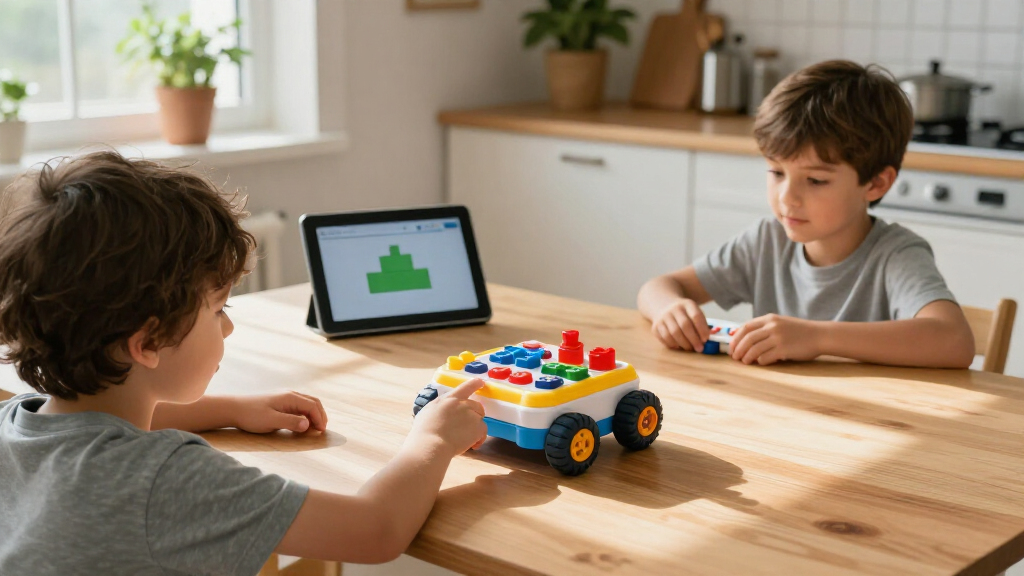

Computer coding toys for kids range from screen-free logic games to robots that kids program with a tablet or computer. My best overall pick is the Makeblock mBot, which offers a path from building the robot to coding its behavior; Botley 2.0 stands out for younger beginners who want screen-free play, while Let’s Start Coding Base Kit suits kids ready to work with real code concepts. The main choice is between hands-on, screen-free activities and toys that introduce device-based coding, with age, setup, and room to grow shaping the fit. Some kits teach sequences and logic through play, while others ask children to build, troubleshoot, or write code. Read on for the full comparison and a guide to choosing the right starting point.

Get business pricing on monitors, keyboards and dev gear
- Business-only prices and quantity discounts
- Tax-exempt purchasing
- Multiple users, one account, clear invoices
Key Takeaways
- mBot offers the broadest progression in this lineup: kids can build a robot and move into coding its behavior, though the setup is more involved than a screen-free toy.
- Botley 2.0 and the Thames & Kosmos Kids First Coding & Robotics set favor screen-free learning, making them better first steps for children who are not ready for app-based activities.
- Let’s Start Coding Base Kit and Coding for Kids: Python ask for more direct engagement with code; they suit learners ready to move beyond button-based robot commands.
- The two Botley kits serve different needs: Botley 2.0 adds more play modes, while the original Botley is a simpler option for introducing basic commands.
- Specialized picks fill narrower roles: ThinkFun Hacker focuses on cybersecurity logic, and the Coding Chameleon centers on a themed robotic pet experience.
| Playz My First Coding and Computer Science Kit for Kids |  | Best for Exploring Coding Concepts | Brand: Playz | Age range: 6 years and up | Activities: Binary necklaces, encryption, sorting races, mystery mazes, pixelated pictures | VIEW LATEST PRICE | See Our Full Breakdown |
| Educational Insights PYXEL Coding Robot for Kids |  | Best for Learning Blockly and Python | Brand: Educational Insights | Model: 1130 | Age range: 8–14 years | VIEW LATEST PRICE | See Our Full Breakdown |
| Makeblock mBot STEM Coding Robot Kit for Kids Ages 8+ | 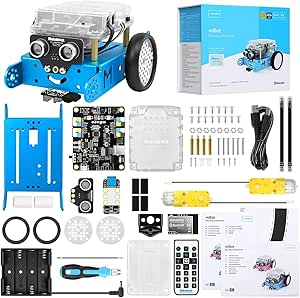 | Best for Building and Extending a Robot | Brand: Makeblock | Model: 90053 | Recommended age: 8 years and up | VIEW LATEST PRICE | See Our Full Breakdown |
| Thames & Kosmos Kids First Coding & Robotics |  | Best Screen-Free Structured Curriculum | Brand: Thames & Kosmos | Intended grade range: Grades K–2 | Manual: 64-page, full-color experiment manual | VIEW LATEST PRICE | See Our Full Breakdown |
| Learning Resources Botley 2.0 The Coding Robot |  | Best for Young Screen-Free Beginners | Brand: Learning Resources | Model number: LER2941 | Age range: 5–8 years | VIEW LATEST PRICE | See Our Full Breakdown |
| Let’s Start Coding Base Kit: Computer Coding Game for Kids 8-12+ and Teens |  | Best for Learning Real Code | Age range: 8–13 years | Coding language: C++ | Projects: 55+ online projects; description also states over 60 included | VIEW LATEST PRICE | See Our Full Breakdown |
| Ozobot Ozo at Home: Interactive STEM Coding Robot Kit for Kids Ages 5+ |  | Best for Screen-Free First Steps | Age range: 5 years and up | Included components: Ozo at Home robot, charging cable, color code markers, magnetic board, activity cards | Coding stages: Screen-free color coding and Ozobot Blockly | VIEW LATEST PRICE | See Our Full Breakdown |
| Teach Tech Mech-5 STEM Coding Robot Building Kit for Ages 10+ |  | Best for Building and Mechanical Coding | Age range: 10 years and up | Programming method: Buttons snapped onto a mechanical coding wheel | Actions: Throwing, lifting, kicking, drawing, forward and backward movement, 360-degree rotation | VIEW LATEST PRICE | See Our Full Breakdown |
| Coding for Kids: Python – Learn to Code with 50 Awesome Games and Activities |  | Best Book for Python Practice | Format: Book | Coding language: Python | Activities: 50 games and activities | VIEW LATEST PRICE | See Our Full Breakdown |
| Ozobot Evo Coding Robot Kit |  | Best for a Broad Lesson Library | Age range: 5–11 years | Included components: Evo robot, Get Started activities, charging cable, 5 dual-tip Color Code Markers, zip case | Coding modes: Ozobot Blockly and screen-free Color Codes | VIEW LATEST PRICE | See Our Full Breakdown |
| Learning Resources Botley the Coding Robot |  | Best for Growing Coding Skills | Brand: Learning Resources | Model: LER2936 | Recommended age: 5–8 years | VIEW LATEST PRICE | See Our Full Breakdown |
| Thames & Kosmos My Robotic Pet: Coding Chameleon |  | Best for Build-and-Code Play | Brand: Thames & Kosmos | Model number: 620507 | Recommended age: 8–12 years | VIEW LATEST PRICE | See Our Full Breakdown |
| ThinkFun Hacker Cybersecurity Coding Game, Ages 10+ |  | Best for Older Puzzle Solvers | Brand: ThinkFun | Age range: 10 years and up | Challenges: 120 | VIEW LATEST PRICE | See Our Full Breakdown |
| Learning Resources Switcheroo Coding Crew |  | Best for Preschool Beginners | Brand: Learning Resources | Model number: LER3108 | Age range: 4–6 years | VIEW LATEST PRICE | See Our Full Breakdown |
| Learning Resources Code & Go Robot Mouse Activity Set | 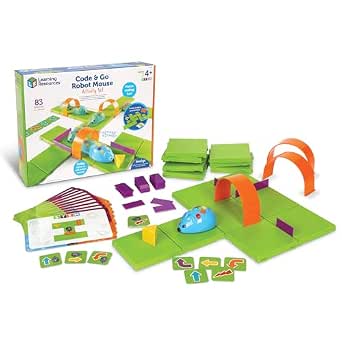 | Best for Maze Building | Brand: Learning Resources | Model number: LER2831 | Age range: 4 years and up | VIEW LATEST PRICE | See Our Full Breakdown |
| computer coding toys for kid | Brand | Age range | Included components |
|---|---|---|---|
| Playz My First Coding and Comp | Playz | 6 years and up | 30+ tools, ingredients, and parts; illustrated lab guide |
| Educational Insights PYXEL Cod | Educational Insights | 8–14 years | Coding pet, USB-C cord, Code Activator, guide, built-in user interface |
| Makeblock mBot STEM Coding Rob | Makeblock | — | — |
| Thames & Kosmos Kids First Cod | Thames & Kosmos | — | — |
| Learning Resources Botley 2.0 | Learning Resources | 5–8 years | Robot, remote programmer, coding cards, tiles, obstacle pieces |
| Let’s Start Coding Base Kit: C | — | 8–13 years | — |
| Ozobot Ozo at Home: Interactiv | — | 5 years and up | Ozo at Home robot, charging cable, color code markers, magnetic board, activity cards |
| Teach Tech Mech-5 STEM Coding | — | 10 years and up | — |
| Coding for Kids: Python | — | — | — |
| Ozobot Evo Coding Robot Kit | — | 5–11 years | Evo robot, Get Started activities, charging cable, 5 dual-tip Color Code Markers, zip case |
| Learning Resources Botley the | Learning Resources | — | Botley robot, remote programmer, detachable arms, coding cards, tiles, and obstacles |
| Thames & Kosmos My Robotic Pet | Thames & Kosmos | — | — |
| ThinkFun Hacker Cybersecurity | ThinkFun | 10 years and up | Game grid, control panel, challenge booklet, solution booklet, tokens, tiles, and game pieces |
| Learning Resources Switcheroo | Learning Resources | 4–6 years | 9 puzzle cards, 3 character shells, 1 robot hub, and 15 math and coding challenge cards |
| Learning Resources Code & Go R | Learning Resources | 4 years and up | Colby robot mouse, 16 maze grids, 22 maze walls, 3 tunnels, 30 double-sided coding cards, 10 double-sided activity cards, cheese wedge, and activity guide |
More Details on Our Top Picks
Playz My First Coding and Computer Science Kit for Kids
Playz My First Coding and Computer Science Kit is a good fit for kids who are curious about the ideas behind coding but aren’t ready to program a robot on a screen. Activities such as binary necklaces, encryption puzzles, sorting races, and mystery mazes turn abstract concepts into short, hands-on challenges. Compared with Thames & Kosmos Kids First Coding & Robotics, Playz offers a broader mix of computer science activities, while Thames & Kosmos gives children a more continuous robot-and-story format for practicing sequences and other coding principles. The tradeoff is that Playz is instruction-led: children work through the included guide rather than freely programming a device. Its varied materials make it a flexible introduction, but families seeking a programmable robot should choose another kit.
Pros:- Covers several computer science ideas through different activities
- Includes more than 30 tools and materials
- Illustrated guide explains activities and educational concepts
Cons:- Activities depend on following the included instructions
- Does not provide a programmable robot or digital coding environment
Best for: Families introducing elementary-age children to coding ideas through varied tabletop activities
Not ideal for: Children who want to program a moving robot or build ongoing coding projects
- Brand:Playz
- Age range:6 years and up
- Activities:Binary necklaces, encryption, sorting races, mystery mazes, pixelated pictures
- Included components:30+ tools, ingredients, and parts; illustrated lab guide
- Educational objectives:Coding skills and sorting skills
- Dimensions:12.2 x 10.1 x 2.8 inches
- Weight:1.1 pounds
- Model:coding
Our verdict“Choose Playz for a varied, hands-on introduction to coding concepts; choose a robot kit if your child wants to program moving actions.”
Educational Insights PYXEL Coding Robot for Kids
PYXEL Coding Robot gives older beginners a path from visual blocks to text-based programming: children can start with Blockly tutorials and later try Python while controlling the robot’s actions, lights, colors, and sounds. That progression makes it a more direct introduction to programming languages than Playz My First Coding and Computer Science Kit, whose activities teach concepts without coding a programmable device. PYXEL also works through a built-in interface and password-protected Wi-Fi, so it does not require an internet connection or separate app. The tradeoff is the need for a Wi-Fi-enabled tablet or computer; it is not a fully device-free toy like Botley 2.0. It suits children ready to move beyond screen-free command cards into writing or arranging code with a companion robot.
Pros:- Offers both beginner-friendly Blockly and Python
- Built-in tutorials support self-guided learning
- Programming changes the robot’s actions, lights, colors, and sounds
- Does not require an internet connection or app
Cons:- Requires a Wi-Fi-enabled tablet or computer
- Age range makes it less suitable for younger beginners
Best for: Kids ages 8–14 with access to a tablet or computer who want to progress from block coding to Python
Not ideal for: Families seeking a screen-free coding toy or children without a compatible Wi-Fi-enabled device
- Brand:Educational Insights
- Model:1130
- Age range:8–14 years
- Coding languages:Blockly and Python
- Connectivity:Password-protected Wi-Fi; no internet connection required
- Power:Built-in rechargeable battery
- Included components:Coding pet, USB-C cord, Code Activator, guide, built-in user interface
Our verdict“Pick PYXEL for a device-supported route from visual coding to Python, especially for a child ready for more than screen-free play.”
Makeblock mBot STEM Coding Robot Kit for Kids Ages 8+
Makeblock mBot is the pick for children who want to assemble a robot and then explore how its electronics and code work together. Its Scratch, mBlock, and Arduino support creates more room to grow than PYXEL’s Blockly-to-Python path, while line-following and obstacle avoidance give early programs a visible job to do. It can also work as a remote-control car, which helps keep the robot engaging between coding sessions. The cost of that flexibility is setup: children must assemble the kit, provide the required batteries, and use compatible software. Botley 2.0 is simpler to start with and stays screen-free, but it does not offer mBot’s build-and-expand approach. Choose mBot for a hands-on project that can grow with a child’s interest in robotics and electronics.
Pros:- Combines robot assembly with coding and electronics learning
- Supports Scratch, Arduino, and mBlock
- Line-following, obstacle avoidance, and remote-control functions add varied play
- Compatible with Makeblock modules and LEGO parts
Cons:- Robot requires four AA batteries and the remote requires a CR2025 battery, none included
- Requires assembly and compatible software for coding activities
Best for: Children 8 and up who enjoy building projects and want to grow from visual coding toward Arduino
Not ideal for: Families wanting an immediately playable, screen-free coding robot with no assembly or battery setup
- Brand:Makeblock
- Model:90053
- Recommended age:8 years and up
- Programming platforms:Scratch, Arduino, mBlock
- Robot functions:Line-following, obstacle avoidance, remote control
- Assembly time:About 15 minutes
- Power requirements:Robot: 4 AA batteries; remote controller: 1 CR2025 battery
- Batteries included:No
- Compatibility:Makeblock modules and platform parts; compatible with LEGO parts
Our verdict“Choose mBot when building and expanding a programmable robot matters more than the simpler, screen-free start offered by Botley 2.0.”
Thames & Kosmos Kids First Coding & Robotics
Thames & Kosmos Kids First Coding & Robotics turns early coding lessons into physical sequences: children lay down code cards, then the Sammy robot reads them and follows a program across map cards. Its 30 guided lessons and six storylines build from basic sequences toward loops, conditionals, functions, and variables, giving it more structured progression than Botley 2.0’s maze-and-movement play. That makes this a strong choice for families who want a lesson-led introduction without a tablet or computer. The tradeoff is that children follow prepared cards and challenges rather than typing code, and the many pieces and models call for a clear play space. Compared with Playz, it offers less variety in standalone computer science activities, but more sustained practice with a physical robot.
Pros:- Works without software, apps, or smart devices
- Physical code cards make program sequences visible and tangible
- Thirty lessons progress through several coding concepts
- Six storylines connect coding challenges to model-building activities
Cons:- Uses prepared physical cards rather than a digital coding language
- Multiple cards, map pieces, and models require space to set up and manage
- Younger children may need adult help with lessons and building
Best for: Families with children in grades K–2 who want guided, device-free lessons in coding fundamentals
Not ideal for: Children who want to code on a computer, explore Python, or avoid following a structured manual
- Brand:Thames & Kosmos
- Intended grade range:Grades K–2
- Manual:64-page, full-color experiment manual
- Lessons:30 coding and model-building lessons
- Coding concepts:Sequencing, loops, events, conditionals, functions, variables
- Storylines:Six
- Programming method:Physical code cards read by the robot
- Device requirement:No software, app, or smart device required
- Dimensions:16.8 x 3.2 x 11.5 inches
Our verdict“Choose Thames & Kosmos for a guided, screen-free coding curriculum with a robot; choose PYXEL when learning a digital programming language is the priority.”
Learning Resources Botley 2.0 The Coding Robot
Botley 2.0 is a straightforward first coding robot for children who learn by giving commands and watching a toy move. The remote programmer, coding cards, and 46-piece set support maze routes, line-following, obstacle detection, and looping sequences without a screen. Compared with Thames & Kosmos Kids First Coding & Robotics, Botley puts more emphasis on active, open-ended movement play, while Thames & Kosmos provides a longer sequence of guided lessons and story-based challenges. That makes Botley easier to approach for a child who wants to start programming quickly, but less suited to families seeking a detailed curriculum. The setup has a practical catch: the robot and remote need five AAA batteries in total, and the supplied information lists no manufacturer warranty.
Pros:- Teaches coding through screen-free, hands-on play
- Forty-six pieces support varied routes and activities
- Obstacle detection and line-following add interactive challenges
- Looping sequences introduce a useful coding concept
Cons:- Requires three AAA batteries for the robot and two for the remote, not included
- Initial assembly requires a Phillips screwdriver
- No manufacturer warranty is listed
Best for: Children ages 5–8 who want to program a robot through physical play without using a screen
Not ideal for: Families looking for a lesson-heavy curriculum, rechargeable power, or a coding toy with a stated manufacturer warranty
- Brand:Learning Resources
- Model number:LER2941
- Age range:5–8 years
- Piece count:46 pieces
- Battery requirements:Robot: 3 AAA; remote: 2 AAA
- Batteries included:No
- Included components:Robot, remote programmer, coding cards, tiles, obstacle pieces
- Features:Obstacle detection, black-line following, light-up effects, looping sequences
- Warranty:No manufacturer warranty
Our verdict“Choose Botley 2.0 for accessible, screen-free movement and command play; choose Thames & Kosmos for more structured lessons and story-based progression.”
Let’s Start Coding Base Kit: Computer Coding Game for Kids 8-12+ and Teens
For kids ready to move beyond drag-and-drop blocks, this kit introduces C++ through a programmable microcontroller and snap-together circuits. Its browser-based projects and 3.5 hours of video guidance give beginners a structured path from instructions to working electronics, without breadboards or loose wires. Compared with Teach Tech Mech-5, which teaches movement through a mechanical coding wheel, the Base Kit focuses more directly on writing and changing computer code. That makes it a stronger fit for a child interested in how software controls circuits, though it offers less of Mech-5’s build-and-watch-a-robot appeal. It needs an internet-connected Windows, Mac, or Chromebook computer; tablets and phones are unsupported, and newer USB-C-only computers need an adapter. The guided projects help newcomers, but the computer requirement narrows where it can be used.
Pros:- Introduces C++ through hands-on electronics projects.
- Snap-together components avoid breadboards and loose wires.
- Browser-based lessons include video walkthroughs and step-by-step guidance.
- Designed for beginners without prior coding knowledge.
Cons:- Requires an internet-connected Windows, Mac, or Chromebook computer.
- Does not work with tablets or smartphones.
- USB-C-only computers require an additional adapter.
Best for: Ages 8 and up who have access to a computer and want guided practice with real C++ and electronics.
Not ideal for: Families seeking a tablet-compatible, screen-free activity or a toy that works without internet access.
- Age range:8–13 years
- Coding language:C++
- Projects:55+ online projects; description also states over 60 included
- Video walkthroughs:3.5 hours
- Code volume:1,000+ lines
- Components:Programmable microcontroller, snap-together electronic components, description cards
- Connectivity:USB-A cable included; USB-C adapter required for newer computers with USB-C only
- System requirements:Windows, Mac, or Chromebook; internet required
- Mobile compatibility:Not compatible with tablets or smartphones
Our verdict“Choose the Base Kit for a computer-equipped beginner who wants to connect real C++ code with electronic circuits.”
Ozobot Ozo at Home: Interactive STEM Coding Robot Kit for Kids Ages 5+
Ozo at Home starts coding with physical play: children use color markers and magnetic tiles to guide the robot before moving on to Ozobot Blockly. That gradual path makes it a better first step for young learners than Ozobot Evo, whose larger lesson library and five skill levels point toward a broader, more sustained program. Its 27 guided activities, designed for 10–30 minute sessions, give families a manageable way to practice sequencing, loops, and engineering ideas. The tradeoff is that the screen-free stage is only the beginning; advanced Blockly activities need a computer or tablet. It also centers on one robot, so children looking for shared play with multiple robots will need another kind of kit. For a young beginner, its tactile entry point is the main draw.
Pros:- Begins with color codes and magnetic tiles before introducing Blockly.
- Includes 27 guided activities in 10–30 minute formats.
- Story-based challenges introduce logic, loops, and engineering.
- No prior coding experience is needed to get started.
Cons:- Advanced Blockly stages require a computer or tablet.
- Includes one robot, limiting multi-robot play.
Best for: Families with children aged 5 and up who want short, guided coding activities that begin without a screen.
Not ideal for: Buyers looking for a multi-robot set or a fully screen-free experience through advanced programming.
- Age range:5 years and up
- Included components:Ozo at Home robot, charging cable, color code markers, magnetic board, activity cards
- Coding stages:Screen-free color coding and Ozobot Blockly
- Guided activities:27
- Activity length:10–30 minutes
- Material:Plastic
- Dimensions:9 x 7.5 x 2 inches
- Model number:70101KIT
Our verdict“Pick Ozo at Home for a young child who benefits from tactile, short-form lessons before moving to screen-based coding.”
Teach Tech Mech-5 STEM Coding Robot Building Kit for Ages 10+
Mech-5 makes construction part of the coding lesson: kids assemble a robot, then snap buttons onto a mechanical wheel to sequence its movements and actions. It can throw, lift, kick, draw, and turn, giving each program a visible physical result. Compared with the Let’s Start Coding Base Kit, Mech-5 puts more emphasis on mechanical assembly and less on writing a language such as C++. That suits children who want to build and direct a moving machine, while the Base Kit offers a more direct route into computer-based coding and circuits. The main cost in effort is time: assembly takes several hours, and this is not a ready-to-play robot out of the box. Its button-based system also offers a different kind of programming practice from editing code on a computer.
Pros:- Combines robot assembly with introductory coding concepts.
- Coding wheel programs several movements and actions.
- Step-by-step English instructions guide construction.
- Actions include drawing, lifting, kicking, and 360-degree rotation.
Cons:- Assembly takes several hours.
- Button-based coding does not provide the same experience as writing code on a computer.
Best for: Ages 10 and up who enjoy assembling models and want to program a robot’s physical actions with buttons.
Not ideal for: Children who want a quick-start toy, computer-based coding, or a robot that arrives assembled.
- Age range:10 years and up
- Programming method:Buttons snapped onto a mechanical coding wheel
- Actions:Throwing, lifting, kicking, drawing, forward and backward movement, 360-degree rotation
- Assembly:Build-it-yourself kit
- Instructions:English instruction manual
- Skills:Coding, construction, concept development, problem solving, STEM
- Model:TTC-895
- Manufacturer:Elenco Electronics LLC
- Warranty:1 year against manufacturer defects
Our verdict“Choose Mech-5 for a patient builder who would rather program a machine’s movements than start with on-screen code.”
Coding for Kids: Python – Learn to Code with 50 Awesome Games and Activities
This book puts written Python at the center, using 50 games and activities to turn basic programming ideas into practice. It suits children who are ready to work through instructions and type code, rather than steer a robot or assemble a circuit. Compared with Let’s Start Coding Base Kit, it focuses on Python projects in a book instead of C++ paired with electronic components; the Base Kit is more hands-on with hardware, while this guide is a simpler format for exploring games and activities. The tradeoff is that a book cannot offer the same physical feedback as a coding robot, and some projects may need adult help or extra materials. Its child-friendly language and illustrations support beginners, but older kids or those already familiar with programming may find the explanations too basic.
Pros:- Introduces core Python concepts through games and activities.
- Includes 50 opportunities to practice.
- Uses child-friendly language and illustrations.
- Encourages problem-solving and logical thinking.
Cons:- May be too basic for older or more experienced coders.
- Some projects may need adult assistance or additional materials.
Best for: Young beginners who want to learn Python through guided games and activities, with an adult available to help when needed.
Not ideal for: Experienced young programmers or children who learn best by building and controlling physical robots.
- Format:Book
- Coding language:Python
- Activities:50 games and activities
- Experience level:Beginner
- Learning approach:Interactive games and hands-on activities
- Audience:Children
- ISBN:1641521759
Our verdict“Choose this book for a beginner who wants Python practice on the page rather than robot-based coding play.”
Ozobot Evo Coding Robot Kit
Evo combines screen-free color coding with Blockly, so a child can begin by drawing routes and later move into app-based programming. Its five skill levels and more than 700 available lessons give it a wider learning runway than Ozo at Home, which is built around 27 guided activities and a tactile introduction. The Evo Entry Kit also includes a zip case and five dual-tip markers, making storage and marker-based play part of the package. That breadth suits families who want varied lessons across stages, though the listed kit still includes only one robot. A computer or compatible device is needed for Blockly, so it cannot serve as a screen-free option at every level. The listing gives dimensions without units, which makes the size harder to judge from the specs.
Pros:- Offers both screen-free Color Codes and Ozobot Blockly.
- Five skill levels support progression through coding stages.
- Provides access to more than 700 lessons.
- Includes markers, charging cable, and a zip case.
Cons:- The kit includes only one robot.
- Blockly requires a computer or tablet.
- Dimensions are listed without units.
Best for: Families with children aged 5–11 who want one robot that can move from color-code play into a substantial Blockly lesson library.
Not ideal for: Buyers seeking multiple robots in one kit or those who need clearly stated unit measurements before choosing a storage space.
- Age range:5–11 years
- Included components:Evo robot, Get Started activities, charging cable, 5 dual-tip Color Code Markers, zip case
- Coding modes:Ozobot Blockly and screen-free Color Codes
- Blockly skill levels:5
- Available lessons:Over 700
- Battery:Lithium-ion
- Material:Plastic
- Dimensions:8.5 x 6.5 x 1.8; units not specified
Our verdict“Choose Evo for a child who wants a longer sequence of robot-coding lessons and can use a computer or tablet for Blockly.”
Learning Resources Botley the Coding Robot
Botley gives young children room to progress from simple sequences to loops and if/then logic, with no screen required. Its capacity for up to 80 steps supports longer obstacle-course challenges than the simpler button-command play of the Switcheroo Coding Crew. The included remote programmer, coding cards, tiles, and obstacles give families several ways to set up activities without adding a separate app or software.
That extra programming range comes with a learning curve: children enter commands using the remote, so it may take adult guidance before independent play clicks. The Code & Go Robot Mouse Activity Set offers more maze-building pieces for younger beginners, while Botley is the stronger fit for kids ready to work through more involved instructions. I’d skip it for children who want immediate, open-ended play without learning a command interface.
Pros:- Introduces loops and if/then logic without a screen.
- Programs up to 80 steps for more involved sequences.
- Includes cards, tiles, obstacles, and a remote programmer for varied activities.
Cons:- Children must use the remote programmer to enter commands.
- Manufacturer warranty is not included.
Best for: Families with children ages 5–8 who are ready to practice sequences, loops, and conditional commands through screen-free robot challenges.
Not ideal for: Caregivers seeking a very simple first coding toy for a four-year-old, or children who may find entering commands with a remote frustrating.
- Brand:Learning Resources
- Model:LER2936
- Recommended age:5–8 years
- Programmable steps:Up to 80
- Screen-free:Yes
- Included components:Botley robot, remote programmer, detachable arms, coding cards, tiles, and obstacles
- Set size:45 pieces
Our verdict“Choose Botley for a screen-free robot that can grow from basic sequencing into longer programs and conditional logic.”
Thames & Kosmos My Robotic Pet: Coding Chameleon
The Coding Chameleon combines construction with physical-card programming, making it a different kind of coding toy from the ready-to-play Botley the Coding Robot. Kids build a 15-inch robotic pet, then use action cards across Coding, Wild, and Pet modes. Its color sensor, infrared sensor, RGB lights, and moving tongue make the robot’s responses visible, while the manual introduces robotics and biomimicry alongside assembly.
The build is part of the appeal, but also the main tradeoff: younger children may need adult help, and the product data recommends batteries without listing them among the included components. Compared with the ThinkFun Hacker board game, this kit offers a tangible robot to assemble and interact with, while Hacker provides many more structured logic challenges without a build step. I’d choose the chameleon for children who enjoy making as well as programming.
Pros:- Combines assembly, physical action cards, and three play modes.
- Color and infrared sensors support responsive interactions.
- Manual introduces robotics and biomimicry concepts.
- Articulated parts, lights, and a moving tongue make commands visible.
Cons:- Assembly may need adult assistance, especially for younger builders.
- Batteries are recommended but are not listed among the included components.
Best for: Children ages 8–12 who like assembling robotic creatures and exploring screen-free, card-based commands with an adult nearby for help.
Not ideal for: Families wanting a ready-to-play coding toy with minimal setup, or children who prefer a large set of structured logic puzzles over building a robot.
- Brand:Thames & Kosmos
- Model number:620507
- Recommended age:8–12 years
- Length:15 inches
- Sensors:Color sensor and infrared sensor
- Lighting:RGB LEDs
- Play modes:Coding, Wild, and Pet
- Manual:48 pages
Our verdict“Pick the Coding Chameleon for an older child who wants to build a screen-free robotic pet as part of learning to code.”
ThinkFun Hacker Cybersecurity Coding Game, Ages 10+
Hacker turns coding ideas into a graduated logic game for children old enough to plan several moves ahead. Its 120 challenges progress from beginner to expert, and the grid, tiles, tokens, and challenge booklet give players a defined problem to solve at each step. Unlike the Code & Go Robot Mouse Activity Set, Hacker does not send a robot through a physical maze; it emphasizes spatial reasoning and planning on a board.
That makes it a more focused pick for ages 10 and up, but less appealing to children who learn best by watching a robot respond to their commands. The Coding Chameleon adds construction and a moving creature, whereas Hacker provides a much larger progression of puzzles without assembly. Its cardboard and plastic components suit a tabletop game, though they may feel less substantial than a robot kit. I’d favor it for patient solo puzzle play or shared challenge solving.
Pros:- Offers 120 challenges with a stated beginner-to-expert progression.
- Exercises logical reasoning, spatial reasoning, and planning.
- Uses a self-contained grid, tiles, and tokens rather than requiring a screen.
Cons:- Designed for ages 10 and up, limiting its fit for younger coding beginners.
- Cardboard and plastic components may be less durable than a buildable robot kit.
Best for: Children ages 10 and up who enjoy progressively harder tabletop puzzles and want to practice planning and programming principles.
Not ideal for: Younger beginners or kids who want to build, drive, or directly interact with a robot.
- Brand:ThinkFun
- Age range:10 years and up
- Challenges:120
- Materials:Cardboard and plastic
- Included components:Game grid, control panel, challenge booklet, solution booklet, tokens, tiles, and game pieces
- Model year:2018
Our verdict“Choose Hacker for an older child who would rather solve a progression of coding-inspired board puzzles than program a physical robot.”
Learning Resources Switcheroo Coding Crew
Switcheroo is the simplest entry point in this group: children press coding buttons to send a robot hub on rescue missions, with three vehicle shells adding pretend-play variety. Its age range of 4–6 makes it a natural fit before a child is ready for Botley’s longer sequences, loops, and if/then logic. The puzzle town map and challenge cards give adults a starting structure for practicing basic sequencing and problem solving at home or in a classroom.
The tradeoff is limited programming depth. Compared with Botley the Coding Robot, Switcheroo’s simple push-button commands give young beginners an easier first step but less room to explore advanced logic. It also needs AAA batteries that are not included, and the supplied data lists no warranty. I’d pass if the child already wants to build long programs or if you need a kit that works straight from the box without sourcing batteries.
Pros:- Uses simple button commands suited to early coding beginners.
- Three vehicle shells add rescue-themed pretend play.
- Includes a puzzle town map and challenge cards for guided activities.
- Supports screen-free use at home or in classrooms.
Cons:- Programming is limited to simple push-button commands.
- Requires AAA batteries, which are not included.
- No warranty is listed in the supplied product data.
Best for: Preschool and kindergarten children ages 4–6 who are beginning to learn sequencing through guided, screen-free play.
Not ideal for: Older children ready for loops or longer programs, and families who need included batteries or a stated manufacturer warranty.
- Brand:Learning Resources
- Model number:LER3108
- Age range:4–6 years
- Included components:9 puzzle cards, 3 character shells, 1 robot hub, and 15 math and coding challenge cards
- Number of packs:1
- Warranty:No warranty listed
Our verdict“Choose Switcheroo for a young beginner who needs simple, guided coding play before moving on to deeper programming concepts.”
Learning Resources Code & Go Robot Mouse Activity Set
Code & Go makes early programming tangible through maze construction: children arrange grids, walls, and tunnels, then use button controls and coding cards to guide Colby toward the cheese. With 83 pieces and a 20-by-20-inch board, it offers a larger build-and-rebuild activity than the more compact challenge setup of the Switcheroo Coding Crew. Lights and sounds provide feedback as the mouse moves, helping younger players connect their sequence of commands with what happens next.
This is the stronger pick when rearranging paths is part of the fun, while Botley the Coding Robot is better suited to children ready for longer sequences and concepts such as loops and if/then logic. The mouse uses simpler button commands, and the many small maze pieces need storage care. Three AAA batteries are not included, and no manufacturer warranty is provided in the supplied data. I’d choose it for a home or classroom with space to lay out the maze.
Pros:- Includes grids, walls, and tunnels for changing maze layouts.
- Coding cards and button controls introduce sequencing without a screen.
- Lights and sounds show children how the mouse responds.
- Activity guide and cards support home or classroom use.
Cons:- The 20-by-20-inch maze needs a clear play surface.
- Small plastic maze components require careful storage.
- Requires three AAA batteries, which are not included.
Best for: Families and educators seeking a hands-on maze activity for children ages 4 and up, especially for small-group sequencing practice.
Not ideal for: Homes short on floor or table space, or children who want to explore longer programs and more advanced logic concepts.
- Brand:Learning Resources
- Model number:LER2831
- Age range:4 years and up
- Total pieces:83
- Power source:3 AAA batteries, not included
- Maze board size:20 × 20 inches
- Included components:Colby robot mouse, 16 maze grids, 22 maze walls, 3 tunnels, 30 double-sided coding cards, 10 double-sided activity cards, cheese wedge, and activity guide
- Educational objectives:Coding skills, sequencing, logic, and problem-solving
Our verdict“Choose Code & Go for a young learner who will enjoy building and solving physical mazes while practicing command sequences.”
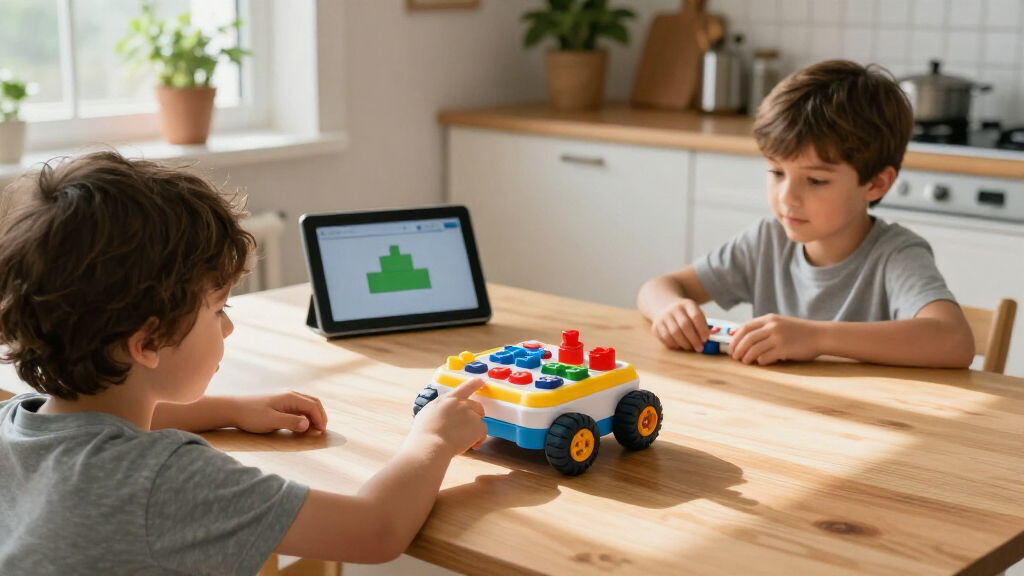
How We Picked
I compared these 15 options by what children actually do to learn coding ideas: arrange commands, solve logic challenges, build a robot, or write code. I gave more weight to clear beginner entry points, age fit, useful progression, and how much adult setup or screen access each activity may require. Build kits and coding books can teach more advanced skills, but they ask for more patience and support than a simple screen-free game.
The ranking favors options with a clear role and a practical learning path, rather than treating every toy as interchangeable. The mBot leads for its combination of building and programming; screen-free picks rank well for accessible early play, while the Python book and Base Kit suit children ready for more direct coding. Narrower themed products remain useful when their focus matches a child’s interests, but they are less versatile as a first or only coding toy.
| computer coding toys for kid | Brand |
|---|---|
| Playz My First Coding and Comp | Playz |
| Educational Insights PYXEL Cod | Educational Insights |
| Makeblock mBot STEM Coding Rob | Makeblock |
| Thames & Kosmos Kids First Cod | Thames & Kosmos |
| Learning Resources Botley 2.0 | Learning Resources |
| Let’s Start Coding Base Kit: C | — |
| Ozobot Ozo at Home: Interactiv | — |
| Teach Tech Mech-5 STEM Coding | — |
| Coding for Kids: Python | — |
| Ozobot Evo Coding Robot Kit | — |
| Learning Resources Botley the | Learning Resources |
| Thames & Kosmos My Robotic Pet | Thames & Kosmos |
| ThinkFun Hacker Cybersecurity | ThinkFun |
| Learning Resources Switcheroo | Learning Resources |
| Learning Resources Code & Go R | Learning Resources |
Factors to Consider When Choosing Computer Coding Toys For Kids
Before choosing, decide what you want the toy to teach and how your child prefers to learn. The right fit depends on more than an age label: screen access, setup, adult involvement, and tolerance for trial and error can determine whether a kit gets used often or set aside.
Choose the kind of coding practice
Coding toys can teach different parts of the subject, and those differences affect what a child takes away. Command cards and button sequences build an understanding of order and cause and effect. Games can make loops, conditions, or logic puzzles easier to grasp without a device. Programmable robots connect commands to movement, while a coding book or electronics kit asks a child to work more directly with code. A common mistake is buying a toy because it says “coding” without checking which skill it practices. Start with the kind of activity your child will enjoy repeating, then choose a toy that adds a manageable next step.
Match the screen experience to your household
Some families want coding activities that work without a tablet, computer, or app; others see a screen as a useful route into programming. Check what the product needs to run, whether the software works with the devices you already have, and whether the activity depends on an internet connection. Screen-free play can make it easier to start quickly, but it may offer less direct experience with code on a display. App-based or computer-based tools can show results and support more advanced tasks, though setup and device sharing may become friction points. Avoid assuming that a robot is screen-free just because the robot itself is a physical toy. Pick the arrangement your child can use consistently.
Look beyond the age label
Age ranges are a starting point, not a measure of coding readiness. Fine motor skills, reading comfort, patience with instructions, and prior experience all shape whether a child can use a kit independently. A younger child may enjoy a higher-age toy with help, while an older beginner may prefer a simple sequence game before moving to code on a computer. Consider whether instructions rely on reading or whether the child can learn through pictures and experimentation. If siblings will share the toy, choose an activity that lets them take turns or tackle different levels. A good fit should offer a small challenge without making every session depend on an adult.
Account for setup and adult support
Building kits, electronics, and computer-based coding activities can involve more preparation than a ready-to-play logic game. Think about whether an adult will need to assemble parts, install software, explain instructions, or help debug early attempts. That support can be rewarding when a child wants a shared project, but it may frustrate a child expecting independent play. Check the space and materials the activity requires, especially if parts need to stay organized between sessions. A common buying error is counting only the toy and overlooking the time and device access needed to use it. Choose the level of setup that fits your household routine.
Decide how much progression matters
A first coding toy does not need to teach every concept, but it should fit the child’s likely next step. A simple game may be ideal for building confidence, even if a child eventually outgrows it. A robot or coding kit with multiple ways to program can support longer exploration, though added complexity may slow the first session. Books and direct coding activities can deepen practice when a learner is ready to read instructions and troubleshoot independently. Consider whether you want one toy for a short introduction or a platform that can grow with changing interests. Paying more attention to progression makes sense when the child already enjoys coding and wants new challenges.
Use interests to narrow the shortlist
Motivation often comes from the activity around the coding: building, moving a robot, solving a mystery, or caring for a character. A child who likes construction may stick with a build-and-program kit longer than a workbook, while a puzzle fan may prefer a logic game. A themed toy can be a strong hook, but check whether its coding tasks remain engaging after the novelty fades. For a child who is unsure about coding, a low-pressure game may be a better introduction than a complex robot kit. If the learner already has a favorite theme, use it to make practice feel purposeful. Interest helps with the first session; clear progression helps sustain the next ones.
Frequently Asked Questions
Should I choose a screen-free coding toy or one that uses a tablet or computer?
Choose screen-free play if your priority is easy setup, shared floor play, or a first introduction to sequences and logic. A computer or app can make sense when your child wants to see code on a screen or progress toward more direct programming. Check which devices and software are supported before buying, since “robot” does not automatically mean device-free. Also think about whether your child will have regular access to that device. The best choice is the one that fits both the learner and your household routine.
Is a robot kit a good first coding toy for a child who has never coded?
It can be, if the commands are approachable and the child enjoys robots or building. A robot makes cause and effect visible, which can help a beginner understand why instruction order matters. More involved kits may require assembly, device setup, or adult help, so a simple screen-free activity can be a smoother first step for some children. Look at the actual activity and support requirements rather than choosing by the word “beginner” alone. If your child loses interest when setup takes too long, favor a toy that can start quickly.
When should a child move from coding toys to learning a programming language?
There is no fixed age or single milestone. A child may be ready when they enjoy making repeated command sequences, ask how to change a result, or are comfortable following written instructions and debugging mistakes. A coding book or computer-based kit can introduce more direct programming, but it may feel like a jump if the child still prefers physical play. You can use a toy to build confidence while letting curiosity guide the next step. Choose a language-based activity when the child is interested in how the code itself works, not just when they reach a particular birthday.
How can I tell whether a coding toy will hold a child’s interest?
Consider what the child already chooses to do: solve puzzles, build things, read, play with robots, or use a computer. Then check whether the toy offers variety or a clear next challenge after the first activity. A strong theme may invite a child to try it, but repeatable tasks and room to experiment help maintain interest. If possible, involve the child in choosing between activity types rather than picking solely from the age range. For a hesitant learner, a simple shared activity can reveal interest before you invest in a more involved kit.
Can one coding toy work for siblings at different ages?
Sometimes, especially when the activity allows simpler and more advanced challenges or lets children take turns. The younger child may focus on basic commands while an older sibling plans longer sequences or helps troubleshoot. Check whether the instructions and small components suit everyone who will use the toy, and plan for adult supervision when needed. A single activity may not keep both children engaged if one quickly masters it or the other cannot follow it yet. If their skills differ widely, pairing a shared toy with separate challenge levels can make play more satisfying.
Conclusion
For the broadest mix of building and coding, I recommend the Makeblock mBot as the best overall pick. Choose Botley 2.0 for beginners who want a screen-free robot, and consider the original Botley or Code & Go Robot Mouse when a simpler command-based introduction is the priority. For value, the Thames & Kosmos Kids First Coding & Robotics set offers concept-focused play without an app, while the mBot is the premium choice for families who want a build-and-program project with more room to explore. Pick Let’s Start Coding Base Kit or the Python book for a child ready to work more directly with coding; choose ThinkFun Hacker for a learner drawn to cybersecurity puzzles. Match the toy to the kind of practice your child will return to, and the choice becomes much clearer.