

If you are comparing software testing tools, this roundup covers ten books and practical guides that teach tool selection, test design, and automation rather than executable platforms. My best overall pick is Full Stack Testing because its broad scope connects multiple testing layers without tying the reader to one framework. Hands-On Automated Testing with Playwright is the stronger focused choice for modern browser automation, while The Complete API Testing Handbook targets REST validation, Python automation, and API security. The main tradeoffs are breadth versus specialization, current frameworks versus durable principles, and AI-led methods versus established automation practices. Read on for the full breakdown and buyer-specific recommendations.
Listen free for 30 days with Audible
Thousands of audiobooks and originals — cancel anytime.
Start your free trialAs an affiliate, we earn on qualifying purchases.
Key Takeaways
- Full Stack Testing takes the top position because it offers the most balanced route from testing strategy to practical delivery across several layers.
- Playwright and API testing are the strongest specialist paths; each is more actionable than a broad guide when the reader already knows which testing layer matters.
- How Google Tests Software is the best value pick for durable organizational ideas, but it offers fewer copy-ready techniques for current frameworks.
- The three AI-focused books serve different buyers: AI for Quality Assurance and Software Testing suits structured adoption, Software Testing with Generative AI favors hands-on experimentation, and Elevating Software Testing with Artificial Intelligence leans toward strategic understanding.
- Older tool coverage has a narrower role: the Selenium cookbook can still help teams maintaining Selenium suites, while the WinRunner, QTP, and TestDirector guide ranks last because its named ecosystem reflects an earlier testing era.
| Software Testing with Generative AI |  | Best for Generative AI Test Planning | Format: Book | Primary subject: Generative AI in software testing | Technology focus: AI-assisted testing methods and tools | VIEW LATEST PRICE | See Our Full Breakdown |
| Software Testing Tools: Covering WinRunner, SilkTest, LoadRunner, JMeter, TestDirector, and QTP |  | Best Legacy Tool Survey | Format: Book | Functional testing tools: WinRunner, SilkTest, and QTP | Performance testing tools: LoadRunner and JMeter | VIEW LATEST PRICE | See Our Full Breakdown |
| Selenium Testing Tools Cookbook – Second Edition |  | Best Selenium Recipe Book | Format: Book | Edition: Second Edition | Primary framework: Selenium | VIEW LATEST PRICE | See Our Full Breakdown |
| Full Stack Testing: A Practical Guide for Delivering High Quality Software |  | Best Overall | Format: Book | Primary subject: Full-stack application testing | Coverage: Testing strategies, techniques, methodologies, and practices | VIEW LATEST PRICE | See Our Full Breakdown |
| How Google Tests Software |  | Best for Testing Culture | Format: Book | Primary subject: Software testing at Google | Coverage: Testing methodologies and quality-assurance practices | VIEW LATEST PRICE | See Our Full Breakdown |
| Software Test Design | 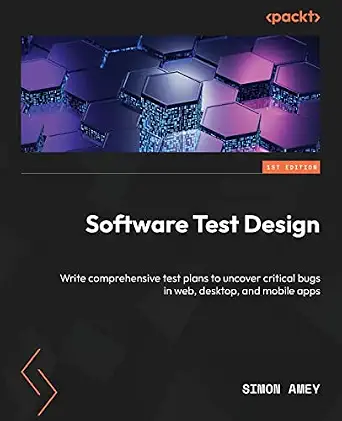 | Best for Test Planning | Product type: Software testing book | Primary subject: Test-plan design | Application coverage: Web, desktop, and mobile apps | VIEW LATEST PRICE | See Our Full Breakdown |
| The Complete API Testing Handbook: A Practical Guide to REST API Validation, Automation, and Security Testing Using Python |  | Best for API Testing | Product type: Practical technical handbook | API architecture: REST | Programming language: Python | VIEW LATEST PRICE | See Our Full Breakdown |
| AI for Quality Assurance and Software Testing: The Practitioner’s Complete Guide to AI-Powered Testing, Tools, and Transformation |  | Best AI Strategy Guide | Product type: Practitioner guide | Primary domain: AI-powered quality assurance | Coverage: Testing tools, methods, and organizational change | VIEW LATEST PRICE | See Our Full Breakdown |
| Elevating Software Testing with Artificial Intelligence |  | Best for AI Concept Exploration | Primary subject: Artificial intelligence in software testing | Application area: Software quality assurance | Stated benefit: Improved testing efficiency | VIEW LATEST PRICE | See Our Full Breakdown |
| Hands-On Automated Testing with Playwright: Create Fast, Reliable, and Scalable Tests for Modern Web Apps with Microsoft’s Automation Framework |  | Best for Modern Web Automation | Product type: Hands-on technical guide | Automation framework: Microsoft Playwright | Target platform: Modern web applications | VIEW LATEST PRICE | See Our Full Breakdown |
| software testing tool | Format | Primary subject |
|---|---|---|
| Software Testing with Generati | Book | Generative AI in software testing |
| Software Testing Tools: Coveri | Book | — |
| Selenium Testing Tools Cookboo | Book | — |
| Full Stack Testing: A Practica | Book | Full-stack application testing |
| How Google Tests Software | Book | Software testing at Google |
| Software Test Design | — | Test-plan design |
| The Complete API Testing Handb | — | — |
| AI for Quality Assurance and S | — | — |
| Elevating Software Testing wit | — | Artificial intelligence in software testing |
| Hands-On Automated Testing wit | — | — |
More Details on Our Top Picks
Software Testing with Generative AI
I rank Software Testing with Generative AI as the specialist choice for teams exploring how generative AI can support test creation, analysis, and workflow efficiency. Its practical AI focus makes it more relevant to experimental QA programs than How Google Tests Software, which concentrates on organizational methods and engineering culture. It also offers a broader testing perspective than AI for Quality Assurance and Software Testing may provide for readers seeking a tool-transformation framework. The main limitation is uncertain depth: the available description does not identify covered platforms, code examples, or chapter-level topics. With no reader ratings supplied, I would treat it as a directional guide rather than a proven technical reference. Buyers needing implementation-ready automation recipes may get more immediate value from the Selenium or Playwright books.
Pros:- Connects generative AI concepts directly to software-testing work
- Addresses both developer and tester perspectives
- Emphasizes practical approaches alongside conceptual insight
Cons:- Available product data does not identify specific AI tools or integrations
- No detailed contents, examples, ratings, or reader feedback are supplied
Best for: QA leads, developers, and test architects planning early generative-AI experiments within an existing testing workflow
Not ideal for: Automation engineers who need documented code samples, named AI platforms, or a step-by-step framework tutorial
- Format:Book
- Primary subject:Generative AI in software testing
- Technology focus:AI-assisted testing methods and tools
- Intended readers:Developers and software testers
- Guidance style:Insights and practical approaches
- Primary outcome:Improved testing efficiency and effectiveness
Our verdict“I would choose this for strategic AI-testing exploration, but not as the sole implementation manual for a production automation stack.”
Software Testing Tools: Covering WinRunner, SilkTest, LoadRunner, JMeter, TestDirector, and QTP
I place Software Testing Tools in the lineup as a broad survey of six named testing platforms, including JMeter, LoadRunner, QTP, and SilkTest. That range gives readers a cross-tool perspective that Selenium Testing Tools Cookbook lacks, since the latter stays centered on web automation with Selenium. The tradeoff is relevance: this book’s stated toolset is weighted toward established enterprise products and omits newer options such as Playwright. It may still help professionals supporting inherited QA environments understand how functional, performance, and test-management tools fit together. I would not make it my first choice for building a new automation stack, especially because no edition, publication details, or reader ratings are supplied. Its strongest role is as a legacy-tool reference, not a current market map.
Pros:- Covers functional, performance, and test-management tool categories
- Includes practical guidance across six named platforms
- Offers a wider tool comparison than single-framework books
Cons:- The covered lineup is oriented toward established and legacy enterprise tooling
- Missing edition and publication details make currency difficult to judge
- No reader reviews or ratings are supplied
Best for: Testers maintaining enterprise environments built around WinRunner, SilkTest, LoadRunner, TestDirector, QTP, or JMeter
Not ideal for: Teams selecting a new web-testing stack around Playwright, current Selenium practices, or cloud-native tooling
- Format:Book
- Functional testing tools:WinRunner, SilkTest, and QTP
- Performance testing tools:LoadRunner and JMeter
- Test management tool:TestDirector
- Guidance style:Practical guidance and testing strategies
- Experience level:Beginners and experienced testers
Our verdict“I would buy this for maintaining or studying a legacy enterprise QA stack, not for choosing today’s newest automation framework.”
Selenium Testing Tools Cookbook – Second Edition
I rank Selenium Testing Tools Cookbook – Second Edition as the most task-oriented Selenium reference in this group. Its recipe-based structure is designed to help readers solve defined web-automation problems, making it more immediately actionable than How Google Tests Software, which deals with testing strategy at an organizational level. It is also narrower than Full Stack Testing: the focus on Selenium favors browser automation rather than coverage across an entire application stack. That specialization is both its advantage and its main drawback. Readers can build targeted automation skills without working through a broad theory text, but teams using Playwright or needing API, mobile, performance, and security guidance should choose another resource. I see this as a working problem-solving guide, although the supplied data does not reveal recipe topics, language bindings, or version compatibility.
Pros:- Uses practical recipes suited to solving specific automation tasks
- Maintains a clear focus on Selenium web testing
- Supports both newer and more experienced automation practitioners
- Aims to streamline repeatable testing work
Cons:- Its Selenium-only scope leaves major testing layers outside the book
- Supplied details do not identify programming languages or Selenium versions
- Recipe-driven learning may provide less architectural context than a full-stack guide
Best for: Web QA engineers and developers who want practical Selenium recipes for expanding browser-automation skills
Not ideal for: Teams standardized on Playwright or readers seeking one guide for API, mobile, performance, and security testing
- Format:Book
- Edition:Second Edition
- Primary framework:Selenium
- Testing target:Web applications
- Instruction format:Practical recipes and examples
- Experience level:Beginners and experienced testers
Our verdict“I would pick this for hands-on Selenium problem solving, provided the buyer verifies that the edition matches the intended technology stack.”
Full Stack Testing: A Practical Guide for Delivering High Quality Software
I choose Full Stack Testing as the best overall guide because its scope connects testing methods across application layers rather than tying the reader to one framework. That makes it a stronger foundation than Selenium Testing Tools Cookbook for developers and QA professionals who must coordinate several kinds of tests. Compared with Software Test Design, this pick appears more focused on full-stack delivery practices, while the other title centers on constructing plans that expose bugs across web, desktop, and mobile apps. Breadth brings a cost: some sections reportedly lack detailed examples, and readers seeking copy-ready Selenium or Playwright automation will find the framework cookbooks more direct. I rank it first because cross-role applicability gives more teams a usable testing model, even though specialists may need a second, tool-specific reference.
Pros:- Connects testing practices across full-stack application layers
- Serves both developers and QA professionals
- Emphasizes practical software-delivery outcomes
- Provides broader methodological coverage than a single-tool cookbook
Cons:- Some sections may not provide enough detailed examples
- Broad coverage offers less framework-specific depth
- Readers may need a second resource for implementation-level automation
Best for: Cross-functional development and QA teams responsible for testing full-stack applications across multiple layers
Not ideal for: Framework specialists who mainly want copy-ready Selenium, Playwright, or API automation examples
- Format:Book
- Primary subject:Full-stack application testing
- Coverage:Testing strategies, techniques, methodologies, and practices
- Intended readers:Developers and QA professionals
- Guidance style:Practical
- Primary outcome:Higher-quality software delivery
Our verdict“I would make this the starting point for teams needing a shared full-stack testing approach, then add a framework-specific book where deeper implementation help is required.”
How Google Tests Software
I position How Google Tests Software as the strongest choice for readers shaping testing culture, team responsibilities, and quality processes at scale. Its value lies in examining Google’s testing methodology, which gives engineering leaders a concrete organizational case rather than another framework tutorial. Compared with Full Stack Testing, it is less of a general guide to application-layer techniques and more of a window into how a large software organization approaches quality. That distinction also creates the main tradeoff: practices developed in Google’s environment may need adaptation before they fit a smaller company, regulated team, or legacy product. The supplied description gives little detail about specific tools or technical examples, so automation engineers seeking ready-made scripts should favor the Selenium or Playwright books. I rank it as the management and process pick.
Pros:- Explains testing practices through a major software organization’s operating model
- Helps leaders think about quality ownership and team structure
- Applies to software engineers, testers, and QA professionals
- Offers a process-level counterpoint to framework-specific guides
Cons:- Google-specific practices may not transfer directly to smaller or regulated organizations
- The supplied data does not identify detailed tool coverage or example depth
- It is less suitable than a cookbook for immediate automation implementation
Best for: Engineering managers, QA leads, and senior testers redesigning quality ownership and testing processes across larger teams
Not ideal for: Individual contributors who primarily need current framework setup instructions, runnable scripts, or narrowly scoped automation recipes
- Format:Book
- Primary subject:Software testing at Google
- Coverage:Testing methodologies and quality-assurance practices
- Organizational focus:Google software engineering
- Intended readers:Software engineers, testers, and QA professionals
- Primary outcome:Improved testing processes and software quality
Our verdict“I would choose this for rethinking testing culture and organizational practice, while pairing it with a technical guide for framework-level execution.”
Software Test Design
I rank Software Test Design as Best for Test Planning because it addresses the thinking that comes before automation: deciding what to test, where risk sits, and how a plan can expose high-impact defects across web, desktop, and mobile apps. That cross-platform scope makes it broader than Hands-On Automated Testing with Playwright, which concentrates on modern web automation, yet it offers less executable instruction. This pick makes the list for QA leads who need a repeatable planning method instead of code recipes. The tradeoff is specificity: the supplied listing names no author, edition, sample framework, or supporting reviews, so buyers get little evidence about depth or currency. I place it behind specialist guides for teams needing immediate scripts, but ahead of them when coverage design is the main gap.
Pros:- Connects test-plan design with finding high-impact defects
- Covers web, desktop, and mobile application contexts
- Supports repeatable planning across varied product types
- Helps teams improve coverage before selecting automation tools
Cons:- The supplied listing provides no author or edition details
- No named automation framework or executable examples are specified
- Missing ratings and reviews make the depth harder to judge
Best for: I recommend it to QA leads and manual testers designing risk-based coverage across web, desktop, and mobile products.
Not ideal for: I would skip it for engineers who primarily need runnable automation examples tied to a named framework.
- Product type:Software testing book
- Primary subject:Test-plan design
- Application coverage:Web, desktop, and mobile apps
- Testing focus:Finding high-impact bugs
- Method:Structured testing strategies
- Intended outcome:Improved software quality and test coverage
- Edition information:Not provided
Our verdict“I would choose this for structured test planning across several platforms, not for framework-specific automation training.”
The Complete API Testing Handbook: A Practical Guide to REST API Validation, Automation, and Security Testing Using Python
I give The Complete API Testing Handbook the Best for API Testing role because its REST focus links validation, Python automation, and security testing in one practical path. Compared with Software Test Design, it moves closer to executable work: readers can connect test ideas to automated checks instead of stopping at planning. It is also more targeted than Full Stack Testing, helping API-focused engineers avoid material outside their daily work. That narrowness is both its strength and its limit. Teams centered on browser flows will get more direct value from Hands-On Automated Testing with Playwright, while non-Python shops may need to translate examples. The step-by-step technical scope can also feel steep for true beginners. I rank it highly for backend quality work, but its Python dependence keeps it from being a general testing reference.
Pros:- Combines REST validation, automation, and security testing
- Uses Python for practical automated testing workflows
- Provides a step-by-step learning structure
- Keeps its scope focused on API quality work
Cons:- Python examples may require translation in other language stacks
- The technical material may be demanding for first-time testers
- It offers less help for browser, desktop, or mobile interface testing
Best for: I recommend it to Python-capable backend engineers, QA automation specialists, and security-minded testers working with REST APIs.
Not ideal for: I would skip it for nontechnical beginners or teams whose testing work centers on browser interfaces rather than APIs.
- Product type:Practical technical handbook
- API architecture:REST
- Programming language:Python
- Testing areas:Validation, automation, and security
- Instruction style:Step-by-step practical guidance
- Primary audience:Technical professionals
- Main outcome:Automated API quality checks
Our verdict“I would pick this for hands-on REST API testing with Python, especially when validation and security belong in the same workflow.”
AI for Quality Assurance and Software Testing: The Practitioner’s Complete Guide to AI-Powered Testing, Tools, and Transformation
I assign AI for Quality Assurance and Software Testing the Best AI Strategy Guide role because it covers AI-powered tools, methods, and organizational change from a practitioner viewpoint. Compared with Elevating Software Testing with Artificial Intelligence, this title presents a wider stated scope and clearer professional audience, making it the stronger choice for QA leaders building an adoption roadmap. It also differs from Software Testing with Generative AI by framing AI across quality work instead of centering only on generative systems. Breadth brings a cost: buyers seeking runnable Python or Playwright examples will find the API Handbook or Hands-On Automated Testing with Playwright more direct. The supplied data gives no edition, publication date, named tools, or reader feedback, which makes freshness and technical depth hard to judge. I choose this for strategy over code, not framework mastery.
Pros:- Covers AI-powered testing tools and working methods
- Connects practitioner guidance with broader QA change
- Addresses AI across software testing rather than one framework
- Supports planning and tool-selection discussions
Cons:- No publication date or edition is supplied
- The listing does not identify the individual tools covered
- Its broad scope may provide less coding depth than specialist guides
Best for: I recommend it to QA managers, test architects, and senior practitioners planning how AI should fit into testing processes and tool choices.
Not ideal for: I would skip it for beginners seeking an introductory testing course or engineers who need ready-to-run automation code.
- Product type:Practitioner guide
- Primary domain:AI-powered quality assurance
- Coverage:Testing tools, methods, and organizational change
- Audience:QA and software testing practitioners
- Orientation:Practical and strategic
- Tool focus:AI-powered testing tools
- Publication details:Edition and date not provided
Our verdict“I would choose this for an organization-level AI testing roadmap, while code-focused buyers should favor a framework-specific guide.”
Elevating Software Testing with Artificial Intelligence
I label Elevating Software Testing with Artificial Intelligence Best for AI Concept Exploration because its promise is simple: use AI to raise testing efficiency and accuracy. That framing suits readers deciding whether AI belongs in their QA process. Yet compared with AI for Quality Assurance and Software Testing, the supplied description is much thinner: it names no tools, languages, workflows, case studies, or publication details. I rank it below that guide for buyers who want an implementation plan, and below Software Testing with Generative AI for readers focused on a defined AI category. Its place in the roundup comes from its process-improvement angle, but the lack of concrete scope creates purchase risk. I would choose it only when a broad AI-testing overview is the goal and verify the contents before expecting hands-on instruction.
Pros:- Frames AI around improved testing efficiency
- Links artificial intelligence with greater testing accuracy
- Focuses on software quality process improvement
- Offers a broad entry point into AI-assisted testing
Cons:- No tools, programming languages, or platforms are identified
- The supplied description offers little detail about instructional depth
- No reader reviews are available to support the product claims
Best for: I recommend it to QA professionals exploring the broad case for AI-assisted testing before committing to a specific tool or coding approach.
Not ideal for: I would skip it for implementation teams that need named platforms, code samples, detailed workflows, or evidence from reader reviews.
- Primary subject:Artificial intelligence in software testing
- Application area:Software quality assurance
- Stated benefit:Improved testing efficiency
- Secondary benefit:Improved testing accuracy
- Approach:AI-assisted process improvement
- Named tools:Not provided
- Reader-review data:Not available
Our verdict“I would select this only for broad AI-testing orientation; buyers ready to implement should choose the more detailed AI practitioner guide.”
Hands-On Automated Testing with Playwright: Create Fast, Reliable, and Scalable Tests for Modern Web Apps with Microsoft’s Automation Framework
I rank Hands-On Automated Testing with Playwright as Best for Modern Web Automation because it turns a specific framework into a clear buyer outcome: fast, reliable tests that can scale with a web application. Compared with Selenium Testing Tools Cookbook, its Playwright focus suits teams choosing Microsoft’s browser-automation framework, while the cookbook may fit established Selenium stacks better. It is also far more executable than Software Test Design, which works at the planning layer across several app types. The cost of that focus is limited reach: desktop, mobile-native, API-only, and non-Playwright teams will need another resource. Beginners without coding or automation foundations may also face a steeper start. I place this pick highest among these five for web engineers ready to build tests now, but not for QA leaders seeking a tool-neutral testing program.
Pros:- Provides hands-on guidance for Microsoft’s Playwright framework
- Targets fast and reliable web test automation
- Addresses scalability as application test suites grow
- Offers a direct path from framework learning to executable tests
Cons:- Its framework-specific scope offers little value to non-Playwright teams
- It does not target desktop or native-mobile application testing
- Readers without coding foundations may find the material advanced
Best for: I recommend it to web developers and automation engineers building maintainable browser tests for modern applications with Playwright.
Not ideal for: I would skip it for desktop, native-mobile, API-only, or Selenium-committed teams that do not plan to adopt Playwright.
- Product type:Hands-on technical guide
- Automation framework:Microsoft Playwright
- Target platform:Modern web applications
- Testing mode:Automated browser testing
- Performance goals:Fast, reliable, and scalable tests
- Instruction style:Practical framework guidance
- Primary audience:Web developers and test automation engineers
Our verdict“I would pick this for teams ready to standardize modern web automation on Playwright, while tool-neutral buyers should start elsewhere.”

How We Picked
I evaluated these resources by practical usefulness, technical relevance, audience fit, breadth, and the durability of their lessons. Because these are learning resources rather than runnable products, performance means how directly each book can help a reader plan tests, choose an automation layer, or improve an existing workflow. I also weighed whether a title connects features to real testing decisions instead of presenting tools as isolated commands.
The highest positions reward transferable methods backed by enough detail to support real work. Specialist guides moved higher when they addressed a clear, active use case, which benefits the Playwright and API entries. AI titles were judged on methodological value beyond temporary prompts, while older framework books were scored on their remaining usefulness for maintenance work. This ranking favors buyer utility over novelty, which is why a broad practical guide leads and the oldest tool-specific collection finishes lower.
| software testing tool | Primary subject |
|---|---|
| Software Testing with Generati | Generative AI in software testing |
| Software Testing Tools: Coveri | — |
| Selenium Testing Tools Cookboo | — |
| Full Stack Testing: A Practica | Full-stack application testing |
| How Google Tests Software | Software testing at Google |
| Software Test Design | Test-plan design |
| The Complete API Testing Handb | — |
| AI for Quality Assurance and S | — |
| Elevating Software Testing wit | Artificial intelligence in software testing |
| Hands-On Automated Testing wit | — |
Factors to Consider When Choosing Software Testing Tools
The right resource depends on the software layer being tested, the team’s automation maturity, and how quickly the underlying technology changes. I would start by defining the next testing capability the purchase must support rather than choosing the book with the longest feature list. A focused guide can create value faster, while a broader testing foundation usually has a longer useful life. The factors below help separate an immediate reference from a long-term learning investment.
Start With the Testing Layer You Need
A testing guide becomes useful when it matches the layer where defects or delivery delays occur. Browser automation, API validation, test design, and organization-wide quality practices require different mental models, even when they share vocabulary. If unstable interface tests are slowing releases, a browser framework guide may help more than a broad testing book. If failures originate between services, API contracts and validation deserve priority. Teams with inconsistent coverage may gain more from test-design methods before buying another automation reference. I would choose around the largest current testing gap, not the most fashionable category.
Choose Between Breadth and Technical Depth
Broad guides are better for readers who coordinate several testing activities or still need to decide where automation belongs. Specialist books trade that flexibility for faster technical progress in one domain. The common mistake is buying a framework book before the team has a clear test strategy, which can produce many scripts without meaningful risk coverage. The reverse mistake is staying with high-level strategy when engineers need executable examples. I favor one foundational resource for shared language and one focused reference for the team’s main automation stack. That pairing usually serves mixed teams better than several overlapping introductions.
Match Framework Coverage to Your Existing Stack
Framework-specific guidance has the highest immediate value when it matches the language, browser targets, CI system, and skills already in place. Playwright may suit a new web project, while Selenium material can remain relevant when a team owns a large Selenium suite. Switching frameworks carries migration and retraining costs that a newer book cannot remove. Compare the guide’s examples with the versions and programming languages used by your team. Also check whether it teaches debugging, parallel execution, and maintainable selectors, since basic test creation is only the beginning. I would pay for framework depth when the buyer has a real project ready for automation.
Judge AI Guidance by Its Shelf Life
AI testing books can date quickly when they revolve around named models, temporary interfaces, or collections of prompts. More durable guidance explains where human review remains necessary, how generated tests are validated, and how private code or test data is handled. I would favor methods that work across providers over instructions tied to one interface. Buyers should also separate AI-assisted authoring from autonomous testing claims; these approaches carry different review burdens. A useful AI guide should address false confidence and weak assertions, not only faster test generation. Pay more for repeatable governance and evaluation methods, not a larger prompt library.
Match the Teaching Style to the Reader
A technically strong book can still be a poor purchase when its assumed knowledge is too high. Beginners benefit from clear test-design foundations, worked examples, and explanations of why a test exists. Experienced automation engineers usually need recipes, architecture patterns, failure diagnosis, and scaling guidance. Managers and test leads may gain more from process and team-design lessons than from pages of code. Before buying for a group, compare one sample chapter with the team’s actual vocabulary and coding skills. I would select a resource that supports the least experienced intended reader without leaving advanced readers with nothing to apply.
Know When a Higher Price Is Justified
A higher-priced guide earns its place when it can support several roles, anchor a training plan, or prevent an expensive automation mistake. A narrow cookbook may offer better value for one blocked engineer, even if a larger book covers more topics. Price should be compared with usable depth per relevant chapter, not page count. Buyers should check publication date, code availability, update access, and whether examples depend on paid services. For teams, shared exercises and reusable workflows can justify spending more than an individual reference would. I would avoid paying a premium for broad but shallow coverage that duplicates free framework documentation.
Frequently Asked Questions
Are These Books Actual Software Testing Tools?
No. This lineup contains books and implementation guides about software testing tools, methods, and frameworks rather than software subscriptions or downloadable testing platforms. Some entries teach named technologies such as Playwright, Selenium, JMeter, and Python, while others focus on test design, AI adoption, or quality practices. Buyers seeking a platform comparison should evaluate factors such as integrations, supported environments, pricing, and reporting separately. These books are better suited to learning how and why testing systems are selected or built. I would treat them as training and reference purchases.
Should I Buy a Broad Testing Guide or a Framework-Specific Book?
I would choose a broad guide when the testing strategy is unclear, several test layers are involved, or the reader coordinates work across roles. A framework-specific book makes more sense when the team has already selected its technology and needs to create reliable tests soon. Beginners often benefit from learning test design before absorbing framework syntax. Experienced engineers can move directly to Playwright, Selenium, or API automation if their project scope is settled. For many teams, the strongest combination is one strategy book plus one technical reference.
Is the Selenium Cookbook Still Useful if Playwright Is Newer?
The Selenium cookbook still has a role for teams that maintain Selenium-based suites or support environments already built around its ecosystem. Playwright is the more focused choice here for buyers starting modern browser automation and seeking material centered on that framework. A new project should not choose Selenium solely because more historical learning material exists. At the same time, rewriting a stable suite for novelty can create maintenance work without proportional gains. I would base the decision on existing suite size, browser requirements, team skills, and migration cost.
Will an AI Testing Book Become Outdated Too Quickly?
Some AI material will age quickly, especially content built around specific model interfaces or prompt recipes. A stronger purchase explains evaluation, privacy, review controls, hallucination risks, and the limits of generated test cases. Those lessons remain useful even as products change. Among these entries, AI for Quality Assurance and Software Testing appears better suited to a structured program, while Software Testing with Generative AI is the more direct fit for experimentation. I would pair either with current vendor documentation rather than expecting one book to track every release.
Which Book Should a Mixed-Skill Testing Team Start With?
For a team spanning developers, testers, and delivery leads, I would start with Full Stack Testing because its cross-layer focus can create shared language around quality work. Junior testers who need stronger planning skills may benefit from Software Test Design as a companion. Engineers can then branch into the Playwright or API handbook according to their assigned systems. This layered approach avoids forcing every role through the same technical material. It also gives the team a shared foundation with role-specific depth.
Conclusion
For most readers, Full Stack Testing is my best overall choice because it balances practical delivery with coverage across testing layers. How Google Tests Software is the best value pick for readers seeking durable lessons about quality culture and team structure. Beginners should start with Software Test Design, which places planning and defect discovery before framework syntax. For a premium, future-facing learning program, I would choose AI for Quality Assurance and Software Testing, with the warning that current documentation will still be needed as AI products change.
For specific needs, Hands-On Automated Testing with Playwright is the clearest choice for modern browser automation, while The Complete API Testing Handbook fits Python users focused on REST validation and security. Selenium Testing Tools Cookbook makes more sense for maintaining an established Selenium suite than for selecting a new framework. Readers exploring generated tests can choose Software Testing with Generative AI for a narrower AI-assisted path. I would reserve the older WinRunner, QTP, and TestDirector collection for historical or legacy-system research rather than a new testing program.
NFL season / tailgating Picks
team gear
As an affiliate, we earn on qualifying purchases.