For most first-time learners, the Makeblock mBot Robot Kit with Scratch and Arduino Coding Box is the best overall choice because it connects visual coding with a robot that can respond to it. The Learning Resources Code & Go Robot Mouse Activity Set is a simpler screen-free starting point, while the Let’s Start Coding Base Kit pairs coding lessons with electronics. The main tradeoff is between easy, guided activities and kits that offer more room to build, troubleshoot, and progress into text-based code. Age, adult setup time, and whether a learner wants a robot, a game, or an electronics project all affect the fit. Read on for how these 10 kits compare and which one suits your beginner best.

Get business pricing on monitors, keyboards and dev gear
- Business-only prices and quantity discounts
- Tax-exempt purchasing
- Multiple users, one account, clear invoices
Key Takeaways
- The mBot with Scratch and Arduino offers the clearest growth path in this group, moving from visual coding toward Arduino rather than stopping at introductory play.
- Code & Go Robot Mouse lowers the starting barrier with screen-free sequencing, but it teaches a narrower set of coding ideas than programmable electronics kits.
- CodaKid focuses on game design, not physical building: its Minecraft modding and Java emphasis suits learners who want software projects, while the robot kits better fit hands-on tinkerers.
- Several robot car kits require more patience than their beginner label may suggest. The OSOYOO Arduino car and MiOYOOW soldering kit bring assembly or electronics work that can be a hurdle for a first independent project.
- The strongest choice depends on the learner’s preferred feedback loop: moving robots, physical circuits, a coded lamp, and digital games each make progress visible in different ways.
| Makeblock mBot Robot Kit with Scratch and Arduino Coding Box |  | Best Guided Robot Starter | Recommended age: 8 years and up | Programming: Scratch and Arduino | Projects: 4 | VIEW LATEST PRICE | See Our Full Breakdown |
| CodaKid Coding Box for Kids: Minecraft Modding and Java Game Design, Ages 9+ |  | Best for Minecraft-Focused Java Learning | Age range: 9+ | Programming language: Java | Platform access: 12 months | VIEW LATEST PRICE | See Our Full Breakdown |
| Makeblock mBot STEM Coding Robot Kit for Kids Ages 8–12 | 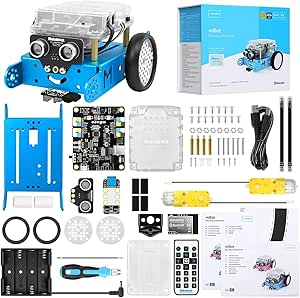 | Best for Expandable Robot Play | Recommended age: 8 years and up | Programming platforms: Scratch, Arduino, and mBlock | Robot functions: Remote control, line following, and obstacle avoidance | VIEW LATEST PRICE | See Our Full Breakdown |
| ACEBOTT 4-in-1 Programmable Robot Arm and Tank Car Kit |  | Best Advanced Robotics Challenge | Age range: 12 years and up | Controller: ESP32 | Robotic arm: Programmable 5DOF | VIEW LATEST PRICE | See Our Full Breakdown |
| MiOYOOW Line-Following Robot Car Soldering Kit |  | Best for Learning Electronics by Soldering | Product type: DIY line-following robot car kit | Motor type: TT motor | Sensor: Photoresistors | VIEW LATEST PRICE | See Our Full Breakdown |
| Let’s Start Coding Base Kit: Computer Coding and Electronics Kit for Kids |  | Best for Guided Coding and Circuits | Age range: 8–13 years | Projects: 55+ online projects | Video walkthroughs: 3.5 hours | VIEW LATEST PRICE | See Our Full Breakdown |
| OSOYOO 2WD Arduino Robot Car Starter Kit |  | Best for Older Arduino Beginners | Robot type: 2WD robot car | Control modes: Wi-Fi app, Bluetooth, infrared remote, autonomous driving | Sensors: Line-tracking sensors | VIEW LATEST PRICE | See Our Full Breakdown |
| TinkRworks Smart Lamp Build-and-Code Kit |  | Best for Young Creative Beginners | Age range: 6 years and up | Number of pieces: 41 | Build time: 10 to 15 minutes | VIEW LATEST PRICE | See Our Full Breakdown |
| Teach Tech Mech-5 STEM Coding Robot Building Kit for Ages 10+ |  | Best for Screen-Free Mechanical Coding | Age range: 10 years and up | Model: TTC-895 | Coding method: Snap coding buttons onto a coding wheel | VIEW LATEST PRICE | See Our Full Breakdown |
| Learning Resources Code & Go Robot Mouse Activity Set | 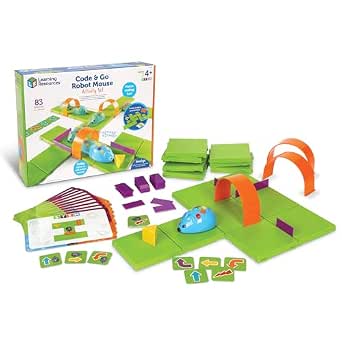 | Best First Coding Set for Preschoolers | Recommended age: 4 years and up | Pieces: 83 | Maze board size: 20 x 20 inches | VIEW LATEST PRICE | See Our Full Breakdown |
| code learning kits for beginner | Included components | Age range |
|---|---|---|
| Makeblock mBot Robot Kit with | mCore mainboard, motors, line-follower sensor, chassis, wheels, cables, fasteners, screwdrivers, USB cable, AA battery holder, infrared remote, and coding box | — |
| CodaKid Coding Box for Kids: M | — | 9+ |
| Makeblock mBot STEM Coding Rob | — | — |
| ACEBOTT 4-in-1 Programmable Ro | — | 12 years and up |
| MiOYOOW Line-Following Robot C | — | — |
| Let’s Start Coding Base Kit: C | Programmable microcontroller, electronic circuit components, description cards, USB-A cable | 8–13 years |
| OSOYOO 2WD Arduino Robot Car S | IR receiver and controller, Model X motor shield, Wi-Fi shield, tracking sensor | — |
| TinkRworks Smart Lamp Build-an | Build materials, remote, coding environment access, online lessons | 6 years and up |
| Teach Tech Mech-5 STEM Coding | Assembly parts, English instruction manual | 10 years and up |
| Learning Resources Code & Go R | Robot mouse, 16 maze grids, 22 maze walls, 3 tunnels, 30 double-sided coding cards, 10 double-sided activity cards, cheese wedge, Activity Guide | — |
More Details on Our Top Picks
Makeblock mBot Robot Kit with Scratch and Arduino Coding Box
I’d choose this mBot for a beginner who learns best by making a robot do something visible. Its four guided projects, including line following and obstacle avoidance, connect block-based Scratch coding to real robot behavior, while the illustrated instructions and eight online courses offer more structure than a kit that leaves learners to figure out the first steps alone. Compared with the CodaKid Coding Box, this is a hands-on electronics and construction experience rather than a Java course built around Minecraft. The path from Scratch toward Arduino gives a learner room to move beyond blocks, though the available project count is limited. Assembly is listed at about 15 minutes, but buyers need to supply AA batteries, which are not included in the stated components.
Pros:- Four guided projects introduce coding through visible robot actions.
- Scratch offers a more approachable starting point, with Arduino as a next step.
- Illustrated instructions and eight online courses provide structured support.
- Includes the robot electronics, chassis, tools, and coding box components.
Cons:- AA batteries are required but are not listed among the included components.
- Four projects provide less stated variety than CodaKid’s 22-plus courses.
- Learners need a robot-building activity, not just screen-based coding.
Best for: Families seeking a quick-to-build physical robot with guided Scratch activities and a route toward Arduino.
Not ideal for: Learners who want a large set of open-ended projects, or households that prefer a computer-only coding course without robot assembly and batteries.
- Recommended age:8 years and up
- Programming:Scratch and Arduino
- Projects:4
- Assembly time:Approximately 15 minutes
- Connectivity:Bluetooth
- Learning resources:Instruction guide, mBlock platform, and 8 step-by-step online courses
- Included components:mCore mainboard, motors, line-follower sensor, chassis, wheels, cables, fasteners, screwdrivers, USB cable, AA battery holder, infrared remote, and coding box
Our verdict“Choose this mBot for a structured first robotics project that pairs beginner-friendly Scratch with a path toward Arduino.”
CodaKid Coding Box for Kids: Minecraft Modding and Java Game Design, Ages 9+
For a beginner already motivated by Minecraft, I’d rank this above the robot kits for sustained screen-based coding: its projects use Java modding to create custom tools, monsters, and items inside a familiar game. The package lists 22-plus courses and 90-plus hours of interactive projects, a much broader stated curriculum than the four projects in the Makeblock mBot Coding Box. Short video lessons and an online human mentor help desk add support for learners who get stuck. This is not a physical build, though, so it won’t suit someone who wants to assemble a robot or see code control motors and sensors. It also needs a compatible Windows PC or Mac, and platform access lasts 12 months rather than being listed as permanent.
Pros:- Uses Minecraft modding to give Java exercises a familiar creative setting.
- Lists more than 22 courses and over 90 hours of interactive projects.
- Short video tutorials support self-paced learning.
- Online human mentor help desk offers a way to get assistance.
Cons:- Requires a compatible Windows PC or Mac.
- Platform access is limited to 12 months.
- Does not include a physical robot or electronics project like either Makeblock mBot kit.
Best for: Minecraft-engaged learners aged 9 and up who have access to a Windows PC or Mac and want guided Java projects.
Not ideal for: Children seeking hands-on electronics or robot construction, and families who do not want a course tied to a 12-month access period.
- Age range:9+
- Programming language:Java
- Platform access:12 months
- Courses:22+
- Interactive project hours:90+
- Tutorial length:8–10 minutes
- Support:Online human mentor help desk
- Compatibility:Windows PC and Mac
Our verdict“Pick CodaKid when Minecraft is the strongest hook for learning Java and a computer-based course suits the learner better than building a robot.”
Makeblock mBot STEM Coding Robot Kit for Kids Ages 8–12
This mBot makes the most sense for a beginner who may want to add parts after learning the basics. Like the Makeblock mBot Coding Box, it starts with a buildable robot and supports Scratch and Arduino, with line-following, obstacle avoidance, and remote-control functions to make coding outcomes easy to see. Its distinction is the stated compatibility with Makeblock add-on packs, more than 100 electronic modules, hundreds of parts, and LEGO parts—a stronger expansion story than the other mBot listing’s emphasis on four guided projects and online courses. That openness can extend the kit’s usefulness, but it also means the core kit may feel less structured for a child who needs a fixed sequence of lessons. The robot requires four AA batteries and a CR2025 battery, none included.
Pros:- Combines Scratch and Arduino for a progression from blocks to text-based programming.
- Remote control, line following, and obstacle avoidance make robot behavior varied and visible.
- Supports Makeblock add-ons, electronic modules, other parts, and LEGO parts.
- Assembly is listed at about 15 minutes.
Cons:- Requires four AA batteries and a CR2025 battery, neither included.
- The listing does not specify a project count or the number of step-by-step courses.
- The open-ended expansion options may be less helpful to learners who need a tightly guided curriculum.
Best for: Curious learners aged 8 and up who want to start with a robot and may later explore compatible modules and building parts.
Not ideal for: Beginners who want a clearly specified set of many guided courses, or families who expect batteries to come in the box.
- Recommended age:8 years and up
- Programming platforms:Scratch, Arduino, and mBlock
- Robot functions:Remote control, line following, and obstacle avoidance
- Assembly time:About 15 minutes
- Power requirements:4 AA batteries for the robot and 1 CR2025 battery for the remote
- Batteries included:No
- Compatibility:Makeblock add-on packs, 100+ electronic modules, 500+ parts, and LEGO parts
- Educational skills:Coding, construction, creativity, critical thinking, problem solving, programming, and STEM
Our verdict“Choose this mBot over the Coding Box version if future hardware expansion matters more than a stated set of guided projects and courses.”
ACEBOTT 4-in-1 Programmable Robot Arm and Tank Car Kit
I’d place the ACEBOTT ahead of the simpler mBot kits for older beginners who want a more involved mechanical challenge, not for a child seeking the gentlest first coding lesson. Its four build configurations let learners rework the same kit as a car, tank, arm car, or arm tank, and the 5DOF programmable arm adds a mechanical task beyond basic driving. Arduino and Scratch compatibility leave room for different coding approaches, while 16 guided tutorials offer a clearer path than an entirely open-ended build. Compared with MiOYOOW’s soldering-focused line follower, this kit centers on modular assembly and programmable robotics rather than soldering practice. The tradeoff is complexity: the 12-plus age guidance and multiple configurations make it a tougher entry point, and terrain performance beyond the listed surfaces is not specified.
Pros:- Four configurations let learners rebuild the kit for different robot forms.
- A programmable 5DOF arm adds a more involved mechanical and coding challenge.
- Works with both Arduino and Scratch.
- Includes 16 guided tutorials and app and IR remote control.
Cons:- Assembly and coding may be challenging for younger or inexperienced beginners.
- The listing does not specify performance on terrain beyond the surfaces it describes.
- More complex than either Makeblock mBot kit as a first robotics build.
Best for: Learners aged 12 and up who already enjoy building and want to explore robot movement, a programmable arm, and multiple configurations.
Not ideal for: Younger children or first-time learners who need a short, simple build; also skip it if you want detailed guidance about performance across different surfaces.
- Age range:12 years and up
- Controller:ESP32
- Robotic arm:Programmable 5DOF
- Build configurations:Robot car, tank, robotic arm car, and robotic arm tank
- Programming compatibility:Arduino and Scratch
- Control methods:Smartphone app for iOS and Android, and IR remote
- Tutorials:16 guided tutorials
Our verdict“Choose ACEBOTT for an older beginner ready for a substantial, reconfigurable robot project rather than a quick first build.”
MiOYOOW Line-Following Robot Car Soldering Kit
MiOYOOW is the most electronics-focused option here: the learner builds a line-following car by soldering components to a labeled PCB, then sees photoresistors guide its movement across a black route. That makes the sensor principle and basic automatic control tangible in a way the CodaKid Java course cannot, while asking for more manual electronics work than either Makeblock mBot. The tradeoff is that this is not a broad coding curriculum: the description centers on soldering, sensors, and circuit assembly, not Scratch or Java lessons. It also depends on a prepared track made from black electrical tape on a contrasting surface, so the car’s activity is less flexible than an app-controlled or obstacle-avoiding robot. I’d choose it for hands-on circuit learning, not as the most complete introduction to programming.
Pros:- Labeled PCB connections support guided assembly.
- Soldering and photoresistors introduce practical electronics and sensor concepts.
- Demonstrates basic automatic control through line following.
- English paper instructions and a downloadable PDF are provided.
Cons:- Requires soldering and hands-on assembly, making it a less suitable first kit for some children.
- Needs a black tracking line on a contrasting surface to follow a route.
- Does not list a programming platform or structured coding course like the Makeblock mBot kits.
Best for: Learners ready for soldering who want to understand basic electronics, light sensors, and automatic control through a simple robot build.
Not ideal for: Young beginners who should avoid soldering, or learners specifically seeking structured Scratch, Arduino, or Java coding lessons.
- Product type:DIY line-following robot car kit
- Motor type:TT motor
- Sensor:Photoresistors
- Assembly:Soldering required
- Track material:Black electrical tape
- Recommended tape width:1.5–2.0 cm
- Instructions:Paper English manual and downloadable PDF
Our verdict“Pick MiOYOOW when the goal is soldering and sensor-based electronics, not a broad beginner programming curriculum.”
Let’s Start Coding Base Kit: Computer Coding and Electronics Kit for Kids
The Let’s Start Coding Base Kit is a strong fit for beginners who want to see how code affects real electronic components without first tackling a robot assembly. Its snap-together circuits remove breadboards and loose wiring from the early lessons, while more than 55 guided projects and video walkthroughs give children a clear path from following instructions to changing code themselves. Compared with the screen-free Learning Resources Code & Go Robot Mouse Activity Set, this kit teaches text-based C++ coding on a computer rather than route sequencing with buttons and cards. That makes it a better match for learners ready to work at a keyboard, but a less suitable choice for younger children or families seeking screen-free play. It also depends on internet access and a compatible computer; tablets and smartphones are not supported.
Pros:- Snap-together components simplify circuit building for first-time learners.
- More than 55 online projects and 3.5 hours of video walkthroughs provide structured practice.
- Introduces C++ through projects that can be customized.
- Browser-based setup requires no software installation or subscription.
Cons:- Requires an internet-connected Windows, Mac, or Chromebook computer.
- Does not work with tablets or smartphones.
- The included USB-A cable needs an adapter for USB-C-only computers.
Best for: Ages 8–13 who have access to a Windows, Mac, or Chromebook computer and want guided practice linking code to circuits.
Not ideal for: Families seeking tablet-only or screen-free activities, or learners who need a kit that works without an internet connection.
- Age range:8–13 years
- Projects:55+ online projects
- Video walkthroughs:3.5 hours
- Coding language:C++
- Included components:Programmable microcontroller, electronic circuit components, description cards, USB-A cable
- Compatibility:Windows, Mac, and Chromebook computers; not tablets or smartphones
- Requirements:Internet connection; USB-C computers require an adapter
- Setup:Browser-based; no software installation or subscription required
Our verdict“Choose this kit for a computer-ready beginner who wants step-by-step C++ and circuit projects rather than screen-free coding play.”
OSOYOO 2WD Arduino Robot Car Starter Kit
The OSOYOO 2WD Arduino Robot Car suits older beginners who want to build a mobile project and experiment with several ways to control it. Wi-Fi, Bluetooth, infrared remote control, and autonomous line tracking give the finished car more range than the Teach Tech Mech-5, which focuses on programmed mechanical actions such as lifting and drawing. Tutorials, circuit diagrams, sample code, and assembly videos support the learning process, while wiring sockets on the motor driver are intended to make connections easier. The tradeoff is that this remains a build-and-program project, not a quick first activity: assembly and coding are required, and the recommended age is 15 and up. Younger children may find the OSOYOO less approachable than the TinkRworks Smart Lamp, which uses pre-wired parts and block-based coding.
Pros:- Offers Wi-Fi, Bluetooth, infrared remote, and autonomous driving modes.
- Line-tracking sensors let beginners explore sensor-based robot behavior.
- Tutorials, circuit diagrams, sample code, and assembly videos support learning.
- Motor-driver wiring sockets are designed to simplify component connections.
Cons:- Assembly and programming are required before the car can be used.
- Recommended for ages 15 and up, limiting its fit for younger beginners.
- Its multiple control systems may be a lot to tackle as a first coding project.
Best for: Teenagers aged 15 and up who want to learn Arduino through building and programming a robot car with multiple control modes.
Not ideal for: Younger beginners or families seeking a short, ready-to-use activity with minimal assembly and coding setup.
- Robot type:2WD robot car
- Control modes:Wi-Fi app, Bluetooth, infrared remote, autonomous driving
- Sensors:Line-tracking sensors
- Included components:IR receiver and controller, Model X motor shield, Wi-Fi shield, tracking sensor
- Material:Acrylic
- Dimensions:8.8 x 6.3 x 3.9 inches
- Weight:469 g
- Recommended age:15 years and up
Our verdict“Pick the OSOYOO for a teen ready to assemble and program an Arduino car, not for a young child needing a guided first activity.”
TinkRworks Smart Lamp Build-and-Code Kit
The TinkRworks Smart Lamp makes an inviting first coding project for children who respond to color, sound, and craft as much as to programming. Its 41 pre-wired pieces snap together quickly, and block-based coding lets beginners control the lamp’s lights and sounds without starting with text-based code. Eight video lessons introduce circuits, color mixing, sound, and coding, so the project connects creative choices to basic STEM ideas. Compared with the Let’s Start Coding Base Kit, this is more accessible to younger children and works with an iPad, but it offers a block-based lamp project rather than C++ practice across 55+ projects. The lamp can also be made with up to four children, which suits sibling or classroom use. Coding still requires a computer, Chromebook, or iPad, and the remote needs a coin-cell battery.
Pros:- Combines hands-on construction, decorating, and block-based coding.
- Pre-wired parts and guided video lessons support first-time builders.
- Includes craft materials, a remote, and lifetime coding environment access without a subscription.
- Designed for individual use or groups of up to four children.
Cons:- Requires a computer, Chromebook, or iPad for coding.
- Focuses on a single lamp build rather than a broad collection of projects.
- The remote uses a CR2025 coin-cell battery.
Best for: Children aged 6 and up who enjoy art and making, including siblings or small groups learning together with a compatible coding device.
Not ideal for: Families seeking a screen-free kit, text-based coding, or a broad set of projects instead of one guided lamp build.
- Age range:6 years and up
- Number of pieces:41
- Build time:10 to 15 minutes
- Coding:Drag-and-drop blocks for lights and sounds
- Included components:Build materials, remote, coding environment access, online lessons
- Lessons:Eight guided video lessons
- Coding device compatibility:Computer, Chromebook, or iPad
- Group size:1 to 4 children
- Remote battery:CR2025 3V lithium coin cell, included
Our verdict“Choose the TinkRworks lamp for a young, creative beginner who will enjoy making and coding a colorful project with adult or group support.”
Teach Tech Mech-5 STEM Coding Robot Building Kit for Ages 10+
The Teach Tech Mech-5 takes a different route into coding: children build a mechanical robot, then set its actions by snapping coding buttons onto a physical coding wheel. That makes sequences visible and hands-on, without requiring a computer or batteries. Its missions—throwing, lifting, kicking, and drawing—also connect programming ideas to mechanical movement. Compared with the OSOYOO 2WD Arduino Robot Car, the Mech-5 avoids digital setup and multiple control systems, but it does not offer app-based control or sensor-driven behavior. The main hurdle is the build itself: assembly takes multiple hours and needs care for the robot to operate properly. This makes it a better fit for a patient older child who enjoys construction than for a beginner wanting a quick activity like the TinkRworks Smart Lamp.
Pros:- Physical coding buttons make movement sequences tangible and visible.
- Robot missions include throwing, lifting, kicking, and drawing.
- Combines introductory coding with mechanical construction and problem solving.
- Requires no batteries.
Cons:- Assembly takes multiple hours.
- Careful construction is needed for the robot to work properly.
- Uses a mechanical coding wheel rather than computer-based coding.
Best for: Children aged 10 and up who enjoy building mechanisms and want to explore coding sequences without a computer or batteries.
Not ideal for: Beginners seeking a quick setup, digital coding tools, or a kit that does not require careful multi-hour assembly.
- Age range:10 years and up
- Model:TTC-895
- Coding method:Snap coding buttons onto a coding wheel
- Educational skills:Coding, concept development, construction, problem solving, STEM
- Included components:Assembly parts, English instruction manual
- Robot actions:Throwing, lifting, kicking, drawing
- Power:No batteries required
Our verdict“Choose the Mech-5 for a patient young builder who wants a screen-free, mechanical introduction to sequencing rather than app-based coding.”
Learning Resources Code & Go Robot Mouse Activity Set
The Code & Go Robot Mouse Activity Set is the most age-accessible option in this group: children as young as four can plan a route with coding cards, then enter commands using buttons on Colby the mouse. Its screen-free maze format teaches sequencing and problem-solving before a child needs to read or type code. The 83 pieces, including maze grids, walls, tunnels, and activity cards, support repeated route challenges and suit small-group or homeschool use. Compared with the TinkRworks Smart Lamp, the mouse is simpler and does not require a coding device, but it focuses on directional sequences rather than circuits, lights, or sound programming. It is also a more limited introduction than the Let’s Start Coding Base Kit for children ready for computer-based code. Families need to supply three AAA batteries.
Pros:- Introduces programming concepts through screen-free maze activities.
- Includes maze pieces and coding cards for repeatable route challenges.
- Mouse lights up, makes sounds, and has two speeds.
- Suitable for classroom, homeschool, and small-group activities.
Cons:- Requires three AAA batteries, which are not included.
- Designed for young learners, so older children may want more advanced coding projects.
- Focuses on sequencing and directions rather than electronics or computer-based code.
Best for: Preschool and early-elementary children aged 4 and up who are learning to plan sequences through hands-on, screen-free play.
Not ideal for: Older beginners who want text-based coding, electronics projects, or lessons that progress beyond route planning.
- Recommended age:4 years and up
- Pieces:83
- Maze board size:20 x 20 inches
- Included components:Robot mouse, 16 maze grids, 22 maze walls, 3 tunnels, 30 double-sided coding cards, 10 double-sided activity cards, cheese wedge, Activity Guide
- Coding method:Plan routes with coding cards and use button controls on the mouse
- Mouse features:Lights, sounds, two speeds
- Battery requirement:3 AAA batteries, not included
- Educational objective:Coding skills, sequencing, logic, and problem-solving
Our verdict“Pick the Code & Go mouse for a young child’s first screen-free coding activities, but choose another kit for computer programming or electronics.”
How We Picked
I compared the 10 kits by how approachable they are for a beginner, what kind of coding they teach, and how directly each activity connects a code change to a visible result. I also weighed age fit, assembly demands, reliance on an adult, and whether the kit offers a useful next step after the first activities. A smooth first session matters, but so does avoiding a kit that becomes limiting as a learner gains confidence.
The ranking favors kits that balance clear entry points with meaningful room to learn. The mBot with Scratch and Arduino leads because it bridges visual coding and a more advanced platform; kits centered on a single activity, younger learners, or specialized assembly rank lower for general-purpose use, even when they may suit a particular buyer better. I treated game design, screen-free sequencing, soldering, and robot construction as distinct learning routes rather than assuming every beginner wants the same project.
| code learning kits for beginner | Included components |
|---|---|
| Makeblock mBot Robot Kit with | mCore mainboard, motors, line-follower sensor, chassis, wheels, cables, fasteners, screwdrivers, USB cable, AA battery holder, infrared remote, and coding box |
| CodaKid Coding Box for Kids: M | — |
| Makeblock mBot STEM Coding Rob | — |
| ACEBOTT 4-in-1 Programmable Ro | — |
| MiOYOOW Line-Following Robot C | — |
| Let’s Start Coding Base Kit: C | Programmable microcontroller, electronic circuit components, description cards, USB-A cable |
| OSOYOO 2WD Arduino Robot Car S | IR receiver and controller, Model X motor shield, Wi-Fi shield, tracking sensor |
| TinkRworks Smart Lamp Build-an | Build materials, remote, coding environment access, online lessons |
| Teach Tech Mech-5 STEM Coding | Assembly parts, English instruction manual |
| Learning Resources Code & Go R | Robot mouse, 16 maze grids, 22 maze walls, 3 tunnels, 30 double-sided coding cards, 10 double-sided activity cards, cheese wedge, Activity Guide |
Factors to Consider When Choosing Code Learning Kits For Beginners
Before choosing a kit, decide what a beginner will want to make and how much support the first project can receive. The most feature-rich set is not always the easiest place to start: setup, instructions, and the learner’s interest can matter more than the number of parts.
Match the Coding Format to the Learner
Visual blocks reduce the burden of typing and syntax, which lets a beginner focus on sequences, conditions, and cause and effect. Text-based programming can be more rewarding for someone already drawn to game development or ready for a steeper learning curve, but it can frustrate a learner who is still figuring out basic logic. Some kits, including the mBot coding box, offer a bridge between these approaches; that path can matter more than starting with the most advanced language. Ask whether the learner enjoys puzzles, physical builds, or creating things on screen before choosing. A kit aligned with an existing interest is more likely to get used after the first activity. Avoid buying a text-heavy kit solely because it sounds more advanced.
Check the Real Starting Age and Support Needs
Age labels are only a rough guide because reading ability, patience with instructions, and comfort with tools vary widely. A younger beginner may benefit from the Robot Mouse’s direct, screen-free sequencing, while a learner comfortable with a computer may prefer guided coding lessons. Assembly adds another layer: a kit involving small parts, wiring, or soldering may need adult help even when the learner can understand its code. Consider who will be available during setup, not just who will use the kit. A common mistake is treating an adult-assisted build as a fully independent beginner activity. If independent use is the goal, favor clear instructions and fewer physical assembly steps.
Choose a Feedback Loop That Holds Attention
Beginners often learn more readily when each change produces an obvious result. A robot that moves, a lamp that responds, or a game that behaves differently can make abstract instructions feel concrete. Screen-free activities reduce device time but may offer less variety than programmable kits; digital projects provide flexibility but can feel detached from physical making. Think about what the learner would choose to do during free time, then match that preference to the kit’s main outcome. Do not assume a robot is automatically more engaging than a game or electronics project. The best feedback loop is the one the learner wants to repeat and modify.
Separate Coding Difficulty From Build Difficulty
A kit can teach simple code while still requiring a challenging build, or offer approachable assembly alongside more advanced programming. Keep those two demands separate when judging beginner fit. Soldering, wiring, and mechanical assembly can teach useful skills, but they also create extra points where a first project can stall. For a learner eager to tinker, that challenge may be part of the appeal; for someone focused on learning code, it can distract from the lesson. Check what needs assembling and whether tools or adult supervision are needed before choosing. A beginner’s first success is easier when the physical setup does not overshadow the coding task.
Look for a Next Step, Not Just More Parts
More components do not automatically mean more learning value. A useful kit gives the learner a way to move from following examples to changing a project and understanding why the result changes. A path from block coding to Arduino, for example, can support growth better than a large collection of activities with no clear progression. At the same time, a focused kit may be the better choice if it teaches one appealing skill well, such as game design or early sequencing. Decide whether this is a first exposure or a longer-term learning tool. Paying more for expansion only makes sense when the learner is likely to use that added depth.
Frequently Asked Questions
Which kit is the safest choice for a child who has never coded?
For a very young or cautious first-timer, the Learning Resources Code & Go Robot Mouse Activity Set offers a direct introduction to sequencing without requiring a computer. For an older beginner ready to explore more, the mBot with Scratch gives a broader route into coding through visible robot movement. The right choice depends on reading confidence, patience, and whether the child wants screen-free play or digital programming. Avoid choosing by age label alone; consider how much help will be available for setup and instructions. A simple first success can matter more than having advanced features from day one.
Should I choose a robot kit or a coding game kit?
Choose a robot kit if the learner is motivated by physical movement, building, and seeing code affect an object in the room. A game-focused option such as CodaKid is a better match for someone who already enjoys Minecraft or wants to create software projects. Robot kits can involve assembly and device setup, while game coding keeps the project on a screen and may involve more reading or programming concepts. Neither format is inherently better for learning; interest and tolerance for setup are stronger guides. If the learner is unsure, start with the kind of project they already choose for fun.
Are Arduino kits a good first purchase for a beginner?
They can be, particularly for older beginners who enjoy building and are willing to troubleshoot. Arduino-oriented options such as the OSOYOO robot car or MiOYOOW soldering kit ask learners to engage with hardware as well as code, so they may need more patience and adult support than a screen-free activity set. Check whether assembly, wiring, or soldering is part of the project before buying. If the learner mainly wants to understand coding logic, a guided block-coding kit may offer a smoother first step. An Arduino kit makes more sense when hands-on electronics is part of the goal.
Do beginners need a kit that teaches both block coding and text-based code?
No; a kit does not need to cover both formats to be a good first choice. Block coding can teach core logic without syntax getting in the way, while text-based coding suits learners who are ready to type and debug instructions. A bridge between formats, like the mBot coding box, is useful when a buyer wants one kit to support progression, but it is not a requirement for every beginner. For a young learner, starting with a clear and enjoyable visual activity may be more productive. Choose progression features when the learner is likely to use them, not just because they appear more advanced.
How much adult help should I expect with a beginner coding kit?
The amount varies widely across this roundup. A screen-free sequencing set can be easier to start with, while robot construction, software setup, electronics, and soldering may call for an adult during assembly or troubleshooting. Even a kit designed for children may assume help with reading instructions, connecting components, or installing the required software. Before buying, check what the first session asks the learner to do and whether tools or a computer are needed. If the kit is meant to be used independently, prioritize a simple setup over a more ambitious build.
Conclusion
Best overall: I recommend the Makeblock mBot Robot Kit with Scratch and Arduino Coding Box for a beginner who wants a hands-on robot and a path from visual coding toward Arduino. Best for the youngest or most hesitant beginners: the Learning Resources Code & Go Robot Mouse Activity Set keeps the starting point screen-free and straightforward. Best for game-focused learners: CodaKid is the clearest fit for someone drawn to Minecraft modding and Java rather than physical builds. Best for electronics-minded learners: the Let’s Start Coding Base Kit or an Arduino car kit makes more sense when circuits and hardware are part of the appeal. Best value: choose the kit that matches the learner’s interests and support needs before paying for broader progression; a simpler set that gets used beats a demanding kit left unfinished. For a lamp project or a more involved build, the TinkRworks Smart Lamp or ACEBOTT and Teach Tech options serve more specific interests, while the MiOYOOW soldering kit is best reserved for learners ready for that added hands-on challenge.