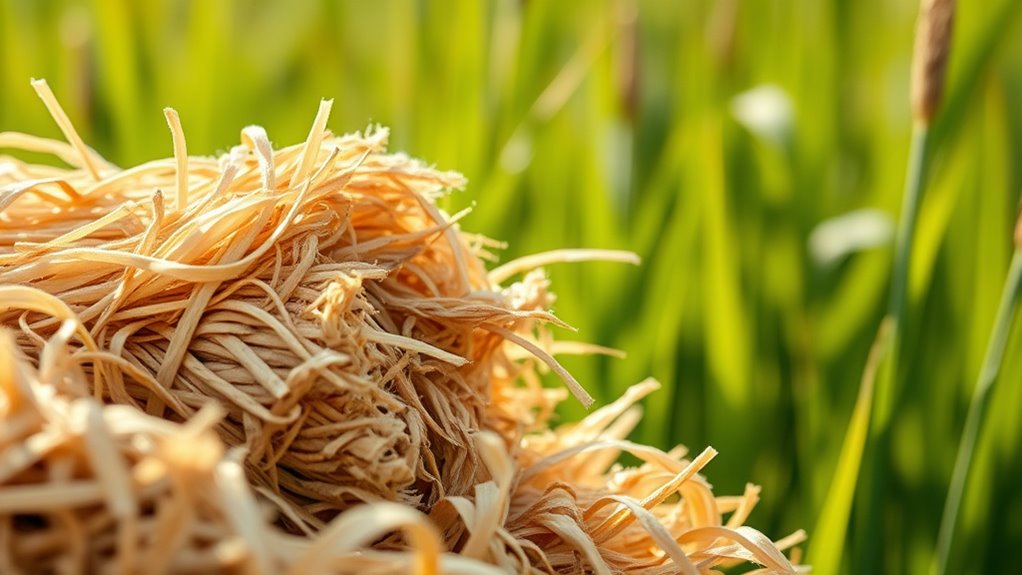

Tree-free paper made from hemp, bagasse, and other plant fibers offers an eco-friendly alternative to traditional paper, helping you reduce deforestation and environmental harm. Hemp grows quickly with minimal resources, while bagasse uses sugarcane waste, turning agricultural byproducts into sustainable paper. Other options like bamboo and jute also support responsible harvesting and protect ecosystems. If you want to discover more about these green materials and their benefits, keep exploring this innovative solution.
Key Takeaways
- Tree-free paper uses eco-friendly fibers like hemp, bagasse, and others to reduce deforestation and environmental impact.
- Hemp grows rapidly with minimal water and no pesticides, producing strong fibers for durable paper products.
- Bagasse, a sugarcane byproduct, offers a sustainable alternative by converting agricultural waste into high-quality paper.
- Other plant fibers such as bamboo, jute, and kenaf are eco-friendly options that grow quickly and require fewer resources.
- Promoting responsible harvesting practices ensures sustainable production and preserves ecosystems while supporting tree-free paper initiatives.
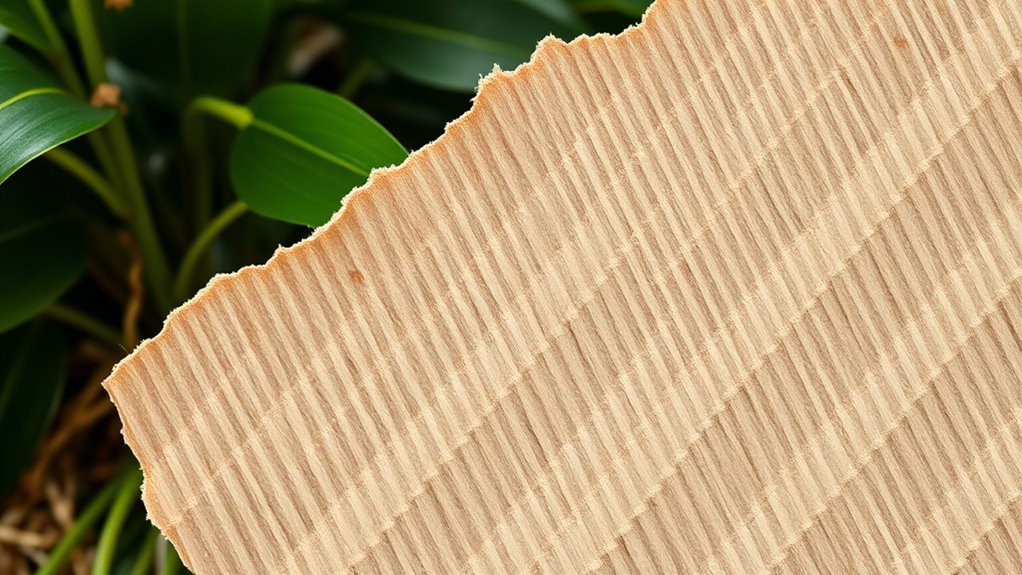
Tree-free paper offers a sustainable alternative to traditional paper made from wood pulp. By choosing this type of paper, you’re supporting environmentally friendly practices that reduce deforestation and lessen the strain on natural forests. Instead of relying on trees, manufacturers use alternative fiber sources, which are often more sustainable and easier to harvest responsibly. These fibers can come from a variety of plants, each offering unique benefits for eco-conscious consumers like you.
Choosing tree-free paper supports sustainability and reduces deforestation through eco-friendly fiber sources.
When exploring alternative fiber sources, hemp stands out as a highly sustainable option. Hemp grows quickly, requiring minimal water and no pesticides, making it an excellent choice for sustainable harvesting. Its rapid growth cycle means that you can produce large quantities of fiber without depleting resources. Hemp fibers are strong, durable, and versatile, suitable for various paper products, from notebooks to packaging. By opting for hemp-based paper, you’re supporting agricultural practices that are eco-friendly and efficient, reducing the environmental impact associated with traditional paper manufacturing.
Another widely used alternative fiber is bagasse, the fibrous residue left after extracting juice from sugarcane. Instead of discarding this waste or burning it, manufacturers turn it into high-quality paper. This process not only makes good use of what would otherwise go to waste but also minimizes environmental harm. Bagasse is abundant in regions where sugarcane is cultivated, making it a renewable resource that can be harvested sustainably. When you choose bagasse-based paper, you’re helping to promote sustainable harvesting practices that make the most of existing agricultural byproducts, reducing reliance on trees and lowering deforestation rates.
Other plant-based fibers, such as kenaf, jute, and bamboo, are also gaining popularity as eco-friendly alternatives. These plants grow rapidly and require fewer resources than traditional trees, making them ideal for sustainable harvesting. Bamboo, in particular, can be harvested annually without killing the plant, ensuring a continuous supply of fiber. Using these alternative fibers not only reduces environmental impact but also supports local economies and encourages responsible farming practices. Incorporating sustainable harvesting methods helps preserve ecosystems and promotes long-term resource availability.

Asatre Handmade Hemp Journal with Lokta Paper – A5 Eco-Friendly Notebook, 120 Blank Pages, Vegan & Sustainable, Made in Nepal (Natural)
AUTHENTIC LOKTA PAPER: Handcrafted in Nepal from sustainably harvested lokta plant bark, this naturally textured paper is tree-free,…
As an affiliate, we earn on qualifying purchases.
As an affiliate, we earn on qualifying purchases.
Frequently Asked Questions
How Does Tree-Free Paper Compare in Cost to Traditional Paper?
Tree-free paper generally costs more than traditional paper due to higher production expenses and less established supply chains. You might notice that hemp and bagasse-based papers have a steeper price tag because they require specialized processing and sourcing. However, as demand grows and technology advances, the cost comparison could shift, making eco-friendly options more affordable. Despite the higher initial costs, you’ll benefit from their environmental advantages.
Are There Environmental Benefits Unique to Hemp-Based Paper?
You’ll find that hemp-based paper offers unique environmental benefits. It promotes sustainable farming by growing quickly without heavy chemical use, reducing environmental impact. Additionally, hemp cultivation supports biodiversity by requiring less land and water compared to traditional trees. Choosing hemp paper helps protect ecosystems, conserves resources, and minimizes deforestation, making it a more eco-friendly option that aligns with sustainable practices and benefits the planet’s health.
What Are the Main Challenges in Scaling Tree-Free Paper Production?
You face challenges in scaling tree-free paper production, balancing supply chain issues and maintaining quality consistency. While demand grows, sourcing raw materials like hemp or bagasse can be be inconsistent, causing delays. Quality varies with different batches, making it hard to meet industry standards. These hurdles slow down large-scale adoption, requiring investments in infrastructure and processes to *guarantee* reliable supply and consistent product quality for widespread use.
Does Tree-Free Paper Have a Different Lifespan or Durability?
Tree-free paper generally has comparable long-term durability to traditional paper, but its lifespan depends on the materials used and the manufacturing process. You might notice differences in aging process; some alternatives like hemp can resist degradation better over time. Proper storage and usage can help maintain its quality. While durability varies, high-quality tree-free paper can last similarly, ensuring your documents or artwork remain intact for years.
Can Tree-Free Paper Be Recycled Like Conventional Paper?
Think of recycling tree-free paper like giving a new life to a vintage sweater; it’s possible but needs special care. Tree-free paper can be recycled through similar processes as conventional paper, but chemical treatments might be required to remove inks or adhesives. Recycling processes vary, so check if your local facilities accept hemp or bagasse paper. With proper handling, you keep it out of landfills and support eco-friendly practices.

Green Earth – Natural Bagasse (Sugarcane Fiber) Tree Free 10" Paper Plate / Biodegradable / Compostable (500 Counts Disposable Plates)
500 counts dinner size plates (10 inches) in a case of 4 packs of 125; designs may vary
As an affiliate, we earn on qualifying purchases.
As an affiliate, we earn on qualifying purchases.
Conclusion
Choosing tree-free paper is like planting seeds for a greener future. Each alternative—hemp, bagasse, or other fibers—becomes a symbol of hope, breaking the cycle of deforestation. By making this simple switch, you’re not just turning a page; you’re opening a chapter of sustainability. Let your choices be the roots that nourish Earth’s vibrancy, ensuring the forest’s whisper continues to inspire generations to come.

Amazon Aware Bamboo 3-Ply Toilet Paper, Unscented, 24 Rolls, FSC Certified, 350 Sheets, 8400 Count, Pack of 24, Plastic-Free
Includes 24 rolls with 350 3-ply sheets per roll
As an affiliate, we earn on qualifying purchases.
As an affiliate, we earn on qualifying purchases.

Creative Co-Op Leather Bound Notebooks with Jute Tie, Green, Set of 3
A set of three green leather-bound notebooks with plain paper and a jute tie closure
As an affiliate, we earn on qualifying purchases.
As an affiliate, we earn on qualifying purchases.