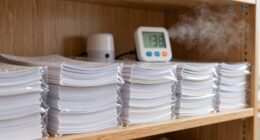
The environmental impact of paper production affects you through habitat loss from deforestation, pollution from manufacturing, and high water and energy use. Unsustainable practices can harm ecosystems, threaten wildlife, and contribute to climate change. Technologies and sustainable methods, like responsible forestry, pollution control, and renewable energy, help reduce these effects. If you want to learn how the industry is evolving to become more eco-friendly, explore further below.
Key Takeaways
- Unsustainable forestry causes deforestation, habitat loss, and biodiversity decline.
- Paper manufacturing releases pollutants harming air, water, and ecosystems.
- High water usage in production can lead to water wastage and contamination.
- Reliance on fossil fuels increases greenhouse gas emissions from mills.
- Sustainable practices like replanting, pollution control, and renewable energy reduce environmental impact.

Have you ever wondered how paper production affects the environment? When you think about it, the process involves more than just turning trees into paper; it impacts ecosystems, air quality, and water sources. One of the key concerns is the way paper companies source their raw materials. If they don’t practice sustainable forestry, forests can be overharvested, leading to habitat loss, reduced biodiversity, and even soil erosion. Sustainable forestry aims to combat these issues by ensuring trees are harvested responsibly, with replanting efforts and forest management practices that maintain ecological balance. When companies adopt these practices, they help preserve forests for future generations and reduce the environmental footprint of paper manufacturing.
However, even with responsible sourcing, the production process itself can create pollution. Manufacturing facilities often release pollutants into the air and water, affecting local communities and wildlife. That’s where pollution control becomes essential. Modern paper mills employ various techniques to minimize emissions, such as scrubbers, filters, and water treatment systems. These measures help trap harmful chemicals before they escape into the environment, protecting air quality and reducing water contamination. Without strict pollution control, toxic substances like chlorine compounds, volatile organic compounds (VOCs), and heavy metals can seep into nearby ecosystems, causing health problems for humans, animals, and plants alike.
The environmental impact also extends to water use. Paper production is water-intensive, and inefficient practices can lead to significant water wastage and pollution. Many mills now implement water recycling systems and cleaner production methods to lessen their water footprint. These innovations not only conserve essential resources but also prevent contaminated water from entering rivers and streams, safeguarding aquatic life. Additionally, adopting sustainable practices can further reduce the overall environmental impact by promoting a circular approach to resource management.
Furthermore, energy consumption plays a part. Paper manufacturing can be energy-heavy, often relying on fossil fuels that contribute to greenhouse gas emissions. Some companies are shifting toward renewable energy sources, such as biomass or solar power, to reduce their carbon footprint. These efforts align with sustainable forestry and pollution control by creating a more environmentally friendly production cycle.

Boise Paper 100% Recycled Multi-Use Copy Paper, 8.5" x 11" Letter, 92 Bright White, 20 lb, 10 Ream Carton (5,000 Sheets)
Trusted results in all copiers and printers with a 99.99% Jam-Free performance guarantee
As an affiliate, we earn on qualifying purchases.
As an affiliate, we earn on qualifying purchases.
Frequently Asked Questions
How Does Paper Recycling Reduce Environmental Impact?
Recycling benefits you by reducing waste and conserving resources. When you recycle paper, you help decrease the amount of waste sent to landfills, which reduces pollution and greenhouse gas emissions. It also saves trees, water, and energy needed for producing new paper. By recycling, you actively contribute to waste reduction, making a positive environmental impact, and promoting sustainability for future generations.
What Are Sustainable Alternatives to Traditional Paper?
You can embrace greener choices by switching to biodegradable alternatives made from plant-based fibers, transforming your paper needs into eco-friendly acts. These sustainable options act like a breath of fresh air in our planet’s lungs, breaking down naturally without leaving harmful traces. By choosing plant-based fiber papers, you help reduce waste and conserve resources, turning everyday tasks into powerful movements for a healthier, more sustainable world.
How Does Paper Production Affect Local Water Sources?
When paper is produced, your local water sources can suffer from water contamination due to chemical runoff from mills. This process often leads to ecosystem disruption, harming aquatic life and affecting water quality for communities. As a result, you might notice reduced fish populations or polluted waters, which pose health risks. To protect your environment, support sustainable paper practices and advocate for cleaner production methods that minimize water contamination and ecosystem damage.
Are There Eco-Friendly Certifications for Paper Products?
Yes, there are eco-friendly certifications for paper products, like FSC and SFI. These certification standards act as a lighthouse guiding you through sustainable choices, ensuring your paper is responsibly sourced. Eco label programs make it easier for you to identify environmentally friendly options at a glance. By choosing certified paper, you’re helping to protect forests and reduce environmental harm, turning your purchase into a positive ripple in the ocean of sustainability.
What Policies Can Governments Implement to Minimize Paper Industry Pollution?
Governments can minimize paper industry pollution by implementing strict emission regulations that limit harmful emissions from manufacturing facilities. You can also promote forest conservation policies that protect natural wood sources and encourage sustainable harvesting. Enforcing these policies guarantees reduced pollution, preserves ecosystems, and promotes eco-friendly practices within the industry. By taking these actions, you help create a cleaner environment and support sustainable development in the paper sector.

True Haunted Tales
As an affiliate, we earn on qualifying purchases.
As an affiliate, we earn on qualifying purchases.
Conclusion
As you can see, paper production markedly affects the environment through deforestation, water use, and pollution. By understanding these impacts, you might wonder if there’s a way to enjoy your favorite paper products without harming the planet. Could choosing recycled or sustainable materials make a difference? Every small action counts. So, next time you pick up paper, ask yourself—are you doing your part to protect our environment? Together, we can make a positive change.

Pollution Control Unit (PCU) Odor Control Filter. 100% Carbon Includes perimeter gasket (20" x 25" x 4")
Odor Control Filter. 20" x 25" x 4". For ODOR CONTROL stage of PCU module.
As an affiliate, we earn on qualifying purchases.
As an affiliate, we earn on qualifying purchases.

Essential Values Electric Shaver Cleaning Solution – Compatible with Braun Clean & Renew Refill Cartridges – 3 Bottles Makes 9 Refills – Manufactured in USA
Refill, Reuse & Save: Our 1oz electric shave cleaner is compatible with Braun clean and renew cartridge refills….
As an affiliate, we earn on qualifying purchases.
As an affiliate, we earn on qualifying purchases.