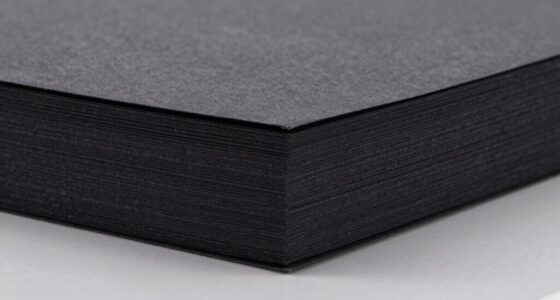
Paper fibres mainly consist of cellulose and lignin. Cellulose provides strength, flexibility, and durability, while lignin acts as a natural binder in plant cell walls. During paper production, you want to focus on removing or reducing lignin to guarantee brighter, longer-lasting paper. The processing methods and sourcing choices you make influence the final quality and sustainability of the product. Keep exploring to understand how these components shape your paper’s qualities and eco-friendliness.

Get business pricing on monitors, keyboards and dev gear
- Business-only prices and quantity discounts
- Tax-exempt purchasing
- Multiple users, one account, clear invoices
Key Takeaways
- Paper fibres primarily consist of cellulose, which provides strength and flexibility to paper products.
- Lignin is a natural polymer in plant cell walls that acts as a binder but can cause yellowing and degradation.
- Chemical pulping removes lignin to produce brighter, more durable paper, while mechanical pulping retains more lignin.
- The balance of cellulose and lignin in fibres affects paper quality, durability, brightness, and environmental impact.
- Responsible sourcing and advanced processing techniques help optimize fibre quality while minimizing environmental effects.

Paper fibres are the fundamental building blocks that give paper its strength and durability. These fibres, primarily cellulose, come from plant sources, and how they’re sourced and processed greatly impacts the quality of the final product. When it comes to sustainable sourcing, you want to guarantee that the fibers originate from responsibly managed forests or recycled materials. This approach minimizes environmental impact, preserves biodiversity, and promotes the responsible use of resources. Sustainable sourcing isn’t just good for the planet; it also appeals to eco-conscious consumers who value environmentally friendly products. Knowing where your fibers come from and how they’re harvested is vital in maintaining both quality and sustainability.
Responsible sourcing of paper fibres ensures quality, sustainability, and eco-friendly products for conscious consumers.
Once the fibres are sourced, fiber processing techniques come into play. These methods determine how fibers are extracted, cleaned, and prepared for paper production. The goal is to maximize fibre integrity while removing impurities like lignin, dirt, and other non-cellulosic materials. Different fiber processing techniques—such as mechanical pulping, chemical pulping, or a combination of both—affect the characteristics of the fibres. Chemical pulping, for example, involves using chemicals to break down lignin and extract pure cellulose, resulting in stronger, higher-quality paper. Mechanical pulping, on the other hand, physically grinds the wood, preserving more lignin, which can influence the paper’s brightness and durability.
Lignin, a complex polymer found naturally in plant cell walls, acts as a natural binder but can cause the paper to yellow and degrade over time. Hence, fiber processing techniques often focus on removing lignin to produce cleaner, brighter, and more durable paper. The choice of processing method hinges on the intended use of the paper—whether for printing, packaging, or specialty products. Efficient fiber processing not only enhances the paper’s strength and appearance but also guarantees the fibres’ sustainability by reducing waste and optimizing resource use.
In essence, understanding the importance of sustainable sourcing and fiber processing techniques helps you appreciate the intricate journey from raw plant material to finished paper. Each step influences the paper’s quality, environmental footprint, and lifespan. By supporting responsible sourcing and advanced processing methods, you contribute to a more sustainable industry, producing high-quality paper while protecting natural resources. Whether you’re a manufacturer, designer, or consumer, recognizing these factors helps you make informed choices that benefit both your projects and the planet.
As an affiliate, we earn on qualifying purchases.
Frequently Asked Questions
How Does the Fiber Length Affect Paper Quality?
You’ll find that longer fibers improve paper quality by increasing fiber strength, which enhances durability and resistance. They also positively influence papermaking properties like printability and surface smoothness. Longer fibers create stronger inter-fiber bonds, resulting in a denser, more cohesive sheet. Conversely, shorter fibers tend to produce weaker, less durable paper. So, choosing fibers with appropriate length is key to achieving the desired balance of strength and papermaking qualities.
What Are the Environmental Impacts of Paper Fiber Processing?
They say “what goes around, comes around,” and that’s true for paper fiber processing. You need to contemplate its environmental impacts, such as chemical emissions and waste, which can harm ecosystems. By prioritizing sustainable sourcing, you reduce deforestation and pollution. Using eco-friendly chemicals and recycling helps lower your carbon footprint. You can make a difference by supporting responsible practices that protect our planet for future generations.
Can Paper Fibers Be Recycled Indefinitely?
You can’t recycle paper fibers indefinitely because fiber degradation occurs each time you recycle, weakening the fibers. Recycling limitations mean that after about 5 to 7 uses, the fibers become too short or damaged to produce quality paper. So, while recycling helps reduce waste, it’s not a perpetual process. You’ll need to eventually replace fibers with new ones to maintain paper quality and strength.
How Do Lignin Levels Influence Paper Durability?
You might not realize it, but lignin content holds the key to paper’s longevity. High lignin levels weaken the fibers, making the paper more prone to deterioration over time. Conversely, lower lignin content guarantees greater durability and longer-lasting quality. So, as you handle paper, consider how its lignin levels subtly influence its lifespan, revealing a fascinating link between composition and enduring strength that often goes unnoticed.
What Innovations Are Emerging in Paper Fiber Technology?
You’ll find that emerging innovations in paper fiber technology focus on biodegradable composites and nanocellulose applications. These advancements enable you to create stronger, more sustainable paper products with enhanced durability and environmental benefits. Researchers are exploring nanocellulose for its exceptional strength and lightweight properties, making it ideal for eco-friendly packaging. Biodegradable composites are also gaining traction, allowing you to develop paper materials that decompose naturally, reducing waste and supporting sustainability efforts.
As an affiliate, we earn on qualifying purchases.
Conclusion
Now that you understand the roles of cellulose and lignin in paper fibers, you see how they work together to create strong, durable paper. Knowing this, you realize that every sheet you handle is a tiny miracle of nature’s engineering. It’s clear that when it comes to paper fibers, the devil is in the details. So next time you read or write on paper, remember, it’s the little things that hold everything together.
As an affiliate, we earn on qualifying purchases.
As an affiliate, we earn on qualifying purchases.
Fall Picks
fall essentials
As an affiliate, we earn on qualifying purchases.