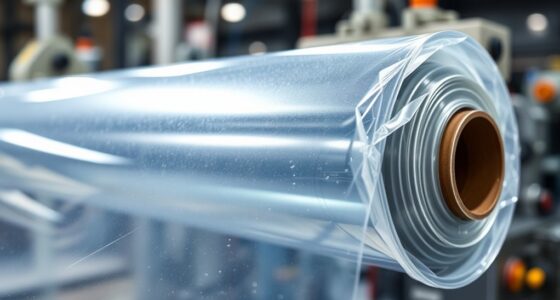

Renewable polymers for packaging films provide an eco-friendly alternative to traditional plastics by reducing fossil fuel dependency and lowering waste. While they offer environmental benefits, challenges like inconsistent biodegradability and scaling production can impact their performance and adoption. Variations in degradation rates and raw material quality need addressing to make these materials more reliable. If you want to discover how these obstacles are being tackled and their promising future, keep exploring this innovative area.
Key Takeaways
- Renewable polymers offer sustainable, biodegradable alternatives for packaging films, reducing reliance on fossil-based plastics.
- Variability in biodegradation rates can impact environmental performance and regulatory compliance of packaging materials.
- Scaling production of renewable polymers involves overcoming supply chain, cost, and process adaptation challenges.
- Ensuring consistent quality and biodegradability is essential for widespread adoption and consumer acceptance of eco-friendly packaging.
- Advances in cultivation, processing, and logistics are needed to make renewable polymers viable for large-scale packaging film manufacturing.
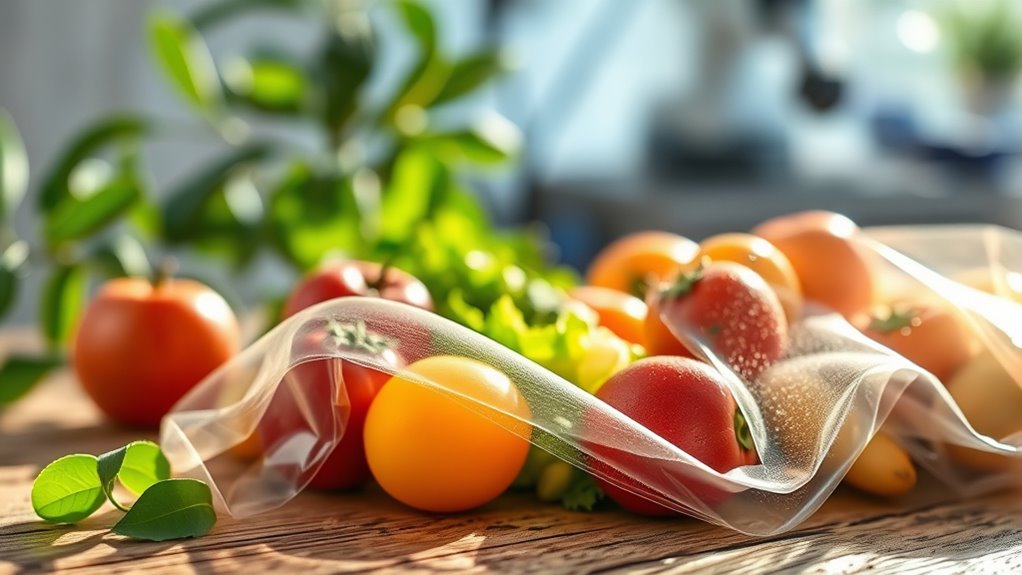
As environmental concerns grow, renewable polymers are increasingly transforming packaging films by offering sustainable alternatives to traditional plastics. These innovative materials aim to reduce dependency on fossil fuels and cut down waste, but they come with their own set of challenges. One significant hurdle is biodegradability challenges. While many renewable polymers are designed to break down more quickly than conventional plastics, their degradation rates can vary depending on environmental conditions, thickness, and formulation. Some materials may require specific composting environments or particular microbial activity to fully biodegrade, which complicates their disposal and recycling processes. This inconsistency can hinder widespread adoption, as manufacturers and consumers seek packaging that reliably decomposes without leaving harmful residues.
Biodegradability variability challenges renewable polymers’ widespread adoption in packaging.
Furthermore, ensuring consistent biodegradability across different applications remains a challenge. For example, a film that biodegrades efficiently in industrial composting facilities might not do so in natural environments like oceans or landfills. This variability raises questions about how these materials should be labeled and managed, especially as regulatory bodies push for stricter standards. Overcoming biodegradability challenges is *vital* for making renewable polymers truly sustainable in real-world scenarios, rather than just in laboratory settings.
Additionally, color accuracy and other material properties impact the performance and acceptance of renewable polymers in packaging applications, necessitating ongoing research and development.
On the manufacturing front, scalability presents another major obstacle. Producing renewable polymers at an industrial scale requires significant adjustments to existing manufacturing processes. Many renewable polymers are derived from bio-based feedstocks, which can be more expensive and less readily available than traditional petrochemical sources. Scaling up production involves investments in new equipment, process optimization, and establishing supply chains for bio-based raw materials. These factors can increase costs, making it harder for companies to adopt renewable polymers widely without passing those costs onto consumers.
Moreover, manufacturing scalability isn’t just about volume; it also involves consistency and quality control. Achieving uniform properties in large batches of renewable polymer films can be difficult, especially when raw material sources fluctuate seasonally or regionally. This variability can affect product performance, which is critical for packaging applications that demand durability, barrier properties, and safety standards. Overcoming these manufacturing hurdles requires innovation in bio-based feedstock cultivation, processing technologies, and supply chain logistics. Without addressing scalability issues, renewable polymers may remain limited to niche markets, preventing them from making the significant environmental impact needed to replace conventional plastics on a global scale.
Frequently Asked Questions
How Do Renewable Polymers Compare Cost-Wise to Traditional Plastics?
You’ll find that renewable polymers generally have higher costs than traditional plastics, mainly due to more expensive raw materials and production processes. A thorough cost analysis shows they’re often less price competitive now, but as technology advances and economies of scale improve, their costs are expected to decrease. While initially pricier, investing in renewable polymers can offer long-term benefits, including sustainability and brand value, making them increasingly attractive despite current cost differences.
What Are the Main Challenges in Scaling Renewable Polymer Production?
You face significant challenges in scaling renewable polymer production. Did you know that supply chain complexities and raw material availability cause delays in 60% of projects? These issues hinder consistent production, as sourcing sustainable feedstocks remains difficult and unpredictable. Overcoming these hurdles requires improving supply chain resilience and developing alternative raw materials. Addressing these factors is essential to make renewable polymers more accessible and competitive with traditional plastics.
Are Renewable Polymers Suitable for All Types of Packaging Films?
Renewable polymers aren’t suitable for all packaging films due to biodegradability concerns and barrier property limitations. You might find them ideal for applications where environmental impact is a priority, but they can struggle with moisture, oxygen, or chemical resistance. For packaging needing long shelf life or high durability, traditional materials may still outperform renewable options. Careful assessment helps determine if renewable polymers meet your specific packaging requirements.
How Do Renewable Polymers Impact the Recyclability of Packaging Materials?
You might think renewable polymers complicate recyclability, but they often enhance it through biodegradability benefits, making disposal easier. By sourcing raw materials sustainably, these polymers reduce environmental impact and support circular economies. Their compatibility with existing recycling processes means you can produce packaging that’s both eco-friendly and recyclable, helping you meet sustainability goals without sacrificing functionality. This synergy between raw material sources and biodegradability benefits truly transforms packaging sustainability.
What Is the Environmental Footprint of Renewable Polymer Manufacturing Processes?
You’ll find that the environmental footprint of renewable polymer manufacturing is generally lower than traditional plastics, thanks to a more favorable life cycle assessment. This process reduces greenhouse gas emissions by utilizing biomass or waste resources instead of fossil fuels. However, manufacturing still involves energy use and resource extraction, so continuous improvements are necessary to minimize impacts further. Overall, renewable polymers help lower your packaging’s environmental footprint when sustainably produced.
Conclusion
By choosing renewable polymers for packaging films, you contribute to a more sustainable future. These eco-friendly materials reduce reliance on fossil fuels and help lower environmental impact. As you consider your packaging options, ask yourself: aren’t we all responsible for protecting our planet? Embracing renewable polymers isn’t just a smart choice—it’s a necessary step towards a greener, healthier world for future generations. Will you take action today?