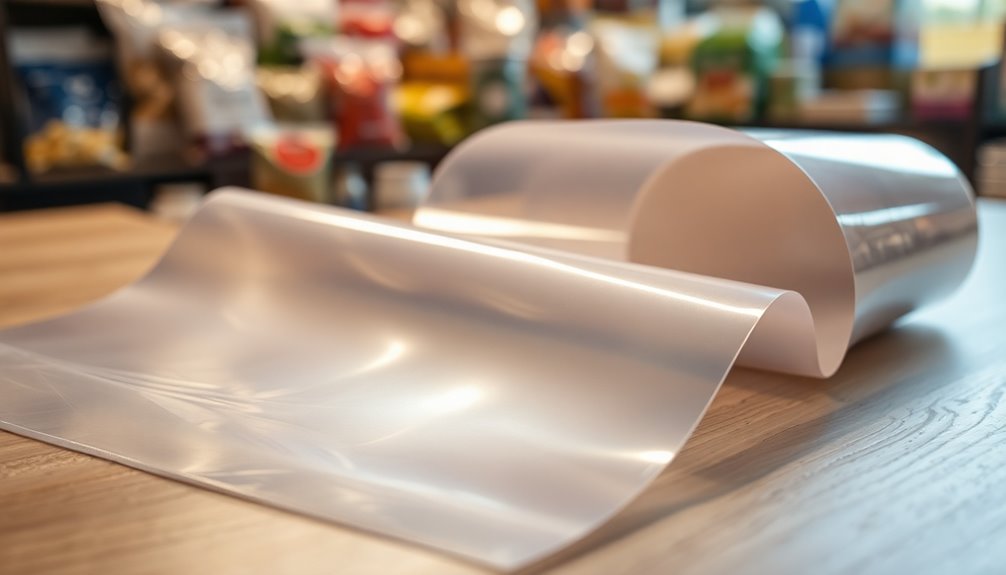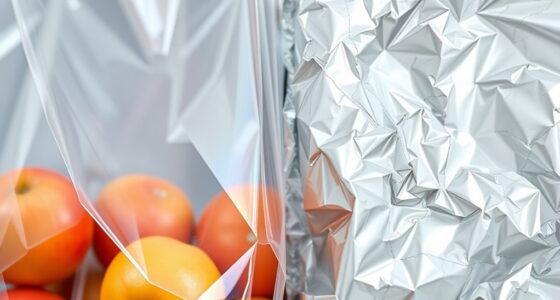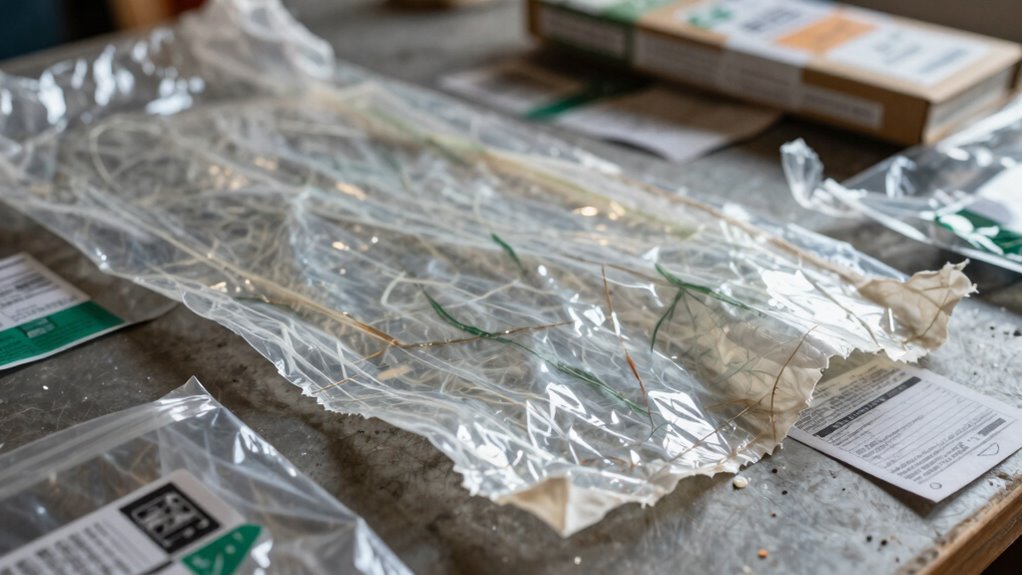

You might notice compostable films often don’t degrade as quickly or reliably in real-world environments. Factors like temperature, moisture, and microbial activity vary, making it hard to predict complete decomposition. Supply chain issues, higher costs, and specialized equipment also limit their widespread use. Plus, these films can be less durable during handling and transport. If you’re interested, you’ll discover how these challenges impact their practical application and what solutions are being explored.
Open a free Amazon Business account
Business pricing, bulk buying and tax-exempt orders.
As an affiliate, we earn on qualifying purchases.
Key Takeaways
- Biodegradation rates vary significantly depending on environmental conditions, making full decomposition unpredictable.
- Limited availability and higher costs of biopolymers hinder large-scale, cost-effective production.
- Compostable films often lack the durability needed for handling, storage, and transportation.
- Compatibility issues with existing packaging machinery restrict widespread adoption.
- Environmental variability impacts degradation performance, affecting consumer trust and waste management practices.
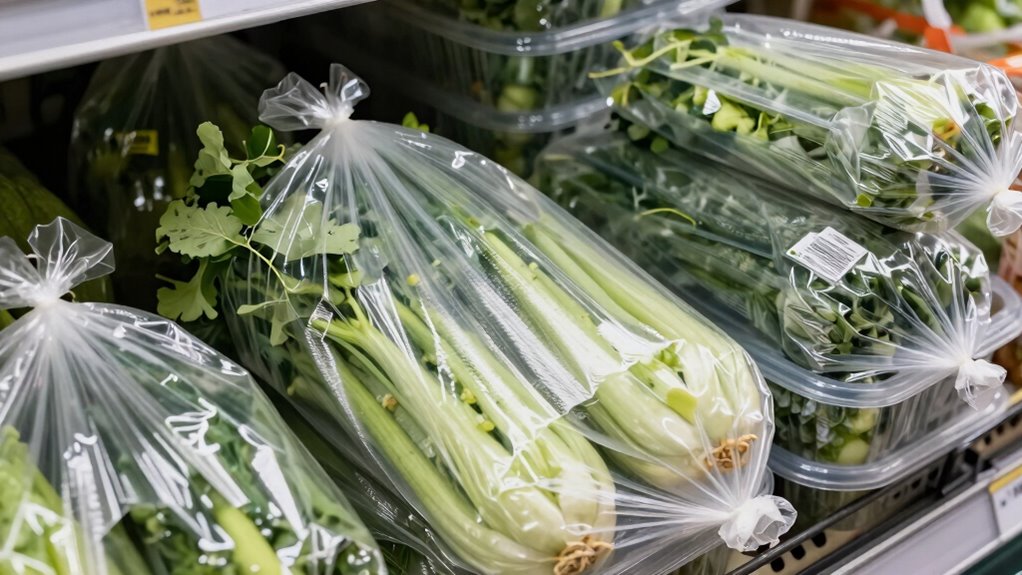
As sustainability becomes a top priority for consumers and manufacturers alike, compostable films and packaging are gaining popularity as eco-friendly alternatives. These materials promise to reduce waste and lessen environmental impact, but they still face significant hurdles in practical applications. One of the main issues is biodegradation challenges. While compostable films are designed to break down naturally, their degradation rates can vary widely depending on factors like temperature, moisture, and microbial activity. In real-world settings, these conditions aren’t always ideal, meaning some compostable packaging may linger longer than expected, undermining their eco-friendly appeal. This inconsistency creates uncertainty for businesses trying to meet sustainability goals and for consumers expecting eco-conscious products to decompose quickly.
Beyond biodegradation challenges, supply chain constraints also limit the widespread adoption of compostable films. From sourcing raw materials to manufacturing and distribution, the entire supply chain faces complexities that make it difficult to scale up production. Many compostable films rely on specific biopolymers, which can be more expensive and less readily available than traditional plastics. This scarcity drives up costs and delays in production, making it less feasible for companies to replace conventional packaging entirely. Additionally, the manufacturing processes for compostable films often require specialized equipment or conditions, which can be scarce or costly to implement. These supply chain constraints mean that even if a company wants to switch to compostable options, they might struggle to do so efficiently and reliably. Supply chain limitations further complicate the transition, emphasizing the need for investment in sustainable infrastructure. As the demand for sustainable packaging grows, so does the importance of developing more resilient supply chains that can support eco-friendly materials.
Furthermore, the integration of compostable films into existing packaging lines isn’t always seamless. They may not withstand the same handling, storage, or transportation conditions as traditional plastics, leading to potential product damage or increased waste. This creates a dilemma: companies must balance eco-friendly initiatives with maintaining product integrity and reducing costs. As a result, many still opt for traditional plastics for certain applications, despite the environmental drawbacks. Compounding these issues is the biodegradation variability, which makes it difficult to predict when or if these materials will fully decompose in different environments. Environmental conditions also play a crucial role in determining the effectiveness of compostable films, adding another layer of unpredictability. Understanding and managing these factors is essential for improving the reliability and practicality of compostable packaging in real-world scenarios.
biodegradable compostable film packaging
As an affiliate, we earn on qualifying purchases.
As an affiliate, we earn on qualifying purchases.
Frequently Asked Questions
How Do Compostable Films Compare Cost-Wise to Traditional Plastics?
You’ll find that compostable films are generally more expensive than traditional plastics when considering the cost comparison. This higher price stems from raw material costs and manufacturing processes, which haven’t yet achieved large-scale efficiency. Market adoption is gradually increasing, but it remains limited compared to conventional plastics. As demand grows and technology advances, compostable films are expected to become more cost-competitive, encouraging broader industry use.
Are Compostable Films Suitable for All Types of Food Packaging?
Imagine a chameleon trying to blend into various backgrounds; compostable films face similar challenges. They’re not suitable for all food packaging due to biodegradability concerns, which could limit their durability in certain environments. Compatibility with machinery also varies, making them less versatile for different food types. So, you should assess these factors, as compostable films excel in some areas but aren’t a universal solution for every food packaging need.
What Are the Main Environmental Benefits of Compostable Films?
You’ll find that compostable films offer significant environmental benefits by reducing landfill waste and lowering pollution. Their ability to biodegrade helps address biodegradation challenges, making them a more sustainable choice. However, consumer awareness is essential—if people don’t understand how to properly compost these films, their positive impact diminishes. Promoting education and proper disposal practices guarantees you maximize the environmental benefits of compostable films in everyday packaging.
How Long Does It Take for Compostable Films to Decompose?
You might wonder about the decomposition timeline for compostable films. Typically, in industrial composting facilities, these films break down within 90 to 180 days. The process depends on factors like temperature, moisture, and microbial activity. While they decompose faster than traditional plastics, achieving complete breakdown requires controlled conditions in industrial settings, making timely decomposition a key aspect of their environmental benefit.
Can Compostable Films Be Recycled Alongside Other Plastics?
You can’t usually recycle compostable films with other plastics because recycling challenges and contamination risks arise. Compostable films often have different chemical compositions, making them incompatible with traditional plastic recycling streams. If mixed, they can contaminate the recycling process, leading to waste or lower-quality recycled products. To avoid these issues, always separate compostable films and dispose of them through composting programs designed specifically for biodegradable materials.
eco-friendly compostable food wrap
As an affiliate, we earn on qualifying purchases.
As an affiliate, we earn on qualifying purchases.
Conclusion
While compostable films are a promising eco-friendly option, only about 1% of global plastic packaging is currently composted, highlighting significant adoption hurdles. You might find it surprising that despite growing awareness, compostable packaging still struggles to meet the demands of durability and shelf life. As you consider greener choices, remember that improving compostability standards could revolutionize waste management and reduce environmental impact—making sustainable packaging more practical for everyday use.
compostable film for industrial packaging
As an affiliate, we earn on qualifying purchases.
As an affiliate, we earn on qualifying purchases.
biopolymer compostable packaging materials
As an affiliate, we earn on qualifying purchases.
As an affiliate, we earn on qualifying purchases.
NFL season / tailgating Picks
team gear
As an affiliate, we earn on qualifying purchases.