Reviving endangered languages through art engages communities by creating meaningful cultural expressions like music, storytelling, murals, and dance. These artistic efforts make the language vibrant and relevant, encouraging active participation from native speakers and youth alike. Involving community members fosters pride and strengthens the link between culture and language. Digital archives and visual arts further preserve and showcase these efforts, inspiring ongoing use. If you keep exploring, you’ll discover how art truly breathes new life into endangered tongues.
Key Takeaways
- Artistic expression like music, storytelling, and visual arts embeds endangered languages into daily cultural practices.
- Community participation in art projects fosters ownership, pride, and authentic language transmission.
- Collaborating with local artists creates culturally meaningful artworks that reinforce language identity.
- Digital art and recordings serve as accessible archives, raising awareness and supporting language preservation efforts.
- Integrating art into language revitalization strengthens emotional bonds and motivates ongoing community engagement.

Endangered languages face the threat of extinction as fewer speakers use them daily, risking the loss of unique cultural identities. To combat this, language documentation becomes essential. You can help by recording spoken language, collecting oral histories, and creating written records that preserve vocabulary, grammar, and pronunciation. This process guarantees that even if the language falls out of common use, future generations can access its richness. But documentation alone isn’t enough; engaging with the community is equally important. When you involve native speakers, elders, and local artists, you foster a sense of ownership and pride. This community engagement encourages active participation rather than passive preservation, making language revival more sustainable.
Supporting endangered languages requires community involvement, documentation, and cultural engagement to ensure their vibrant future.
Through art, you can bridge cultural gaps and breathe new life into endangered languages. Music, dance, storytelling, and visual arts serve as powerful tools for revitalization. For instance, creating songs or poetry in the native tongue helps embed the language in everyday life. You might collaborate with local artists to produce murals or sculptures that depict cultural stories and language symbols. Such artistic expressions make the language visible and relevant, especially to younger generations who might see traditional speech as outdated. By integrating language into art, you foster a sense of identity and continuity, making the language a living part of community life.
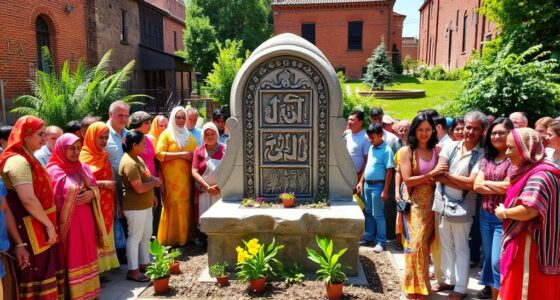
Community engagement plays a fundamental role in these efforts. When local people participate in art projects that celebrate their language, they develop a stronger emotional connection to their heritage. This involvement can include workshops, storytelling sessions, or performances where elders teach youth phrases, idioms, and cultural tales. Your role might be to facilitate these interactions, guaranteeing the language is practiced and appreciated in authentic contexts. The more community members see their language reflected in art, the more motivated they are to preserve and pass it on.
Moreover, documenting language through art helps create tangible artifacts that can be shared globally. Photos of murals, recordings of songs, videos of performances—all serve as digital archives that raise awareness and attract support. These projects can inspire pride and motivate communities to continue using and teaching their language. Additionally, understanding the artistic significance of butter and other cultural symbols can deepen the connection between language and cultural identity, enriching revitalization efforts. Ultimately, by combining thorough language documentation with active community engagement through art, you help assure that these endangered languages not only survive but thrive in new, vibrant forms. In doing so, you protect cultural diversity, fostering a future where languages and their stories remain alive and meaningful.

RECOLX AI Voice Recorder & Transcriber with GPT-5.2 Analysis – 30-Hour Recording, 112-Language Speech-to-Text & Auto Summary for Meetings, Lectures & Interviews,Grey
- AI Transcription & Summary: Converts hours of audio into text and summaries
- Supports 112 Languages: High-accuracy speech-to-text in multiple languages
- Long Battery Life: Records up to 30 hours continuously
As an affiliate, we earn on qualifying purchases.
As an affiliate, we earn on qualifying purchases.
Frequently Asked Questions
How Does Art Influence Language Retention Among Youth?
Art influences language retention among youth by fostering cultural expression and encouraging creative engagement. When you participate in art projects that incorporate your language, you strengthen your connection to your heritage. This active involvement makes learning and using the language more meaningful and enjoyable. As a result, you’re more likely to preserve and pass on your language, ensuring it stays alive through the vibrant, creative ways you express your culture.
What Specific Art Forms Best Support Endangered Language Revival?
You should focus on visual storytelling and musical performances to support endangered language revival. Visual storytelling, like murals and comics, vividly conveys cultural narratives, making the language engaging and accessible. Musical performances, including traditional songs and contemporary fusion, resonate emotionally and encourage participation. These art forms actively involve communities, preserve oral traditions, and inspire younger generations to embrace their language deeply and authentically.
Can Digital Art Effectively Preserve Spoken Dialects?
Digital art can effectively preserve spoken dialects, especially through visual storytelling on interactive platforms. Did you know that over 70% of endangered languages lack recorded audio? By creating immersive digital content, you help keep dialects alive, allowing communities to share their stories globally. Interactive platforms enable users to engage deeply, making language learning engaging and accessible, therefore supporting the revival of endangered dialects through innovative visual storytelling techniques.
How Do Community Artists Contribute to Language Revitalization?
Community artists play a essential role in language revitalization by using cultural storytelling and visual symbolism to connect people with their heritage. You can create murals, performances, or installations that embody traditional stories and symbols, making the language more relatable and memorable. Your work sparks pride and interest, encouraging others to learn and speak the endangered language, ultimately helping to preserve it for future generations.
What Challenges Exist in Integrating Art Into Language Preservation Programs?
You might think integrating art into language preservation is straightforward, but cultural resistance and funding obstacles often stand in your way. Some communities resist change, fearing loss of tradition, while limited funding restricts projects. To succeed, you must navigate these challenges by building trust and securing diverse resources. Overcoming resistance and financial hurdles is key to using art effectively in language revival, making your efforts more sustainable and impactful.

As an affiliate, we earn on qualifying purchases.
Conclusion
By engaging with art, you play a crucial role in reviving endangered languages. Did you know that over 40% of the world’s languages could disappear in the next century? Through your creative efforts—be it music, storytelling, or visual art—you help preserve these languages for future generations. Every brushstroke or note keeps a culture alive, proving that art isn’t just expression; it’s a powerful tool for survival. Together, you can make a lasting impact.
![DeskFX Free Audio Effects & Audio Enhancer Software [PC Download]](https://m.media-amazon.com/images/I/41fXbDohyuS._SL500_.jpg)
DeskFX Free Audio Effects & Audio Enhancer Software [PC Download]
- Audio Transformation: Enhance sound from speakers and headphones
- Sound Quality Improvement: Adjust audio with various effects
- Audio Control: Manage sound through hardware settings
As an affiliate, we earn on qualifying purchases.
As an affiliate, we earn on qualifying purchases.

Frienda Set of 24 Community Helpers Giant Sticker Scene Community Helpers Educational Learning Kit Career Sticker Set Toys for Preschool Classroom Bulletin Board Decorations Flash Cards Crafts
- Complete Sticker Set: 24 scenes with backgrounds and stickers
- Large Group Activity Boards: 17 x 11 inch background boards
- Educational Community Scenes: Includes post office, school, fire station, hospital, grocery, police
As an affiliate, we earn on qualifying purchases.
As an affiliate, we earn on qualifying purchases.