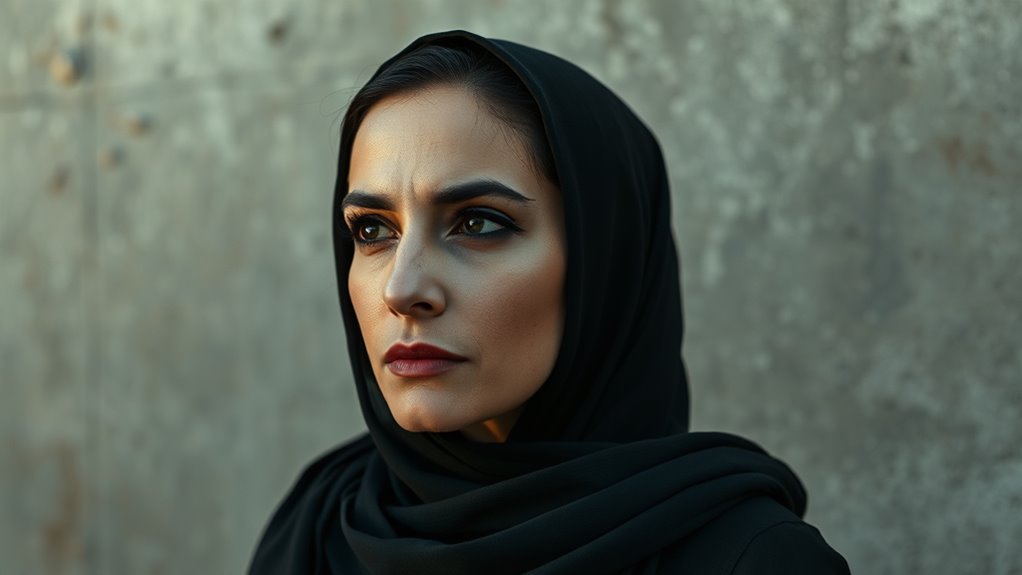

Shirin Neshat’s work challenges your ideas of gender and identity by using powerful symbols rooted in Persian culture. She explores how tradition, societal expectations, and personal freedom shape who we are, often highlighting women’s resilience as acts of resistance. Through layered imagery like calligraphy, veils, and symbols of power, she questions cultural norms and emphasizes the fluidity of identity. Keep exploring her art, and you’ll uncover deeper stories of struggle and empowerment behind her striking visuals.
Key Takeaways
- Neshat’s work explores the fluid and socially constructed nature of gender and identity through symbolic imagery.
- She challenges patriarchal norms in Persian society, highlighting women’s resilience and acts of resistance.
- Visual symbols like calligraphy, veils, and guns evoke themes of repression, rebellion, and cultural tradition.
- Her art juxtaposes Persian tradition with contemporary issues, questioning cultural narratives shaping individual identity.
- Neshat’s artworks encourage critical reflection on how external forces influence personal and gender identity within restrictive environments.
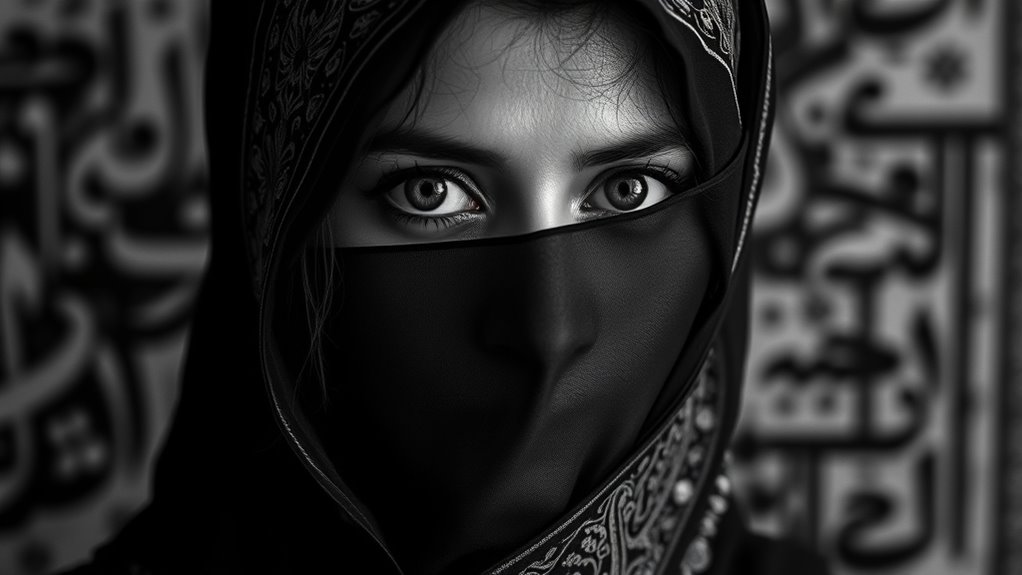
Shirin Neshat challenges viewers to rethink ideas of gender and identity through her powerful artwork. Her work often explores the complex intersections of cultural tradition, personal freedom, and societal expectations, prompting you to reflect on how these forces shape individual identity. Central to her art is a deep engagement with Persian feminism, which she uses to challenge patriarchal norms while honoring the resilience of women in Iran. By doing so, she invites you to see beyond stereotypes and recognize the nuanced realities women face in restrictive environments. Her work doesn’t just depict gender; it questions the very constructs that define it, making you think about the fluidity and socially constructed nature of identity. Visual symbolism is a core technique Neshat employs to communicate her messages. She layers her images with powerful symbols—calligraphy, veils, guns, and traditional attire—that carry layered meanings rooted in Persian culture and history. As you observe her artwork, you’ll notice how these symbols serve as visual shorthand for complex ideas about power, silence, resistance, and spirituality. For example, the use of calligraphy often reflects Iran’s rich literary and religious traditions, but in her work, it can also symbolize suppression or rebellion, depending on how it’s presented. Similarly, veils in her photographs and videos evoke notions of modesty and cultural expectation, yet they also become tools of empowerment or concealment, depending on context. Neshat’s mastery of visual symbolism allows her to communicate powerful messages without explicit language, compelling you to interpret and engage with the layered meanings. Her exploration of alternative investments like gold in her work highlights how cultural symbols can be repurposed to challenge traditional narratives about identity and power. Through her art, she challenges you to confront your assumptions about gender roles, cultural identity, and the boundaries imposed by society. Her work often juxtaposes traditional Persian aesthetics with contemporary themes, highlighting the tension between heritage and modernity. By doing this, she encourages you to question how cultural narratives influence personal identity and whether liberation can be achieved within or outside those narratives. Her focus on Persian feminism is especially significant because it sheds light on the struggles and strengths of women in Iran—a region often misunderstood or stereotyped. Neshat’s art becomes a dialogue about resilience and agency, urging you to consider how women navigate and resist cultural constraints. In the end, Neshat’s artwork acts as a mirror, reflecting the ongoing struggles and hopes tied to gender and identity. It asks you to look beyond surface appearances and see the deeper stories of cultural expression, resistance, and transformation. Her use of visual symbolism, rooted in Persian tradition and feminism, pushes you to reconsider what defines you and how cultural history influences that definition. Through her compelling images and layered meanings, she invites you into a space of critical reflection—challenging, inspiring, and expanding your understanding of gender and identity in a complex world.

HDYDJS Art Poster Islamic Text Persian Painting Wall Art Paintings Canvas Wall Decor Home Decor Living Room Decor Aesthetic 12x18inch(30x45cm) Unframe-style
Canvas:There Are Frame and No Frame to Choose,which are better than paper posters
As an affiliate, we earn on qualifying purchases.
As an affiliate, we earn on qualifying purchases.
Frequently Asked Questions
How Has Neshat’s Personal Life Influenced Her Art?
Your personal experiences deeply influence your art, shaping your perspective on gender and identity. You draw artistic inspiration from your life in Iran, facing cultural and political challenges that fuel your creativity. These experiences allow you to explore complex themes, giving your work authenticity and emotional depth. By channeling your personal stories into your art, you create powerful pieces that resonate with viewers and provoke meaningful conversations about identity and gender.
What Specific Cultural Symbols Does She Incorporate?
You notice that she incorporates Persian calligraphy and Islamic motifs into her art. These symbols reflect her cultural heritage and explore complex themes like gender, identity, and tradition. By using Persian calligraphy, she emphasizes linguistic and cultural roots, while Islamic motifs evoke spiritual and historical connections. Together, these elements create a powerful visual language that invites viewers to engage with Iran’s rich artistic and cultural history.
How Has Her Work Been Received Internationally?
You’ll find that Shirin Neshat’s work has been widely celebrated internationally, with over 30 solo exhibitions worldwide. Her art resonates across cultures, sparking essential conversations on gender and identity. The cultural reception of her work is highly positive, and her powerful imagery has made a significant artistic impact globally. You can see her influence in contemporary art, inspiring dialogues that transcend borders and challenge traditional perspectives.
What Challenges Did She Face as a Female Artist?
You face challenges as a female artist by confronting gender stereotypes that often limit your creative expression. You may encounter artistic censorship, where authorities or institutions restrict your work due to its themes or imagery. These obstacles require resilience and boldness, pushing you to find innovative ways to communicate your message. Despite these difficulties, you continue to explore identity and gender, making a powerful impact through your art.
How Does Her Work Evolve Across Different Regions?
You observe that her work evolves across different regions by incorporating regional influences, which shape her artistic evolution. As she travels and engages with diverse cultures, her themes and visual language adapt, reflecting local traditions and societal issues. This regional interplay enriches her art, allowing her to connect universal concepts of identity and gender with specific cultural contexts, demonstrating her dynamic growth and responsiveness as an artist.

Framed Dark Academia Wall Art Veiled Woman Moth Prints Victorian Gothic Canvas Painting Dark Moody Aesthetic Pictures Wall Decor Moody Romance Prints Artwork for Bedroom Living Room 8×10 Inch
【Framed Moody Gothic Wall Art 】The size of this dark academia wall art is 8×10 This captivating painting…
As an affiliate, we earn on qualifying purchases.
As an affiliate, we earn on qualifying purchases.
Conclusion
You might think that art can’t fully capture complex gender and identity issues, but Shirin Neshat’s work proves otherwise. Her bold visuals challenge stereotypes, inviting you to see beyond surface differences. By confronting cultural taboos, she sparks essential conversations you won’t want to ignore. So, next time you view her art, remember it’s more than beauty — it’s a powerful voice for understanding and change in a divided world.
HANDICHI Design 5-Pack 2 Inch “Portland Resist” Frog Stickers – Vintage Protest Poster Vinyl Decals – Symbolic Activist Frog Artwork – Waterproof Stickers for Laptops, Water Bottles & Journals
🐸 ICONIC “PORTLAND RESIST” DESIGN – Features a bold, symbolic frog facing a silhouetted protest scene with radiant…
As an affiliate, we earn on qualifying purchases.
As an affiliate, we earn on qualifying purchases.
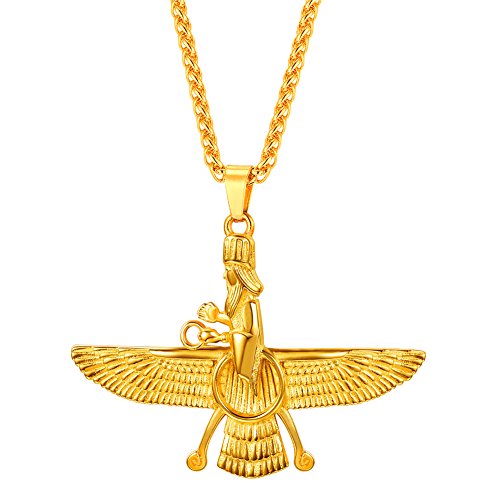
U7 Farvahar Pendant with Chain 18K Gold Plated Symbol of Iran Persian Gift Necklace
forouhar or faravahar pendant.
As an affiliate, we earn on qualifying purchases.
As an affiliate, we earn on qualifying purchases.