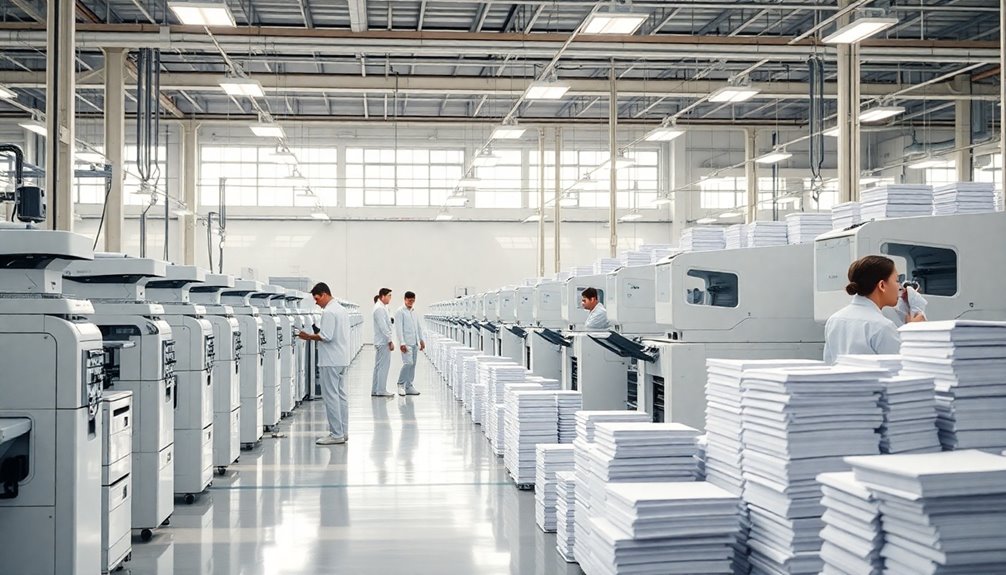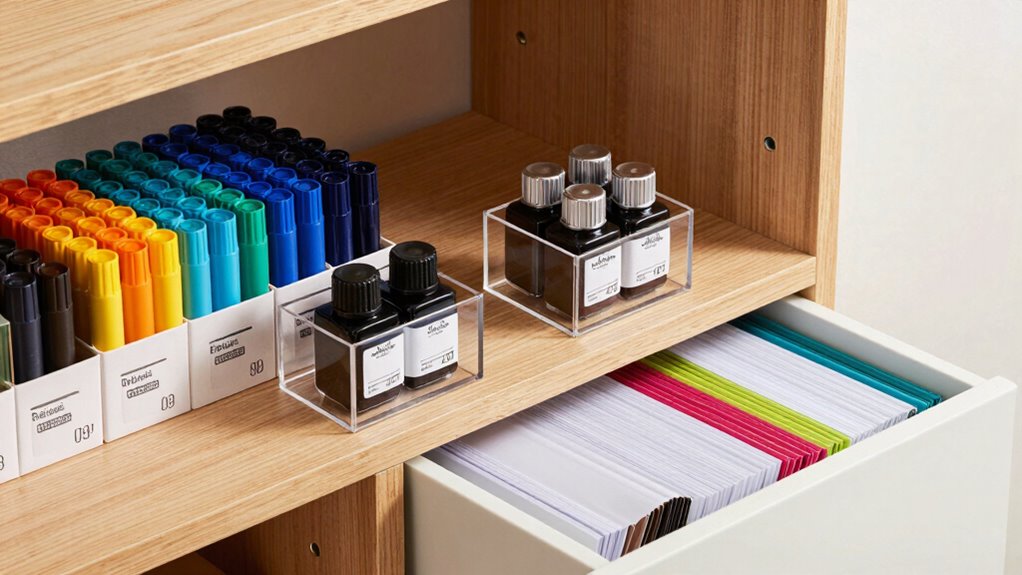

To store spare ink and media smartly, keep cartridges in a cool, dark, and humidity-controlled space, preferably in their original packaging or airtight containers. Store media flat and upright in sturdy, climate-controlled environments away from dust, heat, and chemicals. Label everything clearly and organize supplies to avoid damage and confusion. Regularly inspect your items for signs of deterioration and resealing cartridges tightly. If you want to discover more tips for ideal storage, continue exploring these best practices.

Get business pricing on monitors, keyboards and dev gear
- Business-only prices and quantity discounts
- Tax-exempt purchasing
- Multiple users, one account, clear invoices
Key Takeaways
- Keep ink cartridges in airtight, original packaging or sealed containers in a cool, dark, and dry environment.
- Store media flat or upright in sturdy, climate-controlled containers to prevent warping and damage.
- Clearly label all supplies to easily identify compatible media and ink types, reducing handling errors.
- Maintain consistent temperature and humidity levels to preserve media quality and ink performance over time.
- Regularly inspect stored supplies for signs of damage, such as drying, mold, or warping, and replace as needed.

Storing spare ink and media properly is essential to guarantee they stay in good condition and perform well when you need them. Proper storage helps preserve ink cartridge longevity and ensures your media remains compatible with your equipment. When you’re not using your supplies regularly, neglecting correct storage can lead to dried-out ink, color fading, or media warping, all of which compromise your final results.
Start by keeping ink cartridges in a cool, dark place. Excessive heat or direct sunlight can accelerate ink drying and degrade media quality. Ideally, store cartridges at temperatures between 50°F and 77°F (10°C to 25°C). Avoid humid environments, as moisture can cause ink to clump or corrode the cartridge components. Always keep ink cartridges in their original packaging or in airtight containers to prevent exposure to air, which can dry out the ink and reduce ink cartridge longevity. If you’ve removed a cartridge from its packaging, reseal it tightly to minimize exposure to air and temperature fluctuations. Additionally, storing cartridges away from extreme temperatures helps maintain their optimal condition over time.
Media storage requires attention to media compatibility considerations. Different types of media—such as photo paper, transparencies, or specialty papers—have specific storage needs. Keep media flat in a cool, dry place, away from dust and chemicals that could damage the surface. Store media upright in sturdy containers or racks to prevent warping or bending. For media with adhesive backing or sensitive coatings, avoid stacking too high or placing heavy objects on top, as this can cause damage or misalignment. If possible, keep media in a controlled environment with low humidity, as excess moisture can lead to curling or deterioration over time. Maintaining proper temperature and humidity levels is crucial for preserving media quality, especially for sensitive types. Proper climate control can significantly extend the lifespan of your media, ensuring consistent print results. Additionally, using storage containers specifically designed for media can further protect against environmental damage.
Another key tip is to label your supplies clearly. When storing multiple types of ink or media, labels help you quickly identify contents without unnecessary handling. This reduces the risk of using incompatible media with your printer, which can cause poor print quality or damage to your printer’s print head. Always check your manufacturer’s media compatibility considerations before storing media for long periods. This can prevent printing issues caused by incompatible supplies and ensure your equipment remains in good condition. Proper labeling and organization help streamline your workflow and reduce waste.
Finally, regularly inspect your stored supplies, even if you don’t need to use them immediately. Look for signs of damage, such as dried ink, mold, warping, or discoloration. Proper storage isn’t a one-time effort; maintaining your supplies ensures they perform optimally, extends their lifespan, and saves you money in the long run. Taking these simple steps guarantees your ink cartridges and media stay in top condition, ready for high-quality printing whenever you need them.
airtight ink cartridge storage container
As an affiliate, we earn on qualifying purchases.
As an affiliate, we earn on qualifying purchases.
Frequently Asked Questions
How Long Can Ink Cartridges Remain Unused Before Drying Out?
Ink cartridges typically last 6 to 12 months unused, but their lifespan can shorten if not stored properly. If you keep your cartridges sealed and upright in a cool, dry place, you can extend their media shelf life. However, once opened, ink may dry out within a few months, reducing print quality. To maximize ink cartridge lifespan, avoid exposure to heat and direct sunlight.
What Is the Best Way to Organize Different Media Types?
Think of yourself as a librarian, skillfully organizing a vast collection. The best way to organize different media types is by media categorization—separating photos, papers, and specialty media. Use clearly labeled storage containers for each category to keep things neat and accessible. This method not only saves time but also preserves your media’s quality, ensuring your supplies are ready when inspiration strikes.
Can Temperature Fluctuations Damage Ink and Media Storage?
Temperature fluctuations can damage your ink and media storage. You should maintain temperature stability to prevent warping, cracking, or ink degradation. Rapid changes in temperature can cause condensation, which damages sensitive materials. Keep humidity control in mind too, as high humidity promotes mold and deterioration, while low humidity can cause media to become brittle. Consistently monitoring and regulating both temperature and humidity ensures your stored media and ink stay in ideal condition.
How Often Should I Check Stored Ink and Media for Quality?
You should check your stored ink and media every 3 to 6 months to guarantee color preservation and quality. Regular inspections help you spot any signs of deterioration, like color fading or media warping. Use proper storage containers that protect against light and temperature fluctuations. By doing so, you maintain ideal ink performance and media longevity, making sure your supplies stay in top condition for when you need them.
Are There Eco-Friendly Storage Options for Spare Ink and Media?
Imagine a greener future—yes, you can store spare ink and media sustainably. Eco-friendly packaging made from recycled or biodegradable materials offers a smart choice. Opt for sustainable storage solutions like reusable containers or storage boxes crafted from eco-conscious materials. These eco-friendly options reduce environmental impact, helping you stay organized while caring for the planet. By choosing eco-friendly packaging, you’re not just storing media; you’re making a positive difference.
climate-controlled media storage box
As an affiliate, we earn on qualifying purchases.
As an affiliate, we earn on qualifying purchases.
Conclusion
Storing your spare ink and media wisely guarantees they stay in top shape for when you need them—think of it as having your own modern-day alchemist’s chest. Keep them in a cool, dry place, away from sunlight, and always check expiration dates. By doing so, you’ll be ready for any print adventure—like a true digital knight in shining armor—without the chaos of a mess or ruined supplies. Stay organized, and your prints will thank you!
labeling supplies for ink and media
As an affiliate, we earn on qualifying purchases.
As an affiliate, we earn on qualifying purchases.
As an affiliate, we earn on qualifying purchases.
Halloween Picks
halloween
As an affiliate, we earn on qualifying purchases.