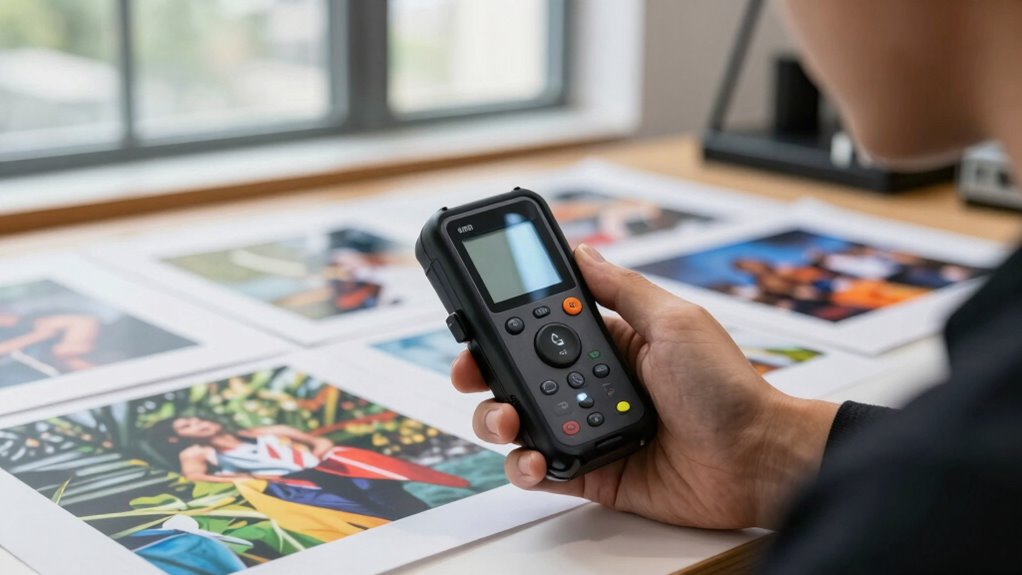
Measuring ambient light helps guarantee you see the true colors and details of your prints. It allows you to create consistent lighting conditions, reducing glare and reflections that can distort your view. Proper lighting makes your evaluations more accurate and reliable, giving you confidence in your color judgments and print quality. By understanding and adjusting your environment, you can improve your review process. Keep exploring to discover more tips on optimizing your print evaluations.

Get business pricing on monitors, keyboards and dev gear
- Business-only prices and quantity discounts
- Tax-exempt purchasing
- Multiple users, one account, clear invoices
Key Takeaways
- It ensures accurate color perception by accounting for different light sources and color temperatures.
- It reduces glare and reflections, providing a clearer view of print details.
- It helps create a consistent review environment for reliable comparisons over time.
- It allows adjustments in lighting conditions to enhance print evaluation accuracy.
- It improves confidence that print assessments truly reflect print quality and color fidelity.

Have you ever wondered why your printed photos or documents look different in various lighting conditions? The answer lies in understanding how ambient light influences the way we perceive prints. When you review a print without considering the lighting environment, you might misjudge its true color accuracy or overlook glare issues that could distort your view. Measuring ambient light becomes essential because it helps you create a consistent viewing environment, guaranteeing that what you see on the print matches your expectations and the original intent.
By evaluating the surrounding light, you can optimize conditions to enhance color accuracy. Different light sources—such as fluorescent, incandescent, or LED lighting—emit varying color temperatures, which can alter how colors appear on a print. For instance, a photo that looks vibrant and true to life under neutral lighting may seem dull or overly warm under yellowish incandescent bulbs. When you measure ambient light, you gain insight into the specific characteristics of your environment, enabling you to adjust lighting or choose the right time of day for review. This way, you guarantee that the colors you see are genuine, helping you make more accurate judgments about the quality of your prints.
Measuring ambient light ensures accurate color perception and helps you choose optimal lighting for true-to-life print reviews.
Glare reduction is another critical factor that ambient light measurement can help address. Excessive or poorly directed light sources can cause reflections and glare on glossy surfaces, making it difficult to evaluate details accurately. By measuring the light levels and angles, you can reposition your light sources or choose lighting setups that minimize reflections, providing a clearer view of your print. Proper lighting reduces eye strain and prevents misleading impressions caused by unwanted reflections, so you can focus on evaluating details and colors objectively. Additionally, understanding the lighting conditions allows you to adapt your setup for optimal viewing, ensuring the best possible evaluation environment. Incorporating knowledge about ambient light helps you anticipate how different settings influence perception and guides you in creating an ideal viewing space. Recognizing the importance of measurement techniques also ensures you accurately assess your environment’s light levels, leading to better print evaluations. Furthermore, understanding the lighting spectrum can help you select light sources that produce the most accurate color rendering for your prints.
Understanding the ambient light conditions also helps you establish a standard viewing protocol for print reviews. When you consistently measure and control lighting, you create a reliable environment that produces consistent results over time. This consistency is vital for comparing different prints or evaluating changes after adjustments to your printer or paper selection. Without this step, your reviews might be skewed by fluctuating light conditions, leading to unreliable assessments. Additionally, being aware of ambient light variations allows you to better anticipate how prints will look in different settings, improving your overall evaluation process.
In essence, measuring ambient light isn’t just about technical precision; it’s about gaining control over how your prints are perceived. It guarantees accurate color representation and minimizes glare, giving you confidence that your print evaluations reflect true quality. Whether you’re a professional photographer, a designer, or just someone who values perfect prints, understanding and managing ambient light makes all the difference in achieving consistent, high-quality results.
digital lux meter for measuring ambient light
As an affiliate, we earn on qualifying purchases.
As an affiliate, we earn on qualifying purchases.
Frequently Asked Questions
Can Ambient Light Affect Printer Color Accuracy?
Yes, ambient light can affect printer color accuracy because it causes light interference, which influences how you perceive colors. When you perform color calibration, the surrounding lighting conditions matter, as inconsistent light can distort color perception. By measuring ambient light, you guarantee your printer’s color output matches your expectations, leading to more consistent and accurate prints. This helps prevent color mismatches caused by changing lighting environments.
What Tools Are Best for Measuring Ambient Light?
You should use light sensors to measure ambient light accurately for better color calibration. These tools detect the intensity and color temperature of your environment, ensuring your printer adjusts colors correctly. The best tools include handheld light meters and dedicated color calibration devices with built-in light sensors. By measuring ambient light, you can optimize your print reviews and achieve consistent, true-to-life colors in your prints, regardless of changing lighting conditions.
Does Ambient Light Vary Throughout the Day?
Yes, ambient light varies throughout the day. Natural sunlight changes intensity and color as the sun moves, affecting your indoor lighting conditions. Morning and afternoon sunlight tends to be brighter and warmer, while evening light is softer and cooler. Indoor lighting also fluctuates with the time of day, influenced by window exposure and artificial light usage. Understanding these variations helps you adjust your print reviews for consistent color accuracy.
How Does Ambient Light Impact Print Longevity?
Think of your print as a delicate flower, vulnerable to the sun’s harsh rays. Light exposure accelerates fading and degradation, reducing your print’s lifespan. Ambient light influences how colors and details hold up over time, making display calibration essential for preservation. By controlling light exposure, you protect your artwork, ensuring it remains vibrant and true to its original for years to come.
Is Measuring Ambient Light Necessary for All Printing Environments?
No, measuring ambient light isn’t necessary for all printing environments, but it’s highly beneficial if you want consistent, accurate color calibration. By monitoring light conditions, you guarantee light consistency, which helps your prints look their best over time. In spaces with fluctuating lighting, this measurement prevents color shifts and maintains print quality. So, while not always essential, measuring ambient light improves overall print reliability and color accuracy.
5000K high CRI daylight LED light for photo print viewing
As an affiliate, we earn on qualifying purchases.
As an affiliate, we earn on qualifying purchases.
Conclusion
By measuring ambient light, you illuminate the true colors of your prints, avoiding the fog of misjudgment. It’s like adjusting your sails before a voyage—ensuring you’re headed in the right direction. When you understand your environment, your print reviews become clearer and more accurate, guiding your choices like a lighthouse in the night. Embrace this simple step, and watch your printing experience transform from murky waters to a horizon of perfection.
D50 print viewing light booth for color evaluation
As an affiliate, we earn on qualifying purchases.
As an affiliate, we earn on qualifying purchases.
anti-glare photo print viewing light
As an affiliate, we earn on qualifying purchases.
As an affiliate, we earn on qualifying purchases.
Halloween Picks
halloween
As an affiliate, we earn on qualifying purchases.