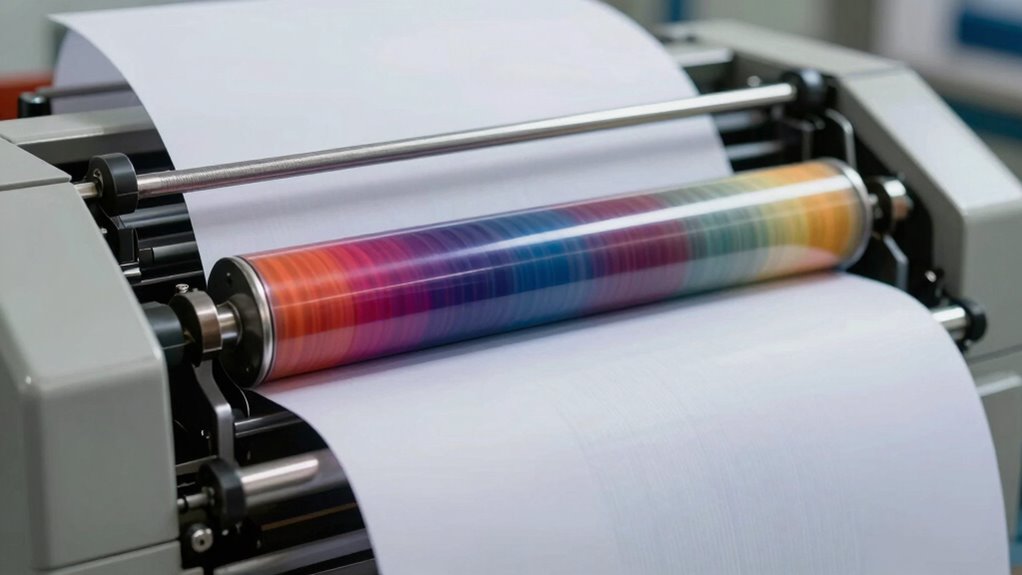

Your media feed system directly impacts print accuracy over long runs by ensuring precise substrate positioning and consistent paper movement. Proper calibration, sensor feedback, and tension control work together to prevent misalignments, skewing, and uneven feeding. These elements help maintain print quality, reduce waste, and avoid costly reprints. When you understand how these systems function and their integration, you’ll see how they keep your output sharp and reliable from start to finish.

Get monitors, keyboards and dev gear delivered free — and shop member deals
- Fast, free delivery on millions of items
- Access to Prime Big Deal Days deals on October 6–7
- Prime Video, Amazon Music and more included
Key Takeaways
- Precise media positioning prevents cumulative misalignments during extended print jobs.
- Digital calibration adapts to media variations, maintaining consistent feeding accuracy.
- Sensor feedback enables real-time adjustments, reducing errors over long runs.
- Tension control ensures media flatness, preventing skewing and uneven feeding.
- Integration of calibration and tension systems sustains high print quality and minimizes waste.
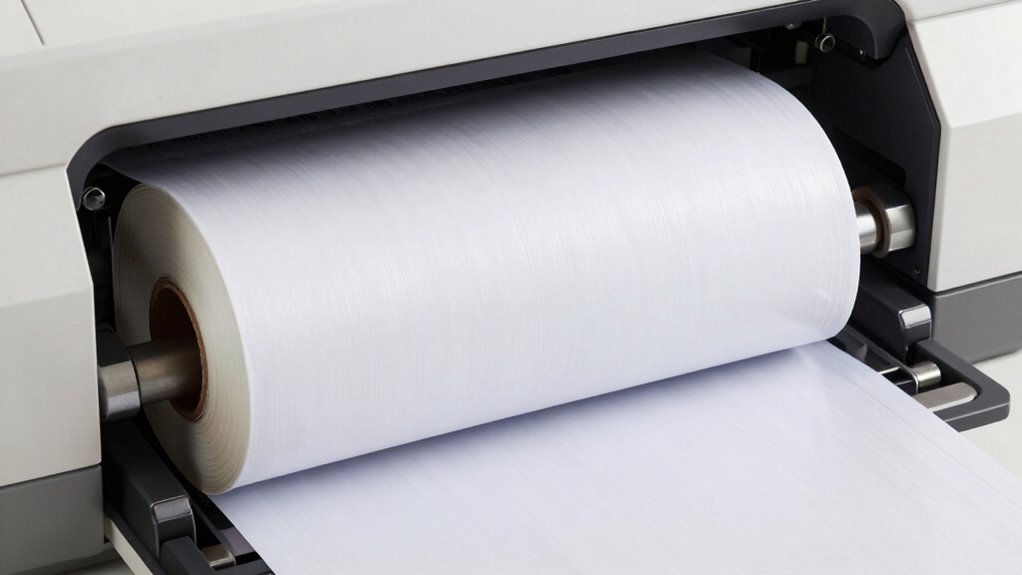
Media feed systems play a crucial role in guaranteeing print accuracy, as they directly influence how consistently and precisely paper or other substrates are positioned during printing. When you’re running long print jobs, maintaining this consistency becomes even more critical, because small misalignments can multiply over time, leading to costly reprints or quality issues. To keep everything aligned, you need to focus on two key aspects: digital calibration and tension control. These elements work together to ensure your media feeds smoothly and accurately, preventing drift or skew that could compromise your final product.
Digital calibration is necessary for fine-tuning your media feed system. It allows you to set precise parameters that adapt to different media types and thicknesses, ensuring the system understands exactly how to handle each substrate. When you perform regular digital calibration, you’re effectively teaching your printer how to interpret sensor data and adjust feed mechanisms accordingly. This process minimizes errors caused by media variations, such as warping or stretching, which can otherwise throw off registration during long runs. Proper digital calibration ensures that each sheet or roll of media advances correctly, reducing the risk of misalignments as the print job progresses. Additionally, accurate calibration helps in compensating for environmental factors like humidity and temperature that can affect media behavior during extended printing. Regular maintenance of calibration settings is essential to sustain optimal performance over long print durations. Furthermore, sensor feedback systems enhance this process by providing real-time data to make dynamic adjustments during printing, which is vital for maintaining consistent quality. Employing automated calibration methods can further streamline this process, saving time and ensuring precision without manual intervention.
Tension control is equally important, especially over long runs where media can stretch or slack, causing inaccuracies. If the media isn’t tensioned properly, it can lead to skewing or uneven feeding, which disrupts image registration and overall print quality. When you maintain consistent tension, you prevent media from bunching or slipping, keeping the substrate flat and stable throughout the process. Many media feed systems incorporate tension sensors and adjustment mechanisms to help you monitor and regulate tension in real-time. This proactive approach minimizes the chances of media shifting mid-print, which can be costly both in terms of materials and time. Moreover, media tension directly influences the stability of the substrate, further emphasizing the importance of precise tension regulation. Proper tension management not only supports print accuracy but also extends the lifespan of media handling components by reducing unnecessary wear. Additionally, proper tensioning can help accommodate media variations, such as different weights or textures, ensuring consistent results across diverse jobs. Ensuring that tension is properly calibrated can also prevent media from curling or distorting, which is especially vital for high-precision applications.
Together, digital calibration and tension control form a feedback loop that keeps your media feeding accurately during extended runs. As the print progresses, sensors detect any deviations and automatically adjust calibration settings or tension levels. This dynamic responsiveness helps you sustain high-quality output without manual intervention, reducing downtime and waste. Over long print runs, where small inaccuracies can accumulate, these systems ensure your output remains consistent, sharp, and true to the original design. By paying close attention to these factors, you maximize your media feed system’s effectiveness, ultimately delivering reliable, high-quality prints from the first sheet to the last.
media feed system for large format printers
As an affiliate, we earn on qualifying purchases.
As an affiliate, we earn on qualifying purchases.
Frequently Asked Questions
How Do Media Feed Systems Vary Between Different Printing Technologies?
You’ll notice media feed systems differ across printing technologies by their mechanisms for media alignment and feed calibration. In digital presses, precise sensors guarantee consistent media positioning, while offset presses rely on manual adjustments for feed calibration. Variations include roller designs, tension controls, and alignment guides, all aimed at maintaining print accuracy. Understanding these differences helps you optimize media handling, reducing errors and ensuring high-quality, long-run print results.
What Maintenance Is Required to Ensure Consistent Print Accuracy?
Did you know that proper maintenance can improve print accuracy by up to 15%? To guarantee consistent results, you should regularly perform calibration procedures and sensor adjustments. Check and clean sensors, verify alignment, and recalibrate the system as needed. These steps help prevent misfeeds, maintain registration, and ensure your media feed system operates smoothly during long runs, saving you time and material costs while improving print quality.
How Does Media Thickness Impact Feed System Performance?
Media thickness greatly impacts your feed system performance because thicker media reduces flexibility, making it harder for the system to grip and feed smoothly. You need to regularly perform thickness calibration to guarantee proper handling. When you adjust for media flexibility, your feed system maintains consistent tension and alignment, preventing misfeeds or jams during long runs. Proper calibration and understanding media thickness help you achieve accurate, high-quality prints without interruptions.
Can Media Feed Systems Be Customized for Specific Print Jobs?
Think of your media feed system as a tailored suit—customizable for each print job. You can optimize it through media customization, adjusting rollers, guides, and tension to suit specific media types. By doing so, you enhance feed system performance, ensuring smooth, accurate prints even over long runs. Feed system optimization isn’t one-size-fits-all; it adapts to your unique printing needs, improving quality and reducing waste.
What Are the Common Troubleshooting Steps for Feed-Related Print Errors?
When troubleshooting feed-related print errors, start by checking media alignment to guarantee the material sits correctly on the rollers. Next, verify roller calibration, making sure the rollers are properly adjusted to prevent skewing or misfeeds. Inspect for any jams, worn rollers, or debris that could disrupt smooth feeding. Regularly maintaining and calibrating your media feed system helps maintain print accuracy over long runs and reduces errors.
digital calibration tools for printers
As an affiliate, we earn on qualifying purchases.
As an affiliate, we earn on qualifying purchases.
Conclusion
In the end, your media feed system is the heartbeat of your print quality. When it’s finely tuned, it guides your paper smoothly, ensuring every detail hits the mark like a well-trained archer hitting the bullseye. But neglect it, and your prints risk veering off course, wasting time and resources. Keep your system in check, and you’ll keep your output precise and reliable—turning your long runs into a masterpiece, not a misfire.
As an affiliate, we earn on qualifying purchases.
sensor feedback printer accessories
As an affiliate, we earn on qualifying purchases.
As an affiliate, we earn on qualifying purchases.
Halloween Picks
halloween
As an affiliate, we earn on qualifying purchases.