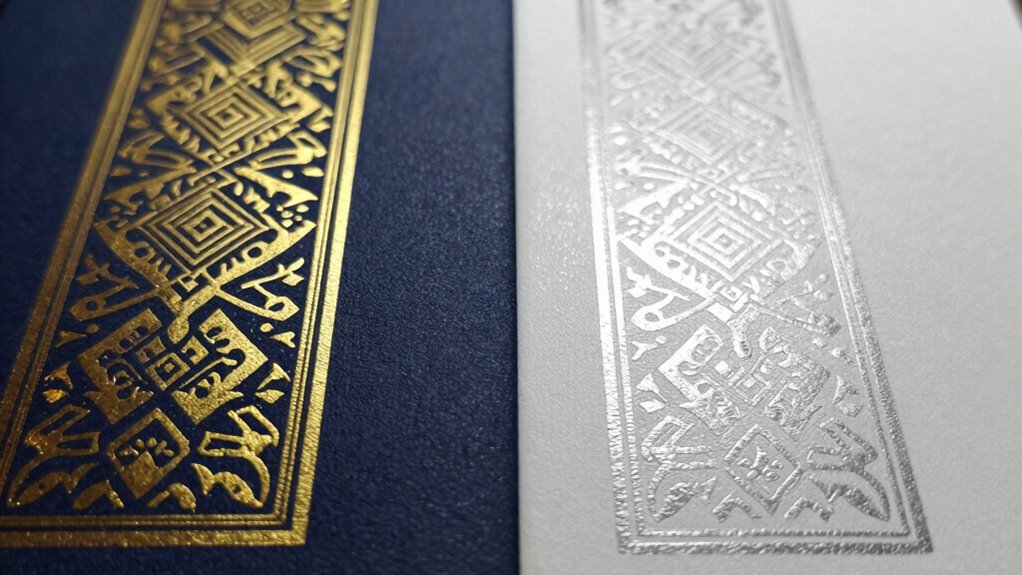

With foil stamping, you’ll need to create custom metal dies, which takes time and adds costs upfront, especially for larger runs. Digital foiling, on the other hand, doesn’t require dies, so setup is faster and cheaper, ideal for quick projects or small quantities. While foil stamping offers embossing and texture, digital foiling is more flexible but lacks the tactile effects. If you’re curious about how these differences affect your project, there’s more to discover below.

Get business pricing on monitors, keyboards and dev gear
- Business-only prices and quantity discounts
- Tax-exempt purchasing
- Multiple users, one account, clear invoices
Key Takeaways
- Foil stamping requires creating a custom metal die, adding significant initial setup time and cost.
- Digital foiling involves digitally preparing files, eliminating the need for physical tooling.
- Foil stamping’s setup process is more involved, suited for large runs, while digital foiling is quicker for small batches.
- Creating and testing dies in foil stamping extends the setup phase compared to the rapid digital file preparation.
- Setup differences impact overall production time, costs, and flexibility in design modifications.

When deciding between foil stamping and digital foiling, understanding their differences can help you choose the best option for your project. The setup process plays a significant role in this decision, as it directly impacts time, cost, and the final look. Foil stamping typically involves creating a custom metal die, which shapes and presses the foil onto your material. This process demands precise embossing techniques to achieve the desired depth and texture, giving your design a tactile quality that digital foiling might not replicate. Because of the physical die, the initial setup is more involved, requiring time to create and test the tooling. However, once the die is ready, producing multiple copies is efficient and consistent, making it suitable for larger runs. The physical die process also allows for embossing techniques that can add extra dimension and texture to your design. Additionally, the durability of the embossed effect can enhance the overall luxury appeal of your printed material.
In contrast, digital foiling streamlines the setup process. It eliminates the need for custom dies, instead utilizing a digital printing process that applies foil directly onto your material. This means there’s no need for embossing techniques involving physical dies, drastically reducing preparation time. Digital foiling is ideal for short runs or one-off projects where quick turnaround and flexibility are priorities. The setup involves preparing digital files and calibrating the printer, which is simpler and faster than creating a metal die. This digital printing method also enables easier customization and variations within the same project, making it highly adaptable to evolving design needs. This flexibility also allows for easy adjustments to design details like size, placement, or even color variations without additional tooling costs.
As an affiliate, we earn on qualifying purchases.
Frequently Asked Questions
How Does Foil Color Selection Impact the Setup Process?
Your foil color choice directly impacts setup precision because different colors have varying reflective qualities and thicknesses. When selecting foil color, you need to adjust the calibration to guarantee accurate application. Bright or metallic foils may require more precise setup, while matte finishes are more forgiving. By carefully choosing your foil color, you help guarantee the process runs smoothly, reducing errors and achieving the desired visual effect.
Can Foil Stamping Be Done on All Paper Types?
Foil stamping can’t be done on all paper types, especially those with metallic finishes or textured surfaces. You need a smooth, sturdy paper to guarantee the foil adheres properly and the design looks crisp. Custom textures can interfere with the stamping process, causing imperfect results. Before proceeding, check your paper’s compatibility to achieve the best quality, especially when working with specialty finishes or textured materials.
What Are the Environmental Considerations for Each Method?
Imagine a shimmering design on eco-friendly materials, where waste reduction is part of the process. With foil stamping, you often use more energy and create more waste, impacting the environment. Digital foiling, on the other hand, uses less material and energy, making it a greener choice. Both methods can be eco-friendly if you select sustainable materials and aim to minimize waste, helping you create beautiful designs responsibly.
How Long Does the Setup Process Typically Take?
The setup duration for foil application varies, but generally, foil stamping takes longer due to intricate setup steps like creating dies and aligning the foil, often taking several hours. Digital foiling, however, is quicker because it uses a digital process that requires minimal setup time, sometimes just minutes. Your choice depends on the project’s complexity and the desired quality, balancing time efficiency with the finished look.
Are There Size Limitations for Foil Stamping Versus Digital Foiling?
Think of foil stamping as a sculptor carving into metal foil—size limitations are more pronounced, especially with intricate paper textures. Larger designs can be challenging because the setup requires precise alignment and specialized equipment. Digital foiling, however, offers greater flexibility, accommodating various sizes and textures effortlessly. So, if you’re dreaming big or working with textured papers, digital foiling might be your best bet for seamless results.
As an affiliate, we earn on qualifying purchases.
Conclusion
In the dance of foil stamping and digital foiling, you hold the brush and the pen—each tool shaping your vision. Foil stamping’s bold, tactile mark is like a stamped seal of tradition, while digital foiling’s shimmering finish glows like a modern star. Choose the path that sings to your creative soul—each step a stroke in your masterpiece. In this symphony of techniques, your choice writes the final chapter of your design story.
As an affiliate, we earn on qualifying purchases.
As an affiliate, we earn on qualifying purchases.
Halloween Picks
halloween
As an affiliate, we earn on qualifying purchases.