

📊 Full opportunity report: World Model Readiness: Are You Ready for AI That Acts? on ThorstenMeyerAI.com — validation score, market gap, and execution plan.
TL;DR
AI development is shifting from models that describe to models that predict and act. A new diagnostic tool measures how prepared organizations are for this transition, highlighting current gaps and risks.
Major AI research efforts and industry initiatives are converging on the development of world models, AI systems capable of predicting environmental changes and executing actions. This shift from descriptive language models to predictive, action-oriented models marks a significant evolution in artificial intelligence, with implications for organizations across sectors. A new diagnostic tool has been introduced to evaluate how prepared companies are for integrating these systems, highlighting current gaps and potential risks.
Since late 2024, prominent AI labs such as Meta, Google DeepMind, Nvidia, and Waymo have launched dedicated projects focused on building and deploying world models. These models aim to internalize an environment’s dynamics, enabling AI to anticipate future states and make informed decisions. Notable developments include DeepMind’s Genie 3, which generates real-time photorealistic 3D worlds, and Meta’s V-JEPA 2, targeting robotics applications.
Industry leaders emphasize that the transition from models that simply describe to those that predict and act requires organizations to evaluate their data infrastructure, process representability, and oversight mechanisms. The new diagnostic tool, developed to assess world model readiness, asks critical questions about data availability, process modeling, supervision, and understanding failure modes. It is designed not to push for immediate adoption but to identify gaps and risks, helping organizations make informed decisions about future AI integration.
World Model Readiness — are you ready for AI that acts?
LLMs describe. World models predict and act. The next AI shift isn’t “have we adopted a chatbot” — it’s whether you’d know what to do with a model that anticipates consequences.
Independent commentary, produced with AI assistance under human editorial oversight. The views are the author’s own and may change. World Model Readiness is an early, positioning-stage diagnostic — an assessment framework, not a prediction, guarantee, or technical advice; its conclusions depend on the framework’s assumptions. “World models” are an emerging, rapidly-evolving area of AI; statements about the field reflect publicly reported developments as of mid-2026 and may quickly date. References to companies, labs, and products describe public reporting and imply no affiliation, endorsement, or verification. Product, model, and company names are trademarks of their respective owners.
Implications of Transitioning to Action-Oriented AI
This shift to AI systems that can predict and act has profound implications for industries relying on automation, safety, and decision-making. Organizations unprepared for this transition risk operational failures, safety issues, or being left behind as competitors adopt more autonomous, environment-aware systems. The diagnostic tool offers a structured way to evaluate readiness, ensuring organizations understand their current capabilities and limitations before deploying such systems at scale.
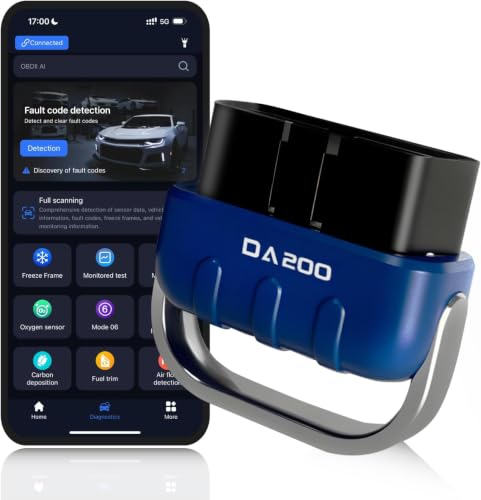
Bluetooth OBD2 Scanner Diagnostic Tool with AI Repair Guides, Wireless OBDII Scan Tool w/Battery Test & Live Data Readiness, Check Engine Light Car Code Reader for iOS & Android w/Free APP
- AI-Powered Diagnostic Insights: Provides detailed fault explanations and repair tips
- Comprehensive Code Reading: Reads DTCs, monitors engine faults, and exports reports
- Real-Time Data Monitoring: Displays live vehicle data and freeze frame info
As an affiliate, we earn on qualifying purchases.
As an affiliate, we earn on qualifying purchases.
Rapid Growth of World Model Research and Development
Over the past two years, the focus in AI research has moved from language models that generate text to world models capable of understanding and predicting physical environments. Initiatives from industry giants and startups alike have raised significant funding, signaling a major shift. The research bifurcates into models that compress environment data into latent states and those that generate detailed future scenarios, both aiming toward vision-language-action systems.
Despite the momentum, experts caution that current systems are still early-stage, data-hungry, and limited in real-world physical reasoning. Benchmarks reveal persistent gaps, especially in physical reasoning and the ‘reality gap’ between simulation and deployment. The industry recognizes that readiness involves more than technology; it requires organizational, data, and safety considerations.
“The move from describe to act fundamentally changes what organizations need to be prepared for, as prediction becomes critical for safe and effective AI deployment.”
— Thorsten Meyer, AI researcher

Artificial Intelligence-Driven Models for Environmental Management
As an affiliate, we earn on qualifying purchases.
As an affiliate, we earn on qualifying purchases.
Current Limitations and Challenges in Real-World Deployment
While research progresses rapidly, it remains unclear how soon fully reliable, safe, and general-purpose world models will be ready for widespread deployment. The ‘reality gap’ persists, and current models often struggle with physical reasoning and real-world unpredictability. The exact timeline for overcoming these limitations and the best practices for organizational adaptation are still under development.

NVIDIA Jetson Orin Nano Super Developer Kit
- AI Performance: Up to 40 TOPS of AI power
- Compact Design: Small size with extensive connectors
- High Compatibility: Supports Orin Nano and NX modules
As an affiliate, we earn on qualifying purchases.
As an affiliate, we earn on qualifying purchases.
Next Steps for Organizations Facing the World Model Shift
Organizations should begin conducting self-assessments using the new diagnostic tool to identify gaps in data, processes, and oversight. Industry efforts will likely produce more refined readiness frameworks and standards over the coming months. Companies that proactively evaluate their capabilities now will be better positioned to adopt and safely integrate action-oriented AI systems as technology matures.

The Next Renaissance: AI and the Expansion of Human Potential
As an affiliate, we earn on qualifying purchases.
As an affiliate, we earn on qualifying purchases.
Key Questions
What is a world model in AI?
A world model is an AI system that internally represents how an environment works, allowing it to predict future states and decide on actions based on those predictions.
Why is readiness for world models important now?
As AI systems move from descriptive to predictive and action-capable, organizations need to understand their current capabilities and limitations to ensure safe and effective deployment.
What are the main challenges in adopting world models?
Key challenges include gathering sufficient real-world data, modeling complex physical processes, supervising autonomous actions, and managing the ‘reality gap’ between simulation and deployment.
Is the diagnostic tool available for all organizations?
The diagnostic is currently in early stages, designed primarily for organizations to evaluate their readiness and identify gaps before adopting world models at scale.
When can we expect widespread deployment of reliable world models?
Experts suggest that while progress is rapid, full deployment of robust, general-purpose world models may still be several years away, depending on overcoming current technical and organizational challenges.
Source: ThorstenMeyerAI.com