
🔍 Read the full analysis: A Closer View Of AI, Noctilucent Clouds, And The Twilight Dial on ThorstenMeyerAI.com

Get business pricing on monitors, keyboards and dev gear
- Business-only prices and quantity discounts
- Tax-exempt purchasing
- Multiple users, one account, clear invoices
TL;DR
ThorstenMeyerAI.com describes “Noctilucent — NLC Watch at 83 km,” an AI-built exhibition page that uses a solar-depression dial to change a simulated twilight sky. The observing project and its field journals are fictional; noctilucent clouds are real, but the page is not a live scientific service.
ThorstenMeyerAI.com has described an AI-built exhibition page called “Noctilucent — NLC Watch at 83 km”, where visitors move a solar-depression dial to alter a simulated twilight sky and explore how high-altitude clouds can remain sunlit after sunset, as detailed in the original analysis. The site is a fictional field journal, not a real observing network or live scientific service, though noctilucent clouds themselves are a real atmospheric phenomenon.
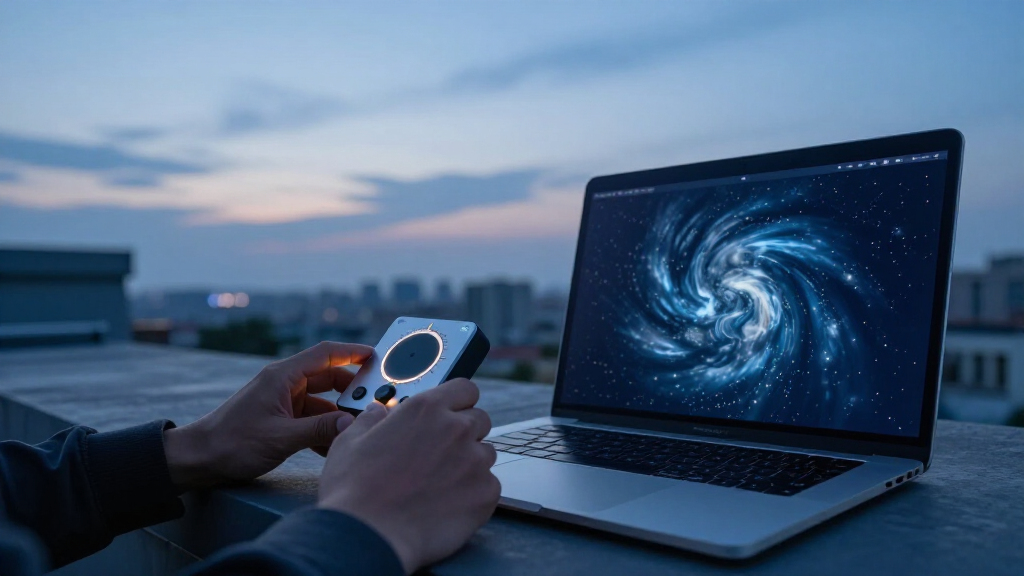
The central interaction sets the Sun between six and 16 degrees below the horizon. As the visitor moves the dial, the page adjusts several linked visual elements, including sky brightness, shadow depth, cloud glow, ambient color, grain and horizon flare. The design account says the experience is most expressive near 11 degrees below the horizon. The dial also updates diagram details and supporting text, making the setting part of the exhibit’s explanation rather than a control for decoration alone.
The sky and cloud artwork are generated in the browser using Canvas, while inline SVG supplies diagrams and the altitude illustration. The clouds have different simulated forms: billows use repeated tighter crests, whirls bend into polar distortions, and bands move in broader waves. In a later exercise, visitors hold a control as simulated ground-level haze fades and the cloud band at 83 kilometres becomes clearer. The reveal supports pointer and keyboard interaction, and can fade if the control is released early.
The project’s visual design sets electric cyan against deep violet and near-black, then shifts to a cream-colored field-log section. ThorstenMeyerAI.com also describes visibility-aware animation that stops when the browser tab is hidden and a still presentation for users who request reduced motion. The supplied material calls the work Room 162 of 175 and says its construction process involved building the room, reviewing it for clarity and interaction, and completing an art-director review.
A Closer View Of AI, Noctilucent Clouds, And The Twilight Dial
Inside a fictional field journal that turns one atmospheric variable into an interactive lesson: how clouds at 83 kilometres can still catch sunlight after sunset.
A dial that teaches through change
“Noctilucent — NLC Watch at 83 km” is an AI-built exhibition page. Visitors move a solar-depression dial, and the simulated sky, diagrams, and supporting text respond together.
Light after sunset
Noctilucent clouds are real high-altitude ice clouds that can remain sunlit while the ground below has entered darkness.
One variable, many effects
Changing the Sun’s position below the horizon adjusts sky brightness, shadow depth, cloud glow, ambient color, grain, and horizon flare.
A lesson, not a forecast
The dial makes a scientific idea tangible, while the page remains an educational artwork rather than a live observing service.
Follow the changing sky
The stated range runs from six to 16 degrees below the horizon. The design account says the experience is most expressive near 11 degrees.
Ground darkens.
Clouds still glow.
One setting links the visible sky to diagram details and explanatory copy, so the control carries meaning beyond decoration.
Set the dial
Choose the simulated Sun position below the horizon.
Sky responds
Brightness, color, shadow, and cloud glow shift.
Explore forms
Billows, polar whirls, and broad bands take distinct shapes.
Reveal the band
Hold a control as ground haze fades and the 83 km cloud band clears.
Procedural visuals, crafted for access
The supplied design account describes browser-generated artwork and a staged review process. It does not report independent scientific review or performance testing.
Sky and clouds
Canvas generates the sky and cloud artwork. Billows use tighter repeated crests; whirls bend into polar distortions; bands move in broader waves.
Diagrams and altitude
Inline SVG supplies explanatory diagrams and the altitude illustration, connecting the visual scene to the exhibit’s account.
Reveal and motion
The haze reveal supports pointer and keyboard input and can fade if released early. Animation stops when the tab is hidden, with a still presentation for reduced motion.
Real clouds. Fictional watch.
The atmospheric phenomenon is real; the observing network, stations, and field logs belong to the creative concept. Keep the simulated display distinct from cloud reports.
Noctilucent clouds are real ice clouds at high altitude. The exhibit uses their illumination after sunset as its central scientific premise.
“NLC Watch” and its proposed logs and stations near Kiruna and the Shetland Islands are explicitly presented as fictional.
No live weather, satellite feed, current observations, validated atmospheric model, or measurement checks are identified in the supplied material.
ThorstenMeyerAI.com points to the live room and construction guide for the interactive page and implementation notes.
Quick answers for visitors
Use the exhibit to explore an atmospheric idea, while treating its visuals and fictional field notes as part of an artwork.
Is NLC Watch a real observing service?
No. It is described as a fictional observing project and exhibition, not a live scientific service.
Are noctilucent clouds real?
Yes. They are high-altitude ice clouds that can remain sunlit after the surface below grows dark.
What does the dial change?
It sets the simulated Sun position from six to 16 degrees below the horizon, adjusting light, cloud glow, color, shadow, and diagrams.
Does it use live atmospheric data?
The supplied material does not say that it does. It describes browser-generated Canvas and SVG visuals.
How the Twilight Dial Teaches
The exhibit’s main idea is that one scientific variable can shape an entire visual experience. Changing the Sun’s position below the horizon affects the simulated sky, diagrams and text, giving visitors a way to explore the relationship between darkness at ground level and illumination higher in the atmosphere. That makes the page a design demonstration as well as an introduction to noctilucent clouds.
Its limits matter too. The displayed conditions and the fictional observing logs are not measurements from real stations. Readers should treat the site as an interactive educational artwork, not as a forecast, observation feed or source of current cloud sightings. Its value lies in presenting an atmospheric concept through a responsive interface, not in collecting or validating scientific observations.
interactive sky simulation software
As an affiliate, we earn on qualifying purchases.
As an affiliate, we earn on qualifying purchases.
Real Clouds, Fictional Watch
Noctilucent clouds are high-altitude ice clouds that can remain illuminated by the Sun after the surface below has entered darkness. The source material places the featured cloud band at about 83 kilometres altitude and describes the exhibit’s subject as real mesospheric science. The contrast between a darkening observer’s sky and clouds still catching sunlight is the scientific premise behind the page’s twilight dial.
The named project, “NLC Watch,” is explicitly presented as a fictional network. Its proposed field logs and stations near Kiruna and the Shetland Islands belong to the creative brief, not to a verified observing program. The accompanying design guide describes browser-generated visuals and the three-stage design process; the supplied material does not provide independent scientific review or performance testing.
“The room’s signature move is to make that contrast interactive.”
— ThorstenMeyerAI.com, describing the exhibit
As an affiliate, we earn on qualifying purchases.
What the Simulation Does Not Show
The supplied account does not identify an independent scientific review, explain whether the dial maps to a validated atmospheric model, or provide measurements against which its visual output could be checked. It describes a procedural simulation, but does not say that the page uses live weather, satellite data or current observations. The exact publication date and the exhibit’s availability beyond the source’s invitation to visit the live site are also not specified in the material provided.
Accordingly, the stated altitude and atmospheric explanation describe the subject of the artwork; they do not make its fictional field logs or simulated sky observations real. Whether the exhibit includes further documentation or links to scientific data is not established by the supplied source.
atmospheric phenomenon educational kit
As an affiliate, we earn on qualifying purchases.
As an affiliate, we earn on qualifying purchases.
Where Readers Can Follow Up
ThorstenMeyerAI.com directs readers to the live room and its construction guide for the interactive page and implementation notes. The supplied material gives no announced release schedule, research partnership or plan to turn the fictional network into a working observation service. For now, the documented next step is to explore the browser-based exhibit while keeping its simulated displays distinct from real cloud reports.
solar-depression dial astronomy tool
As an affiliate, we earn on qualifying purchases.
As an affiliate, we earn on qualifying purchases.
Key Questions
Is NLC Watch a real cloud-observation service?
No. ThorstenMeyerAI.com describes it as a fictional observing project and exhibition piece, not a live scientific service.
Are noctilucent clouds real?
Yes. The source describes noctilucent clouds as real, high-altitude ice clouds that can remain sunlit after the ground below has grown dark.
What does the twilight dial change?
The dial sets the simulated Sun position from six to 16 degrees below the horizon. The page then adjusts elements such as sky light, cloud glow, color, shadow and supporting diagrams.
Does the exhibit use live atmospheric data?
The supplied material does not say that it does. It describes browser-generated Canvas and SVG visuals, and identifies the project and its observing logs as fictional.
Source: ThorstenMeyerAI.com
Halloween Picks
halloween
As an affiliate, we earn on qualifying purchases.