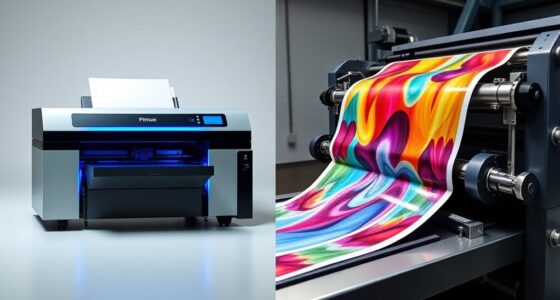
Spectrophotometers matter more than you might think because they guarantee your color choices are accurate, consistent, and true to the original across different materials and lighting conditions. They provide objective spectral data, helping you avoid costly mistakes and maintain brand integrity. By supporting precise color matching and batch control, they give you a professional edge. If you want to understand how these tools can elevate your work even further, stick around for more insights.

Get business pricing on monitors, keyboards and dev gear
- Business-only prices and quantity discounts
- Tax-exempt purchasing
- Multiple users, one account, clear invoices
Key Takeaways
- Spectrophotometers provide objective, precise color measurements, reducing human error and ensuring consistent color reproduction across projects.
- They detect subtle batch-to-batch color variations, maintaining high quality and visual uniformity in manufacturing.
- Spectrophotometers analyze spectral data, enabling fine-tuning of colors for accurate matching and optimal lighting conditions.
- They uphold brand integrity by ensuring consistent product appearance, regardless of material or lighting differences.
- Utilizing spectral analysis enhances decision-making, leading to better color control and competitive advantage in design.
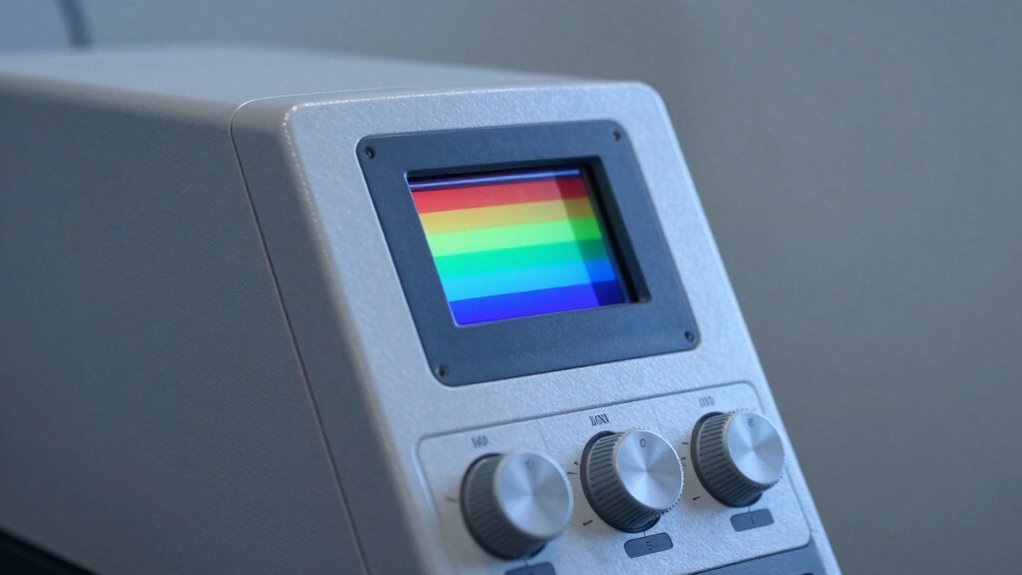
Spectrophotometers might not be the most glamorous tools in a designer’s toolkit, but their impact on color accuracy and consistency is profound. When you’re working on a project, whether it’s fashion, interior design, or product development, the ability to match colors precisely can make or break the final outcome. This device guarantees that the colors you see on your screen or in your samples are an exact reflection of the actual material, eliminating guesswork and human error. With a spectrophotometer, you gain a reliable measurement of how light interacts with your materials, giving you the confidence that every shade, hue, and tone is consistent across batches and applications.
Color accuracy isn’t just about matching a color to a swatch; it’s about reproducing that exact hue every time, regardless of lighting conditions or material differences. Spectrophotometers analyze the spectral properties of colors, providing detailed data that helps you fine-tune your colors with precision. This is especially critical when working with complex colors or subtle shades, where even slight deviations can be noticeable and diminish the quality of your work. By integrating a spectrophotometer into your workflow, you can guarantee your colors remain true to your original vision, whether you’re designing fabric, paint, or packaging.
Material consistency is another crucial aspect that spectrophotometers help uphold. Materials can vary markedly due to manufacturing processes, environmental factors, or aging, which can affect how colors appear. Without proper measurement tools, these variations can lead to inconsistencies that harm brand reputation or product appeal. A spectrophotometer provides objective data, allowing you to verify that each batch of material matches your specifications. This level of control helps you avoid costly reprints, remakes, or redesigns caused by unnoticed discrepancies. It also helps maintain quality standards, ensuring that each product leaving your workshop or factory looks and feels the same, no matter when or where it’s produced.
Ultimately, the value of a spectrophotometer lies in its ability to bridge the gap between perception and reality. It empowers you to make informed decisions based on hard data rather than subjective judgment. Whether you’re working on a small batch or large-scale production, this tool guarantees that your colors are accurate and your materials consistent, giving your work a professional edge. In a competitive market, that precision can differentiate your designs and elevate your craftsmanship, proving that spectrophotometers are more essential than many realize. A deeper understanding of spectral analysis can further enhance your ability to achieve perfect color matches and material uniformity. Additionally, understanding the spectral reflectance of materials can help optimize your color matching process for various lighting conditions. Recognizing the importance of color measurement in design workflows ensures that you maintain high standards and deliver consistent results every time.
spectrophotometer for color matching
As an affiliate, we earn on qualifying purchases.
As an affiliate, we earn on qualifying purchases.
Frequently Asked Questions
How Do Spectrophotometers Improve Color Accuracy in Design?
Spectrophotometers improve color accuracy in design by ensuring precise color matching through advanced light measurement. You can accurately analyze colors, matching them perfectly across different materials and lighting conditions. This reduces errors and inconsistencies, helping your designs look professional and consistent. By using spectrophotometers, you gain reliable data that guides your color choices, ensuring your final product reflects your vision accurately under various lighting scenarios.
What Industries Benefit Most From Spectrophotometer Technology?
You might assume industries like fashion or printing benefit most from spectrophotometers, and you’re right—these tools excel at precise color matching and material analysis. But research shows industries such as automotive, cosmetics, and textiles also rely heavily on this technology. Spectrophotometers guarantee consistency, accuracy, and quality across diverse materials, underpinning critical decisions in manufacturing and quality control, proving their value extends far beyond aesthetics alone.
Can Spectrophotometers Detect Color Inconsistencies During Production?
Yes, spectrophotometers can detect color inconsistencies during production. They excel at color matching by precisely measuring light absorption and reflection, guaranteeing that colors stay consistent. You use them for quality control to catch color deviations early, preventing costly rework or product recalls. By integrating spectrophotometers into your process, you maintain high standards, assure uniformity, and deliver products that meet exact color specifications every time.
How Do Spectrophotometers Differ From Colorimeters?
Spectrophotometers differ from colorimeters in precision and versatility. While colorimeters provide quick, basic color matching, spectrophotometers offer detailed spectral data, ensuring more accurate color matching across various materials. They utilize advanced calibration techniques to maintain accuracy over time. You’ll find spectrophotometers essential for high-quality color consistency, especially when precise calibration is critical, making them indispensable tools for designers aiming for impeccable color fidelity.
What Are the Cost Considerations for Implementing Spectrophotometers?
Investing in spectrophotometers is like planting a seed for precision; your budget planning should account for initial costs and ongoing maintenance. While the upfront expense may seem high, consider maintenance costs and calibration needs, which can add up over time. Balancing quality and affordability ensures you make a smart investment, avoiding future surprises and keeping your color measurements sharp and reliable for your projects.
professional color measurement device
As an affiliate, we earn on qualifying purchases.
As an affiliate, we earn on qualifying purchases.
Conclusion
So next time you’re choosing colors without a spectrophotometer, remember you’re like a chef seasoning a dish blindfolded—trusting guesswork over precision. Without these devices, your designs risk looking like a toddler’s crayon chaos rather than a polished masterpiece. Spectrophotometers are the unsung heroes making sure your colors stay true, so you don’t end up selling “vintage mustard” when you meant “sleek gold.” Don’t ignore them; your reputation—and your palette—deserve better.
spectrophotometer for manufacturing quality control
As an affiliate, we earn on qualifying purchases.
As an affiliate, we earn on qualifying purchases.
As an affiliate, we earn on qualifying purchases.
Halloween Picks
halloween
As an affiliate, we earn on qualifying purchases.