Scan-to-print pipelines reduce errors in archival reproduction by using automated calibration, error detection, and quality checks at every step. These systems help you minimize manual mistakes, guarantee accurate color, focus, and resolution, and catch issues early. Automated quality control assures that each reproduction faithfully matches the original, saving time and preserving details. If you want to discover how these processes improve accuracy and efficiency further, keep exploring this topic.
Key Takeaways
- Automated calibration and alignment minimize distortions and ensure accurate reproduction of original details.
- Automated error detection identifies misalignments, color mismatches, and resolution issues early in the process.
- Digital quality assurance checks verify fidelity to the original, preventing flawed reproductions.
- Streamlined workflows reduce manual handling errors and enhance process consistency.
- Continuous process monitoring and correction improve overall accuracy and reliability of archival reproductions.
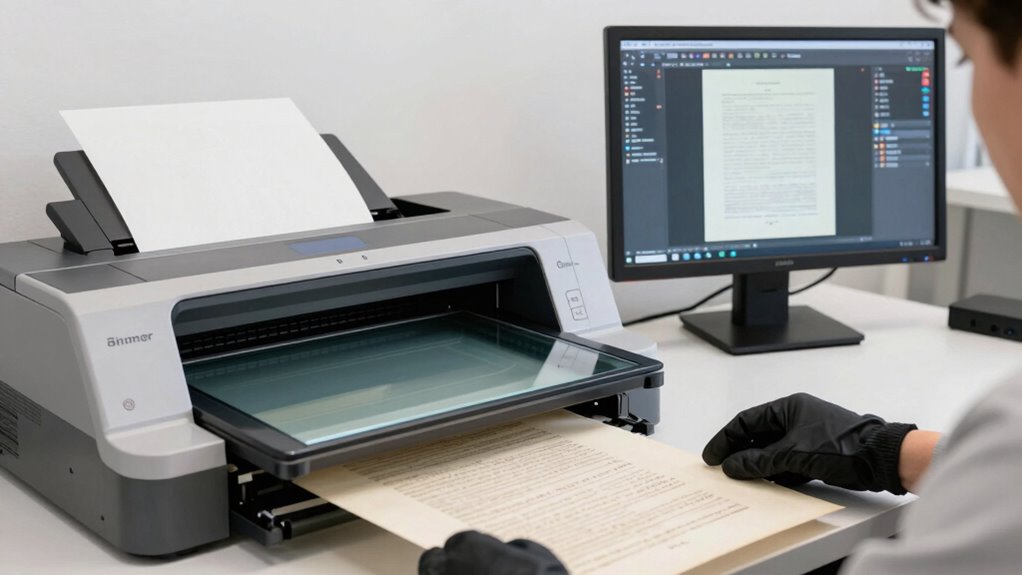
In archival reproduction, scan-to-print pipelines have become crucial for preserving and sharing historical materials with accuracy and efficiency. These pipelines streamline the process of converting fragile, aging documents into digital formats and then producing high-quality prints. By doing so, they support digital preservation efforts, guaranteeing that valuable materials are protected from further handling and deterioration. They also help minimize errors that can occur during manual reproduction, making the entire process more reliable and consistent.
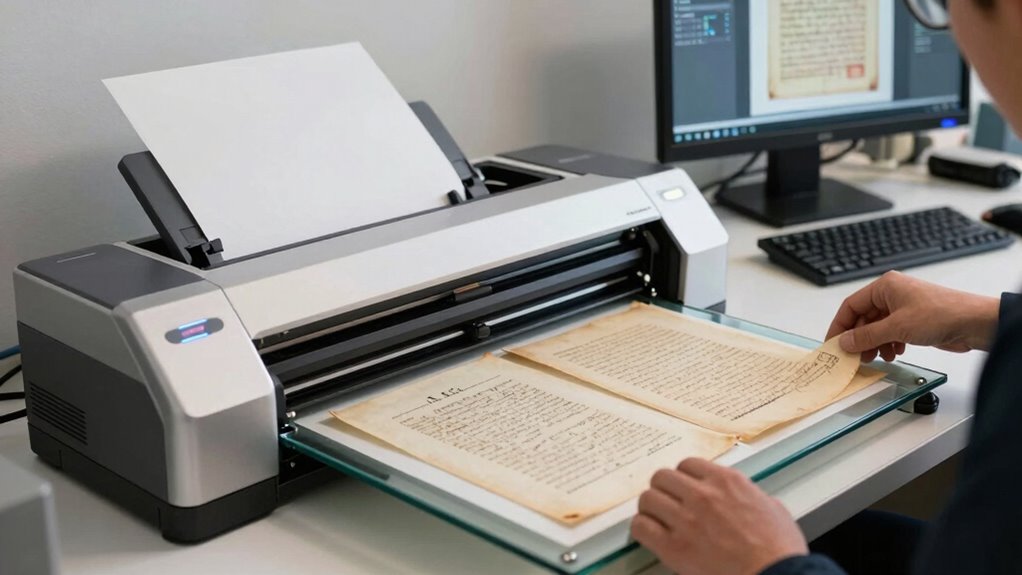
One of the key ways scan-to-print pipelines reduce errors is through automation and precise calibration. When you use advanced scanning equipment, you’re less likely to introduce distortions or misalignments that often happen during manual copying. Automated calibration ensures color accuracy, proper focus, and correct resolution, which are essential for preserving the original details of archival materials. This level of quality assurance means you get faithful reproductions, whether you’re working with photographs, manuscripts, or delicate artifacts. It’s a significant step toward maintaining the integrity of the original material without risking damage or loss of detail. Additionally, automated error detection can further improve the process by identifying inconsistencies early on.
Moreover, digital preservation benefits greatly from these streamlined pipelines. Digital files created through high-resolution scanning serve as a safeguard against physical degradation over time. When you implement a well-designed scan-to-print process, you’re not only creating accurate physical copies but also generating digital backups that are easier to store, search, and share. This reduces the chance of errors caused by manual handling or misinterpretation of content. It also allows for the implementation of quality assurance protocols, like automated checks for resolution, color fidelity, and document integrity, which further reduce the risk of reproducing flawed or incomplete images. Incorporating digital workflow management can further optimize the overall process and enhance consistency.
Additionally, modern scan-to-print pipelines incorporate quality assurance measures at every step. From initial scanning to final printing, you can verify the accuracy of digital files against the original materials. This proactive approach catches potential errors early, whether it’s a misaligned scan, color mismatch, or resolution issue. When these problems are identified promptly, you can correct them before producing the final print, saving time and resources. As a result, the process becomes more efficient, and the final product more precise. Implementing automated quality control processes further enhances the reliability of the reproduction, ensuring that each step maintains fidelity to the original.

Epson Perfection V19 II Flatbed Photo Scanner 4800 dpi Optical Resolution
- High-Resolution Scanning: 4800 dpi optical resolution
- Includes ScanSmart Software: Epson ScanSmart software included
- One-Touch Scanning: Easy-to-use one-touch buttons
As an affiliate, we earn on qualifying purchases.
As an affiliate, we earn on qualifying purchases.
Frequently Asked Questions
How Do Scan-To-Print Pipelines Integrate With Existing Archival Systems?
You integrate scan-to-print pipelines with existing archival systems through a seamless digital workflow that connects scanning hardware, processing software, and your archive database. Metadata management plays a vital role, ensuring accurate tracking, cataloging, and retrieval of digital files. By automating data transfer and standardizing formats, you minimize errors, increase efficiency, and maintain the integrity of your archival reproduction, making the entire process more reliable and easier to manage.
What Are the Costs Associated With Implementing Scan-To-Print Technology?
Implementing scan-to-print technology involves costs like purchasing equipment, software, and training staff. Conduct a thorough cost analysis to understand initial investments and ongoing expenses. You should also consider budget considerations, such as maintenance and potential upgrades, to guarantee long-term sustainability. While upfront costs can be significant, the improved accuracy and efficiency in archival reproduction often justify the investment over time, saving you money and reducing errors.
How Do Pipelines Handle Fragile or Degraded Archival Materials?
You’ll find that scan-to-print pipelines handle fragile materials carefully by using specialized equipment and gentle scanning techniques, minimizing physical contact and reducing preservation challenges. These systems often incorporate high-resolution imaging and controlled environments to prevent further deterioration. By digitizing fragile or degraded items with precision, you preserve their integrity and guarantee accurate reproduction, all while avoiding the risks of handling delicate materials directly, effectively addressing preservation challenges.
Can Scan-To-Print Pipelines Be Customized for Different Archive Types?
Think of your archive as a garden needing tailored care. You can customize scan-to-print pipelines like a gardener adjusts tools for each plant. By focusing on material preservation and adapting digital workflows, you guarantee each archive type—whether fragile manuscripts or photos—receives precise handling. This customization minimizes errors, enhances quality, and preserves the unique integrity of every piece, making your archival reproduction both accurate and respectful of its original form.
What Training Is Required for Staff to Operate These Pipelines Effectively?
You need to provide staff with thorough training focused on operational skills for scan-to-print pipelines. This includes understanding the equipment, software, and quality control processes. Hands-on practice helps staff become confident in handling different archive types and troubleshooting issues. Regular updates and refresher courses ensure they stay current with system upgrades. Well-trained staff minimize errors, improve efficiency, and ensure high-quality archival reproductions, making your workflow more reliable.
As an affiliate, we earn on qualifying purchases.
Conclusion
By adopting scan-to-print pipelines, you reduce errors, enhance accuracy, and streamline your archival reproduction process. You improve quality, guarantee consistency, and save time—all by embracing this innovative approach. You minimize risks, maximize efficiency, and preserve history with confidence. With scan-to-print pipelines, you transform your workflow into a reliable, precise system that protects your archives and guarantees exceptional results every time. Embrace the future, elevate your standards, and trust in technology to deliver excellence.
digital archival reproduction printer
As an affiliate, we earn on qualifying purchases.
As an affiliate, we earn on qualifying purchases.
automated quality control scanner
As an affiliate, we earn on qualifying purchases.
As an affiliate, we earn on qualifying purchases.