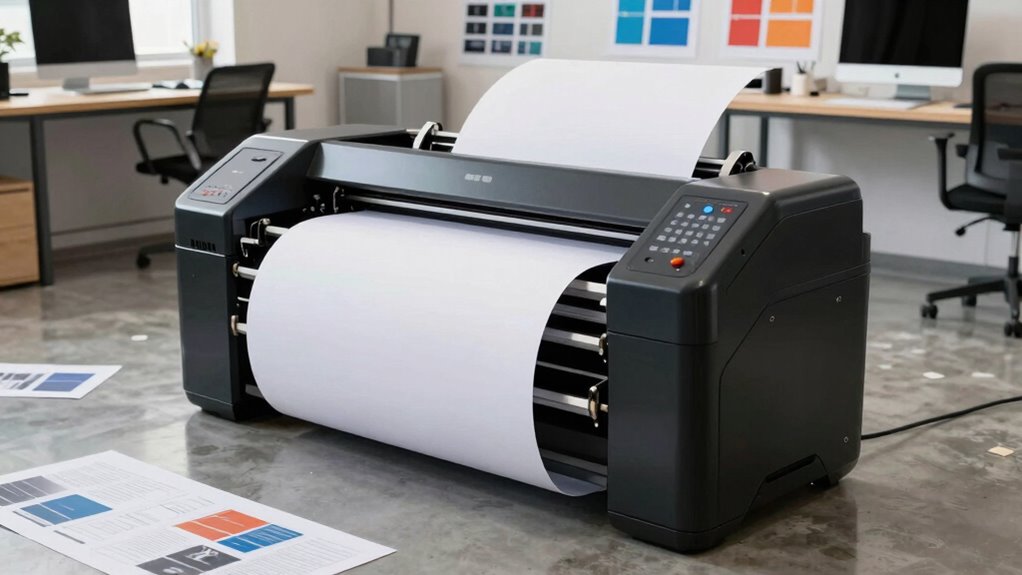

Choosing the wrong plotter size can cost your studio money through delays, poor-quality prints, and wasted materials. If your plotter is too small, you’ll need multiple passes for large projects, slowing you down and increasing labor costs. Oversized models take up space and lead to unnecessary expenses. Finding the right size balances your project needs, workflow, and budget. Keep going to discover how avoiding this mistake can transform your studio’s efficiency.

Get business pricing on monitors, keyboards and dev gear
- Business-only prices and quantity discounts
- Tax-exempt purchasing
- Multiple users, one account, clear invoices
Key Takeaways
- Choosing a plotter that’s too small leads to multiple passes, increasing production time and labor costs.
- Oversized plotters waste space and incur unnecessary equipment costs, reducing overall studio efficiency.
- Incorrect sizing causes media handling issues, resulting in print errors that require rework and additional expenses.
- Small plotters may compromise color accuracy and quality for large projects, affecting client satisfaction.
- Poor size selection hampers workflow, causing delays and increasing operational costs over time.
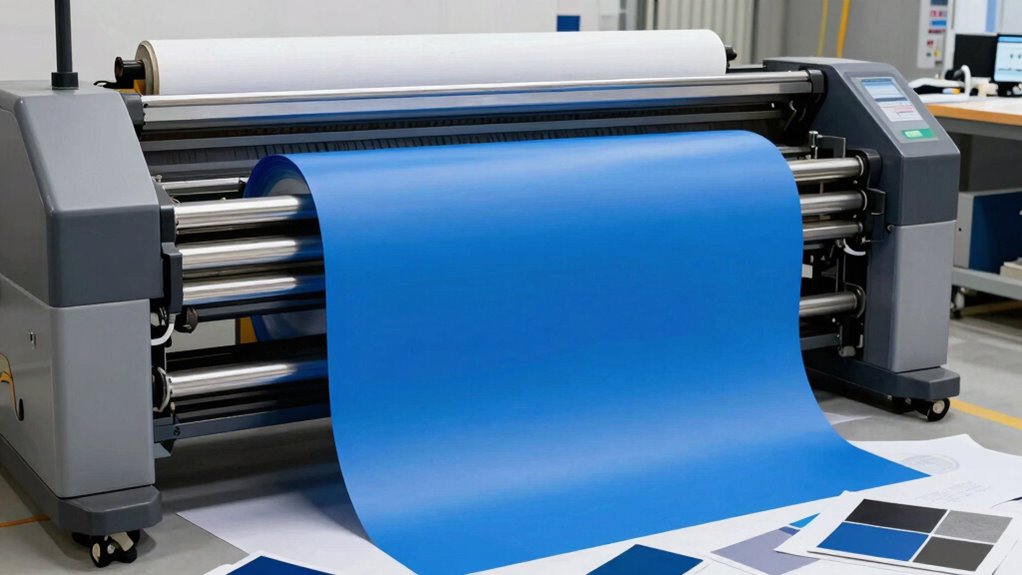
Choosing the wrong plotter size can lead to costly mistakes and project delays. When you select a plotter that’s too small, you risk running into frequent interruptions that slow down your workflow. Small plotters often require multiple passes to complete large designs, which not only takes more time but can compromise color accuracy. When you’re trying to produce vibrant, consistent colors across a large print, any misalignment or variation caused by multiple passes can result in dull or uneven color output. Conversely, opting for a plotter that’s too large for your typical projects can be an unnecessary expense, clutter your workspace, and make handling easier materials more cumbersome.
Choosing the right plotter size balances workflow efficiency, color accuracy, and workspace organization.
One of the critical factors to contemplate when choosing the right plotter size is how well it manages the paper feed. A plotter with an appropriate paper feed system ensures smooth, consistent movement of media through the machine. If your plotter is undersized, paper feed issues can become a major headache. You might experience jams, skewed prints, or uneven edges, all of which can ruin your work and lead to costly reprints. On the other hand, a plotter that’s too large might have a paper feed system that’s over-engineered for your needs, which can make it unstable or harder to calibrate properly. Proper paper feed is essential for maintaining precise registration, especially when working with large-format printing that demands high accuracy. Additionally, selecting the right plotter size impacts overall cost efficiency, helping you avoid unnecessary expenses associated with oversized equipment or frequent reprints due to inadequate size. Proper consideration of media handling capabilities is also vital for ensuring compatibility with your typical print materials and volume, which can influence the overall performance of the machine. Being aware of the media roll width your projects require can help prevent choosing a machine that’s either too limited or excessively large for your needs.
Color accuracy is another crucial consideration impacted by plotter size. Larger plotters are typically designed for high-resolution printing, which helps deliver sharp, vibrant images with consistent color across the entire print. If you choose a plotter that’s too small, you might find yourself sacrificing color fidelity because of the limitations in print size and resolution. Small plotters can struggle to reproduce colors accurately over large formats, especially when trying to maintain uniformity from edge to edge. This inconsistency can lead to reprints and wasted materials, costing you both time and money. Ensuring the right size also involves assessing your project scope, making sure the equipment can handle future growth and larger jobs without frequent upgrades.
In essence, selecting the right plotter size isn’t just about fitting your space; it’s about balancing your project requirements with the machine’s capabilities. You want a plotter that can handle your typical print sizes comfortably, with a reliable paper feed and excellent color accuracy. Doing so ensures you avoid the pitfalls of misalignment, poor color reproduction, and slow production times—all of which can be costly for your studio. Making an informed decision now helps you save money, streamline your workflow, and deliver high-quality results every time.
large format plotter for graphic design
As an affiliate, we earn on qualifying purchases.
As an affiliate, we earn on qualifying purchases.
Frequently Asked Questions
How Do I Determine the Correct Plotter Size for My Studio?
Think of choosing a plotter size like fitting a suit—too big or small, and it costs you. To get it right, consider your typical print width and volume, balancing size with maintenance needs and ink consumption. If you often print large banners, opt for a bigger plotter. Smaller jobs need a compact model to save on ink and maintenance costs, helping you avoid unnecessary expenses and downtime.
Are There Specific Industries That Benefit More From Larger Plotters?
Yes, industries with high production volume and large-format needs, like architecture, engineering, and advertising, benefit more from larger plotters. These sectors rely on industry-specific equipment that handles bigger paper sizes efficiently, saving time and reducing costs. If your studio frequently produces large-scale blueprints, posters, or detailed designs, investing in a bigger plotter makes sense. It boosts productivity and guarantees you meet client demands without delays.
What Are the Cost Differences Between Various Plotter Sizes?
Smaller plotters are generally more cost-efficient upfront, but larger plotters offer better equipment longevity and can handle bigger projects, which benefits high-volume studios. The cost differences depend on size, features, and brand, with larger models costing considerably more to purchase and operate. While larger plotters may seem expensive initially, their efficiency in handling bigger tasks can reduce overall costs, making them more economical in the long run.
How Often Should I Upgrade My Plotter to Optimize Costs?
You should upgrade your plotter every 3 to 5 years, keeping pace with technology advancements to boost efficiency and reduce long-term costs. Regularly review maintenance schedules to guarantee peak performance and identify when an upgrade might be necessary. Upgrading too early can be costly, while waiting too long may cause costly downtime. Staying informed about industry trends helps you balance upgrade timing with operational needs effectively.
Can Using an Incorrect Plotter Size Affect Print Quality?
Using an incorrect plotter size can definitely affect print quality. When you choose a size that doesn’t match your paper’s compatibility, it can lead to uneven print resolution, blurry images, or misaligned details. Even if your printer produces high-resolution images, the wrong plotter size compromises the final output. Always confirm your plotter size aligns with your paper type and resolution needs to achieve sharp, professional results.
medium-sized wide format printer
As an affiliate, we earn on qualifying purchases.
As an affiliate, we earn on qualifying purchases.
Conclusion
So, next time you’re choosing a plotter, imagine it like fitting a giant canvas into a tiny studio. If you pick the wrong size, you’ll be fighting a losing battle, wasting paper, ink, and time. Think of your studio as a stage — bigger isn’t always better, but a mismatch can turn your creative space into a cluttered chaos. Make the right choice, and watch your projects flow smoothly, like a well-rehearsed dance.
professional large plotter for architecture
As an affiliate, we earn on qualifying purchases.
As an affiliate, we earn on qualifying purchases.
compact plotter for small studios
As an affiliate, we earn on qualifying purchases.
As an affiliate, we earn on qualifying purchases.
Fall Picks
fall essentials
As an affiliate, we earn on qualifying purchases.