FDM enclosures matter for ABS printing because they create a stable environment that reduces warping, cracks, and layer separation. They control ambient temperature, preventing drafts and temperature drops that cause print issues. Enclosures also keep filament dry, improving adhesion and surface finish. Additionally, they contain fumes and odors, making your workspace safer and more comfortable. By maintaining consistent conditions, enclosures boost print success and quality, so you’ll want to explore how they can benefit your printing projects.
Key Takeaways
- Enclosures maintain a stable environment, reducing warping and layer separation during ABS printing.
- They prevent drafts and temperature fluctuations that can cause print failures.
- Enclosures control fumes and odors, improving safety and workspace comfort.
- They help keep filament dry, ensuring consistent extrusion and better surface quality.
- Enclosures support larger, more complex prints by providing consistent thermal conditions.
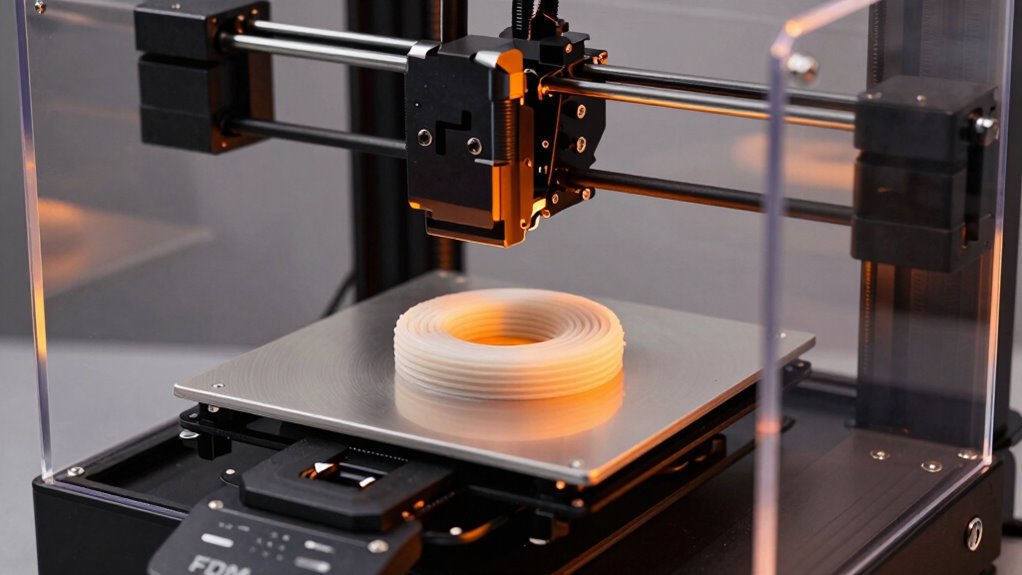
If you’re aiming for high-quality ABS prints, investing in an FDM enclosure can make a significant difference. ABS filament is notorious for warping and cracking if not handled properly, and an enclosure helps mitigate these issues by maintaining a stable printing environment. One of the main benefits of an enclosure is improved filament storage. When you keep your ABS filament enclosed, it stays dry and free from moisture that can cause bubbles, weak layers, and poor surface finish. Moisture absorption is a common problem with ABS, so a dedicated enclosure acts as a barrier, preserving the filament’s quality and ensuring consistent extrusion. This means fewer failed prints and less time spent troubleshooting. An enclosure also helps control ambient temperature, which is critical for preventing warping and ensuring adhesion. Beyond filament storage, an enclosure plays a crucial role in enhancing print bed adhesion. ABS tends to lift and warp if the ambient temperature fluctuates or if the print bed isn’t adequately heated. With an enclosure, the ambient temperature around your print remains more consistent, reducing the chances of warping caused by drafts or sudden temperature drops. This stability ensures that the first few layers of your print stick firmly to the bed, which is essential for successful high-quality prints. When the print bed adhesion is reliable, you can push your prints to larger sizes or more complex geometries without worrying about layer separation or print failure. An enclosure also helps contain the fumes and odors produced during ABS printing. While this might seem secondary, it’s a health and comfort factor that shouldn’t be overlooked. Plus, by creating a controlled environment, the enclosure minimizes temperature fluctuations, leading to smoother layer bonding and better overall surface quality. This consistency allows you to fine-tune your print settings with greater confidence, knowing the environment won’t change unexpectedly. In addition to these benefits, an enclosure can help reduce the need for extensive post-processing. When your ABS prints are produced in a stable environment, you’ll notice fewer surface imperfections, less warping, and a more professional finish right off the printer. This reduces sanding and finishing time, saving you effort and improving your workflow. Maintaining a controlled environment is essential for achieving consistently high-quality prints and minimizing material waste. A well-designed enclosure also contributes to safety by containing potentially harmful fumes, making your workspace safer and more comfortable.
FDM 3D printer enclosure for ABS
As an affiliate, we earn on qualifying purchases.
As an affiliate, we earn on qualifying purchases.
Frequently Asked Questions
Can Enclosures Improve Print Speed for ABS?
Yes, enclosures can improve print speed for ABS by providing better temperature stability and airflow control. When your printer stays within a consistent temperature range, it reduces warping and layer separation, allowing you to print faster without sacrificing quality. Additionally, airflow control prevents drafts that could cool the filament unevenly, ensuring smoother extrusion. This combination helps you achieve quicker prints with higher precision and fewer defects.
Are DIY Enclosures as Effective as Commercial Ones?
DIY enclosures can be as effective as commercial ones if you carefully consider material compatibility and cost considerations. Investing time and effort into building your own enclosure allows you to customize it for ideal ABS printing conditions, maintaining temperature stability and reducing warping. While commercial enclosures might be more polished, a well-constructed DIY version can save money and achieve similar results, provided you select the right materials and design thoughtfully.
How Do Enclosures Affect ABS Warping?
Enclosures greatly reduce ABS warping by maintaining temperature stability, preventing drafts, and controlling the environment around your print. They contain the heated air, which helps keep the print bed and filament at consistent temperatures, minimizing stress and deformation. By effectively trapping heat, enclosures guarantee smoother, more accurate prints, especially with ABS, which is prone to warping. You’ll notice fewer print failures and better surface quality with a well-designed enclosure.
Do Enclosures Require Additional Ventilation?
Enclosures don’t necessarily require additional ventilation, but you should consider ventilation requirements based on your workspace. ABS emits fumes that can affect air quality, so ensuring proper airflow is important for safety. Good ventilation helps reduce fumes, making your environment healthier. You might need an exhaust fan or air purifier to maintain air quality considerations. Ultimately, balancing enclosure benefits with proper ventilation keeps your workspace safe and comfortable.
Can Enclosures Be Customized for Different Printer Sizes?
Yes, enclosures can be customized for different printer sizes. You have options for material customization, ensuring the enclosure fits perfectly and offers the necessary protection. Size adaptability is key, so you can tailor enclosures to match your specific printer dimensions. Whether you need a compact or large enclosure, customizing allows you to optimize airflow, safety, and overall print quality, making your ABS printing process more efficient and safer.
As an affiliate, we earn on qualifying purchases.
Conclusion
By now, you understand how FDM enclosures substantially improve ABS printing, reducing warping by up to 80%. This means your prints come out smoother, stronger, and with less hassle. An enclosure creates a stable environment, making your results more consistent and professional. If you’re serious about high-quality ABS parts, investing in an enclosure is a game-changer. It’s a small step that can elevate your 3D printing game to the next level.
3D printer enclosure with fume extraction
As an affiliate, we earn on qualifying purchases.
As an affiliate, we earn on qualifying purchases.
large 3D printer enclosure for high-quality prints
As an affiliate, we earn on qualifying purchases.
As an affiliate, we earn on qualifying purchases.