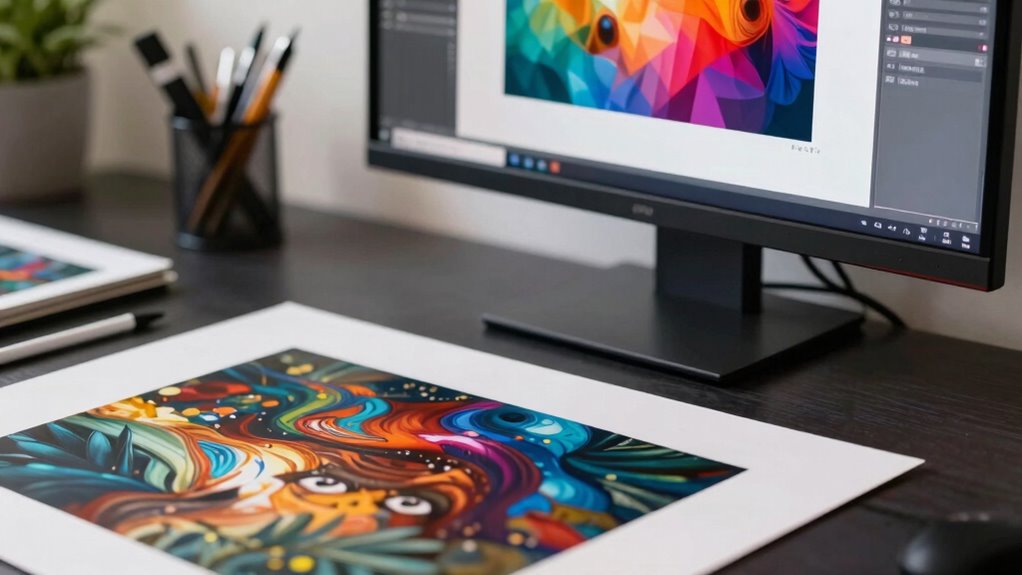

Digital proofing is becoming essential in fine art printing because it helps you guarantee your colors and details match your vision accurately. It allows you to catch potential issues early, saving time and resources. By calibrating devices and choosing the right paper, you can achieve consistent high-quality results. This process also streamlines your workflow and improves client satisfaction. To discover how these tools can elevate your prints even further, keep exploring the key techniques involved.

Get business pricing on monitors, keyboards and dev gear
- Business-only prices and quantity discounts
- Tax-exempt purchasing
- Multiple users, one account, clear invoices
Key Takeaways
- Ensures digital images accurately match final print colors, reducing surprises and reprints.
- Facilitates early detection of issues, saving time, resources, and maintaining artwork integrity.
- Enhances workflow efficiency by enabling precise adjustments before printing.
- Allows testing on different papers to achieve the desired artistic effect and final appearance.
- Supports consistent color management and device calibration for high-quality, reproducible prints.
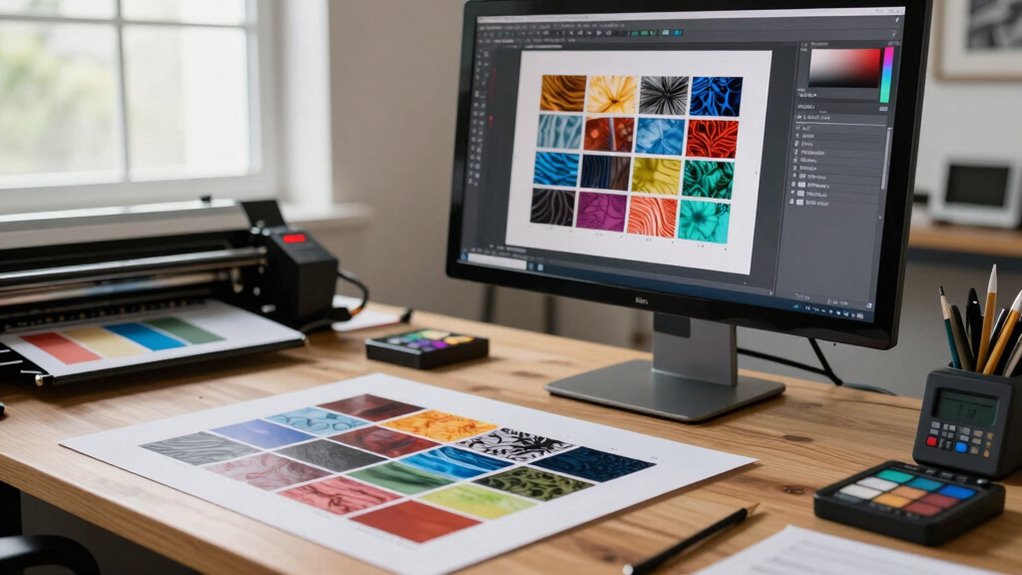
Have you ever wondered how artists and printers guarantee that a digital image will translate perfectly into a stunning fine art print? The answer lies in precise digital proofing, a process that guarantees your digital files match the final print’s appearance with remarkable accuracy. As the demand for flawless reproductions grows, digital proofing has become an essential step in the fine art printing process. It allows you to catch potential issues early, saving time and resources while preserving the integrity of your artwork.
One of the key components of effective digital proofing is color calibration. This process involves adjusting your monitor to display colors as accurately as possible, so what you see on screen closely represents the actual print. Without proper calibration, your digital images might appear vibrant or dull, leading to surprises when you finally see the printed piece. Consistent color calibration ensures that your digital proofs reflect the true colors you want to achieve in the final print, reducing the risk of mismatched hues or unwanted color shifts. When combined with a well-chosen paper type, calibration helps create a reliable preview that guides your decisions throughout the printing process. Proper monitor calibration is a critical step in establishing a dependable digital proofing workflow.
Color calibration ensures accurate digital proofs, guiding your print decisions with true-to-life colors and consistent results.
Paper selection plays a *fundamental* role in digital proofing because different papers can dramatically alter how colors and details appear. Some papers add warmth or coolness, while others emphasize texture or gloss. By testing your digital proofs on various paper types before committing to the final print, you can determine which surface best complements your artwork’s intent. This step is especially *imperative* in fine art printing, where subtle nuances can make a significant difference. Digital proofing allows you to experiment with paper options in a controlled, cost-effective way, *making certain* that the final product aligns with your artistic vision. Additionally, understanding and managing the color accuracy of your digital files is crucial for achieving faithful reproductions across different media. Incorporating color management techniques enhances this process, ensuring consistency throughout the workflow. An additional consideration is the importance of calibrated printing devices, which further ensures that the final output matches your digital proof.
As digital proofing becomes more integrated into the workflow, it offers a level of precision that was once impossible. You can make adjustments based on accurate representations, rather than relying solely on digital previews or guesswork. This practice not only improves the quality of your prints but also streamlines the entire production process. You avoid costly reprints and minimize delays, which is *essential* when working with clients or exhibiting in galleries. Utilizing digital proofing tools effectively can further improve the accuracy and efficiency of your process, making it a vital component of professional fine art printing.
In the end, digital proofing serves as a bridge between your digital file and the physical artwork. It provides confidence that every detail, color, and texture will be faithfully reproduced. With proper color calibration and thoughtful paper selection, digital proofing ensures your fine art prints meet professional standards, helping you deliver consistently stunning pieces that truly reflect your artistic intent.
monitor calibration tool for digital proofing
As an affiliate, we earn on qualifying purchases.
As an affiliate, we earn on qualifying purchases.
Frequently Asked Questions
How Does Digital Proofing Compare to Traditional Proofing Methods?
Digital proofing outperforms traditional methods by offering superior color accuracy and faster results. You can preview and adjust colors precisely before printing, saving time and reducing waste. Digital tools streamline your workflow, allowing you to see potential issues early and make corrections instantly. Unlike traditional proofs, digital proofing provides an accurate, consistent representation of the final print, ensuring your artwork matches your vision perfectly.
What Are the Common Challenges Faced During Digital Proofing?
You face challenges like ensuring perfect color calibration and maintaining high file resolution, which can make or break your digital proofing accuracy. Small discrepancies in color match or resolution loss can cause delays and reprints, leaving you frustrated. Suspense builds as you aim for flawless proofs, but these hurdles demand meticulous attention and precise adjustments. Overcoming them is essential to delivering fine art prints that truly meet your artistic vision.
Can Digital Proofing Reduce the Overall Cost of Fine Art Printing?
Digital proofing can markedly reduce the overall cost of fine art printing by enhancing cost efficiency and ensuring quality assurance. You avoid costly reprints and material waste by catching errors early in the process. This approach allows you to fine-tune colors, details, and materials digitally before printing, saving time and resources. Ultimately, digital proofing helps you deliver high-quality prints efficiently, reducing expenses and ensuring your artwork meets your standards.
How Secure Is the Digital Proofing Process for Sensitive Artworks?
Digital proofing is quite secure for sensitive artworks, especially when you use features like digital watermarking to protect authenticity. It helps prevent unauthorized copying and guarantees art authentication by embedding invisible identifiers. While no system is completely foolproof, combining secure encryption with watermarking considerably reduces risks. You can confidently review and approve proofs knowing that your artwork’s integrity remains protected throughout the digital process.
What Future Advancements Are Expected in Digital Proofing Technology?
Think of digital proofing technology as a crystal ball, revealing future advances. You can expect AI integration to enhance color accuracy and streamline workflows, making proofs more precise and efficient. Future tools may include real-time adjustments and improved calibration techniques, ensuring every print matches your vision perfectly. These advancements will transform digital proofing into an even more reliable partner, helping you create stunning, true-to-life fine art prints with confidence.
professional color calibration monitor
As an affiliate, we earn on qualifying purchases.
As an affiliate, we earn on qualifying purchases.
Conclusion
As you embrace digital proofing, you’re planting seeds for perfection in your art. It’s like having a crystal ball that reveals your masterpiece’s true colors before the final print, saving you from costly surprises. With each proof, you’re forging a bond between your vision and reality, ensuring your artwork’s true essence shines through. In this digital age, proofing isn’t just a step—it’s the brushstroke that guarantees your art will truly speak to those who view it.
As an affiliate, we earn on qualifying purchases.
color management software for printers
As an affiliate, we earn on qualifying purchases.
As an affiliate, we earn on qualifying purchases.
Fall Picks
fall essentials
As an affiliate, we earn on qualifying purchases.