If you scan rolled plans, you need special workflows because their large size and fragility make standard methods unsuitable. Handling wide-format, delicate sheets requires careful unrolling and specialized equipment to prevent damage. Automated checks help catch issues early, saving you time and effort. Organizing files and following tailored steps guarantees high-quality digital copies that preserve the plans’ details and condition. Keep exploring to see how these precise procedures can improve your scanning process.

Get business pricing on monitors, keyboards and dev gear
- Business-only prices and quantity discounts
- Tax-exempt purchasing
- Multiple users, one account, clear invoices
Key Takeaways
- Large, continuous sheets require specialized equipment and techniques to capture details accurately without damage.
- Fragile, rolled plans need careful handling to prevent tears, creases, or deterioration during unrolling and scanning.
- Standard scanners often cannot accommodate large-format plans, necessitating tailored workflows for proper image capture.
- Automated quality checks ensure high standards are maintained, reducing re-scans and project delays.
- Organized workflows improve file management, making digital plans easier to access, review, and preserve.
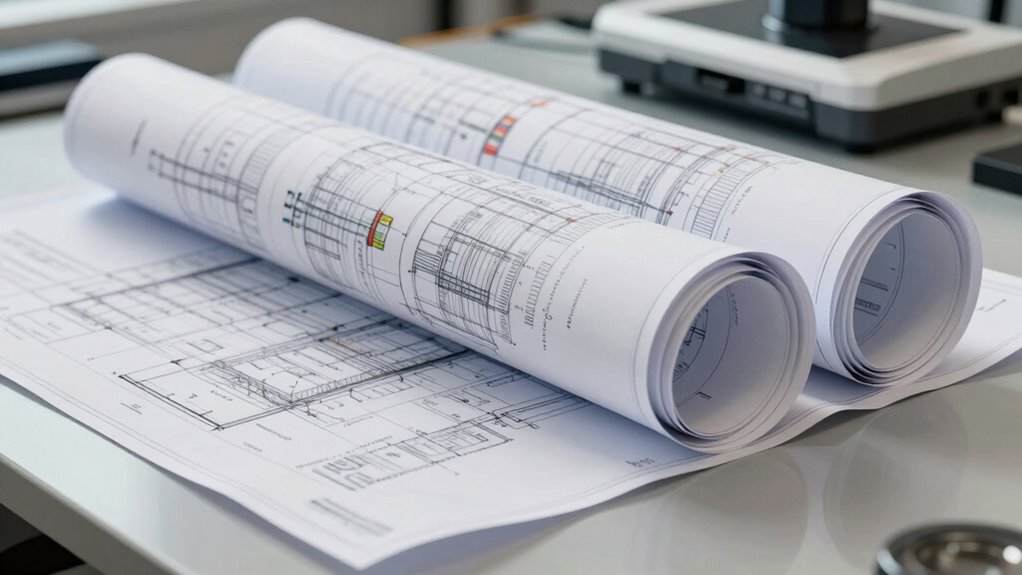
Have you ever wondered how to streamline your plans and improve your scanning workflows? When dealing with rolled plans, standard scanning processes often fall short because these large, continuous sheets require a different approach. Rolled plans are typically more fragile and complex, demanding specialized workflows that can handle their size, condition, and detail. Without a tailored system, you risk losing important information or damaging the plans during handling. That’s where a dedicated scanning workflow comes into play, guaranteeing you capture every detail accurately while maintaining the integrity of the original document.
One of the key components of an effective workflow for rolled plans is automated verification. Automated verification tools check the quality of scanned images immediately after capture, identifying issues such as blurriness, incomplete scans, or misalignments. This process saves you time and reduces errors, as you don’t have to manually review each scan. Instead, the system guarantees that every image meets your quality standards before moving forward. Automated verification is vital for maintaining quality assurance, especially when working with fragile, large-format plans that can easily be compromised during scanning. This proactive approach helps you catch problems early, avoiding costly re-scans and delays in your project timeline. Additionally, integrating quality control measures into your workflow ensures consistent standards across all scans. Incorporating automated quality checks further enhances the reliability of your digital reproductions, reducing the risk of missing critical details. Proper handling and careful unrolling techniques are also essential to prevent damage during the scanning process.
Automated verification ensures high-quality scans, catching issues early to save time and prevent costly rework.
Moreover, specialized workflows for rolled plans often include techniques to handle their physical characteristics. For example, using wide-format scanners with adjustable settings prevents damage and ensures full, accurate captures. Proper handling procedures, such as carefully unrolling plans with minimal bending or stress, complement the technical setup. These steps help preserve the plans’ condition while providing clear, detailed digital copies. A well-designed workflow also incorporates organized file management, so scanned images are stored systematically and are easily accessible for future reference or editing. Handling fragile documents is a critical consideration when designing these workflows to prevent deterioration or damage.
In addition, a tailored scanning workflow improves overall efficiency. It minimizes manual intervention, allowing you to process large volumes of plans faster without sacrificing quality. This streamlined approach boosts productivity and ensures that your team can focus on analysis and decision-making rather than wrestling with subpar scans or rework. When combined with automated verification and strict quality assurance protocols, your workflow becomes a reliable system that produces high-quality digital reproductions of rolled plans, ready for digital analysis, sharing, or preservation. Understanding the physical characteristics of rolled plans, such as their fragility and large size, is essential for developing effective scanning techniques. Ultimately, rolled plans demand special scanning workflows because their size, fragility, and complexity require thoughtful, precise handling. Implementing automated verification and rigorous quality assurance measures guarantees you capture every detail accurately, protect the original documents, and maintain efficiency. This tailored approach not only preserves the integrity of your plans but also enhances your overall project workflow, saving you time, money, and headaches in the long run.
As an affiliate, we earn on qualifying purchases.
Frequently Asked Questions
How Do Rolled Plans Differ From Standard Architectural Drawings?
Rolled plans differ from standard architectural drawings because they often contain detailed, large-scale designs that require careful handling to preserve materials and maintain historical accuracy. You need special scanning workflows to avoid damaging fragile paper or losing intricate details. These plans are usually old and delicate, so you must prioritize material preservation while ensuring that every line and annotation remains clear for future reference.
What Equipment Is Best for Scanning Rolled Plans?
Imagine unrolling a scroll of ancient maps—your scanner needs precision. The best equipment for scanning rolled plans includes large-format flatbed scanners or specialized drum scanners, both offering high scan resolution and excellent color calibration. These tools handle the curves and creases without distortion, ensuring accurate details. Investing in quality equipment guarantees you capture every line and shade, preserving the integrity of your plans for digital use or archiving.
How Can Digital Workflows Prevent Damage to Fragile Plans?
Digital workflows help prevent damage to fragile plans by emphasizing fragile preservation and proper handling techniques. You should carefully unroll plans, supporting them with foam rollers or soft supports to avoid tears. Use gentle scanning equipment designed for delicate materials, and avoid excessive pressure. These steps guarantee the preservation of fragile plans while digitizing, minimizing risks like tears or creases, and maintaining the integrity of valuable documents for future use.
Are There Specific File Formats for Scanned Rolled Plans?
Think of scanned rolled plans as treasures needing proper preservation. You should use specific file formats like TIFF or PDF for compatibility and quality. These formats support high scanning resolutions, often 300 to 600 dpi, ensuring clarity and detail. Choosing the right file format helps prevent data loss and makes future editing or sharing easier. Always verify your scanner’s settings to match the desired resolution, safeguarding your plans’ integrity.
What Are Cost-Effective Strategies for Large-Scale Plan Digitization?
To digitize large plans cost-effectively, focus on combining historical preservation with smart cloud storage strategies. You can scan plans in batches using high-speed scanners, then organize files with metadata for easy retrieval. Opt for affordable cloud solutions that offer scalable storage, ensuring your digital archives are protected and accessible. This approach minimizes costs while maintaining the integrity of your rolled plans and enabling efficient large-scale digitization.
As an affiliate, we earn on qualifying purchases.
Conclusion
You might think that rolled plans don’t need special scanning workflows, but that’s a misconception. Without tailored processes, you risk errors, delays, or missed details that can compromise your project. By adopting a specialized scanning workflow, you guarantee accuracy, efficiency, and peace of mind. It’s worth the small effort upfront, because it safeguards your plans and keeps your project moving smoothly. Don’t let a one-size-fits-all approach hold you back—customize your process for better results.
automated document quality check system
As an affiliate, we earn on qualifying purchases.
As an affiliate, we earn on qualifying purchases.
As an affiliate, we earn on qualifying purchases.
Fall Picks
fall essentials
As an affiliate, we earn on qualifying purchases.