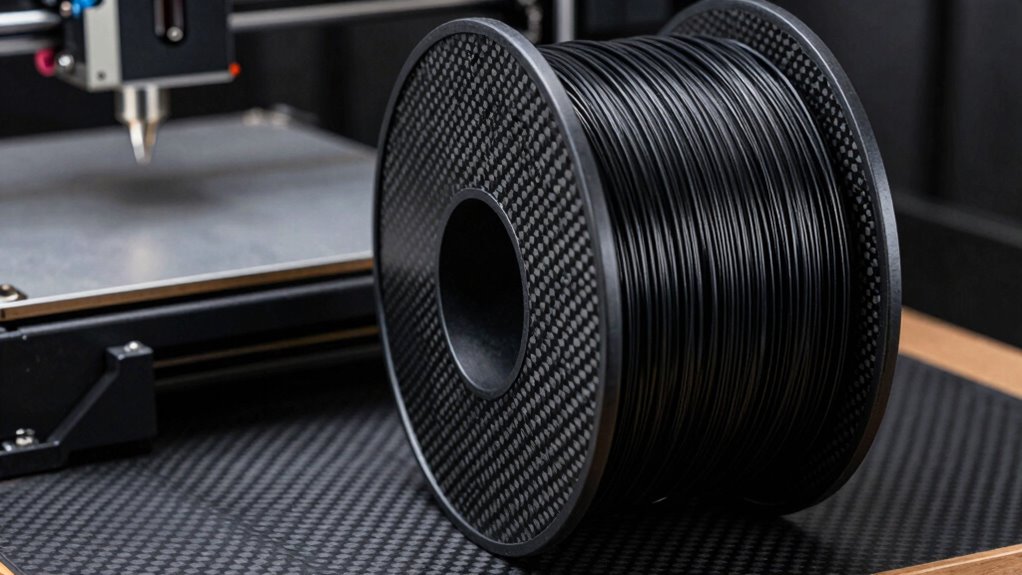

Carbon-fiber nylon printing is demanding because the abrasive carbon fibers wear out nozzles quickly and require specialized, hardened tools. You need precise control of temperature, speed, and layer adhesion to avoid warping or delamination. Its high strength makes parts less forgiving of imperfections, and managing thermal conditions is essential. If you want to understand how to handle these challenges effectively, there’s more to discover below.

Get business pricing on monitors, keyboards and dev gear
- Business-only prices and quantity discounts
- Tax-exempt purchasing
- Multiple users, one account, clear invoices
Key Takeaways
- The abrasive nature of carbon fibers accelerates nozzle wear, requiring specialized hardened nozzles.
- High strength reduces material forgivingness, making parts more prone to defects from imperfections.
- Precise temperature control is essential to prevent clogging and ensure strong layer bonding.
- Managing warping and delamination demands heated beds, enclosures, and careful environmental regulation.
- Fine-tuning print settings like speed and cooling is critical for achieving high-quality, high-strength components.
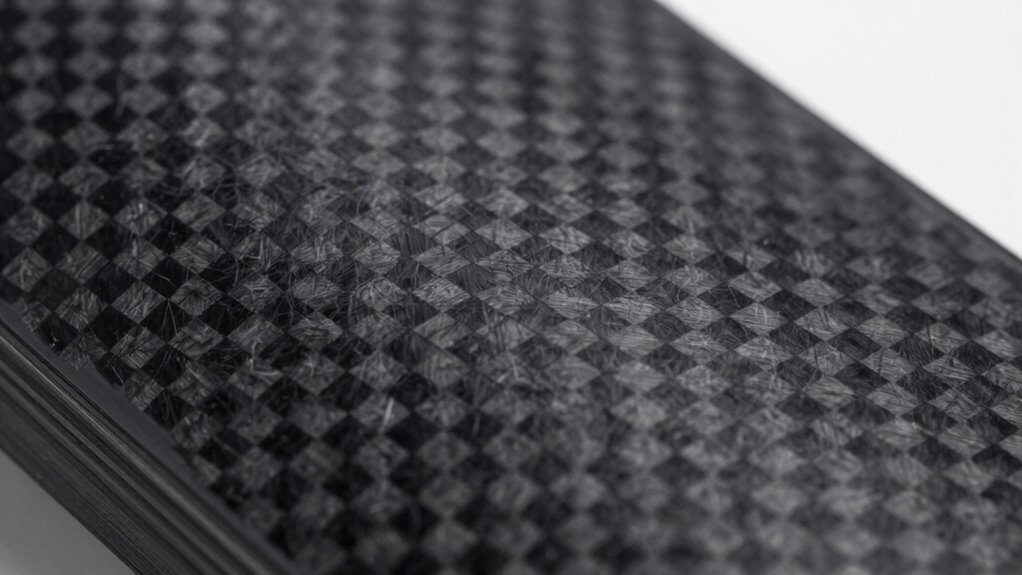
Have you ever wondered how to create lightweight, high-strength parts with a smooth finish? If so, carbon-fiber nylon printing might catch your interest. This advanced method combines the benefits of nylon’s durability with carbon fiber’s exceptional reinforcement, resulting in parts that are both tough and lightweight. However, mastering this process isn’t straightforward. The demanding nature of carbon-fiber nylon printing hinges on understanding material strength and refining your printing techniques. The added carbon fibers dramatically improve the material’s strength-to-weight ratio, making it ideal for engineering applications. But this increased strength also introduces challenges, especially when it comes to achieving consistent print quality.
One of the main hurdles is that carbon fibers tend to be abrasive. Their presence can accelerate wear on your printer’s nozzle, which means you need specialized, hardened nozzles to prevent frequent replacements. Properly maintaining your equipment is vital to guarantee high-quality output and avoid downtime. Additionally, the infusion of carbon fibers affects how the filament melts and flows. Unlike standard nylon, carbon-fiber nylon requires precise temperature control to ensure the material bonds correctly without clogging the nozzle or causing warping. You’ll need to fine-tune your print settings, including temperature, speed, and layer height, to optimize material flow and adhesion.
The printing techniques involved also demand greater attention to detail. Due to the composite’s increased rigidity, parts are less forgiving of imperfections. Small inconsistencies in layer alignment or insufficient support can lead to warping or delamination. To combat this, you should consider using heated beds and enclosures to stabilize the thermal environment during printing. Layer adhesion becomes even more critical, so adjusting print speed and ensuring proper cooling are essential steps. Furthermore, post-processing techniques, such as sanding or coating, might be necessary to achieve the desired smooth finish. Understanding the material properties of carbon-fiber nylon is essential for optimizing your printing process and ensuring durability. Being aware of how the material composition influences print quality can help in troubleshooting issues and improving overall results. Additionally, gaining insight into the abrasiveness of the fibers can help you select the right tools and maintenance routines to extend equipment lifespan. Recognizing the thermal behavior of this composite material can also assist in refining your printing environment for better consistency. Moreover, understanding the material’s thermal expansion can aid in minimizing warping during printing.
Hardened nozzles for 3D printing
As an affiliate, we earn on qualifying purchases.
As an affiliate, we earn on qualifying purchases.
Frequently Asked Questions
How Does Carbon-Fiber Nylon Compare to Traditional Nylon in Strength?
You’ll find that carbon-fiber nylon surpasses traditional nylon in strength due to fiber reinforcement, making it considerably more durable and resistant to impact. While traditional nylon offers greater material flexibility, the addition of carbon fibers reduces flexibility but enhances stiffness and strength. This makes carbon-fiber nylon ideal for high-performance applications where strength is critical, though it may be less forgiving in terms of bendability compared to standard nylon.
What Are the Best Printer Settings for Carbon-Fiber Nylon?
You should set your printer to a higher extruder temperature, around 240-260°C, to guarantee proper flow. Use a heated print bed at about 60°C to improve filament adhesion, preventing warping. Store your filament in an airtight container with desiccants to avoid moisture. Additionally, apply a suitable surface treatment, like a glue stick or painter’s tape, to enhance print bed adhesion and achieve ideal results with carbon-fiber nylon.
Can Carbon-Fiber Nylon Be Used for Functional Prototypes?
Yes, you can use carbon-fiber nylon for functional prototypes. Its high material stiffness and strength make it ideal for parts requiring durability, while some flexibility remains for certain applications. However, you should consider cost because it’s more expensive than standard materials. Confirm your printer settings are optimized to handle its demanding nature, and balance material flexibility with cost considerations to achieve the best results in your prototypes.
How Does Temperature Affect Carbon-Fiber Nylon Printing?
Temperature plays a vital role in carbon-fiber nylon printing. You need to maintain consistent heat to guarantee proper layer adhesion and avoid warping. Too high a temperature can cause excessive moisture absorption, weakening the material’s thermal stability, while too low can lead to poor bonding. By controlling the temperature carefully, you help optimize print quality and durability, preventing defects caused by moisture and making sure the part maintains its structural integrity.
What Post-Processing Techniques Improve Carbon-Fiber Nylon Parts?
They say “a polished gem is born from rough stones,” and that’s true for carbon-fiber nylon parts. To improve surface finish, you should focus on post curing, which enhances strength and stability, and sanding or polishing to smooth the surface. These post-processing techniques remove layer lines and imperfections, giving your parts a professional look and better performance. Proper post curing and surface finishing truly release the material’s potential.
As an affiliate, we earn on qualifying purchases.
Conclusion
When it comes to carbon-fiber nylon printing, you need to be prepared for a steep learning curve. The demanding process tests your patience and precision, but don’t throw in the towel just yet. Mastering the intricacies means you’ll be able to craft parts that are incredibly strong and lightweight. Remember, every cloud has a silver lining—pushing through these challenges will ultimately lead to impressive results and new skills you can be proud of.
As an affiliate, we earn on qualifying purchases.
Precision 3D printing temperature controller
As an affiliate, we earn on qualifying purchases.
As an affiliate, we earn on qualifying purchases.
Halloween Picks
halloween
As an affiliate, we earn on qualifying purchases.