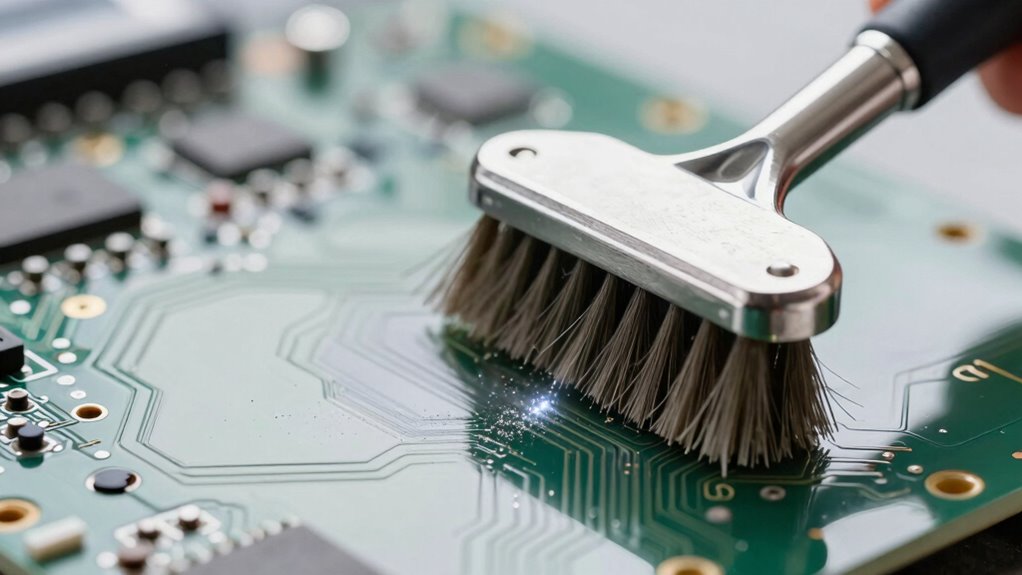
Anti-static brushes are vital in print rooms because they prevent static buildup that causes misprints, paper jams, and damage to your equipment. They safely dissipate static charges, keeping the environment smooth and reliable. Using them regularly reduces wear on your machines and improves print quality. Proper static control is essential for efficiency and longevity. Want to discover more about how these brushes can protect your print room? Keep exploring for helpful tips.
Key Takeaways
- They effectively dissipate static charges, preventing misprints, paper jams, and equipment damage.
- Made from conductive materials that quickly neutralize static buildup, ensuring smoother printing operations.
- Regular use reduces static-related wear on rollers, sensors, and electronic components.
- Integrating anti-static brushes improves overall print quality and extends equipment lifespan.
- They provide a cost-effective solution to static issues, minimizing downtime and repair expenses.
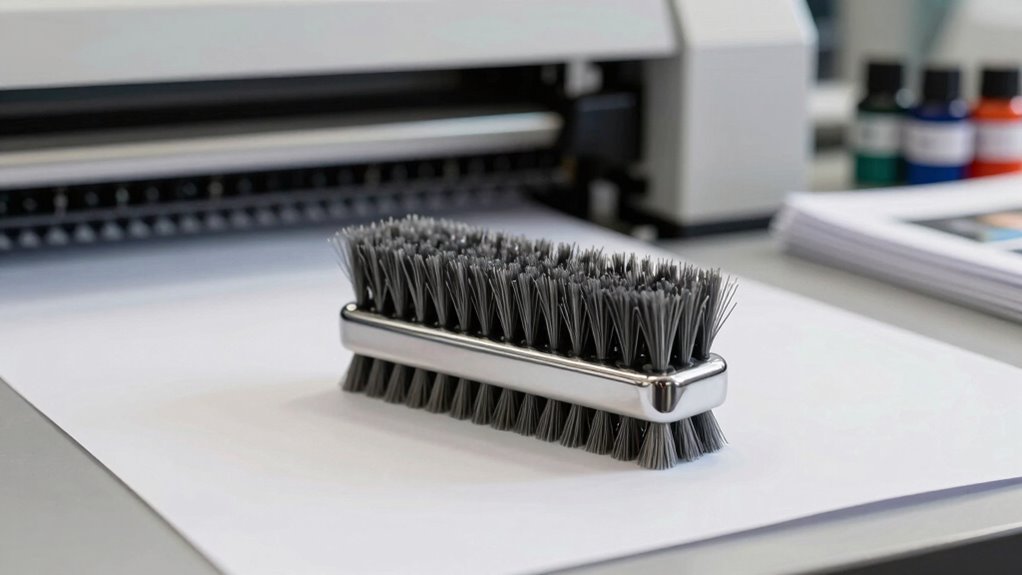
In print rooms, static electricity can cause major disruptions, leading to misprints, paper jams, and damage to sensitive equipment. One of the most effective ways to combat this issue is by using anti-static brushes. These tools are designed to safely dissipate static charges, preventing electrostatic discharge that can interfere with printing processes. Without proper static control, you risk costly downtime and compromised print quality, making anti-static brushes an essential part of your equipment arsenal.
Static electricity in print rooms causes misprints, jams, and equipment damage; anti-static brushes are essential for reliable operation.
You should understand that electrostatic discharge occurs when static charges built up on paper, rollers, or other surfaces suddenly find a path to ground. This sudden release can cause paper to stick together, misalign, or even damage delicate electronic components in your printing machinery. Anti-static brushes work by providing a conductive path, allowing static charges to safely flow away from the materials involved. This process reduces the risk of static buildup reaching dangerous levels, ensuring smooth operation and preventing costly malfunctions. Implementing proper static discharge methods can significantly improve overall print room efficiency. Additionally, selecting the right conductive materials for your brushes can enhance their effectiveness and longevity. Using appropriate static control techniques can further optimize the static dissipation process, ensuring a more reliable print environment.
The effectiveness of an anti-static brush depends heavily on its brush material composition. You’ll find that brushes made from conductive materials, such as carbon-infused fibers or specialized polymers, are best suited for static dissipation. These materials are designed to have high electrical conductivity, enabling them to neutralize charges quickly and efficiently. When you select an anti-static brush, pay attention to its material composition—those with a well-balanced blend of conductive fibers and soft, non-abrasive bristles tend to perform most reliably without damaging delicate surfaces or paper. Additionally, choosing the right brush material composition can significantly impact the longevity and performance of your static control tools.
Not only does the right brush material composition facilitate immediate static control, but it also extends the lifespan of your equipment. By continuously neutralizing static buildup, you reduce wear and tear on rollers, sensors, and other components that are sensitive to electrostatic interference. Using a brush with the appropriate composition also minimizes the risk of introducing new static charges or damaging the print media, which can happen with poorly made or incompatible brushes. Proper static management is vital for maintaining consistent print quality over time. Regularly inspecting and replacing worn brushes is also essential to maintain optimal static control.
Incorporating anti-static brushes into your routine maintenance isn’t just about preventing immediate static issues; it’s about safeguarding your entire print environment. When you use brushes crafted from the right material composition, you’re proactively reducing static-related disruptions, improving print quality, and extending the life of your equipment. Understanding the importance of static control helps you make informed choices to keep your print room running smoothly and efficiently.
anti-static brush for print room
As an affiliate, we earn on qualifying purchases.
As an affiliate, we earn on qualifying purchases.
Frequently Asked Questions
How Do Anti-Static Brushes Differ From Regular Cleaning Brushes?
Anti-static brushes differ from regular cleaning brushes by specifically preventing electrostatic discharge that can damage sensitive equipment or print materials. They are made with materials designed for durability, ensuring they last longer and maintain their anti-static properties. While regular brushes may clean dust, anti-static brushes neutralize static charges, protecting your print room’s delicate electronics and preventing potential data or print quality issues.
Are Anti-Static Brushes Environmentally Friendly and Reusable?
Yes, anti-static brushes are environmentally friendly and reusable. They’re often made from eco-friendly materials that reduce environmental impact, and their durable design means you can use them repeatedly without needing replacements often. This reusability benefits both your workflow and the planet, minimizing waste. By choosing anti-static brushes, you not only protect sensitive print equipment but also contribute to sustainable practices in your print room.
Can Anti-Static Brushes Damage Sensitive Printing Equipment?
Like a knight with a trusty shield, anti-static brushes protect your equipment. They won’t damage sensitive printing gear when used properly; instead, they prevent electrostatic buildup and static discharge hazards. However, if you’re careless or use excessive force, you risk scratching delicate surfaces. Always handle brushes gently and follow manufacturer guidelines. Proper use keeps your print room safe and your equipment functioning smoothly, avoiding costly repairs.
What Materials Are Used to Make Effective Anti-Static Brushes?
Effective anti-static brushes are made from conductive fibers, which are typically composed of carbon or metal-infused materials. These conductive fibers are woven into a sturdy brush base, often made of plastic or anti-static materials, ensuring safe static charge dissipation. The material composition allows the brush to effectively neutralize static without damaging sensitive printing equipment, making them essential tools in print rooms. Their design combines durability with maximum static control.
How Often Should Anti-Static Brushes Be Replaced for Optimal Performance?
For peak performance, replace your anti-static brushes every six months or sooner if you notice decreased effectiveness. Regularly switching out brushes prevents buildup of dust and debris that can hinder their ability to eliminate electrostatic buildup. Maintaining brush longevity ensures consistent static control, protecting delicate print equipment and materials. Don’t wait until static problems escalate—timely replacements keep your workspace static-free, ensuring smooth, seamless printing processes.
conductive anti-static cleaning brush
As an affiliate, we earn on qualifying purchases.
As an affiliate, we earn on qualifying purchases.
Conclusion
Incorporating anti-static brushes into your print room isn’t just a good idea—it’s a subtle way to enhance your workflow’s harmony. Think of them as quiet guardians, gently maintaining the delicate balance your equipment needs to perform at its best. By giving your workspace this tender touch, you’re not just preventing issues; you’re fostering a smoother, more reliable printing environment. After all, sometimes the smallest changes make the biggest difference.
static dissipating brush for printers
As an affiliate, we earn on qualifying purchases.
As an affiliate, we earn on qualifying purchases.
electrostatic discharge brush for printing
As an affiliate, we earn on qualifying purchases.
As an affiliate, we earn on qualifying purchases.