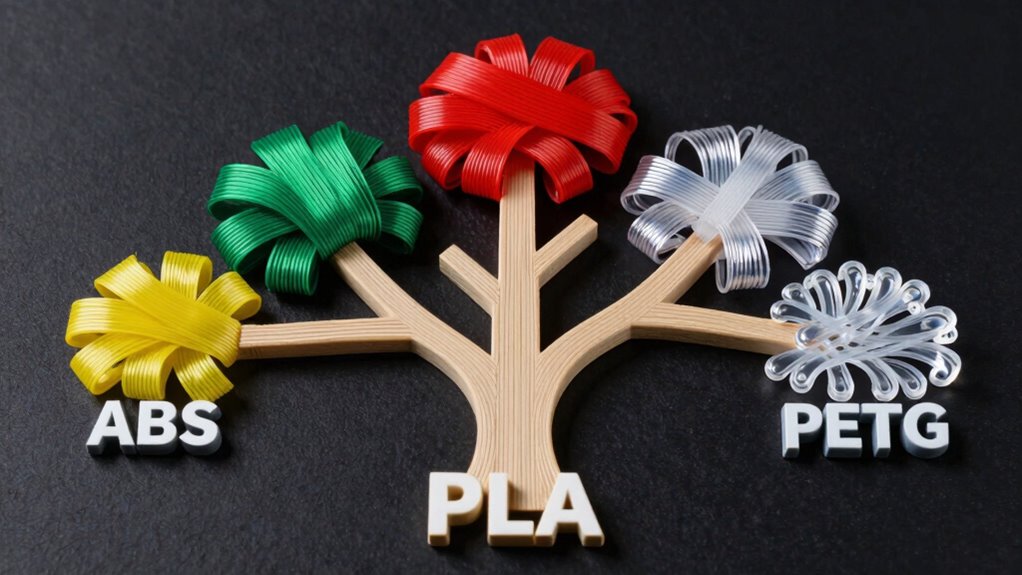

When choosing between Nylon, ABS, PLA, and PETG, consider your project’s needs. Nylon offers durability and flexibility for high-stress parts, while ABS excels at heat resistance and impact strength. PLA is user-friendly and eco-friendly but less durable. PETG balances strength with ease of printing. Understanding these differences helps you pick the right filament—more details below will guide you to the perfect choice.

Get business pricing on monitors, keyboards and dev gear
- Business-only prices and quantity discounts
- Tax-exempt purchasing
- Multiple users, one account, clear invoices
Key Takeaways
- Evaluate mechanical properties needed: Nylon for durability, ABS for impact resistance, PLA for ease, PETG for toughness.
- Consider environmental impact: PLA is biodegradable; Nylon, ABS, and PETG have limited recyclability and varying disposal regulations.
- Match compatibility and printer requirements: Some filaments need heated beds or enclosures; ensure your 3D printer supports your choice.
- Assess aesthetic and finishing needs: PLA offers vibrant colors and smooth finishes; ABS and Nylon require post-processing for quality surfaces.
- Balance cost and application: PLA is affordable and user-friendly; Nylon and ABS are pricier but suited for high-stress, functional parts.
As an affiliate, we earn on qualifying purchases.
Key Differences Among 3D Printing Filaments: Nylon, ABS, PLA, PETG
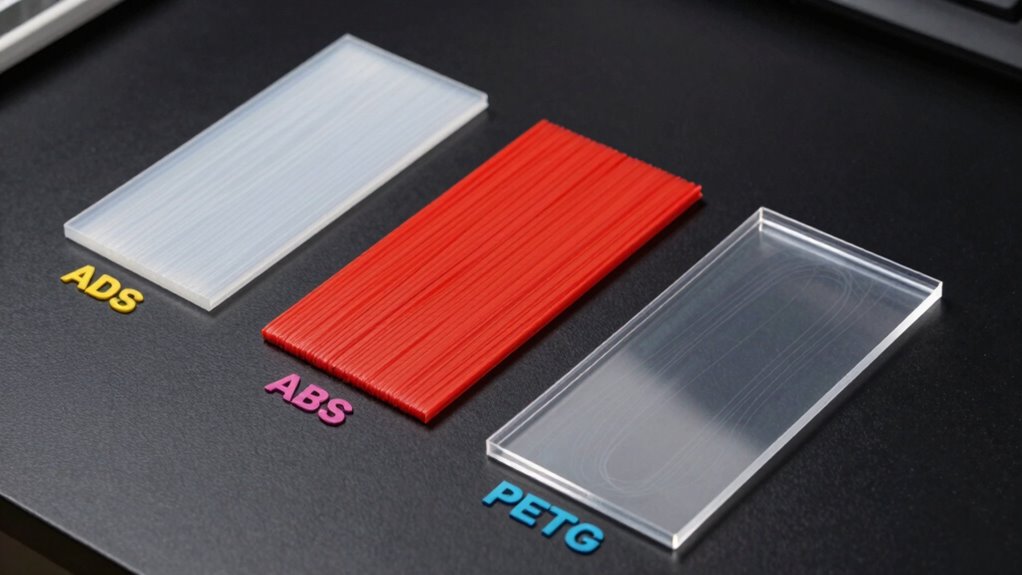
When choosing among 3D printing filaments like nylon, ABS, PLA, and PETG, understanding their key differences is essential. Filament compatibility varies, influencing which material suits your specific printer and project. For example, some printers handle ABS better, while others are optimized for PLA. Color options also matter; PLA offers a wide range of vibrant colors, making it ideal for decorative items. PETG balances durability and transparency, often available in clear or tinted hues. Nylon tends to have fewer color choices but excels in flexibility and strength. By knowing these differences, you can select the filament that matches your desired functionality, aesthetic, and printer compatibility, ensuring you get the best results for your 3D printing projects. Material properties are crucial for making informed choices in 3D printing.
As an affiliate, we earn on qualifying purchases.
Why Nylon Is a Durable, Flexible Filament for Strong Parts
Nylon stands out as a durable and flexible filament, making it an excellent choice for creating strong, functional parts. Its durability testing shows it can withstand wear and tear, ideal for demanding applications. Flexibility analysis reveals Nylon’s ability to bend without breaking, providing resilience in dynamic environments. This combination of strength and flexibility allows you to produce parts that resist impact and fatigue while maintaining their shape. Nylon’s inherently tough nature makes it suitable for gear wheels, hinges, and other components requiring both durability and pliability. Its capacity to absorb shocks and resist cracking ensures longevity in use. Material properties are crucial for selecting the right filament for specific needs. Proper material selection is also vital for optimizing performance in various applications. Regular maintenance and proper piercing care and hygiene are essential for ensuring the longevity of nylon components in demanding environments. Additionally, understanding material compatibility can help prevent common issues like warping or delamination. Being aware of post-processing techniques can further enhance nylon’s performance and finish. Overall, Nylon’s unique balance of durability and flexibility helps you craft reliable, high-performance parts that stand the test of time.
As an affiliate, we earn on qualifying purchases.
Why Choose ABS for High-Temperature and Impact-Resistant Parts?
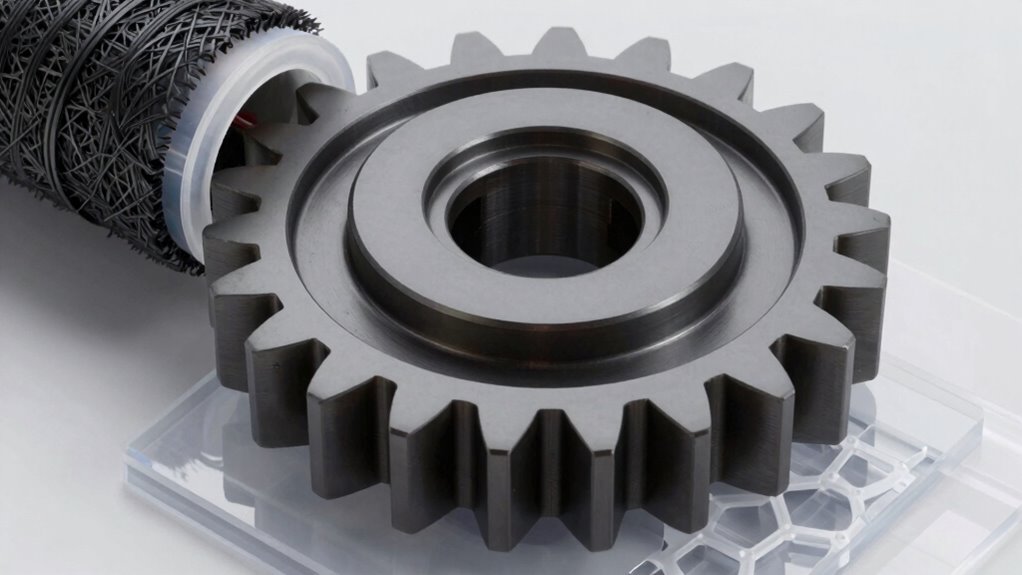
Choosing ABS for high-temperature and impact-resistant parts is a smart move because of its exceptional strength under demanding conditions. Its heat resistance allows it to maintain shape even at elevated temperatures, making it ideal for functional parts. Plus, ABS boasts superior impact durability, so your creations withstand drops and collisions without cracking. Here are four reasons to choose ABS:
- Handles heat without warping or deforming
- Absorbs impacts better than many plastics
- Suitable for engineering applications
- Easy to post-process for a smooth finish
With these properties, ABS ensures your parts stay reliable in tough environments. Its combination of heat resistance and impact durability makes it a go-to choice for high-performance, demanding applications.
As an affiliate, we earn on qualifying purchases.
Is PLA the Easiest and Most Eco-Friendly Filament?
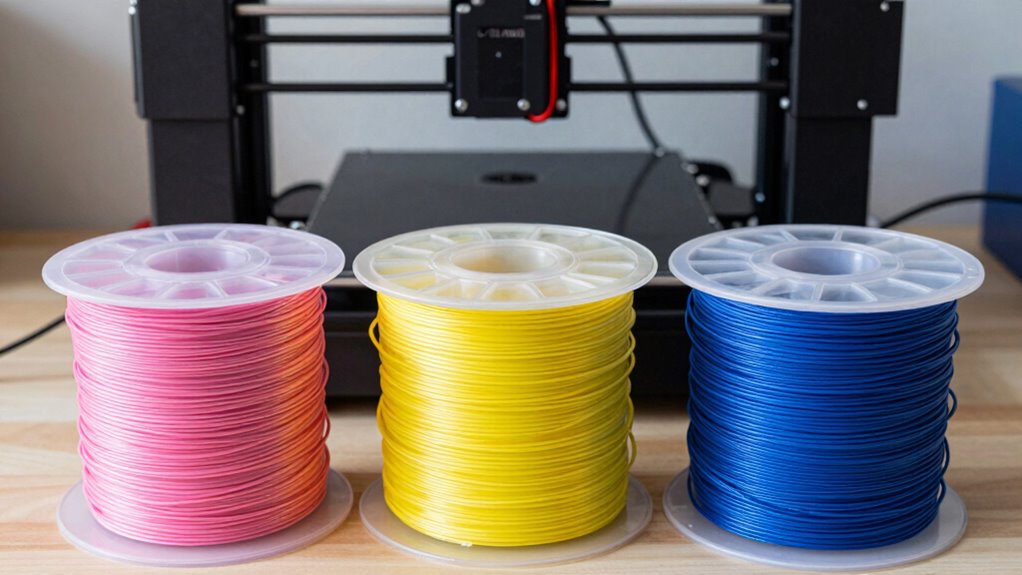
Is PLA truly the easiest and most eco-friendly filament for 3D printing? Many consider PLA an eco friendly material because it’s made from renewable resources like cornstarch and sugarcane. It’s also biodegradable under industrial composting conditions, which helps reduce waste. Its user-friendly nature makes it popular among beginners; it requires lower temperatures and emits fewer fumes. Additionally, biodegradation process for PLA requires specific conditions that are not always available in standard landfills. Research suggests these conditions can be challenging to meet in typical disposal environments, affecting its overall sustainability. While it’s often touted as an eco-friendly choice, its biodegradability depends on proper disposal and composting facilities. Additionally, recycling options for PLA are less widespread compared to other plastics, limiting its recyclability. The availability of recycling infrastructure plays a significant role in determining its environmental impact. Overall, PLA offers convenience and some environmental benefits, but it’s essential to understand its limitations in sustainability, especially compared to more recyclable or biodegradable options. Furthermore, ongoing innovations in biodegradable materials could enhance the eco-friendliness of 3D printing filaments in the future.
How PETG Combines Strength and Flexibility for Versatile Prints
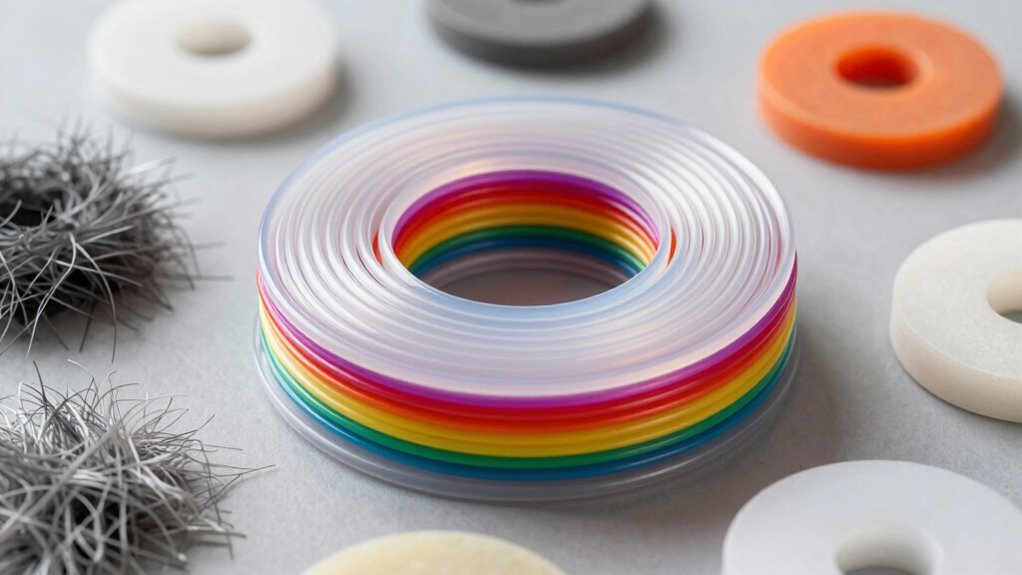
While PLA offers ease of use and eco-friendly benefits, it may not meet the demands of more complex or functional prints. PETG strikes a perfect balance by combining material flexibility with high print durability. Its ability to bend without cracking makes it ideal for parts requiring some give. PETG’s toughness ensures your prints withstand stress and impact, extending their lifespan. To maximize its benefits, consider these key points:
PETG offers a perfect balance of flexibility and durability for long-lasting, stress-resistant 3D prints.
- Material flexibility helps prevent brittle failures.
- Print durability ensures long-lasting, functional parts.
- Ease of printing reduces warping and stringing issues.
- Versatility suits both decorative and structural applications.
- Material toughness is essential for creating durable, long-lasting prints. Additionally, understanding material compatibility can help optimize your printing process for PETG and other filaments. Recognizing how print settings influence material performance can further improve your results and achieve optimal print quality.
With PETG, you get a versatile filament that delivers strength and flexibility, perfect for a wide range of projects.
How Do Nylon, ABS, PLA, and PETG Compare in Strength and Printability?

Nylon, ABS, PLA, and PETG each bring unique strengths and challenges when it comes to 3D printing. Nylon offers high filament flexibility, making it durable but sometimes difficult to print due to warping. ABS is known for strength and impact resistance, yet it requires higher printing speeds and controlled cooling to minimize warping. PLA is the easiest to print with, offering decent strength and excellent printability, especially at moderate speeds. PETG strikes a balance, providing good strength and flexibility while remaining relatively easy to print at reasonable speeds. When comparing these materials, consider that filament flexibility impacts durability, but too much flexibility can affect print accuracy. Printing speed influences surface finish and layer adhesion, making it essential to choose the right material for your project’s strength and ease of printing. Additionally, understanding how material properties influence print quality can help optimize your results.
Which Filament Is Best for Your 3D Printing Needs?
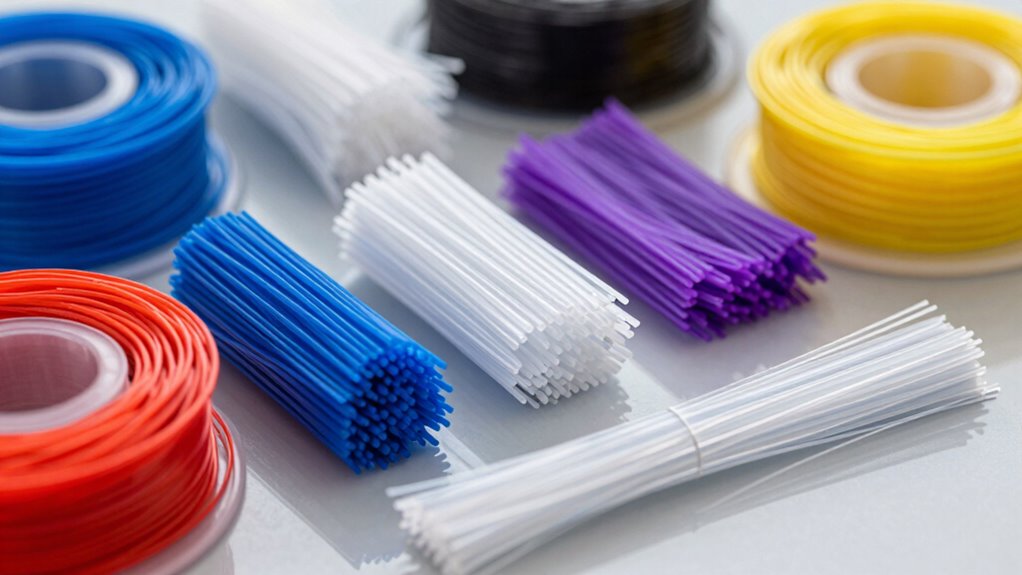
Choosing the right filament depends on your specific 3D printing needs and project goals. To do this effectively, consider these factors:
- Filament material compatibility – Make certain your printer supports the filament type you choose.
- Strength and durability – Match your project’s strength requirements with filament properties.
- Finish quality – Decide if you need a smooth, glossy, or matte surface.
- Filament storage tips – Keep filament dry and cool to prevent moisture absorption, which affects print quality.
Tips for Choosing the Right Filament Based on Your Project Goals
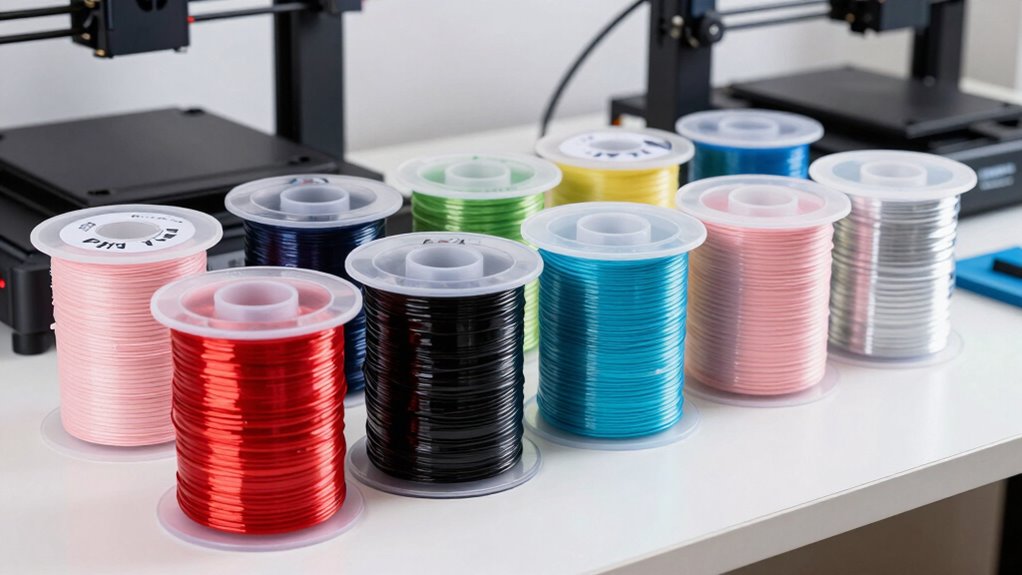
Selecting the right filament for your project starts with clearly defining your goals. Consider how filament versatility matches your needs—do you need strength, flexibility, or ease of printing? Your project material influences choices; for example, if durability is essential, nylon or PETG might be best. If you want a smooth finish and easy printability, PLA could be ideal. Think about the environment where the piece will be used, as some materials perform better under specific conditions. Your end goal determines whether you prioritize mechanical properties, surface finish, or ease of use. By understanding your project’s requirements, you can choose a filament that aligns with your objectives, ensuring better results and a smoother printing experience.
Common Problems When Printing With Nylon, ABS, PLA, or PETG: and How to Fix Them
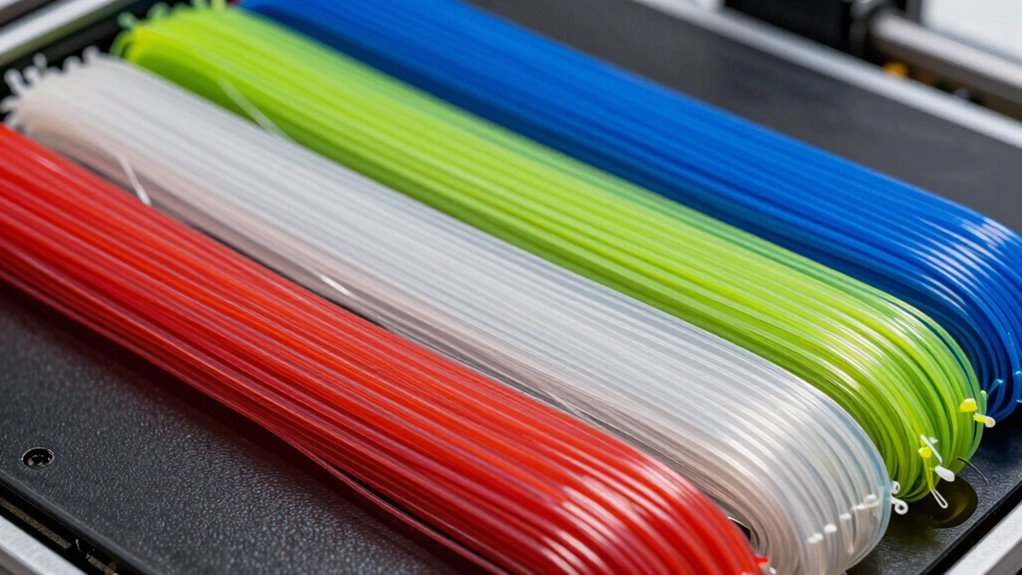
Printing with materials like Nylon, ABS, PLA, or PETG can lead to issues like warping, cracking, stringing, or oozing. These problems often stem from temperature settings or environmental factors. Understanding how to avoid and fix them ensures better, more reliable prints.
Warping and Cracking Prevention
Warping and cracking are common issues when printing with materials like nylon, ABS, PLA, or PETG, and addressing them early can save you time and effort. To prevent these problems:
- Use a heated bed to improve adhesion and minimize warping.
- Maintain consistent print speed—slower speeds often reduce stress and cracking.
- Enclose your printer to stabilize temperature and prevent drafts.
- Explore color customization options that allow for better temperature control, reducing thermal stress.
Adjusting your print speed can help prevent cracking caused by rapid cooling, while choosing the right color can influence heat absorption. Proper bed adhesion and a stable environment are essential for preventing warping, ensuring your prints stay intact and look professional.
Stringing and Oozing Solutions
Stringing and oozing are common issues when printing with materials like nylon, ABS, PLA, or PETG, and they can considerably affect the quality of your finished parts. To reduce stringing, lower the printing temperature slightly and enable retraction settings, which help prevent excess filament from leaking during non-print moves. Ensuring good print bed adhesion is essential, as poor adhesion can cause movement that worsens stringing. Using support material wisely can also help stabilize overhangs and reduce unnecessary filament flow. Additionally, dialing in print speed and travel moves can minimize oozing. Regularly cleaning the nozzle and inspecting for clogs keeps filament flow consistent. Implementing these solutions improves print quality, resulting in cleaner, more precise parts without stringing or oozing artifacts.
Cost, Post-Processing, and Environmental Impact of Nylon, ABS, PLA, and PETG
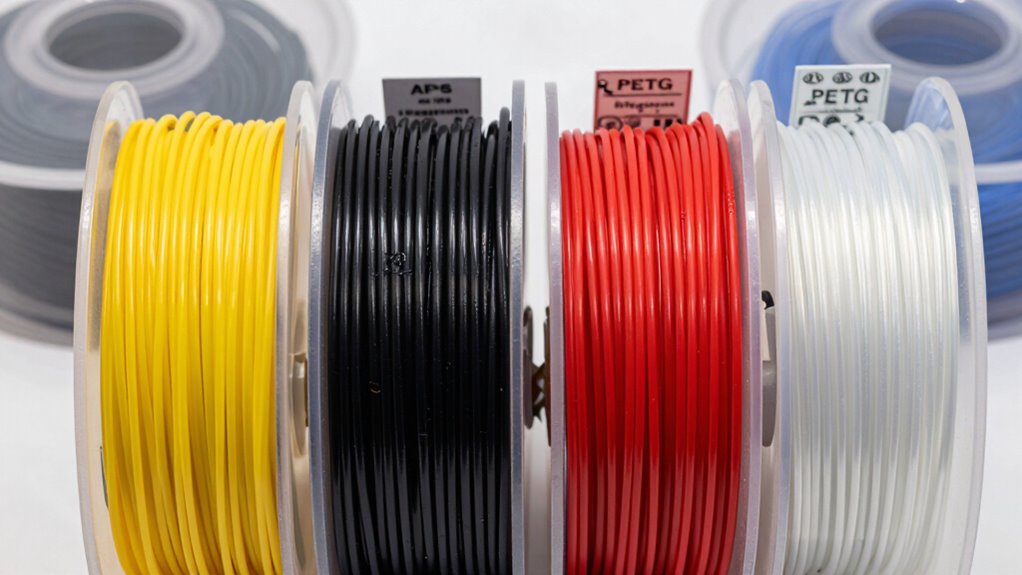
When choosing materials like Nylon, ABS, PLA, and PETG for 3D printing, understanding their costs, post-processing needs, and environmental impacts is essential. Your cost analysis should consider filament prices and potential filament recycling options, which can reduce waste and expenses. Nylon and ABS tend to be more expensive and require post-processing like sanding or acetone smoothing, impacting environmental sustainability. PLA is affordable and biodegradable but may need special handling for recycling. PETG balances cost and durability, with less post-processing required. Additionally, the recyclability of filaments varies depending on the material, influencing long-term sustainability and disposal options. Incorporating connected technology into your printing process can also help track filament usage and optimize recycling efforts for a smarter, more sustainable workflow. Recognizing the regional environmental regulations can influence your choice of filament based on disposal and recycling options specific to your location. Furthermore, understanding the filament lifespan can assist in planning for responsible disposal and reuse, extending the overall sustainability of your 3D printing projects. Being aware of the cost-effectiveness of different filaments can guide you in balancing quality with budget constraints while maintaining eco-friendly practices.
Frequently Asked Questions
How Does Filament Color Affect Print Quality and Strength?
Filament color can influence print quality and strength by affecting color consistency, which guarantees uniform appearance and fewer defects. Brighter or darker colors may require adjustments in print settings, impacting adhesion and layer bonding. Additionally, certain colors can produce aesthetic effects or reveal layer lines more prominently. Choosing high-quality filament and consistent color batches helps maintain strength, preventing weak spots caused by pigment irregularities or inconsistent extrusion.
What Are the Best Storage Methods to Prevent Filament Degradation?
You should store filament in airtight containers with desiccant packs to prevent moisture, which causes degradation. Keep it in a cool, dry place away from direct sunlight and temperature fluctuations. Using vacuum-sealed bags or resealable containers also helps maintain ideal conditions. By following these filament storage tips, you’ll effectively prevent degradation, ensuring your filament stays fresh, strong, and ready for high-quality 3D printing whenever you need it.
Can These Filaments Be Recycled or Reused After Printing?
You can often recycle or reuse these filaments after printing, but it depends on the material and how it’s processed. Filament recycling is possible through specialized equipment that re-melts and re-extrudes the material, enhancing reuse potential. Keep in mind, some filament types may degrade in quality after multiple uses, so check for filament quality and consider recycling programs or DIY recycling methods to extend your filament’s life.
How Do Printing Speeds Influence Filament Adhesion and Warping?
Imagine your print like a dance; fast moves can cause missteps. Higher printing speeds often reduce filament adhesion, risking warping, especially if your print bed temperature isn’t ideal. Conversely, slower speeds give filament time to bond properly. Keep filament cooling in check—too much cools too fast, causing warping. Find a rhythm that balances speed, bed temperature, and cooling to make sure a smooth, accurate print every time.
Are There Specific Safety Precautions for Printing With Each Filament Type?
You should always follow safety precautions when printing with different filament types. For instance, some filaments like ABS and Nylon emit fumes that can be toxic, so wear a mask and guarantee proper ventilation. Always use safety gear requirements such as gloves or eye protection if handling heated filaments or cleaning extruders. Check the filament’s material toxicity and adhere to manufacturer guidelines to keep your workspace safe.
Conclusion
So, here’s the twist: choosing the right filament isn’t rocket science, but it’s close. Whether you crave Nylon’s toughness, ABS’s heat resistance, PLA’s eco-friendliness, or PETG’s versatility, every filament has its quirks. Ironically, the perfect choice depends on your project—and your patience for troubleshooting. So go ahead, pick your poison, and embrace the chaos—you might just end up loving the filament you dreaded most. Happy printing!
Columbus Day / Indigenous Peoples' Day Picks
long weekend sales
As an affiliate, we earn on qualifying purchases.