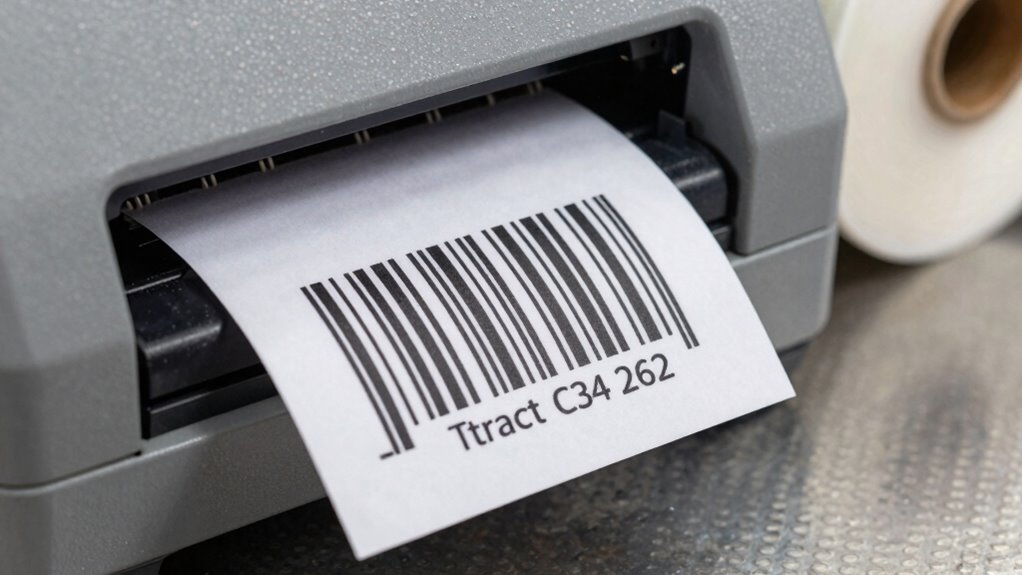

Thermal transfer printing makes more sense when you need labels that last in tough conditions, resist fading, chemicals, and abrasion. It’s ideal if your labels must endure months or years, especially in industrial, medical, or outdoor environments. Unlike direct thermal, which relies on heat-sensitive paper, thermal transfer uses ribbon ink to create durable, waterproof, and chemical-resistant labels. If you want to guarantee your labels stay intact longer, exploring these benefits can help you make the right choice.

Get business pricing on monitors, keyboards and dev gear
- Business-only prices and quantity discounts
- Tax-exempt purchasing
- Multiple users, one account, clear invoices
Key Takeaways
- When labels require long-lasting resistance to fading, chemicals, or abrasion, thermal transfer is preferable over direct thermal.
- For outdoor or harsh environments, thermal transfer offers waterproof, chemical-resistant, and tear-proof labels.
- If higher print durability and clarity are needed, thermal transfer’s ink transfer provides superior longevity.
- When using diverse materials like polyester or polypropylene, thermal transfer ensures better adhesion and durability.
- For high-volume applications needing consistent, durable labels, thermal transfer reduces reprints and maintenance costs.

While direct thermal printing offers quick and simple label creation, there are times when thermal transfer printing proves to be the smarter choice. If you need labels that stand up to harsh environments, thermal transfer is often the better option. The key reason is its superior label durability. Unlike direct thermal labels, which rely on heat-sensitive paper that can fade or discolor over time, thermal transfer labels use a ribbon with ink that’s transferred onto the label material. This process results in a more resilient print that can withstand exposure to sunlight, chemicals, moisture, and abrasion. If your labels need to last months or even years, thermal transfer provides the longevity you require. Additionally, thermal transfer printing allows for material versatility, enabling the creation of labels suitable for a variety of demanding environments.
Thermal transfer labels are more durable, resisting fading, chemicals, and abrasion for long-lasting results.
Another factor to deliberate is ink compatibility. Thermal transfer printers offer a wide range of ribbon options, including wax, resin, and wax-resin blends, giving you the flexibility to match the right ink with your specific label needs. For example, if you’re labeling products that will be exposed to chemicals or harsh cleaning agents, resin ribbons offer excellent resistance. Wax ribbons, on the other hand, are suitable for indoor applications with less demanding environments. This versatility means you can choose the best ink for your labels, ensuring clarity and durability without sacrificing print quality. Plus, understanding the printing process can help you optimize your label performance and longevity. Recognizing the environmental conditions in which your labels will be used is crucial to selecting the proper thermal transfer materials and ribbons.
Furthermore, the ability to print on various materials makes thermal transfer highly adaptable for specialized applications. You’ll also find that thermal transfer printing is more adaptable to diverse label materials. While direct thermal labels are limited mostly to paper-based surfaces, thermal transfer can print on a variety of materials, including synthetic films, polyester, and polypropylene. This expands your options for labels that need to be waterproof, chemical-resistant, or tear-proof. As a result, thermal transfer becomes an ideal choice for industrial, medical, or outdoor applications where label integrity is critical. Additionally, the cost-effectiveness of thermal transfer printing over time can make it a more economical solution for high-volume labeling needs.
Furthermore, although thermal transfer printers may have a slightly higher initial cost and require ongoing ribbon purchases, the long-term benefits often outweigh these expenses. You get labels with enhanced durability, better ink compatibility, and broader material compatibility. This means fewer reprints, less maintenance, and reduced risk of your labels failing in demanding environments.
As an affiliate, we earn on qualifying purchases.
Frequently Asked Questions
How Does Print Speed Differ Between Thermal Transfer and Direct Thermal?
You’ll find that thermal transfer printers generally print slower than direct thermal ones, especially when producing high-quality labels. This is because thermal transfer involves melting ink from a ribbon onto the label, which takes more time. While the faster speed of direct thermal printing boosts productivity, it often requires less maintenance and offers better print quality for detailed images. Your choice depends on balancing speed, quality, and maintenance needs.
Are There Specific Industries That Prefer Thermal Transfer Over Direct Thermal?
You’ll find that thermal transfer is preferred in industrial applications because of its superior material compatibility and durability. Industries like manufacturing, logistics, and healthcare choose thermal transfer labels for their resistance to chemicals, heat, and abrasion. This method guarantees long-lasting prints, making it ideal for products, asset tracking, and shipping labels. If you need labels that withstand tough environments, thermal transfer definitely makes more sense than direct thermal.
What Are the Environmental Impacts of Each Printing Method?
You’ll find that thermal transfer printing is generally more eco-friendly because it uses durable ribbons with eco-friendly materials, reducing waste over time. While direct thermal printing consumes less energy initially, it often requires more frequent replacements, leading to increased waste. Thermal transfer may have a slightly higher energy consumption, but its longer-lasting prints and use of sustainable materials make it a better choice for environmentally conscious applications.
Can Thermal Transfer Printers Print on Various Materials Besides Paper?
Think of a thermal transfer printer as a versatile artist’s brush, capable of painting on many surfaces beyond paper. Yes, you can print on various materials, thanks to alternative substrates like plastics, fabrics, and metals. This material versatility allows you to create durable labels, tags, or packaging that withstand harsh environments. So, you’re not limited; your printer can adapt to almost any surface, making it a powerful tool for diverse applications.
How Does Cost-Effectiveness Compare Over the Long Term?
Thermal transfer printers tend to be more cost-effective over time because of their durability and longer-lasting labels. You’ll save money with fewer replacements since the labels resist scratches, chemicals, and UV light better than direct thermal prints. Although initial costs are higher, their durability comparison shows they maintain quality longer, making them ideal for long-term applications where cost efficiency and label longevity matter most.
resin ribbon for thermal transfer printer
As an affiliate, we earn on qualifying purchases.
As an affiliate, we earn on qualifying purchases.
Conclusion
So, next time you’re tempted to stick with direct thermal labels for quick wins, remember—sometimes, the more expensive thermal transfer option actually saves you money and headaches in the long run. Irony’s a funny thing; choosing convenience now could cost you dearly later. If you want durability, clarity, and fewer surprises, it’s time to invest in thermal transfer. After all, isn’t it ironic how the smarter choice often takes a little more effort upfront?
As an affiliate, we earn on qualifying purchases.
polypropylene labels for outdoor use
As an affiliate, we earn on qualifying purchases.
As an affiliate, we earn on qualifying purchases.
Fall Picks
fall essentials
As an affiliate, we earn on qualifying purchases.